
The digital world is transforming rapidly, and every business must adapt to stay ahead. Are you prepared to excel in the fast-changing environment of 2026?
This guide delivers the latest web and marketing strategies designed for measurable business growth. Discover trends in web technology, data-driven marketing, omnichannel engagement, AI integration, and methods to future-proof your digital presence.
Seize new opportunities, embrace innovation, and use proven tactics to outperform competitors. Start your journey toward digital leadership today.
Understanding the 2026 Digital Landscape
The digital world is rapidly transforming, and businesses must adapt their web and marketing strategies to keep pace. Understanding the landscape for 2026 is crucial for staying ahead of the competition and delivering exceptional customer experiences.
Rapid Evolution of Web Technologies
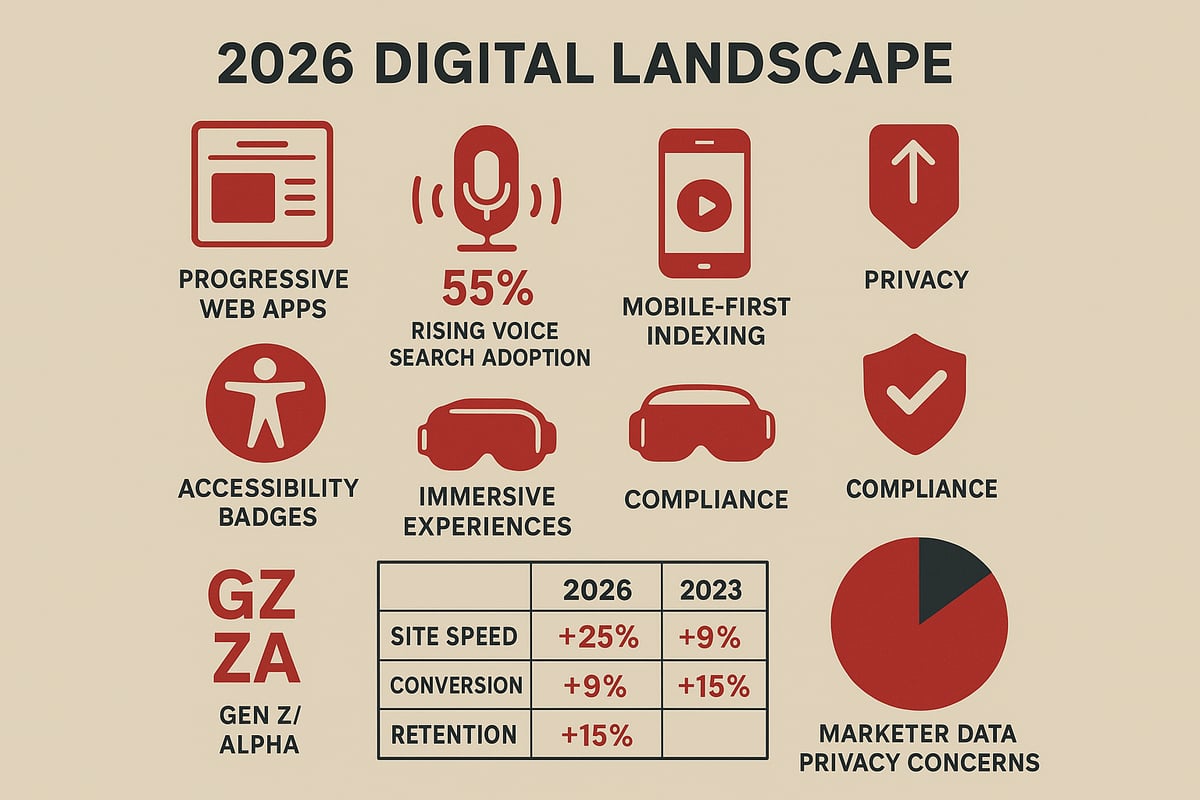
In 2026, web and marketing leaders are embracing a new generation of technology. Progressive Web Apps (PWAs) are revolutionizing user engagement by blending the speed of native apps with the reach of the web. Brands like Starbucks and Pinterest have set the standard, and more companies are following suit. For a deeper look at how PWAs are transforming engagement, see Progressive Web Apps enhancing user engagement.
Voice search is becoming mainstream, with 55% of households projected to use smart speakers. Conversational interfaces are now expected, not optional. Mobile-first indexing is the default for all search engines, making responsive design essential for web and marketing success.
Accessibility is another non-negotiable. Compliance with ADA and WCAG 3.0 ensures everyone can interact with your site. Leading brands leverage AR and VR to deliver immersive experiences, keeping web and marketing efforts innovative and inclusive.
Shifting Consumer Behaviors
Consumer expectations in web and marketing have never been higher. Privacy-first, personalized experiences are now the norm. Gen Z and Generation Alpha are shaping digital consumption, demanding authenticity and relevance.
Instant, frictionless customer journeys are essential. E-commerce brands excel by offering 1-click checkout and tailored recommendations. These trends highlight the need for web and marketing strategies that prioritize speed and simplicity.
Consider how quick, tailored experiences build loyalty. Personalization engines and dynamic content are no longer advanced features—they are basic requirements for 2026.
Data Privacy and Compliance
The regulatory environment for web and marketing is tightening globally. Updates to GDPR, new US state laws, and APAC privacy acts are changing how businesses collect and use data.
Third-party cookies are disappearing, pushing brands to adopt zero-party data strategies. This means collecting data users willingly provide, building trust through transparency. In fact, 68% of marketers now cite data privacy as their top concern for digital campaigns.
Web and marketing teams must stay agile, adapting to these shifts while maintaining compliance and safeguarding customer trust.
Competitive Benchmarking for 2026
Successful web and marketing initiatives rely on measurable performance. Key metrics include site speed, conversion rates, omnichannel reach, and customer retention.
| Metric | 2026 Benchmark | Impact |
|---|---|---|
| Site Speed | Under 2 seconds load time | Bounce rate rises 32% per extra sec |
| Conversion Rate | 3-7% (industry dependent) | Directly affects ROI |
| Omnichannel Reach | 5+ integrated platforms | Increases customer engagement |
| Customer Retention | 70%+ | Drives sustainable growth |
Top-performing sites load in under two seconds. Every additional second increases bounce rates by 32%. Omnichannel strategies and high retention rates are now mission-critical for web and marketing teams aiming to outperform competitors.
Building a High-Performance Website for 2026
A high-performance website is the foundation of any effective web and marketing strategy for 2026. As digital competition intensifies, businesses must build platforms that do more than look great—they must deliver seamless, secure, and engaging experiences at scale. Let us explore the core elements that will define market leaders in this new era.
Essential Elements of Future-Proof Web Design
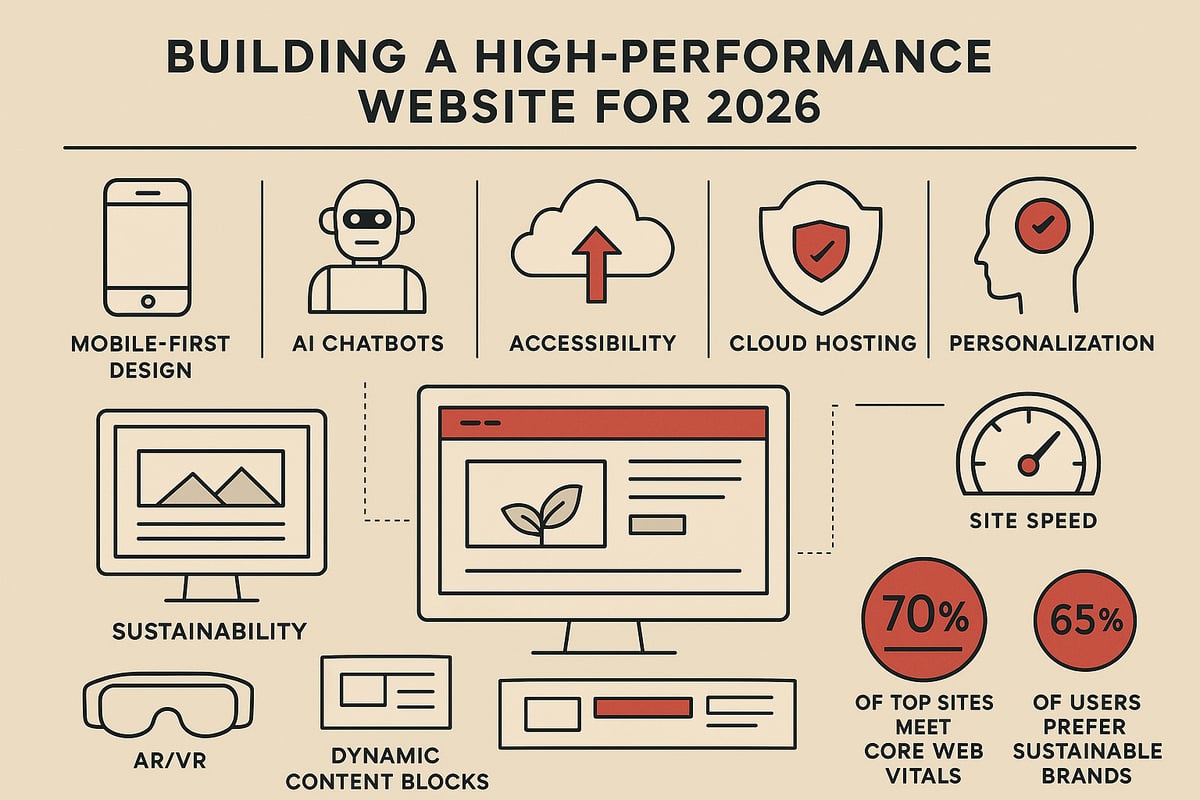
To succeed with web and marketing in 2026, your website must be mobile-first, responsive, and accessible to all users. Progressive Web Apps (PWAs) are setting new standards, making sites feel like native apps while improving engagement and retention. AI-powered chatbots and virtual assistants are now critical for 24/7 support and frictionless customer journeys.
Accessibility is not just a legal requirement—it is a competitive advantage. Adhering to ADA and WCAG 3.0 guidelines ensures your content reaches everyone. Leading retailers are boosting conversions with AI-driven product finders, creating personalized, interactive experiences that drive results.
For businesses seeking a comprehensive solution, web design and marketing services offer integrated design, SEO, and branding to maximize your digital impact. Investing in these essentials will future-proof your web and marketing efforts.
User Experience (UX) and User Interface (UI) Innovations
User experience is at the core of effective web and marketing. Micro-interactions and motion UI elements increase engagement, making sites more intuitive and enjoyable to navigate. Adaptive content delivery tailors information based on device, location, and user preferences, ensuring every visitor receives the most relevant experience.
Netflix exemplifies this approach with adaptive streaming and a personalized interface, setting the standard for user-centric design. By focusing on intuitive layouts and context-aware features, you empower users and enhance brand loyalty. This innovation is no longer optional for competitive web and marketing strategies.
Core Web Vitals and Technical SEO
In 2026, Google’s Core Web Vitals—LCP (Largest Contentful Paint), FID (First Input Delay), and CLS (Cumulative Layout Shift)—are essential benchmarks. Top-performing sites not only achieve fast load times but also deliver smooth interactivity and visual stability. Meeting these metrics is crucial for high search rankings and user satisfaction.
Here are key optimization tips:
- Compress images and use next-gen formats.
- Minimize JavaScript and CSS.
- Implement lazy loading for offscreen content.
Statistics show that 70% of top-ranked sites meet Core Web Vitals thresholds, making technical SEO a core pillar of web and marketing excellence.
Security, Reliability, and Scalability
Security and reliability are non-negotiable for high-performance web and marketing. Implementing HTTPS, SSL certificates, and advanced security protocols protects user data and builds trust. Cloud hosting and edge computing ensure your site is fast and available worldwide, supporting global audiences.
SaaS platforms now leverage multi-region hosting to achieve 99.99% uptime, minimizing downtime risk. Prioritizing security and scalability in your web and marketing approach not only protects your business but also enhances customer confidence.
Content Management and Personalization
A modern web and marketing strategy relies on flexible content management and dynamic personalization. Headless CMS platforms provide agility, enabling seamless omnichannel delivery and rapid content updates. Personalization engines use real-time data to serve tailored content, increasing engagement and conversions.
News sites, for example, deliver geo-targeted headlines that resonate with local audiences. By integrating dynamic content blocks and behavioral data, you create memorable experiences that set your web and marketing apart.
Sustainability and Green Hosting
Sustainability is now a key consideration for web and marketing leaders. Eco-friendly practices—such as using energy-efficient hosting, optimizing images, and writing clean code—reduce environmental impact and appeal to conscious consumers.
A Deloitte study found that 65% of users prefer brands with sustainable digital practices. Choosing green hosting and prioritizing digital efficiency not only supports the planet but also strengthens your brand’s position in the web and marketing landscape.
Data-Driven Marketing Strategies for Maximum ROI
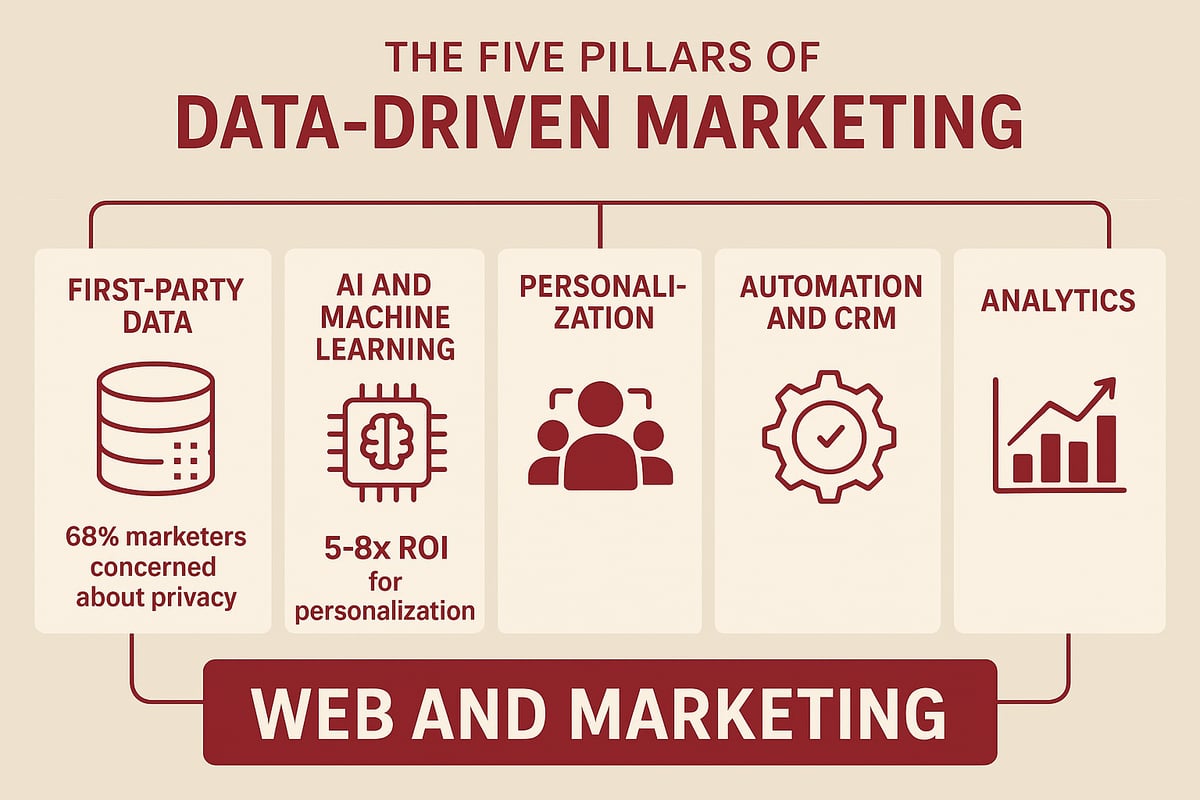
In 2026, data-driven strategies are the backbone of successful web and marketing efforts. Businesses that harness actionable insights will outperform competitors, adapt quickly, and achieve measurable results. A strategic approach to data collection, personalization, automation, and analytics transforms how brands engage audiences and maximize ROI.
Leveraging First-Party and Zero-Party Data
The decline of third-party cookies is reshaping web and marketing approaches. Brands now prioritize first-party and zero-party data, collected directly from consumers through website interactions, surveys, and loyalty programs.
This shift builds trust and transparency. Clearly communicated data policies and incentives, such as exclusive offers, encourage customers to share information willingly. By owning their data, businesses can personalize experiences while staying compliant with evolving privacy regulations.
A robust first-party data strategy enables tailored messaging and more effective targeting. For example, e-commerce brands use purchase history and preferences to recommend products, increasing conversion rates and fostering long-term loyalty. Adopting these methods ensures your web and marketing initiatives remain future-proof.
AI and Machine Learning in Marketing
AI and machine learning are revolutionizing web and marketing by transforming how brands analyze data and engage customers. Predictive analytics allows marketers to segment audiences, forecast trends, and identify high-value prospects with precision.
Automated content generation tools streamline campaign creation, enabling faster adaptation to market changes. AI-powered recommendation engines and chatbots enhance customer service, delivering instant support and personalized suggestions.
For instance, e-commerce companies use AI to analyze shopping behavior, reducing cart abandonment by 20%. Integrating these technologies into web and marketing operations provides a competitive edge, driving efficiency and improving outcomes.
Advanced Personalization and Customer Journey Mapping
Personalization is the linchpin of high-impact web and marketing campaigns. By leveraging data, brands deliver relevant content, offers, and experiences across every touchpoint. Hyper-personalized emails, dynamic web content, and tailored ads boost engagement and loyalty.
Customer journey mapping tools visualize how users interact with your brand, revealing opportunities for optimization. Multi-channel attribution models help marketers understand which efforts drive conversions.
Research shows personalized initiatives deliver 5-8x ROI over generic messaging. To explore why these strategies are crucial, read Why personalized marketing matters. Embedding personalization into web and marketing ensures customers feel valued and understood.
Marketing Automation and CRM Integration
Unified marketing automation and CRM platforms are essential for scaling web and marketing programs. These systems automate repetitive tasks, nurture leads, and provide real-time insights into customer behavior.
Key benefits include:
- Lead scoring and segmentation for targeted outreach
- Automated email drip campaigns and follow-ups
- Seamless integration with sales and support teams
By consolidating data, businesses gain a 360-degree view of the customer journey. This holistic approach shortens sales cycles and increases retention, making web and marketing more efficient and impactful.
Attribution, Analytics, and Performance Measurement
Continuous performance measurement is vital for optimizing web and marketing investments. Advanced analytics dashboards provide real-time visibility into key metrics such as customer lifetime value, engagement rates, and omnichannel conversions.
Multi-touch attribution models track the impact of various campaigns, revealing which channels and messages drive results. Retailers, for example, use real-time analytics to adjust campaigns on the fly, maximizing ROI.
Establishing clear KPIs and leveraging actionable insights enable businesses to refine strategies, allocate resources effectively, and sustain growth in an evolving digital landscape. Data-driven web and marketing ensures every decision is supported by measurable evidence.
Omnichannel and Integrated Marketing Approaches
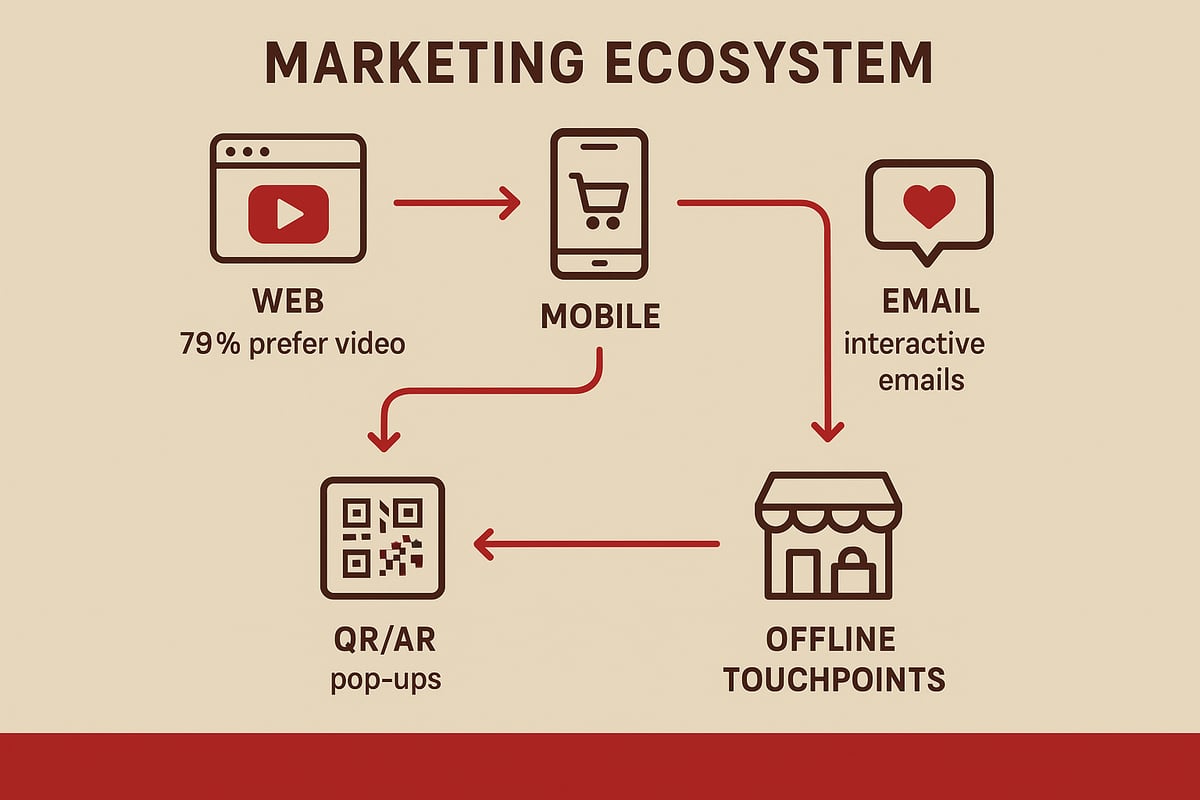
Succeeding in the evolving web and marketing space requires a holistic approach. Businesses must connect every digital and physical touchpoint to deliver seamless, memorable experiences. Omnichannel strategies unite branding, communication, and technology, ensuring customers feel recognized wherever they interact.
The Omnichannel Imperative
Omnichannel integration is now essential for any web and marketing strategy. Today’s consumers expect to start their journey on one channel and finish on another without friction. Brands that synchronize their web, mobile, social, and offline presence create trust and loyalty.
Consistent branding and messaging reinforce recognition, whether a customer browses online or visits a store. Retailers pioneering “buy online, pick up in store” (BOPIS) models illustrate how digital and physical channels can work in harmony. This approach not only increases convenience but also boosts conversion rates.
- Unified customer profiles drive personalization
- Centralized data enables targeted campaigns
- Cross-channel promotions maximize engagement
To thrive, businesses must design web and marketing experiences that feel cohesive, no matter where the interaction begins.
Social Media, Influencer, and Community Marketing
Social media is a cornerstone of web and marketing success. Emerging platforms like TikTok and Threads attract younger audiences, while niche communities foster deeper engagement. Brands are shifting focus from macro-influencers to micro-influencers for authentic regional connections.
User-generated content and community-driven campaigns amplify trust. For example, local influencers can elevate regional brand awareness cost-effectively. To master these tactics, explore effective social media marketing strategies that align with omnichannel goals.
- Identify relevant platforms for your audience
- Collaborate with micro-influencers for authenticity
- Encourage user-generated content to build trust
A strong web and marketing presence on social platforms ensures customers remain engaged throughout their journey.
Video, Live Streaming, and Interactive Content
Video content is transforming web and marketing engagement. Shoppable video and live commerce allow customers to interact with products in real time. Interactive webinars and virtual events bridge the gap between B2B and B2C audiences, delivering immersive brand experiences.
A recent study reveals that 79% of consumers prefer video to learn about products. Formats such as product demos, tutorials, and live Q&A sessions foster trust and drive conversions. Businesses leveraging these tools strengthen their omnichannel presence.
- Shoppable videos streamline purchase decisions
- Live streaming creates urgency and excitement
- Interactive webinars offer direct value to participants
Incorporating video into web and marketing campaigns is vital for capturing attention and driving action.
Email and Messaging Platforms
Email remains a powerful web and marketing channel, especially when paired with AI-driven segmentation. Brands now integrate email with SMS, WhatsApp, and in-app messaging to reach customers wherever they are. Hyper-personalized campaigns increase open and click-through rates.
Interactive AMP emails allow users to shop, book, or interact directly from their inbox. Combining multiple messaging platforms ensures messages are timely and relevant, enhancing customer satisfaction and retention.
- Segment lists with AI for targeted outreach
- Sync SMS and in-app messages for unified campaigns
- Use interactive elements to boost engagement
A coordinated approach across email and messaging platforms elevates the entire web and marketing ecosystem.
Offline and Experiential Integration
Blending digital and physical experiences is a cornerstone of modern web and marketing. Pop-up events, QR code activations, and augmented reality (AR) experiences create memorable touchpoints. Customers value brands that offer both convenience and excitement through these integrations.
For example, brands use AR to let shoppers virtually try products or unlock exclusive deals at events via QR codes. These strategies deepen engagement and foster brand loyalty, making digital interactions feel tangible.
- Host pop-ups with digital enhancements
- Leverage AR for immersive product experiences
- Use QR codes to bridge online and offline journeys
The future of web and marketing lies in unifying online innovation with real-world connection.
Measurement and Optimization Across Channels
Continuous measurement is critical for omnichannel web and marketing. Brands utilize advanced attribution models and unified reporting dashboards to analyze performance. By tracking customer journeys across all channels, marketers identify what works and adjust campaigns in real time.
Agile testing and optimization ensure resources are allocated to the highest-performing strategies. Businesses that adopt a data-driven approach to omnichannel marketing consistently outperform competitors.
To stay ahead, organizations must commit to ongoing analysis and agile improvements, ensuring their web and marketing efforts remain effective and future-ready.
Harnessing AI, Automation, and Emerging Technologies
Artificial intelligence, automation, and emerging technologies are redefining web and marketing strategies for 2026. Businesses that adopt these advancements are gaining a competitive edge, scaling their efforts, and delivering highly personalized experiences at every touchpoint.
AI-Powered Content Creation and Curation
AI-driven tools are transforming content production for web and marketing. Businesses now use natural language generation to automate blog writing, product descriptions, and email campaigns, saving time and maintaining quality. Automated video editing and content repurposing tools help teams scale output while keeping messaging consistent.
Publishers rely on AI to curate relevant content, recommend articles, and personalize user experiences. This shift empowers organizations to deliver targeted information based on browsing behavior and preferences. For a deeper dive into how generative AI is shaping digital strategies, see AI in digital marketing strategies.
Predictive Analytics and Customer Insights
Predictive analytics is revolutionizing web and marketing by enabling businesses to anticipate customer needs and market trends. Machine learning models analyze patterns in user data to forecast demand, identify potential churn, and inform campaign timing.
Retailers, for example, use predictive insights to optimize inventory and personalize offers in real time. This approach not only increases efficiency but also elevates the customer journey. With the right predictive tools, organizations can proactively address challenges and discover new growth opportunities for their web and marketing initiatives.
Marketing Automation at Scale
Marketing automation platforms are now indispensable in web and marketing operations. They allow businesses to automate ad bidding, schedule social media posts, and nurture leads with minimal manual intervention. Chatbots and conversational AI provide instant, 24/7 support, improving response times and customer satisfaction.
According to industry research, businesses leveraging automation see a 14.5 percent increase in sales productivity. Discover more about recent AI-driven marketing automation trends and how they are streamlining processes in web and marketing.
Voice, Visual, and Augmented Reality Search
Voice search and visual discovery tools are reshaping how users interact with web and marketing platforms. Optimizing for voice assistants and visual search engines is becoming essential, especially as consumers seek hands-free, intuitive experiences.
Augmented reality (AR) is also gaining traction, with brands offering virtual try-ons and immersive product demos. Beauty and fashion retailers are among those leading the charge, using AR to bridge the gap between digital and physical shopping in web and marketing strategies.
Blockchain and Web3 Marketing
Blockchain and Web3 are introducing new levels of transparency and security to web and marketing ecosystems. Decentralized platforms empower users with greater control over their data and enable brands to build trust through verifiable transactions.
NFT-based loyalty programs and blockchain-enabled communities are emerging, offering exclusive rewards and fostering deeper engagement. As these technologies mature, forward-thinking businesses will find innovative ways to integrate them into their web and marketing efforts.
Future-Proofing Your Web and Marketing Strategy
The pace of digital change demands that organizations make future-proofing a core part of their web and marketing strategy. Success in 2026 requires agility, risk management, and a commitment to sustainability. Let’s explore how to build resilience and long-term growth.
Agility and Continuous Learning
Staying ahead in web and marketing means cultivating an agile mindset across your organization. Encourage experimentation by launching pilot projects and testing new platforms. Upskill your teams regularly, focusing on emerging trends like AI, automation, and omnichannel engagement.
Invest in ongoing digital training programs. Companies that foster a culture of learning respond faster to market shifts and technological advancements. This agility positions your web and marketing initiatives for long-term relevance and success.
Scenario Planning and Risk Management
Uncertainty is a constant in the web and marketing space. Scenario planning equips businesses to face regulatory updates, tech disruptions, and shifting consumer behaviors. Build flexible tech stacks that can adapt to new compliance requirements or platform changes.
Develop contingency plans for unexpected events. This proactive approach ensures business continuity and protects your web and marketing investments from unforeseen challenges.
Sustainability and Corporate Social Responsibility (CSR)
Modern consumers increasingly favor brands that prioritize environmental and ethical responsibility. Integrate green practices into your web and marketing efforts, such as using energy-efficient hosting, optimizing web assets, and minimizing digital waste.
Make sustainability and CSR part of your core messaging. Brands that champion social causes and eco-friendly initiatives gain loyalty and stand out in a crowded marketplace. Consider sharing your progress through annual sustainability reports or interactive dashboards.
Building Resilient Digital Infrastructures
A robust digital infrastructure is the backbone of effective web and marketing strategies. Adopt cloud-native architectures for scalability and flexibility. Implement disaster recovery planning to safeguard critical data and maintain uptime during disruptions.
Ensure your infrastructure supports high performance, security, and reliability. This resilience not only enhances user experiences but also reinforces trust in your web and marketing presence.
Monitoring Trends and Competitive Intelligence
Continuous trend monitoring is vital for staying ahead in web and marketing. Leverage AI-powered tools to analyze market shifts, competitor activities, and emerging technologies. Real-time insights help you pivot strategies quickly and seize new opportunities.
For a deeper dive into how artificial intelligence is shaping the future, explore this resource on the Future of AI in marketing. Staying informed enables your team to anticipate changes and outperform competitors.
Setting KPIs and Measuring Long-Term Success
Defining clear objectives is essential for any web and marketing strategy. Identify key performance indicators (KPIs) that align with your business goals, such as customer lifetime value, engagement rate, or omnichannel conversions.
Use analytics dashboards to track progress and refine tactics over time. Regular measurement ensures your web and marketing initiatives remain effective, adaptable, and focused on measurable growth.
As you look ahead to 2026, staying ahead in the digital landscape means more than just keeping up with trends—it’s about building real, lasting connections with your audience through smart strategy and creative execution. At Red Van Creative, we’ve helped businesses thrive by blending web innovation, data-driven marketing, and authentic branding across industries just like yours. If you’re curious how these strategies come to life in the real world, take a moment to See Our Work / View Our Portfolio. You’ll find inspiration and proof of what’s possible for your brand’s future.