
Marketing campaigns represent the strategic backbone of business growth in 2026, serving as coordinated efforts to promote specific products, services, or brand messages across multiple channels. Whether you’re a startup looking to establish market presence or an established company launching new offerings, understanding the fundamentals of campaign development and execution can make the difference between mediocre results and exceptional returns on investment. The landscape has evolved dramatically, with digital channels now offering unprecedented targeting capabilities and measurement precision that allow businesses to refine their approach in real-time.
Understanding Marketing Campaign Fundamentals
Marketing campaigns function as time-bound initiatives designed to achieve specific business objectives through coordinated messaging and tactical execution. At their core, successful marketing campaigns require three essential elements: clear goals, well-defined target audiences, and compelling creative assets that resonate with those audiences.
The foundation begins with strategic planning. Before launching any campaign, businesses must identify what success looks like. Revenue targets, lead generation goals, brand awareness metrics, or customer retention rates all serve as valid objectives that guide subsequent decisions. A digital business strategy helps align campaign goals with broader organizational priorities.
Setting Measurable Campaign Objectives
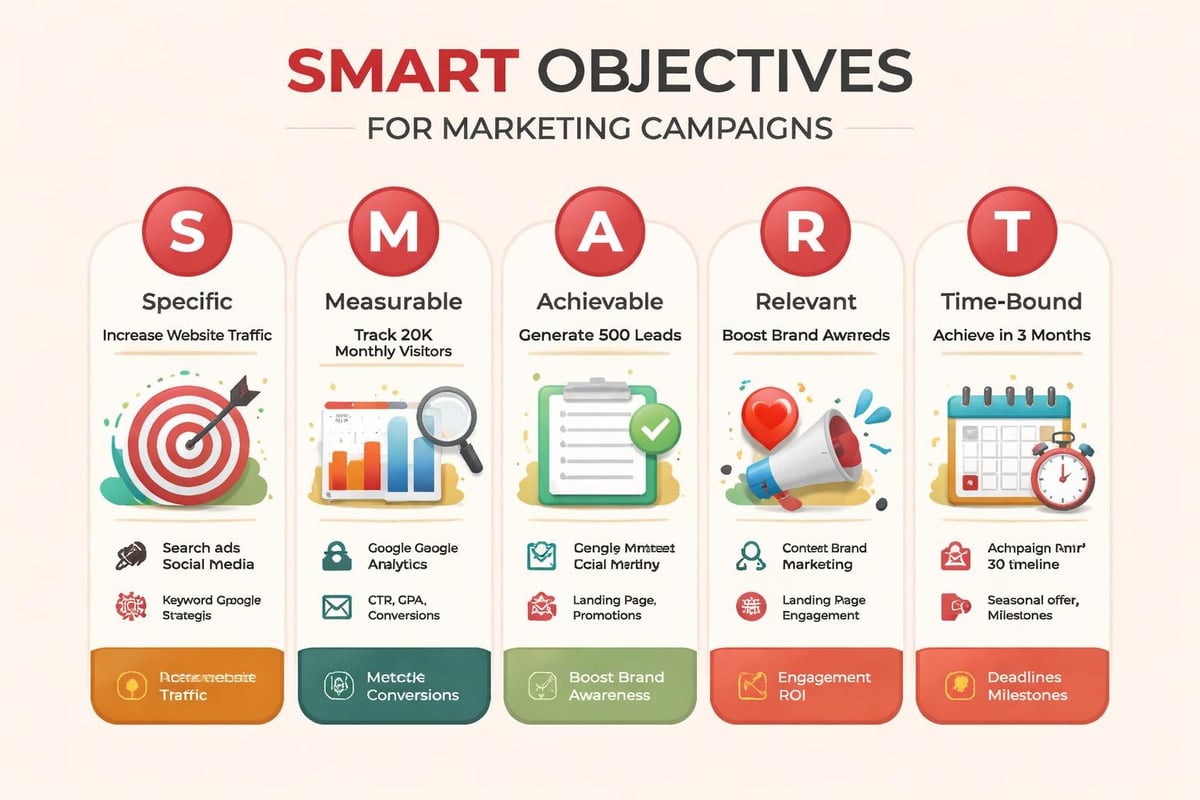
Effective campaign objectives follow the SMART framework:
- Specific targets that clearly define desired outcomes
- Measurable metrics that allow for tracking and optimization
- Achievable goals based on realistic resource allocation
- Relevant objectives that align with business priorities
- Time-bound deadlines that create urgency and accountability
Modern marketing campaigns demand precision in measurement. Rather than vague aspirations like “increase brand awareness,” successful campaigns in 2026 focus on quantifiable outcomes such as “generate 500 qualified leads within 60 days” or “achieve a 25% increase in website conversions from paid social channels.”
Research demonstrates that campaigns with clearly defined metrics outperform those without by significant margins. According to strategic planning best practices, cross-functional collaboration during the goal-setting phase ensures that marketing campaigns align with sales, product development, and customer service objectives.
Audience Research and Segmentation Strategies
Knowing your audience represents the single most critical factor in campaign success. Generic messaging that attempts to appeal to everyone typically resonates with no one. Instead, sophisticated marketing campaigns in 2026 leverage detailed audience segmentation to deliver personalized experiences at scale.
Audience research begins with data collection from multiple sources. Customer relationship management systems, website analytics, social media insights, and third-party demographic data all contribute valuable information about who your customers are and how they behave. For businesses serving diverse industries like oil and gas, healthcare, construction, and retail, understanding the unique characteristics of each sector becomes essential for digital marketing campaigns that convert.
Creating Detailed Buyer Personas
Buyer personas transform raw data into actionable profiles that guide creative development and channel selection. These semi-fictional representations of ideal customers should include:
- Demographic information such as age, location, income, and education
- Professional details including job title, industry, and decision-making authority
- Behavioral patterns covering content consumption habits and purchase triggers
- Pain points that your products or services address
- Preferred communication channels and content formats
The depth of persona development directly impacts campaign effectiveness. Surface-level demographics provide limited value compared to psychographic insights that reveal motivations, fears, and aspirations. A construction company owner in Houston faces different challenges than a healthcare administrator, requiring distinct messaging approaches even when both might benefit from similar services.
Channel Selection and Integration
Marketing campaigns today span an ever-expanding array of channels, from traditional media like print and broadcast to digital platforms including search engines, social media, email, and programmatic display advertising. The key lies not in being present everywhere but in focusing resources on channels where your target audience actively engages.
| Channel Type | Best For | Typical ROI Timeline | Measurement Complexity |
|---|---|---|---|
| Search (PPC) | High-intent leads | Immediate | Low |
| Social Media | Brand awareness, engagement | 3-6 months | Medium |
| Email Marketing | Customer retention, nurturing | Immediate | Low |
| Content Marketing | Thought leadership, SEO | 6-12 months | High |
| Display Advertising | Retargeting, reach | 1-3 months | Medium |
| Video Marketing | Product demos, storytelling | 3-6 months | Medium |
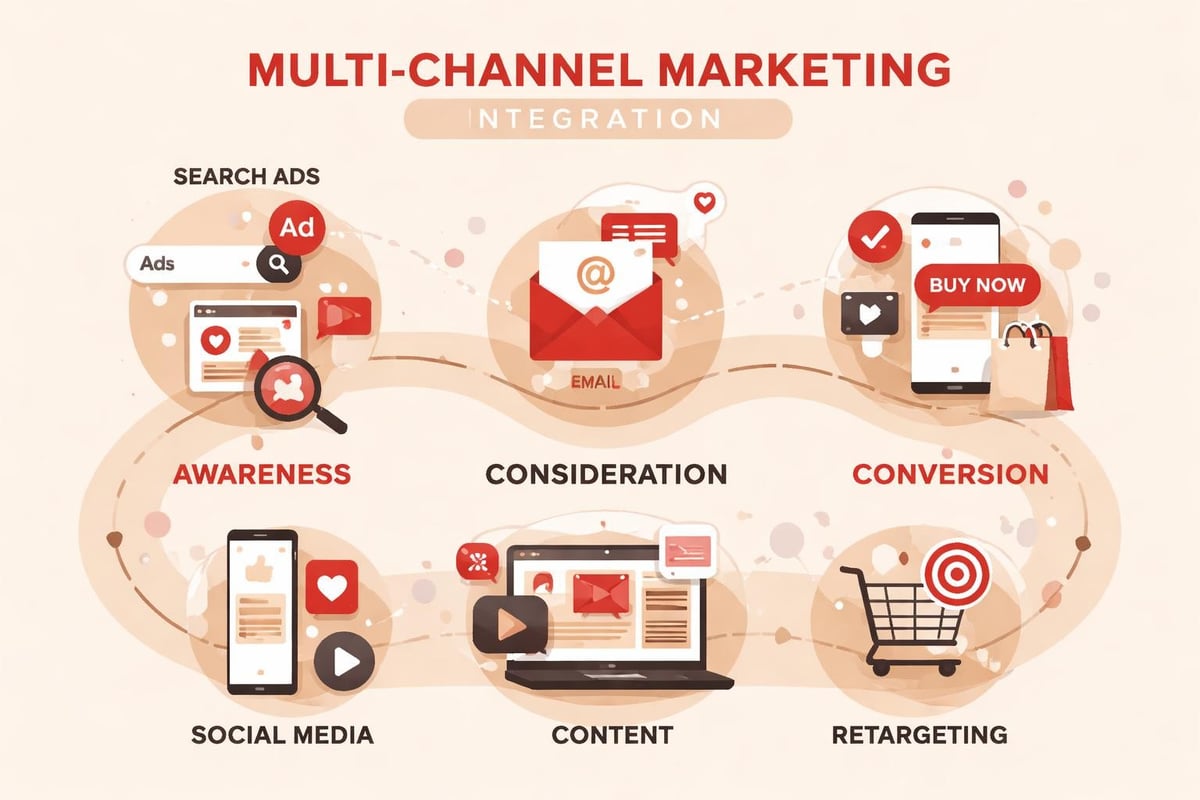
Channel integration amplifies campaign effectiveness through coordinated messaging across multiple touchpoints. A prospective customer might first encounter your brand through a social media ad, research your offerings via organic search, receive targeted email communications, and ultimately convert through a retargeting campaign. Each touchpoint reinforces the overall message while serving a specific function in the customer journey.
PPC consultancy services can help businesses navigate the complexities of paid advertising channels, ensuring budget allocation aligns with campaign objectives. Similarly, social media marketing expertise helps brands maintain consistent messaging across platforms while adapting to each channel’s unique characteristics.
Creative Development That Resonates
Creative assets serve as the voice and face of marketing campaigns, translating strategy into tangible messages that capture attention and inspire action. In 2026, modern marketing tips emphasize the importance of short-form video content and authentic storytelling that builds genuine connections with audiences.
The creative development process begins with a clear understanding of the campaign’s core message. What single idea should audiences remember after encountering your campaign? This central concept informs all creative decisions, from visual design to copywriting to format selection.
Visual Identity and Brand Consistency
Strong creative campaigns maintain these elements:
- Consistent color palettes that reinforce brand recognition
- Typography choices that reflect brand personality
- Imagery that resonates with target audience values
- Messaging hierarchy that guides attention to key information
- Format variations optimized for different platforms
Brand consistency across marketing campaigns builds recognition and trust over time. Whether audiences encounter your message on Instagram, in their inbox, or through a search ad, immediate visual recognition reinforces credibility. Online branding services ensure that campaigns maintain cohesive identity while allowing creative flexibility for different channels and audiences.
Unconventional approaches sometimes deliver outsized results. Guerrilla marketing tactics demonstrate how creative thinking can generate significant attention with limited budgets. Similarly, meme marketing strategies show how brands can tap into cultural moments to increase relevance and shareability.
Campaign Execution and Project Management
Flawless execution separates successful marketing campaigns from those that fail to deliver results despite solid strategy and creative development. The operational aspects, while less glamorous than creative work, determine whether campaigns launch on time, on budget, and with all elements functioning properly.
Project management frameworks keep complex campaigns on track. Multiple stakeholders, including creative teams, media buyers, developers, and analysts, must coordinate efforts around shared timelines. Campaign calendars establish clear milestones for asset creation, review cycles, platform setup, and launch dates.
Quality Assurance Before Launch
Pre-launch testing prevents costly errors that damage campaign performance and brand reputation. Comprehensive quality assurance includes:
- Technical verification of tracking codes, conversion pixels, and analytics integration
- Creative review across devices, browsers, and platforms to ensure proper display
- Link testing to confirm all CTAs direct to correct landing pages
- Copy proofreading to eliminate typos, factual errors, and broken messaging
- Budget confirmation to ensure spending limits align with approved allocations
The best practices outlined by industry leaders emphasize the importance of audience segmentation and creative asset management throughout the execution phase. Proper organization of campaign components enables rapid optimization based on early performance data.
Performance Measurement and Optimization
Marketing campaigns generate vast amounts of data, but data without analysis provides limited value. Sophisticated measurement frameworks transform raw numbers into actionable insights that inform both immediate optimizations and long-term strategic decisions.
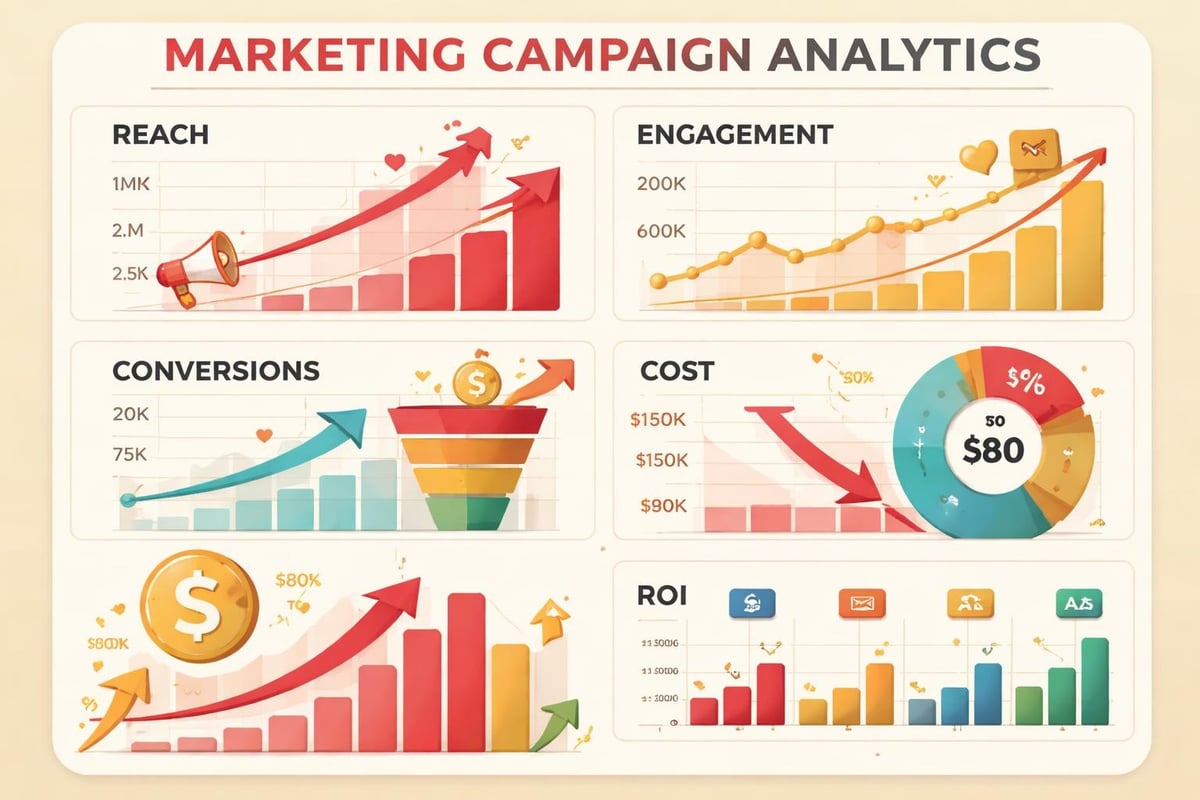
Key performance indicators vary based on campaign objectives, but common metrics include:
- Reach metrics measuring how many people see campaign messages
- Engagement metrics tracking interactions like clicks, shares, and comments
- Conversion metrics quantifying desired actions such as purchases or form submissions
- Cost metrics evaluating efficiency through cost per click, cost per acquisition, and return on ad spend
- Attribution metrics identifying which touchpoints contribute to conversions
Real-time monitoring enables rapid response to performance trends. Underperforming creative assets can be paused or replaced, budget allocations can shift toward high-performing channels, and targeting parameters can be refined based on audience response patterns. This agile approach maximizes campaign effectiveness throughout the flight period rather than waiting until completion to assess results.
A/B Testing for Continuous Improvement
Testing represents the foundation of data-driven marketing campaigns. Rather than relying on assumptions about what resonates with audiences, systematic testing reveals actual preferences and behaviors.
Common A/B testing opportunities include:
- Headline variations that emphasize different value propositions
- Call-to-action button text, color, and placement
- Email subject lines and preview text
- Landing page layouts and form field requirements
- Ad creative formats, imagery, and messaging angles
- Audience segment targeting parameters
Campaign case studies from leading brands demonstrate how iterative testing compounds improvements over time. Small incremental gains from individual tests combine to produce substantial performance increases across complete campaigns.
Advanced marketers employ sophisticated techniques like Bayesian Marketing Mix Modeling to assess campaign effectiveness across multiple variables simultaneously. These statistical approaches help attribute revenue impact more accurately than traditional last-click attribution models.
Email Campaign Best Practices
Email remains one of the highest-ROI channels for marketing campaigns in 2026, offering direct access to engaged audiences at relatively low cost. However, inbox competition continues to intensify, requiring strategic approaches to cut through noise and drive meaningful engagement.
Segmentation drives email campaign success. Generic blast emails to entire databases underperform compared to targeted messages based on subscriber characteristics, behaviors, and lifecycle stages. Welcome series for new subscribers, re-engagement campaigns for inactive contacts, and personalized product recommendations based on purchase history all leverage segmentation to improve relevance.
Email campaign improvement strategies emphasize storytelling and engaging content over promotional messaging. Audiences respond more favorably to emails that provide value through education, entertainment, or utility rather than constant sales pitches.
| Email Type | Average Open Rate | Average CTR | Best Send Time | Optimal Frequency |
|---|---|---|---|---|
| Welcome Series | 45-55% | 8-12% | Immediately | 3-5 emails over 2 weeks |
| Newsletter | 18-25% | 2-4% | Tuesday-Thursday 10am | Weekly or bi-weekly |
| Promotional | 15-22% | 2-3% | Tuesday-Friday 10am | Monthly max |
| Transactional | 60-75% | 15-25% | Immediate | As needed |
| Re-engagement | 10-15% | 1-2% | Weekend mornings | Quarterly |
Deliverability fundamentals ensure that carefully crafted emails actually reach recipient inboxes. List hygiene practices that remove inactive addresses, authentication protocols like SPF and DKIM, and engagement-focused content strategies all contribute to strong sender reputation and inbox placement.
Budget Allocation and Resource Planning
Financial planning determines what marketing campaigns can realistically accomplish within available resources. Strategic budget allocation balances competing priorities while ensuring sufficient investment in high-impact activities.
Zero-based budgeting approaches start from scratch each planning cycle rather than incrementally adjusting previous allocations. This methodology forces evaluation of every expense against current objectives and market conditions. While historical performance provides valuable context, market dynamics shift rapidly enough that past success doesn’t guarantee future returns.
Resource allocation considerations include:
- Media spending across paid channels based on projected reach and conversion costs
- Creative development resources for assets, content, and design work
- Technology costs for marketing automation, analytics, and campaign management platforms
- Personnel investments in strategy, execution, and optimization expertise
- Testing budgets reserved for experimentation with new channels and approaches
Local marketing agencies with deep market knowledge often deliver superior returns compared to national firms lacking regional insights. Understanding local audience preferences, competitive dynamics, and community connections enables more efficient spending and authentic messaging that resonates with Houston-area businesses and consumers.
Long-Term Campaign Strategy Development
Individual marketing campaigns contribute to broader strategic narratives that unfold over months or years. Campaign sequencing builds momentum through coordinated initiatives that advance audiences through awareness, consideration, and decision stages.
Annual planning establishes thematic frameworks that unite multiple campaigns under cohesive positioning. The Dove Campaign for Real Beauty exemplifies how sustained messaging around core brand values creates lasting impact beyond any single tactical execution. This multi-year initiative transformed brand perception through consistent reinforcement of authentic beauty standards across numerous campaigns and touchpoints.
Building Campaign Calendars
Strategic calendars map campaigns to business cycles, seasonal opportunities, and industry events. Retail brands align major campaigns with shopping holidays, B2B companies coordinate with trade show schedules, and service providers time campaigns to match decision-making patterns in their target markets.
Campaign retrospectives capture institutional knowledge that improves future performance. Systematic documentation of what worked, what didn’t, and why creates valuable reference material for teams planning subsequent initiatives. Marketing best practices emphasize learning from both successes and failures to build organizational capabilities over time.
Building Brand Authenticity Through Campaigns
Authenticity separates memorable marketing campaigns from forgettable advertising noise. Modern audiences possess sophisticated detection mechanisms for inauthentic messaging, quickly dismissing brands that appear disingenuous or purely transactional.
Campaign messaging that acknowledges real customer challenges, admits limitations, and demonstrates genuine commitment to solving problems builds trust that transcends individual purchase decisions. This approach requires deep understanding of audience values and willingness to align brand actions with stated principles.
Branding integration across marketing campaigns ensures consistent representation of organizational identity and values. Visual elements, tone of voice, and messaging themes should reinforce core brand attributes whether audiences encounter campaigns through social media, search advertising, or email communications.
For businesses serving multiple industries, authentic campaigns acknowledge sector-specific nuances rather than applying generic templates. Healthcare marketing campaigns address different concerns than construction industry campaigns, requiring tailored approaches that demonstrate relevant expertise and understanding.
Successful marketing campaigns in 2026 demand strategic planning, creative excellence, and relentless optimization to deliver measurable business results. Whether you’re launching new products, entering new markets, or strengthening customer relationships, the principles outlined above provide a framework for campaign success. Red Van Creative has been helping Houston businesses build authentic marketing campaigns that drive real results since 1999, combining strategic insight with creative execution across website design, SEO, branding, and targeted advertising to create genuine connections between brands and their customers.