

The digital marketing landscape is evolving at record speed, making online visibility more competitive than ever as we approach 2026.
Emerging technologies, rapidly shifting consumer behaviors, and the rise of new digital channels are redefining what it means to succeed in web digital marketing. Businesses can no longer rely on outdated tactics if they want to stand out.
To thrive, organizations need to adopt forward-thinking strategies and embrace innovation at every level. Staying ahead requires both agility and a strong grasp of the latest industry shifts.
This guide offers a comprehensive, actionable roadmap to mastering web digital marketing in 2026. You will find insights and strategies covering:
- The foundations of web digital marketing
- Emerging trends reshaping the industry
- Step-by-step strategic planning
- Integration of advanced technology and tools
- Measurement, optimization, and analytics
- Future-proofing your approach for ongoing success
Prepare to elevate your digital presence and outpace the competition in the evolving online world.
The Foundations of Web Digital Marketing in 2026
In 2026, the foundations of web digital marketing are more dynamic and interconnected than ever. As digital channels multiply and user expectations evolve, businesses must understand what sets web digital marketing apart and how to build strategies that last.
Defining Web Digital Marketing: 2026 Perspective
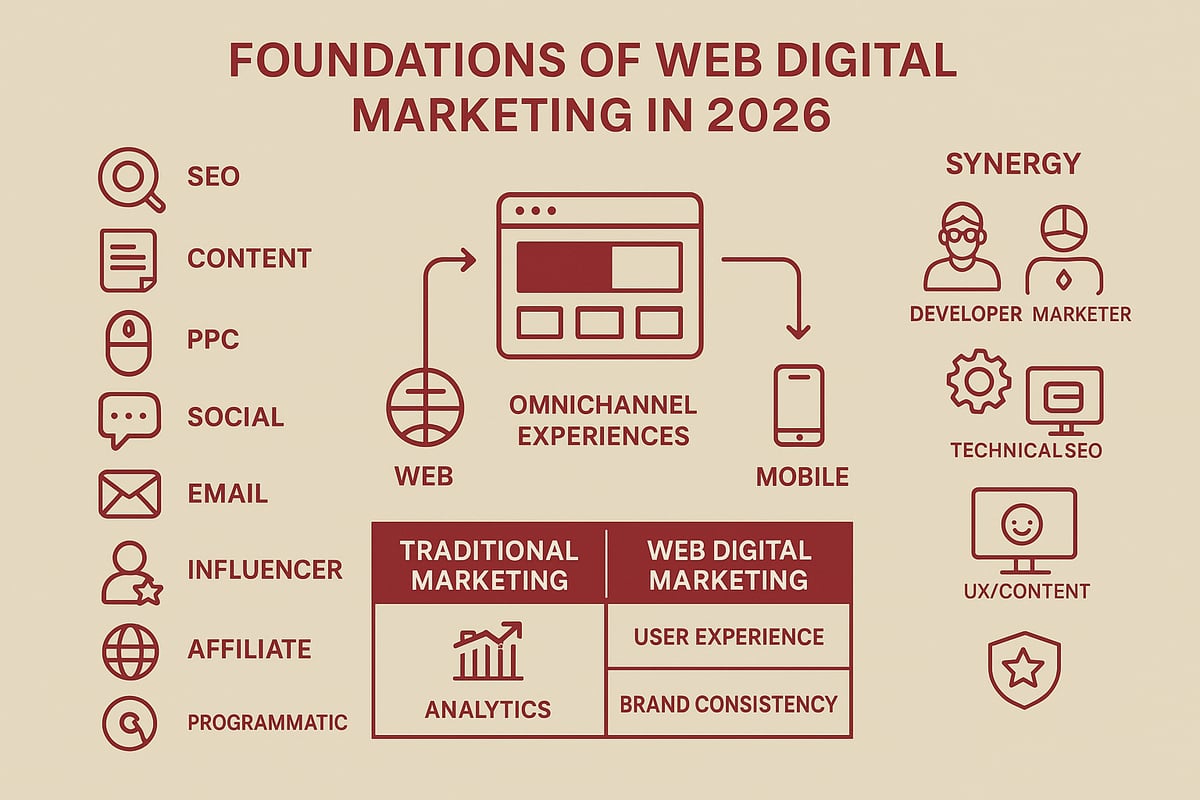
Web digital marketing in 2026 refers to the strategic process of promoting brands, products, or services through connected web-based channels to reach the right audiences at the ideal moments. Unlike traditional or hybrid approaches, web digital marketing unites the power of web, mobile, and omnichannel experiences to deliver seamless, targeted interactions.
This ecosystem includes essential types such as:
- Search Engine Optimization (SEO)
- Content Marketing
- Pay-Per-Click (PPC) Advertising
- Social Media Marketing
- Email Marketing
- Influencer Marketing
- Affiliate Marketing
- Programmatic Advertising
Competitors define it succinctly: "Web marketing is the process of marketing your business online to reach people who are most interested in your business" (WebFX). Today, brands blend these channels to create a unified digital presence.
For a deeper understanding of foundational concepts and strategies, explore this guide on digital marketing and online marketing.
Web digital marketing now sits at the heart of the digital ecosystem, bridging web and mobile for omnichannel journeys that keep consumers engaged wherever they are.
Core Pillars of a Successful Digital Marketing Strategy
The website remains the central hub of any effective web digital marketing strategy. Investing in user experience, site speed, mobile-first design, and accessibility is essential for capturing and retaining audience interest.
Critical pillars include:
- Brand consistency across all digital touchpoints, from web to social.
- Data-driven decision-making using analytics, attribution, and a focus on ROI.
- Customer-centricity through personalization and detailed journey mapping.
Consider a business that integrates web design, SEO, and content development. By doing so, it creates a holistic growth engine, ensuring every visitor encounters a consistent brand message and relevant content at every step.
Web digital marketing thrives when every strategic pillar works together, allowing teams to adapt rapidly to changes in technology and consumer behavior.
The Importance of Web Development and Digital Marketing Synergy
Seamless collaboration between web developers and marketers is now a non-negotiable for web digital marketing success. Technical SEO components like meta tags, sitemaps, structured data, and site speed require both technical skill and marketing insight.
Content and user experience must align to engage and convert visitors effectively. As Moonstone Interactive notes, "A well-built website gives users a seamless experience," which directly impacts visibility and conversion rates.
Businesses that blend web development and digital marketing disciplines consistently outperform those who treat them separately. This synergy ensures that every element, from code to content, is optimized for audience needs and business results.
Emerging Trends Shaping Web Digital Marketing in 2026
The pace of change in web digital marketing has never been faster. As we move into 2026, new technologies and user habits are quickly redefining what it takes to stand out online. Businesses must stay informed and agile to keep their strategies aligned with the latest industry shifts.
AI and Automation in Digital Marketing
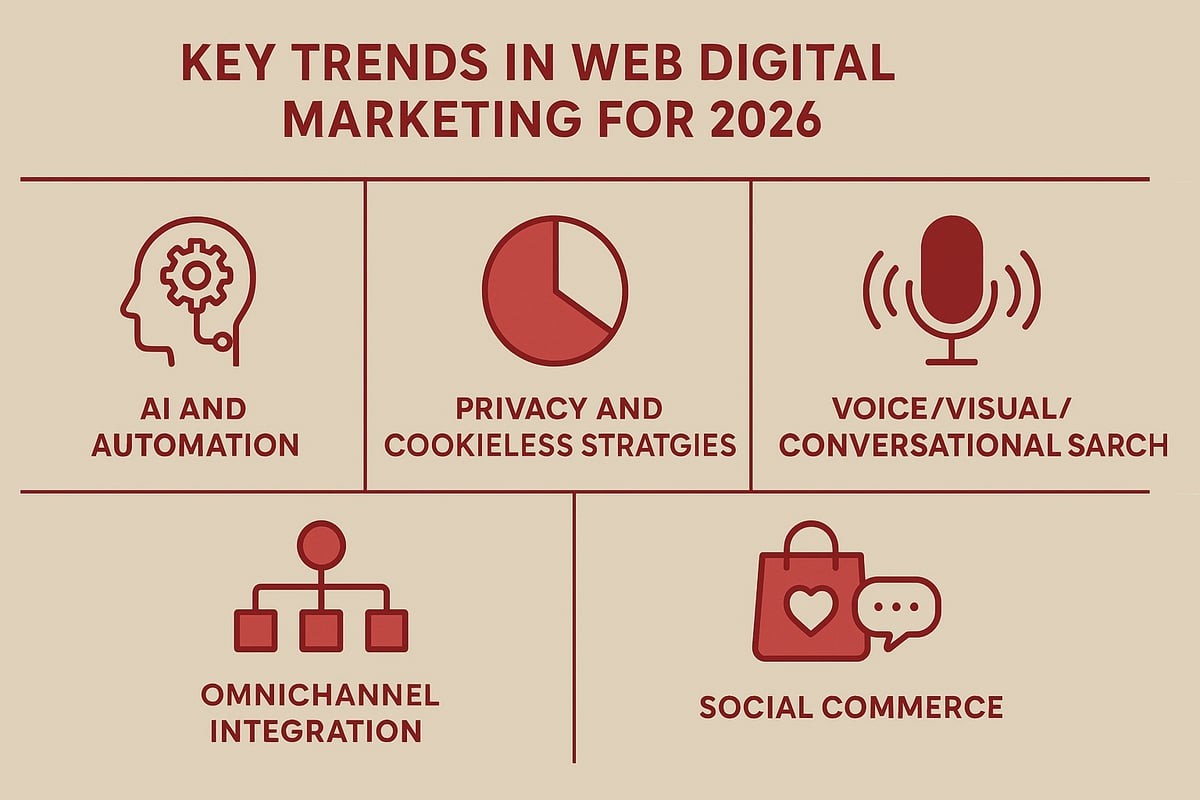
Artificial intelligence is now at the core of web digital marketing. Marketers are using AI-powered tools for advanced SEO, content generation, and personalized customer engagement. Automation platforms help manage campaigns, segment audiences, and deliver targeted messages at scale.
Generative AI assists with creating on-brand content, while predictive analytics enables smarter targeting. Chatbots and virtual assistants handle customer queries, improving response times and satisfaction. These innovations free up teams to focus on strategy and creative work.
AI's impact extends to performance measurement, allowing businesses to optimize campaigns in real time. By adopting these tools, brands can enhance efficiency and maintain a competitive edge in the web digital marketing landscape.
Privacy, Data, and the Cookieless Future
Data privacy is now a top priority in web digital marketing. Regulations like GDPR and CCPA, along with the end of third-party cookies, are forcing marketers to rethink data strategies. Collecting and using first-party data has become essential for building effective campaigns.
Brands are investing in transparent consent management systems to earn customer trust. Loyalty programs and interactive content help capture valuable information directly from users. These approaches not only comply with privacy laws but also foster long-term relationships.
The cookieless future challenges marketers to be more creative and ethical with data. Trust and transparency are becoming key differentiators in web digital marketing, offering brands a clear path to stand out.
Voice, Visual, and Conversational Search
Search behavior is evolving rapidly, impacting every aspect of web digital marketing. Voice search continues to grow, driven by smart speakers and mobile assistants. Businesses need to optimize for natural language queries to ensure their content is discoverable.
Visual search, powered by AI, is making image-based product discovery easier. Augmented reality (AR) and virtual reality (VR) are enhancing online experiences, allowing users to explore products in new ways. Conversational AI enables users to interact with brands using everyday language.
Adapting content strategies to these new search methods is crucial. Brands that embrace voice, visual, and conversational search will capture more attention and engagement within the web digital marketing ecosystem.
Omnichannel and Cross-Platform Integration
Consumers expect seamless experiences across all digital touchpoints. Omnichannel strategies in web digital marketing blend web, mobile, social, and even offline interactions to create cohesive customer journeys. Progressive web apps (PWAs) and headless CMS platforms help deliver content everywhere users are.
Integrating technology stacks allows marketers to track behavior and personalize messaging regardless of device or channel. Unified campaigns across search, social, and email boost reach and consistency. According to Top Digital Marketing Trends to Watch in 2026, predictive analytics and hyperlocal targeting are becoming standard, making cross-platform coordination more powerful.
The ability to connect data and experiences is a defining feature of successful web digital marketing strategies in 2026.
Social Commerce and Influencer Marketing Evolution
Social platforms have transformed into powerful commerce engines. In web digital marketing, brands are leveraging Instagram, TikTok, and Facebook Shops to enable in-platform shopping. This trend shortens the path from discovery to purchase.
Micro- and nano-influencers are gaining traction, offering authentic engagement and niche audience access. Brands are also encouraging user-generated content to build community and trust. These tactics drive both traffic and sales, making social commerce a must-have component.
Influencer partnerships are evolving, focusing on long-term collaboration and genuine storytelling. As social commerce continues to expand, it will play an even bigger role in web digital marketing success.
Step-by-Step Guide: Building a Winning Web Digital Marketing Strategy for 2026
Achieving sustainable growth in 2026 requires a precise, agile approach to web digital marketing. This step-by-step guide breaks down the essential stages every business needs to follow for a future-ready strategy. By following these steps, you can maximize your online presence, outpace competition, and drive measurable results.
Step 1: Set Clear Objectives and KPIs
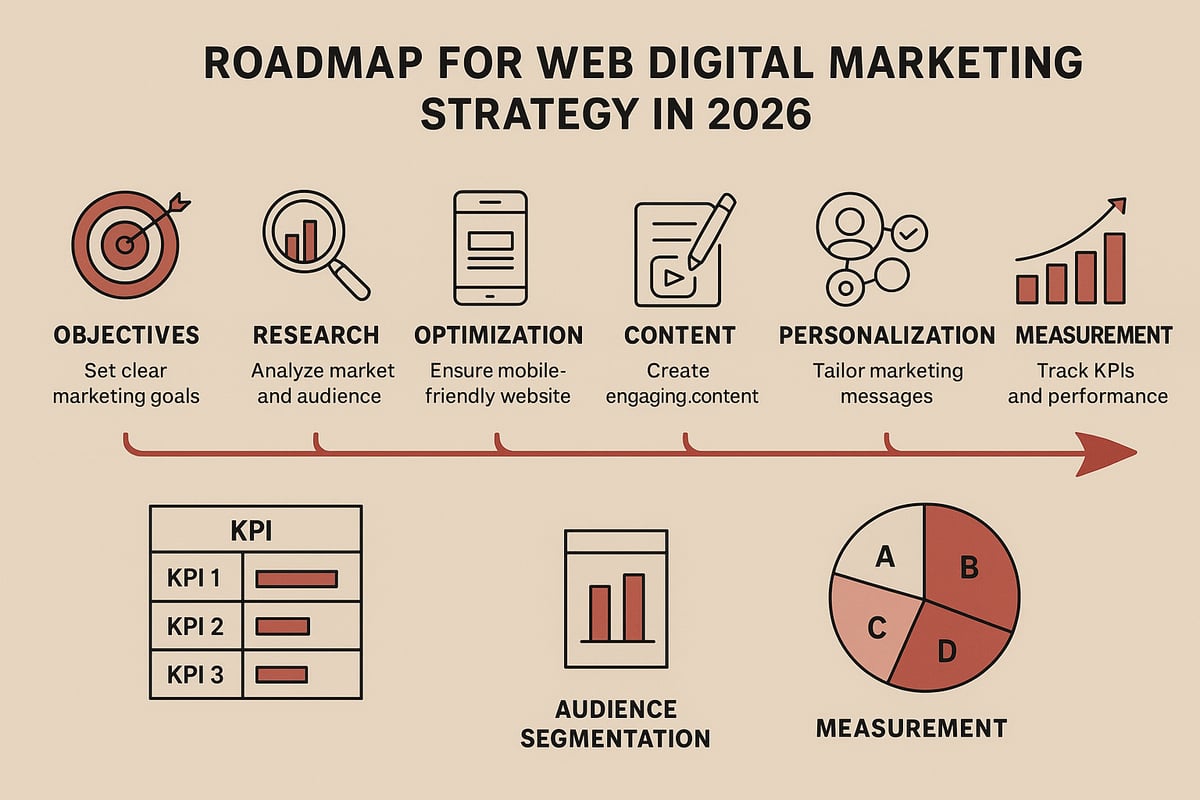
Start by aligning your web digital marketing goals with your overall business objectives. Define what success looks like. This might be increasing qualified leads, boosting sales, or expanding brand reach.
Use the SMART framework to set goals:
- Specific: Clearly define the outcome.
- Measurable: Quantify your targets.
- Achievable: Ensure goals are realistic.
- Relevant: Align with business priorities.
- Time-bound: Set deadlines.
Identify key performance indicators (KPIs) for each web digital marketing channel. For example, track organic search traffic, conversion rates, or cost per acquisition.
| Channel | Example KPI |
|---|---|
| SEO | Organic Traffic |
| PPC | Cost per Lead |
| Social Media | Engagement Rate |
| Open/Click Rate |
A clear focus on objectives and KPIs ensures every web digital marketing effort supports your growth.
Step 2: Deep Audience and Market Research
Understanding your target audience is foundational for web digital marketing success. Begin by building detailed buyer personas using first-party data, website analytics, and customer feedback.
Conduct market research to benchmark your business against competitors. Identify their strengths, weaknesses, and market positioning.
Key audience research steps:
- Segment users by demographics, interests, and behaviors.
- Map out customer pain points and motivations.
- Pinpoint preferred digital channels for engagement.
Use analytics tools to monitor user journeys on your website. This data-driven approach helps refine your web digital marketing campaigns and ensures you reach the right people with the right message.
Step 3: Optimize Your Website for 2026 Standards
Your website is the central hub of all web digital marketing activities. Prioritize a mobile-first, responsive design that delivers fast load times and seamless navigation. Accessibility is key, ensuring every visitor can interact with your content.
Focus on technical SEO by implementing structured data, XML sitemaps, and schema markup. Enhance site security with HTTPS and regularly monitor your core web vitals.
Key optimization checklist:
- Responsive mobile design
- Fast site speed
- Secure browsing (SSL)
- Accessible content (WCAG standards)
- Up-to-date technical SEO
For a deeper look at how website design and marketing integration can elevate your strategy, explore Web design and marketing services.
A fully optimized website supports all other web digital marketing initiatives, driving higher engagement and better results.
Step 4: Content Strategy and Creation
Content fuels web digital marketing. Develop a content calendar that aligns with user intent, trending topics, and seasonal opportunities.
Leverage AI-powered tools for content ideation, optimization, and personalization. Diversify your formats to engage a broader audience:
- Blog posts
- Videos
- Infographics
- Podcasts
- Interactive quizzes
Data-driven storytelling and dynamic content can significantly boost engagement. Regularly analyze performance to refine your messaging and format mix, ensuring your web digital marketing content stays relevant and impactful.
Step 5: Multi-Channel Campaign Execution
A winning web digital marketing strategy integrates multiple channels for maximum reach. Combine SEO, PPC, social media, email, and influencer marketing to create unified campaigns.
Allocate your budget based on past channel performance and current audience behavior. Use automation platforms to schedule posts, segment audiences, and nurture leads efficiently.
Consider this multi-channel execution workflow:
- Launch a PPC campaign targeting high-intent keywords.
- Support with organic SEO content.
- Engage audiences on social media with tailored posts.
- Send personalized email follow-ups to drive conversions.
This cohesive approach ensures your web digital marketing message is consistent and visible across every relevant platform.
Step 6: Personalization and Customer Experience
Personalization is now a core expectation in web digital marketing. Use personalization engines to deliver tailored content, product recommendations, and offers based on user behavior.
Map and optimize the customer journey across all digital touchpoints. Incorporate chatbots, live chat, and interactive site features to enhance engagement.
Key personalization tactics:
- Dynamic website content
- Automated product suggestions
- Personalized email campaigns
- Real-time chat support
A focus on customer experience ensures your web digital marketing efforts build loyalty and increase lifetime value.
Step 7: Measure, Analyze, and Iterate
Continuous improvement is essential for web digital marketing success. Set up robust analytics, including Google Analytics 4, heatmaps, and attribution models.
Regularly review campaign performance, user behavior, and conversion metrics. Use A/B testing to optimize landing pages, calls to action, and messaging.
Effective analysis allows you to:
- Identify what works and what needs refinement
- Allocate resources to high-performing channels
- Adapt quickly to market changes
By iterating on your web digital marketing strategy, you ensure ongoing growth and resilience in an evolving landscape.
Integrating Technology and Tools for Scalable Success
Staying ahead in web digital marketing requires more than innovative ideas. Businesses must harness the right technologies and tools to achieve scalable, measurable results. Integrating the right tech stack and development practices is key to staying agile, competitive, and ready for the future.
Essential Tech Stack for Modern Digital Marketing
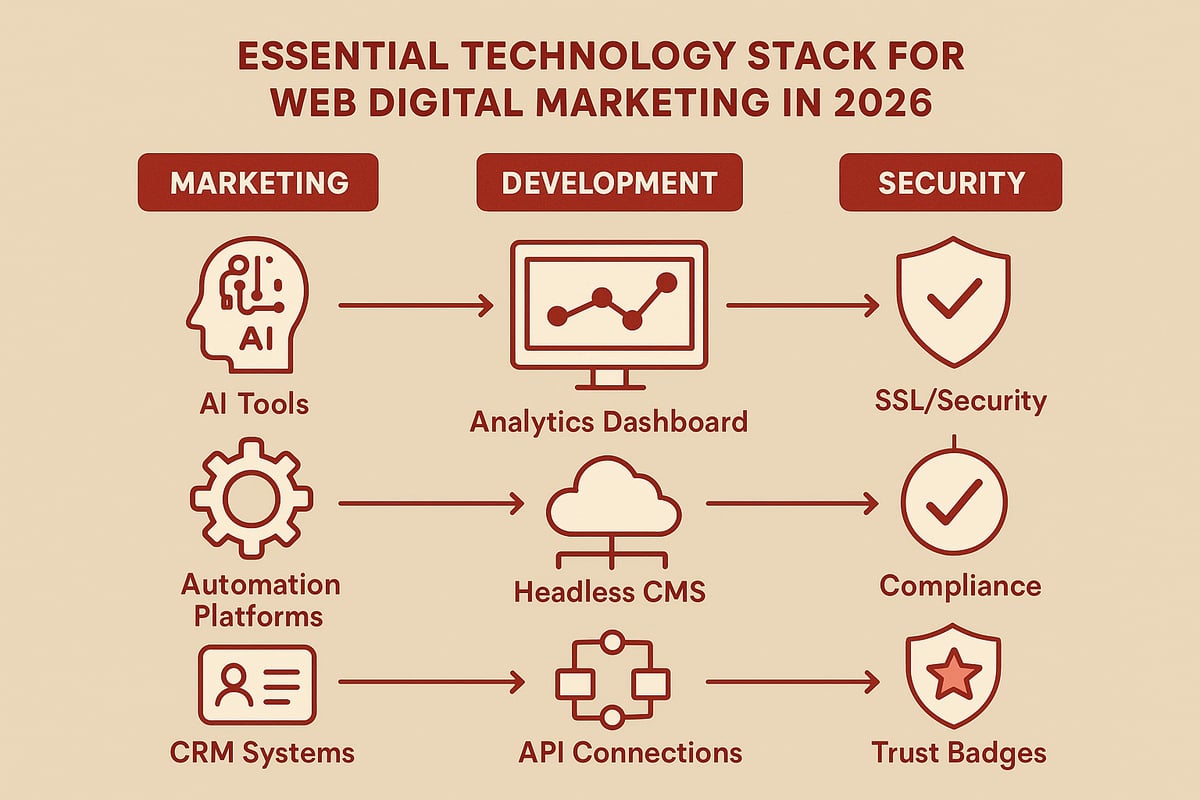
A robust tech stack forms the backbone of successful web digital marketing. Today’s marketers rely on platforms that streamline workflows, automate campaigns, and centralize data for smarter decisions.
Key components include:
- Marketing automation platforms for campaign management and lead nurturing.
- AI-powered SEO and content tools to enhance search visibility and personalize content.
- Customer Relationship Management (CRM) and Customer Data Platforms (CDPs) for unified customer insights.
- Analytics and reporting dashboards that provide real-time campaign performance metrics.
AI is now fundamental in web digital marketing, powering everything from predictive analytics to content generation. For a deeper look at how AI is transforming digital strategies and driving real financial returns, see AI’s Impact on Digital Marketing in 2026.
A well-integrated tech stack ensures marketers can react quickly to trends, optimize campaigns, and scale growth efficiently.
Leveraging Web Development for Marketing Agility
Web development and marketing are now more tightly linked than ever. In web digital marketing, agility starts with deploying content quickly and adapting to changing user needs.
Modern approaches include:
- Headless CMS for rapid, flexible content updates across channels.
- API integrations that connect marketing tools, CRM, and analytics platforms for seamless data flow.
- Custom web applications and interactive features that boost user engagement and support campaign objectives.
A strong collaboration between developers and marketers ensures the website matches the brand’s identity, delivers a consistent user experience, and supports all marketing initiatives. When web development is fully aligned with marketing goals, businesses can react faster to market shifts and customer expectations.
Security, Compliance, and Trust Signals
Security and trust are critical pillars for web digital marketing in 2026. With data privacy regulations tightening and customers demanding transparency, businesses must prioritize protection and compliance.
Essential practices include:
- Implementing SSL certificates for secure browsing.
- Maintaining up-to-date privacy policies and aligning with regulations like GDPR and CCPA.
- Displaying clear CTAs, customer reviews, and trust badges to reassure visitors.
By safeguarding user data and communicating transparency, brands build trust and loyalty. Companies that make security and compliance a visible part of their web digital marketing strategy gain a distinct competitive advantage and foster stronger customer relationships.
Measuring Success and Future-Proofing Your Web Digital Marketing
Staying ahead in web digital marketing requires more than just launching campaigns. Success in 2026 depends on rigorous measurement, continuous optimization, and the readiness to embrace change. By focusing on the right metrics, testing strategies, and future-proofing your approach, you can ensure your digital presence remains strong as the landscape evolves.
Key Metrics and Analytics for 2026
In 2026, data-driven decision-making is the backbone of web digital marketing. Marketers must track a variety of key metrics to understand performance and identify opportunities for growth.
Some of the most important metrics include:
| Metric | Purpose | Example Tool |
|---|---|---|
| Website Traffic | Measure reach and audience growth | Google Analytics |
| Engagement Rate | Track user interaction quality | Hotjar, GA4 |
| Conversion Rate | Assess campaign effectiveness | HubSpot, GA4 |
| Customer Lifetime Value | Evaluate long-term profitability | CRM Platforms |
| Attribution Modeling | Identify channel contributions | Attribution Tools |
Channel-specific metrics, such as organic search rankings, paid ad ROI, email open rates, and social reach, are equally vital. Multi-touch attribution helps marketers understand complex customer journeys. As highlighted by Experian’s 2026 Digital Trends and Predictions, data quality and first-party data activation are now critical for effective measurement in web digital marketing.
Advanced Testing and Optimization Techniques
To thrive in web digital marketing, brands must continually refine their strategies. Advanced testing techniques, such as A/B and multivariate testing, allow marketers to compare variations in content, layouts, and CTAs for optimal results.
Personalization experiments are essential for boosting engagement and conversion rates. By analyzing user behavior and applying feedback, you can create continuous improvement cycles. Brands often use data-driven A/B testing to optimize landing pages and headlines, ensuring that each element drives measurable impact.
Consider these optimization methods:
- A/B Testing: Compare two versions of a page or email
- Multivariate Testing: Assess multiple variables at once
- Personalization: Tailor experiences based on user data
- Heatmaps: Visualize user interactions
By implementing these techniques, web digital marketing teams can maximize ROI and stay competitive.
Preparing for the Next Wave of Innovation
The digital landscape is evolving rapidly, and web digital marketing professionals must stay alert to emerging technologies. Monitoring innovations such as Web3, blockchain, AR/VR, and the metaverse is increasingly important for future success.
Building adaptable teams and investing in ongoing education helps businesses respond quickly to change. Agencies and in-house teams should regularly review digital trends and predictions, such as those found in Experian’s 2026 Digital Trends and Predictions, to guide strategic planning.
Fostering a mindset of curiosity and adaptability ensures your web digital marketing strategy is ready for whatever comes next.
Building a Resilient, Adaptable Digital Marketing Strategy
Future-proofing your web digital marketing approach means preparing for market shifts and disruptions. Scenario planning helps anticipate potential challenges, while balancing automation with human creativity ensures campaigns remain authentic and engaging.
Encourage experimentation within your team. Regularly test new ideas, channels, and technologies. This culture of learning creates resilience and keeps your web digital marketing strategy relevant.
Remember, businesses that combine digital marketing with robust web development gain a distinct edge over competitors. By focusing on both agility and reliability, you position your organization for sustainable growth in 2026 and beyond.
As you look ahead to 2026 and consider how to put these digital marketing strategies into action, it's helpful to see real-world examples of what works. At Red Van Creative, we've spent over two decades helping brands across industries build authentic connections and achieve measurable results—combining thoughtful web design, branding, and digital marketing. If you’d like some inspiration or want to see how these strategies come to life, I invite you to See Our Work / View Our Portfolio. This is a great way to visualize what’s possible for your own business journey.