
The digital landscape is shifting quickly, and every web advertising agency faces new challenges and opportunities. To remain competitive in 2026, agency leaders and marketers need more than just the basics—they require advanced strategies and a forward-thinking mindset.
This guide equips your web advertising agency with proven frameworks, technology insights, and actionable tactics designed for today’s evolving market. Discover the latest trends, learn how to position your agency for growth, and master innovative approaches to client acquisition and campaign optimization.
Ready to future-proof your agency? Dive in for step-by-step guidance that will help you adapt, thrive, and lead in the digital advertising world.
The 2026 Web Advertising Landscape: Trends and Challenges
Digital advertising is entering a transformative era. For every web advertising agency, understanding the trends and challenges shaping 2026 is essential for sustained success. Agencies must keep pace with rapid shifts in technology, consumer expectations, and regulatory frameworks to remain competitive.
Shifts in Digital Ad Spend and Consumer Behavior
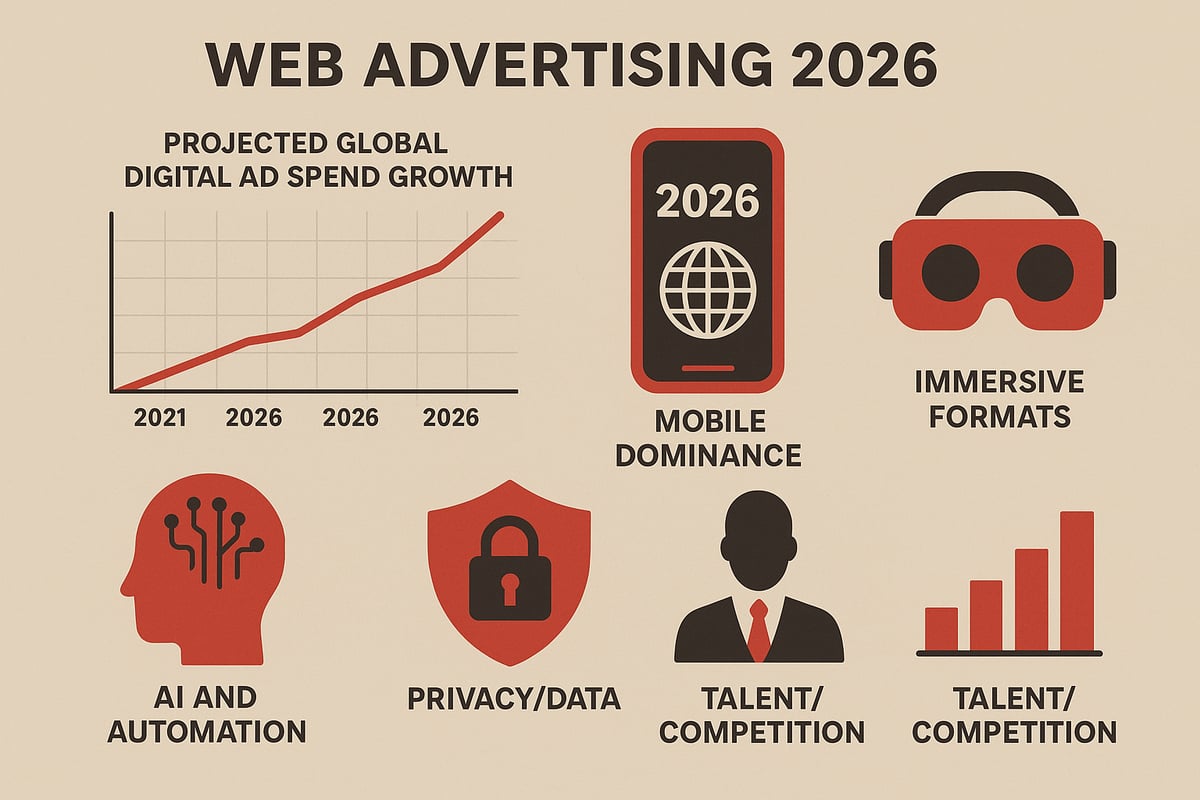
The global digital ad market is projected to expand dramatically, with estimates suggesting digital advertising will reach $835.8 billion by 2026. This surge reflects a major reallocation of budgets toward digital channels, as brands seek measurable results and broader reach. For a web advertising agency, this growth brings both opportunity and heightened competition.
Consumer behavior is evolving. Audiences show increased skepticism toward traditional ads and demand authentic, value-driven messaging. Privacy-first advertising is becoming the norm, with users expecting control over their data and transparency from brands.
Video, interactive, and immersive ad formats are gaining traction, especially on mobile and cross-device platforms. Mobile remains the dominant touchpoint, making it critical for every web advertising agency to optimize campaigns for seamless experiences. As digital spending climbs, agencies must stay agile and responsive to changing consumer preferences. For more on industry projections, see Digital advertising to reach $835.8 billion by 2026.
The Role of AI and Automation in Campaign Management
Artificial intelligence and automation are revolutionizing how web advertising agency teams manage campaigns. AI-driven tools now handle tasks such as bid optimization, audience targeting, and dynamic creative generation, increasing efficiency and unlocking new performance gains.
Automation also streamlines workflows, reducing manual work and allowing agency staff to focus on higher-value strategy and creative tasks. Successful agencies leverage AI for predictive analytics, real-time budget adjustments, and personalized ad delivery. Notably, AI-powered campaigns have demonstrated measurable improvements in click-through rates and return on ad spend.
Regulatory and Data Privacy Considerations
Data privacy regulations are tightening worldwide. Agencies must navigate evolving standards, from GDPR and CCPA to new 2026 rules, to ensure compliance and maintain consumer trust. Transparent data practices and clear user consent protocols are now non-negotiable for any web advertising agency.
First-party data collection is more important than ever. With third-party cookies phasing out, agencies are investing in owned data strategies to deliver personalized, privacy-compliant advertising. Agencies that prioritize ethical data handling and proactive compliance gain a competitive edge and foster long-term client relationships.
Key Challenges Facing Agencies
Web advertising agency leaders face several pressing challenges. Talent shortages in digital marketing roles are intensifying, making recruitment and retention a top priority. Rising client acquisition costs and increased competition require agencies to demonstrate clear value and ROI.
Balancing innovation with profitability is a constant struggle. Agencies must invest in new technologies and creative formats while ensuring campaigns deliver measurable results. Navigating these challenges demands a blend of agility, expertise, and a relentless focus on client outcomes. Agencies that adapt quickly and prioritize strategic growth will lead the way in 2026.
Positioning Your Web Advertising Agency for Success
To stand out in 2026, a web advertising agency must define what makes it unique, deliver integrated services, build authentic connections, and maintain a credible reputation. Let us explore how your agency can establish a strong market position and become a go-to partner for clients seeking measurable growth.
Defining and Differentiating Your Agency’s Value Proposition
Every web advertising agency must begin by identifying its core strengths. Are you known for industry specialization, innovative technology, or creative excellence? Pinpointing these qualities helps shape a unique value proposition that resonates in a crowded digital marketplace.
A compelling value proposition addresses the real needs of your target clients. Agencies that define a clear niche, such as healthcare or e-commerce, often see faster growth and higher client loyalty. For example, an agency that focuses exclusively on sustainability brands can attract mission-driven clients who value expertise in that space.
Consider the following differentiators:
| Differentiator | Example |
|---|---|
| Industry Focus | Healthcare, Retail, B2B |
| Service Innovation | AI-powered creative, Automation |
| Creative Excellence | Award-winning campaigns |
| Tech Expertise | Proprietary analytics tools |
By consistently communicating your strengths, your web advertising agency can attract clients who align with your vision and values.
Building a Holistic Service Offering
Clients are seeking partners who can manage every aspect of their digital presence. That is why a modern web advertising agency should offer integrated solutions such as branding, SEO, content marketing, and paid media. This full-funnel approach ensures clients receive cohesive strategies that drive results at each stage of the buyer journey.
Bundled service packages are gaining popularity. For instance, combining website development, paid advertising, and ongoing SEO creates a seamless client experience. Agencies that master this integration not only improve client satisfaction but also increase retention rates.
Learn more about how branding integrates with digital marketing by visiting Branding in digital marketing. Emphasizing a holistic offering positions your web advertising agency as an essential partner for long-term growth.
Leveraging Local Expertise and Authentic Relationships
Hyper-local targeting is rising in importance as brands look to connect with communities on a deeper level. A web advertising agency with strong local knowledge can create campaigns that resonate with specific audiences, building trust through relevant messaging and community engagement.
Agencies that invest in authentic, long-term relationships see higher client retention and referrals. Hosting local events, participating in community initiatives, and supporting neighborhood causes are powerful ways to strengthen your agency’s local presence.
By becoming a trusted resource in your region, your web advertising agency can win business from both local and national brands seeking genuine connections.
Agency Branding and Reputation Management
Credibility is vital in the digital age. A web advertising agency should leverage awards, case studies, and client reviews to demonstrate expertise and results. Featuring client success stories on your website and social channels builds trust with prospective clients.
Online reputation management is no longer optional. Monitor review sites and social platforms, respond transparently to feedback, and maintain consistency in your agency’s messaging across every touchpoint.
A strong brand identity, supported by visible achievements, makes your web advertising agency the first choice for clients who value reliability and excellence.
Red Van Creative: A Houston-Based Example of Holistic Agency Success
Red Van Creative exemplifies what a modern web advertising agency can achieve with an integrated approach. With over 25 years of experience, they combine branding, web, and advertising services to deliver authentic results for clients across industries.
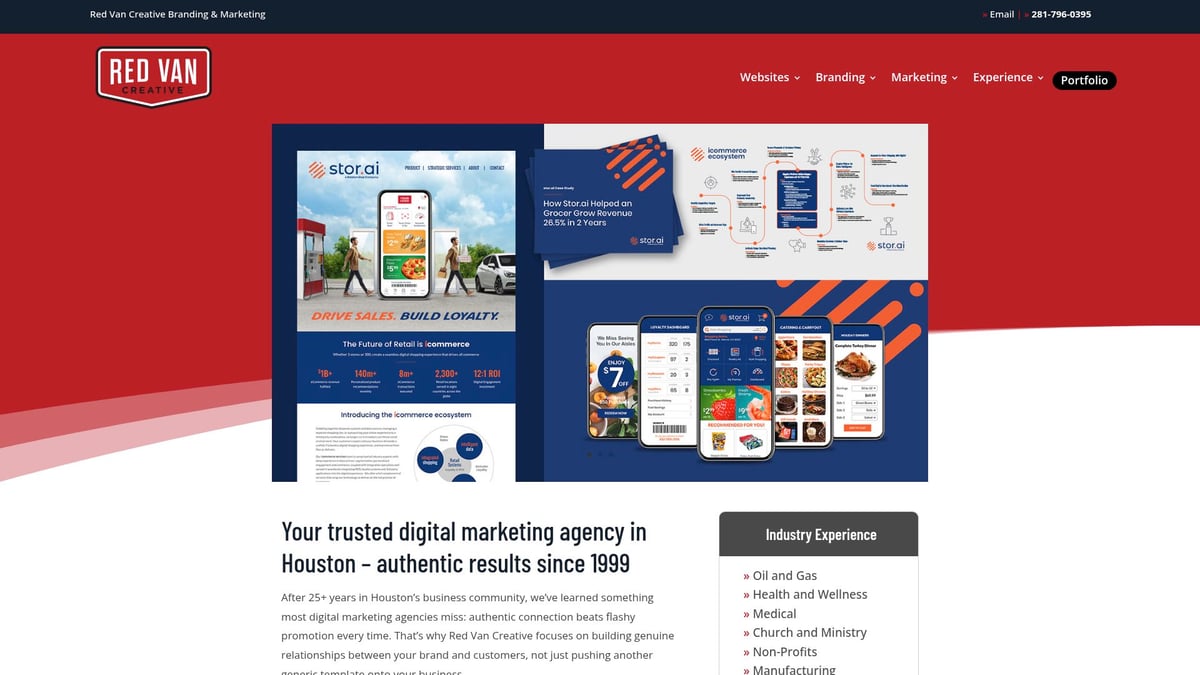
Their commitment to relationship-driven marketing and local expertise sets them apart. Red Van Creative’s industry-specific solutions address unique client challenges, while their recognition and awards serve as trust signals for new partnerships.
For agencies looking to succeed in 2026, Red Van Creative demonstrates the value of a holistic, client-focused model. Emulate their approach to position your web advertising agency for long-term growth and credibility.
Winning and Retaining Clients in a Crowded Market
In 2026’s saturated digital space, every web advertising agency must excel at both winning new clients and keeping existing ones engaged. Strategic prospecting, relationship building, and ongoing value delivery are essential to stand out and grow your agency.
Advanced Prospecting and Lead Generation Tactics
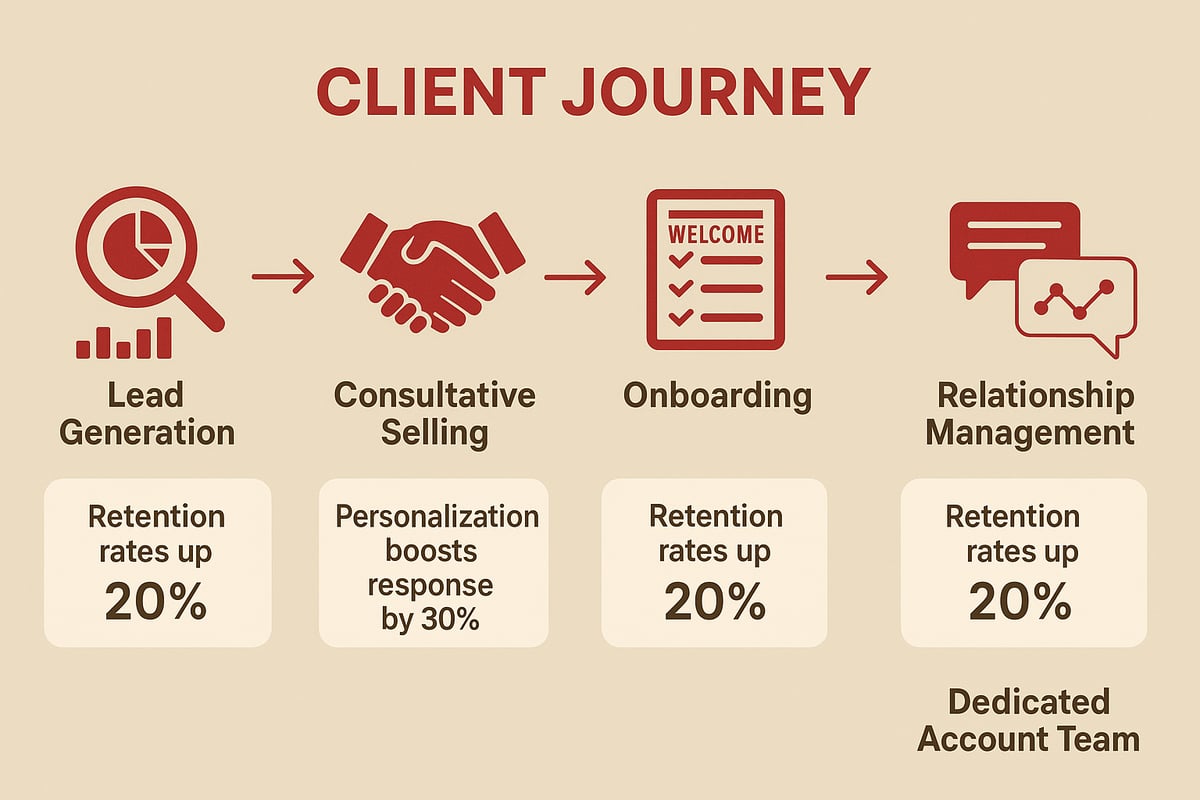
A successful web advertising agency in 2026 leverages data-driven insights to target high-value prospects efficiently. AI-powered prospecting tools analyze market signals, uncovering opportunities that manual research might miss.
Personalization is key. Automated platforms enable agencies to deliver tailored outreach at scale, increasing engagement rates. Utilizing LinkedIn, webinars, and industry events helps nurture warm leads and build authority. For deeper strategies, explore Digital marketing agency insights to stay ahead of evolving best practices.
Shortlists, segmentation, and custom messaging ensure your agency connects with decision-makers who are most likely to convert.
Consultative Selling and Needs Assessment
Shifting from transactional sales to a consultative approach is crucial for a web advertising agency aiming for long-term client relationships. Begin with in-depth discovery sessions, asking probing questions to uncover true business challenges.
Comprehensive marketing audits highlight gaps and reveal growth opportunities. Tailored proposals, built on these insights, demonstrate commitment and expertise. This method positions your agency as a strategic partner, not just a service provider.
Clients appreciate agencies that listen, adapt, and deliver solutions that align with their unique needs and objectives.
Client Onboarding and Relationship Management
A seamless onboarding process sets the tone for a positive client experience with your web advertising agency. Clear communication protocols, transparent timelines, and accessible resources build trust from day one.
Establish regular check-ins and reporting cycles to maintain accountability. Address client questions promptly and proactively share updates. Consistency and openness help foster lasting partnerships.
Effective relationship management relies on anticipating needs and providing ongoing support as campaigns evolve.
Retention Strategies and Upselling Opportunities
To retain clients, a web advertising agency must consistently deliver measurable results. Use transparent reporting dashboards to show progress on KPIs like ROI and engagement rates.
Offer educational resources such as webinars and workshops to empower clients. Identify upsell and cross-sell opportunities by monitoring changing business objectives. Proactive recommendations demonstrate your agency’s commitment to ongoing growth.
Long-term clients are more likely to invest in additional services when they see tangible value and expert guidance.
Example: Agencies Increasing Retention Rates with Dedicated Account Teams
Many leading web advertising agency teams have boosted retention by introducing specialized account managers. Dedicated teams understand client industries, anticipate challenges, and personalize strategies.
A recent trend shows agencies improving client lifetime value by more than 20% through this approach. Account managers act as trusted advisors, ensuring clients feel valued and supported.
This structure encourages loyalty, repeat business, and referrals, all of which fuel sustainable agency growth.
Campaign Strategy and Optimization for 2026
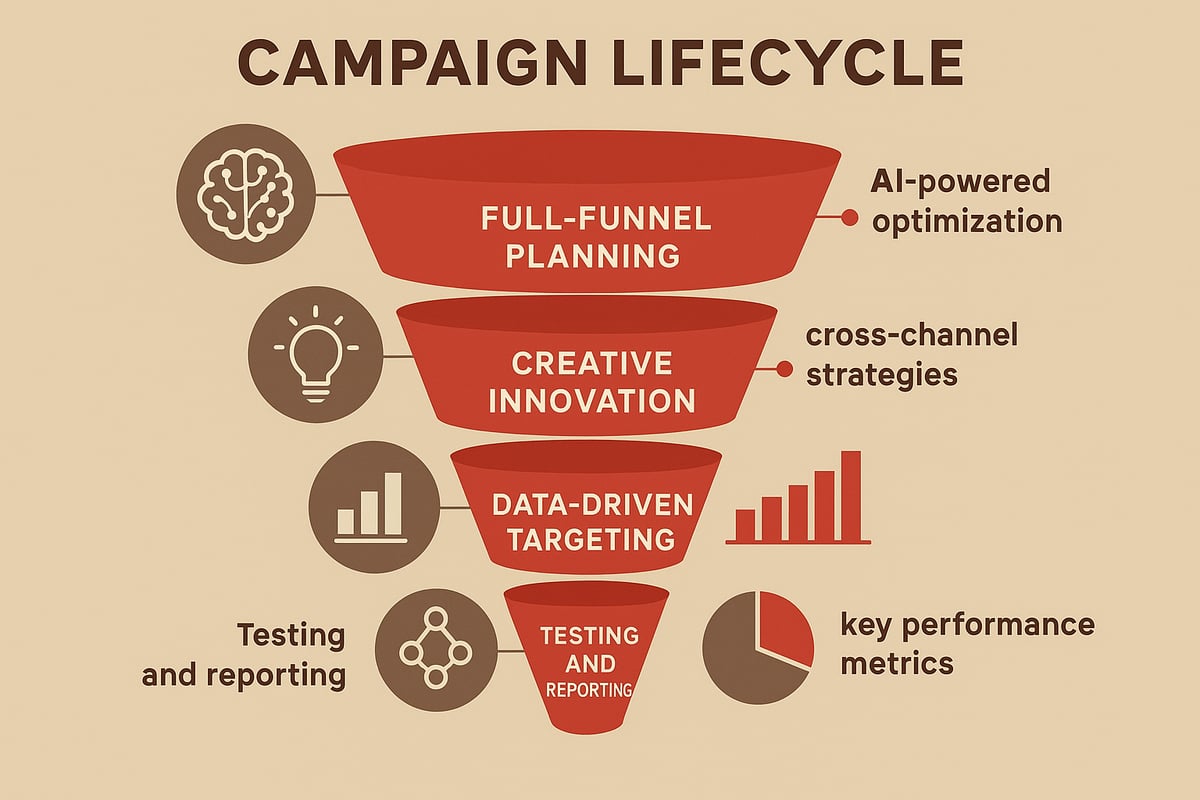
Navigating the complexities of modern digital campaigns requires a web advertising agency to be agile, data-driven, and relentlessly innovative. Success in 2026 will depend on mastering each stage of the campaign lifecycle, from strategic planning to precise measurement. The following strategies will help your agency achieve optimal results and sustainable growth.
Full-Funnel Campaign Planning
A successful web advertising agency begins every campaign by mapping the entire customer journey. This ensures that messaging and creative assets are tailored for each stage, from awareness to conversion. Effective full-funnel planning balances brand storytelling with performance-driven tactics, maximizing both reach and ROI.
Key steps include:
- Identifying target audiences and their decision stages
- Aligning ad formats and platforms to each funnel stage
- Setting clear KPIs for awareness, consideration, and conversion
For agencies looking to refine their funnel strategies, leveraging web and digital marketing services can provide a comprehensive approach to integrating branding, SEO, and paid campaigns for measurable growth.
Creative Innovation in a Saturated Market
Standing out in a crowded digital landscape is essential for any web advertising agency. Creative innovation means going beyond static banners and embracing interactive, shoppable, or immersive formats that captivate audiences. Agencies should experiment with user-generated content, influencer collaborations, and dynamic video ads.
Consider these tactics:
- Launch interactive ads that invite participation
- Use AR or VR experiences for deeper engagement
- Test shoppable content for seamless conversion
Case studies show that brands adopting these creative approaches often see higher engagement rates and improved campaign effectiveness.
Data-Driven Targeting and Personalization
A forward-thinking web advertising agency relies on robust data to deliver personalized experiences at scale. In 2026, first-party and zero-party data are critical for targeting without sacrificing privacy. AI-driven segmentation and predictive analytics enable agencies to anticipate user needs and adapt messaging in real time.
Best practices include:
- Collecting consented data through value exchanges
- Building granular audience segments
- Applying privacy-compliant personalization techniques
By leveraging advanced analytics, agencies can achieve higher conversion rates while maintaining trust with their audiences.
Multichannel and Omnichannel Campaign Integration
To maximize impact, a web advertising agency must coordinate campaigns across multiple platforms, including search, social, display, video, and connected TV. True omnichannel integration ensures a seamless brand experience regardless of where the customer engages.
Key integration strategies:
- Synchronize messaging and creative across channels
- Use attribution models to track performance by channel
- Implement unified reporting dashboards for holistic insights
Integrated campaigns consistently outperform siloed efforts, delivering higher conversion rates and stronger brand equity.
Continuous Testing and Optimization
Continuous optimization is the heartbeat of any high-performing web advertising agency. Regular A/B and multivariate testing frameworks uncover which creative elements, audiences, or channels drive the best results. Real-time analytics empower teams to make agile adjustments and capitalize on emerging opportunities.
Optimization checklist:
- Test headlines, visuals, and calls-to-action
- Analyze real-time data for quick pivots
- Benchmark against industry standards to identify gaps
Agencies that prioritize ongoing testing can significantly improve campaign ROI and reduce wasted ad spend.
Measuring and Reporting on Campaign Performance
Accurate measurement is essential for demonstrating the value a web advertising agency provides. Key performance indicators such as cost per acquisition (CPA), return on ad spend (ROAS), lifetime value (LTV), and engagement rates should be tracked consistently. Using visualization tools and dynamic dashboards enhances client transparency and trust.
Best practices for reporting:
- Present actionable insights, not just raw data
- Customize dashboards for client preferences
- Share regular updates to foster collaboration
By adopting these measurement strategies, agencies can showcase their impact, build stronger relationships, and retain clients for the long term.
Leveraging Technology and Tools for Agency Efficiency
Staying competitive as a web advertising agency in 2026 means harnessing technology for smarter, faster, and more effective operations. Agencies that strategically adopt the right tools can deliver superior results for clients, streamline workflows, and scale with confidence.
Essential MarTech Stack for 2026
A future-ready web advertising agency relies on a robust MarTech stack that merges innovation with reliability. Key components include advanced ad platforms, analytics suites, automation solutions, and collaboration tools.
| MarTech Component | Example Tools | Primary Benefit |
|---|---|---|
| Ad Platforms | Google Ads, Meta, TikTok | Reach & targeting |
| Analytics Suites | Google Analytics 4, Tableau | Performance insights |
| Automation Tools | Zapier, HubSpot, AdEspresso | Task efficiency |
| Creative AI | Canva AI, Jasper, Adobe Firefly | Fast content creation |
| Project Management | Asana, Trello, Monday.com | Team coordination |
AI-driven creative and copy generation is transforming agency workflows. Tools powered by generative AI enable teams to produce compelling ads and content at scale, freeing up time for strategy. For a deeper dive on how AI is reshaping agency models, see Generative AI’s impact on advertising agencies.
Workflow Automation and Process Improvement
Automation is a game-changer for every web advertising agency aiming to maximize productivity. By automating repetitive tasks like reporting, ad scheduling, and client updates, agencies cut manual workload and reduce errors.
Benefits of workflow automation include:
- Faster campaign launches
- Improved accuracy in reporting
- Consistent client communication
Project management platforms with built-in automation features streamline internal processes, enabling teams to collaborate more efficiently. As a result, agencies can reallocate resources to higher-value activities and client strategy.
Integrating Data Sources for Unified Insights
Data integration is vital for a web advertising agency to deliver actionable insights. By connecting CRM systems, analytics platforms, and ad channels, agencies achieve a unified view of client performance.
Consider this simplified integration flow:
CRM Data + Analytics Suite + Ad Platform = Real-time Unified Dashboard
Maintaining data hygiene and integrity ensures that insights are reliable. When agencies break down data silos, they empower teams to make informed decisions and demonstrate clear ROI to clients.
Example: Agencies Reducing Operational Costs with Automation
Leading web advertising agency teams are seeing measurable cost reductions through automation. According to industry surveys, agencies leveraging advanced tools report up to 30 percent time savings and higher project throughput.
Case studies show that by automating campaign management and integrating project communication, agencies decrease operational expenses and boost client satisfaction. These efficiencies translate into higher margins and a stronger competitive position in the market.
Future-Proofing Your Web Advertising Agency
To ensure long-term growth, a web advertising agency must commit to ongoing evolution. The industry is changing rapidly, and agencies that invest in their people, processes, and technology will outpace competitors. Future-proofing requires a proactive mindset and a willingness to adapt at every level.
Investing in Talent and Ongoing Education
A web advertising agency thrives on expertise. Prioritize upskilling teams in AI, analytics, and creative technologies. Provide regular training sessions, certifications, and access to industry conferences. Encourage knowledge sharing and mentorship within the agency. Investing in people not only improves campaign results but also boosts retention and attracts top talent in a competitive market.
Adapting to Emerging Platforms and Consumer Trends
Staying ahead means actively monitoring new digital channels like AR, VR, and voice-enabled devices. Evaluate these platforms for audience fit and campaign effectiveness. According to the Digital 2026: Global Overview Report, digital channels are capturing a growing share of ad spend, underscoring the need for agility. Test and refine strategies as consumer habits shift across devices and formats.
Building Resilient, Scalable Agency Structures
Flexibility is key for a web advertising agency to weather market changes. Adopt scalable models such as fractional CMO offerings or remote-first teams. Streamline processes to handle fluctuating client demands. Prepare contingency plans for economic shifts or industry disruptions. This structural resilience ensures your agency can adapt quickly and continue delivering value.
Fostering a Culture of Innovation and Experimentation
Encourage creative risk-taking by fostering a test-and-learn environment. Launch internal labs or pilot programs to explore new approaches. Recognize and reward experimentation that leads to measurable improvements. A culture of innovation keeps your web advertising agency at the forefront of trends and enables rapid response to changing client needs.
Example: Agencies Leading Through Change
Agencies recognized for adaptability often share core traits—continuous learning, process flexibility, and a growth mindset. They embrace change, invest in training, and leverage data to inform decisions. By modeling these behaviors, your web advertising agency can build a reputation for resilience and forward-thinking strategies that attract ambitious clients.
As you look ahead to 2026’s fast-changing digital landscape, it’s clear that agencies need to combine strategy, technology, and authentic client relationships to truly thrive. At Red Van Creative, we’ve spent over 25 years helping brands across industries navigate these very shifts—always with a focus on genuine results and meaningful connections. If you’re curious how a holistic approach can elevate your agency’s work and drive measurable impact, I invite you to see real-world examples of our strategies in action. Explore our recent projects and discover what’s possible:
See Our Work / View Our Portfolio