

In 2026, the digital marketplace is more crowded and competitive than ever. Brands face constant pressure to rise above the noise and capture attention.
To thrive, mastering online branding is non-negotiable. This guide will equip you with the latest strategies, actionable frameworks, and essential steps for building a standout brand in today’s fast-evolving online environment.
You will discover how to craft a memorable digital identity, engage audiences across every channel, and leverage new technologies for lasting impact. Ready to future-proof your brand? Follow each step and set the stage for online branding success in 2026.
The Foundations of Online Branding in 2026
In 2026, online branding stands as the cornerstone of business success in the digital world. As technology advances and consumer expectations rise, brands must master both the art and science of building a digital identity that is memorable, authentic, and agile.
Understanding Online Branding: Definition & Evolution
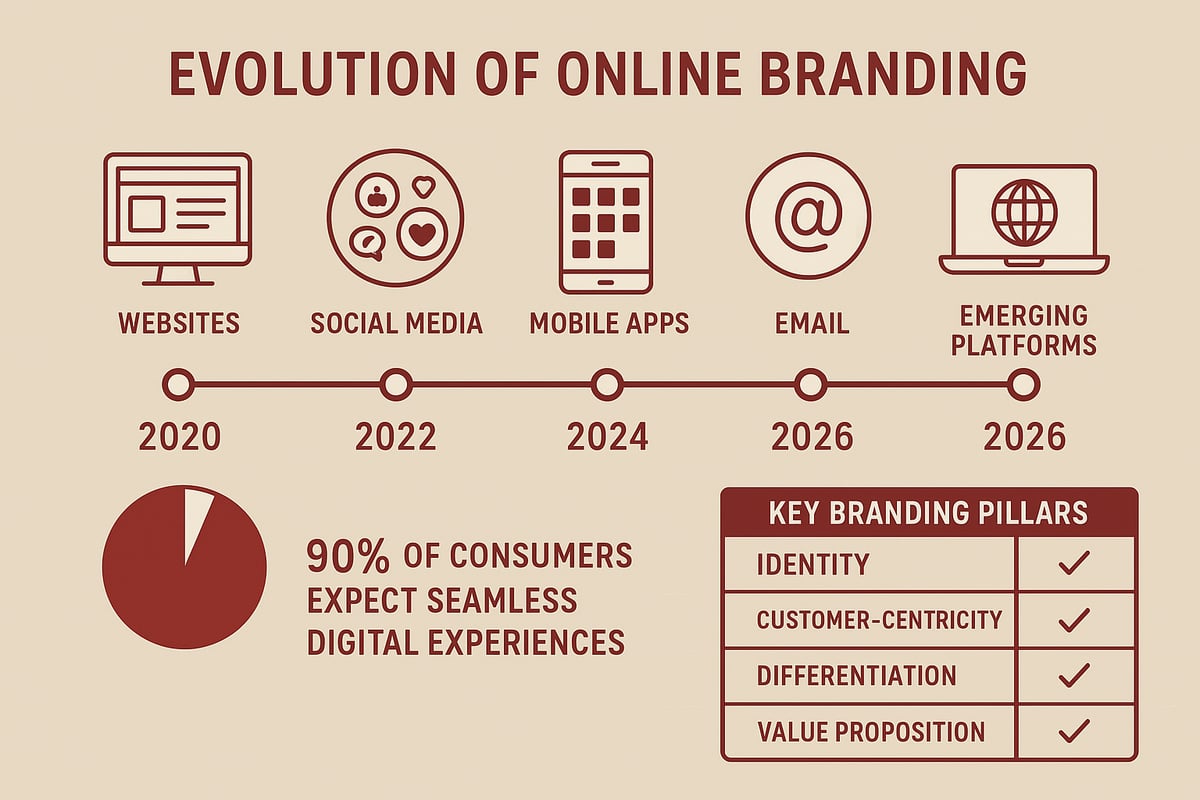
Online branding in 2026 is more than a digital presence, it is a dynamic, interconnected experience that brings a brand’s values, personality, and promise to life across every digital touchpoint. While online branding in 2020 often meant having a polished website and active social channels, today’s landscape demands much more.
The journey from static web pages to fluid, omnichannel experiences has reshaped the essence of online branding. Brands must now integrate their websites, social media profiles, mobile apps, email communications, and emerging platforms into a cohesive ecosystem. This approach ensures that the user experience feels seamless, regardless of where the interaction begins.
Consistency and authenticity have never been more critical. According to Smart Insights, 90% of consumers expect a seamless experience across all digital channels. Brands that fail to deliver risk losing trust and relevance. Maintaining a unified message and visual identity across touchpoints fosters recognition and loyalty. For a deeper dive into why consistency matters, explore the power of brand consistency.
Customer experience now plays a defining role in shaping brand perception. When a consumer interacts with a brand, whether on Instagram, through an app, or via email, every moment influences their opinion. Leading brands like Nike and Starbucks have evolved their online branding by investing in digital innovation and omnichannel strategies, ensuring every customer touchpoint is both engaging and aligned with their brand promise.
Key Branding Pillars for the Digital Era
The digital era has expanded the foundations of online branding into several essential pillars. At the core is brand identity, which extends far beyond logos or color schemes. It encompasses visuals, messaging, values, and a consistent tone of voice. This holistic approach enables brands to be both recognizable and relatable.
Customer-centricity is another vital pillar. With diverse audiences engaging across multiple channels, tailoring brand experiences to individual preferences is now standard. By leveraging analytics and feedback, brands can make every digital interaction feel personalized and meaningful.
Competitor differentiation has also become a key focus. In a transparent digital landscape, brands must constantly refine their strategies to stand out. A strong online value proposition, clearly communicated, helps consumers understand what makes a brand unique.
Consider the following examples:
| Brand | Digital-First Message | Impact |
|---|---|---|
| Tesco | Every Little Helps | Reinforces value and care in every touch |
| Sky | Believe in Better | Highlights innovation and improvement |
The right brand name and URL also shape online branding success, influencing both searchability and memorability. A name that is SEO-friendly, easy to pronounce, and unique will help a brand rise above the digital noise.
In summary, building a strong foundation for online branding in 2026 requires a focus on cohesive identity, customer-centric strategies, clear differentiation, and a compelling digital value proposition. These pillars enable brands to thrive in a competitive, ever-evolving environment.
Step 1: Crafting a Distinctive Digital Brand Identity
Establishing a distinctive digital brand identity is the cornerstone of online branding in 2026. In a landscape where consumers are flooded with choices, your brand’s digital presence must be both recognizable and adaptable. A powerful identity not only attracts attention but also builds trust and loyalty over time.
Building Blocks of a Memorable Brand Identity
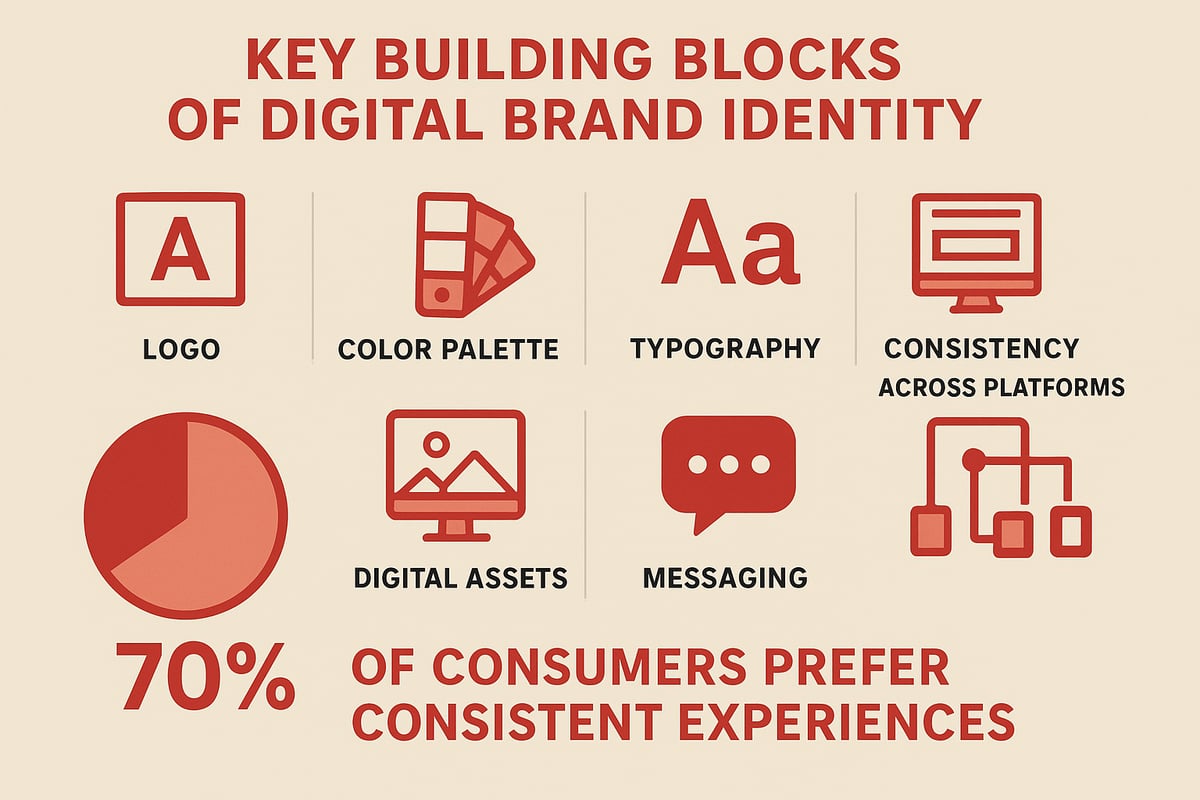
A memorable digital brand identity is far more than just a logo. It encompasses visuals, messaging, values, and the tone your audience experiences at every touchpoint. Core elements include:
- Logo: The visual anchor for your brand, instantly recognizable across platforms.
- Color Scheme: A cohesive palette that evokes emotion and aligns with your values.
- Typography: Font choices that reinforce your brand personality and readability.
- Digital Assets: Icons, imagery, and graphics tailored for web, mobile, and social use.
To excel in online branding, adapt these elements for multi-platform visibility. Design logos and icons to scale for everything from website headers to social media favicons. Responsive design ensures your brand looks sharp on any device, while flexibility allows quick adaptation to new digital trends.
Naming is another critical factor. Choose names that are SEO-friendly, easy to pronounce, and simple to remember. This not only boosts discoverability but also strengthens your brand’s digital footprint. For example, Facebook’s “Blue F” icon is instantly recognizable whether on a desktop or a mobile app.
For a deeper dive into the foundations of digital identity, explore Branding in digital marketing to see how strategy and creative execution intersect.
Messaging & Storytelling in the Digital Age
Effective online branding requires a compelling narrative that resonates with audiences across digital channels. Start by developing a brand story that reflects your mission and values. This story should be clear, concise, and emotionally engaging, making it easy for audiences to connect with your brand.
Consistency is key. Your messaging must maintain a unified tone and narrative whether delivered via email, social media, or your website. Use data insights to personalize content for segmented audiences, ensuring relevance and fostering deeper engagement.
Consider how leading brands like Nike use personalization in their online branding. The Nike ID platform enables customers to tailor products to their preferences, making each interaction feel unique. This approach not only enhances the brand story but also forges a personal connection with customers.
To craft impactful messaging, focus on clarity and authenticity. Avoid jargon, use language your audience understands, and communicate your brand’s promise at every touchpoint. Personalization, powered by customer data, transforms generic messaging into memorable experiences.
Visual & Experiential Consistency
Unified experiences are essential for successful online branding. Your website, social media, and email communications should all reflect the same visual standards and messaging. This consistency fosters recognition and builds trust with your audience.
Develop comprehensive brand guidelines that cover visual identity, tone of voice, and usage rules for digital assets. This playbook ensures anyone creating content for your brand maintains the intended look and feel, regardless of platform or medium.
Accessibility and inclusivity should be integral to your visual strategy. Use high-contrast colors, readable fonts, and alt text on images to ensure your brand is welcoming to all users. In 2026, 70% of consumers are more likely to buy from brands offering consistent experiences, making this a business imperative.
By delivering a seamless and inclusive experience, your online branding will stand out in crowded digital spaces and foster lasting customer loyalty.
Step 2: Mastering Omnichannel Presence & Engagement
To achieve sustained success in online branding, brands must go beyond single-channel strategies. Today’s digital landscape requires businesses to orchestrate seamless, engaging experiences across every platform customers use. Let’s explore how to map the customer journey, optimize every channel, and elevate engagement for superior online branding results.
Mapping the Customer’s Digital Journey
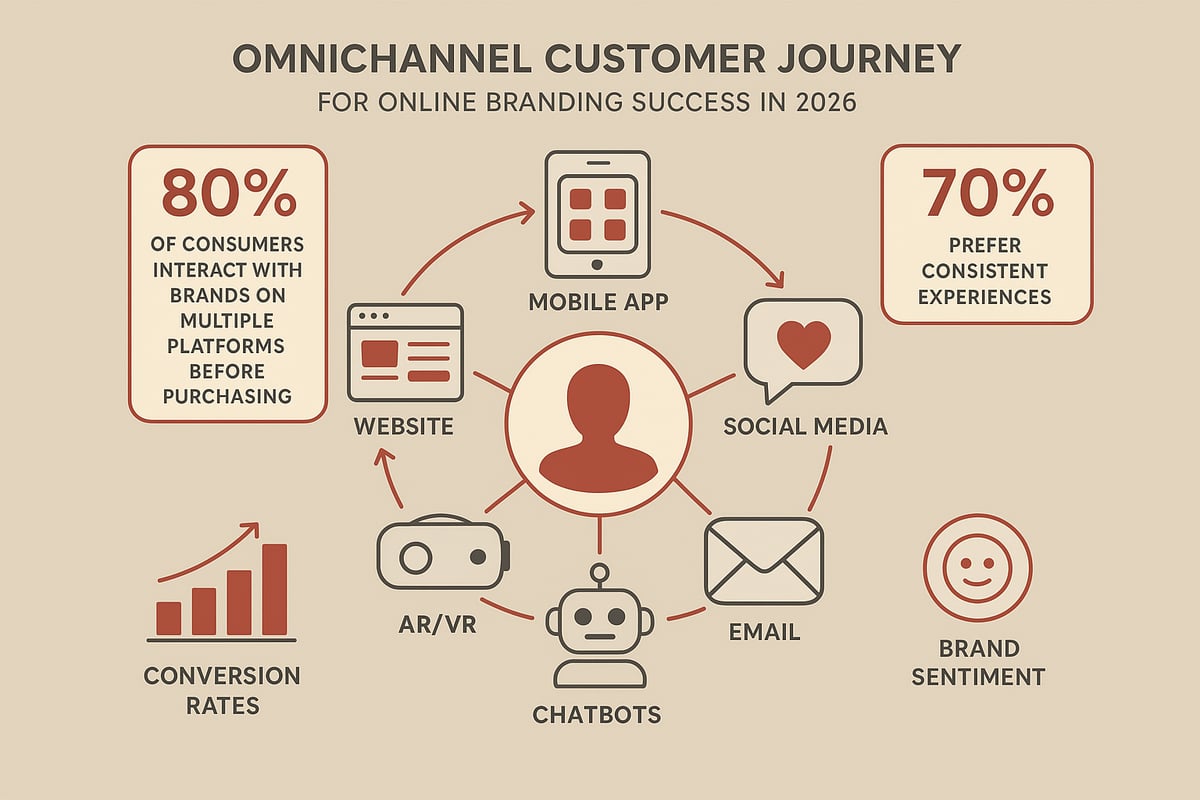
The foundation of effective online branding in 2026 is a deep understanding of the customer’s digital journey. Brands must identify and integrate the most relevant touchpoints, such as websites, social media platforms, mobile apps, email campaigns, and chatbots. Each channel plays a unique role in shaping perceptions and driving engagement.
Modern consumers expect frictionless movement between these touchpoints. For example, a user might explore your website on a desktop, receive a personalized email on their smartphone, and complete a purchase via your mobile app. To support this journey, brands need to analyze demographic data and track behavioral patterns, ensuring every interaction feels tailored and consistent.
Mobile-first strategies are vital, as more than half of digital interactions now occur on smartphones. Embracing location-based marketing also enables brands to deliver timely, relevant content that resonates with users wherever they are. Starbucks exemplifies this approach, using localized offers and mobile app integration to create seamless digital experiences that strengthen their online branding.
Key digital touchpoints include:
- Website (central hub for information and transactions)
- Mobile app (personalized features, loyalty rewards)
- Social media (community engagement, real-time updates)
- Email (targeted messaging, personalized content)
- Chatbots (instant support, guided journeys)
By mapping every step of the customer’s path, brands can design cohesive experiences that reinforce their online branding at each interaction.
Channel Optimization Strategies
Optimizing every channel is critical for maximizing the impact of online branding. Start with your website, ensuring it delivers fast load times, intuitive navigation, and personalized content for each visitor. A responsive design guarantees your brand looks and feels consistent on any device.
Social media platforms require tailored strategies. Develop platform-specific content, engage in active community management, and collaborate with influencers to amplify your online branding. Each network offers unique opportunities to express your brand’s personality and connect with varied audiences.
Email marketing remains a cornerstone, but automation and segmentation are now essential. Deliver interactive, relevant messages that reflect the recipient’s preferences and behaviors. Emerging platforms like AR, VR, and even metaverse spaces are opening new doors for immersive brand engagement.
According to recent omnichannel marketing trends 2026, unified customer data platforms and immersive experiences are rapidly becoming standard. Brands integrating these innovations can create more meaningful, memorable interactions and elevate their online branding.
Channel optimization checklist:
- Website: UX/UI, speed, personalization
- Social: platform-specific content, influencer collaborations
- Email: automation, segmentation, interactivity
- New tech: AR/VR, voice search, metaverse presence
By continually refining each channel, brands ensure that their online branding remains relevant, engaging, and competitive.
Measuring & Enhancing Engagement
To drive ongoing success in online branding, brands must track and enhance engagement across all digital channels. Start by monitoring key metrics such as time on site, conversion rates, social shares, and overall brand sentiment. These indicators reveal how effectively your online branding resonates with your audience.
A/B testing is a powerful tool for optimizing digital content. By experimenting with different headlines, images, or calls to action, brands can identify what drives the best results. Regularly gathering and analyzing customer feedback further informs improvements, allowing you to refine every touchpoint.
Leading brands like Tesco use digital innovation to personalize shopping experiences, integrate rewards, and deliver consistent messaging. Their approach demonstrates how data-driven insights and continuous optimization can transform online branding performance.
Table: Essential Engagement Metrics for Online Branding
| Metric | Purpose |
|---|---|
| Time on Site | Measures engagement depth |
| Conversion Rate | Tracks goal completions |
| Social Shares | Gauges content virality |
| Brand Sentiment | Assesses public perception |
By focusing on these metrics and embracing a cycle of testing and improvement, your online branding will adapt, thrive, and foster lasting customer loyalty.
Step 3: Leveraging Technology & Data for Brand Growth
Digital innovation is redefining what it means to achieve sustainable online branding growth in 2026. Brands that leverage technology and harness data are primed to outpace competitors, deepen customer relationships, and adapt to shifting digital landscapes.
Harnessing Data-Driven Insights
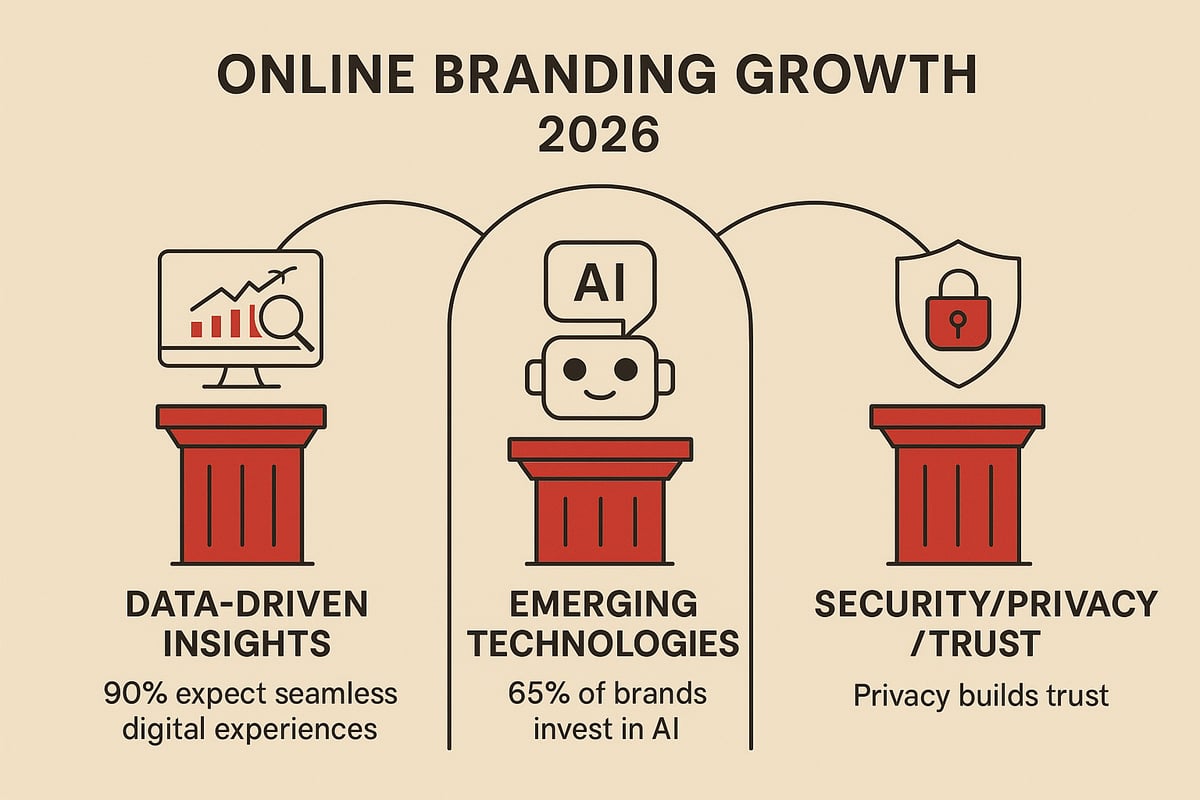
Successful online branding in 2026 starts with actionable data. Analytics platforms like Google Analytics, social listening tools, and heatmaps allow brands to decode audience behaviors and preferences. This real-time intelligence reveals which content resonates, where users drop off, and how messaging can be refined.
Brands use these insights to tailor digital experiences and ensure every touchpoint supports their online branding goals. For example, tracking conversion rates, user flows, and engagement metrics helps identify what truly matters to your audience.
A practical approach involves competitor analysis through digital transparency. By analyzing competitor websites, apps, and emails, you can benchmark your online branding performance and uncover opportunities for differentiation.
| Tool | Key Use Case |
|---|---|
| Google Analytics | Track user behavior |
| Social Listening | Monitor sentiment |
| Heatmaps | Visualize engagement |
Consistently reviewing this data keeps your online branding strategy agile and customer-centric. Insights should inform both creative and technical decisions for maximum impact.
Embracing Emerging Technologies
Emerging technologies are rapidly transforming the online branding landscape. Artificial intelligence drives hyper-personalization, powering chatbots, predictive recommendations, and dynamic content that adapts to individual users in real time.
Augmented reality and virtual reality open doors to immersive brand storytelling, from virtual try-ons to interactive branded environments. Automation tools streamline marketing workflows, ensuring consistency and freeing up creative teams for strategic work.
Voice search and smart devices are now integral to online branding. Brands optimize for these interfaces to capture audiences searching on the go or interacting via smart speakers.
According to industry forecasts, 65 percent of brands will invest in AI-driven branding tools by 2026. For a deeper dive into how AI is reshaping omnichannel journeys and personalizing digital experiences, read more about AI-driven marketing strategies.
Adopting these technologies allows your online branding to stay relevant, engaging, and accessible in a crowded market.
Security, Privacy, and Trust
Trust is the foundation of effective online branding. As customers become more aware of digital privacy, brands must embrace transparent data practices and comply with evolving regulations like GDPR and CCPA.
Cybersecurity is equally vital. A single breach can erode years of brand equity. Investing in robust security measures and communicating your privacy commitments through clear, accessible messaging reassures your audience.
Leading brands prioritize privacy by giving customers control over their data and openly sharing how information is used. These practices reinforce credibility and foster long-term loyalty, making security and privacy integral to online branding success in 2026.
Step 4: Future-Proofing Your Brand Strategy
Staying ahead in online branding means never standing still. The digital landscape changes rapidly, so brands must proactively anticipate and adapt to future challenges. Future-proofing your strategy ensures your online branding remains relevant, trusted, and resilient in 2026 and beyond.
Adapting to Evolving Consumer Expectations
Consumer expectations for online branding are higher than ever. Brands must monitor cultural shifts, including sustainability, inclusivity, and ethical practices. These trends shape how audiences perceive your brand and can influence long-term loyalty.
Digital behaviors change quickly as new platforms and technologies emerge. Brands that succeed in online branding continuously track and embrace these shifts. For example, the rise of interactive and multimedia content has made it vital to stay informed about content marketing trends 2026. Adapting to these changes helps brands remain visible and engaging across all digital channels.
Upskilling teams in digital branding best practices is crucial. Encourage learning and experimentation to keep pace with new tools, channels, and audience preferences. Global events, from economic shifts to social movements, can also impact online branding. Being proactive allows your brand to pivot quickly and maintain relevance.
Building Brand Resilience
Resilience in online branding is about preparing for uncertainty. Scenario planning helps you anticipate digital crises, such as reputation threats or cybersecurity incidents. Develop response plans and train teams to act swiftly and transparently when issues arise.
Diversifying your digital assets and touchpoints reduces dependence on any single platform. Spread your presence across websites, apps, social media, and emerging channels. This strategy helps mitigate risks if one channel faces disruption.
Fostering brand loyalty is another pillar of resilience. Build strong communities around your brand through open communication and transparency. Encourage customer feedback and maintain authentic engagement. Loyal audiences are more likely to advocate for your brand when challenges occur, strengthening your position in the digital marketplace.
Measuring Long-Term Success
To ensure your online branding strategy delivers lasting value, define clear KPIs and track them consistently. Focus on:
| KPI | What It Measures | Why It Matters |
|---|---|---|
| Brand Awareness | Recognition and reach | Gauges market presence |
| Brand Preference | Customer choice over others | Indicates differentiation |
| Brand Loyalty | Repeat engagement | Drives retention and advocacy |
| Advocacy | Word-of-mouth, referrals | Expands organic growth |
| Customer Lifetime Value (CLV) | Total long-term value | Measures profitability |
Use feedback loops and analytics to refine your approach. Brands like Sky demonstrate how ongoing innovation and loyalty programs sustain strong online branding. Regularly review your metrics and adjust strategies to stay aligned with evolving goals.
Case Studies: Online Branding Excellence in Action
Examining leading brands in online branding reveals how strategic innovation drives measurable success. The following case studies illustrate how Nike, Starbucks, and Tesco set the standard for digital excellence, each leveraging unique approaches to connect with audiences and build enduring loyalty.
Nike: Personalization and Digital Connection
Nike’s approach to online branding centers on deep personalization and interactive digital experiences. The Nike ID platform empowers customers to design custom products, blending self-expression with brand affinity. This initiative not only enhances engagement but also transforms users into brand advocates.
Nike leverages social sharing tools and seamless integration across web and mobile to amplify reach. By fostering two-way communication, Nike consistently adapts to evolving customer preferences. Their investments in immersive platforms and data-driven personalization result in higher conversion rates and stronger loyalty.
Effective customer engagement is at the heart of Nike’s strategy. For more on building similar connections, explore Customer engagement in digital marketing.
Starbucks: Localization and Omnichannel Mastery
Starbucks excels in online branding by tailoring digital experiences to both global and local audiences. Their mobile app delivers location-based offers, personalized recommendations, and convenient ordering options. The result is a unified journey that feels relevant in every market.
Starbucks also adapts its content for regional cultures while maintaining a consistent brand voice. Social media campaigns, influencer partnerships, and responsive customer service foster a vibrant community. The seamless movement between digital touchpoints ensures customers remain engaged across every channel.
Starbucks’ omnichannel strategy enables them to anticipate customer needs, drive retention, and reinforce their reputation as a digital innovator.
Tesco: Consistent Messaging and Digital Innovation
Tesco’s “Every Little Helps” campaign exemplifies the power of consistent messaging in online branding. Their digital platforms deliver personalized offers, rewards, and content that reinforce the brand promise at every interaction. Tesco’s commitment to digital innovation is evident in their user-friendly website, efficient mobile apps, and interactive loyalty programs.
Tesco’s data-driven approach enables real-time adaptation to customer preferences. By integrating feedback and analytics, Tesco refines its digital touchpoints, improving satisfaction and maintaining competitive advantage. This focus on innovation and consistency keeps Tesco’s online branding relevant and trusted.
Key Takeaways from Top Brands
The case studies above highlight several essential strategies for online branding success:
- Customer-centric personalization
- Omnichannel integration
- Consistent messaging
- Data-driven innovation
| Brand | Personalization | Omnichannel | Consistency | Innovation | Result |
|---|---|---|---|---|---|
| Nike | ✓ | ✓ | ✓ | ✓ | Strong loyalty |
| Starbucks | ✓ | ✓ | ✓ | ✓ | High retention |
| Tesco | ✓ | ✓ | ✓ | ✓ | Competitive advantage |
Brands that integrate these elements outperform competitors by 30 percent, according to Smart Insights. For further insights on amplifying your online branding through social channels, see Branding social media marketing.
Ultimately, these leaders prove that strategic online branding requires a focus on engagement, adaptability, and unified digital presence. By applying these lessons, any business can elevate its brand and thrive in the digital landscape.
Action Plan: Steps to Online Branding Success in 2026
Building a standout online branding strategy in 2026 demands a clear, actionable plan. With digital competition fiercer than ever, brands need a structured approach to thrive. The following action plan breaks down the process into manageable steps, ensuring your online branding efforts drive measurable results and long-term growth.
Step-by-Step Roadmap
A successful online branding journey starts with a thorough audit. Review every digital touchpoint, from your website to social profiles and email campaigns. Next, define or refresh your brand identity, ensuring your visuals, messaging, and values align across platforms.
Map your customer journey to pinpoint where users interact with your brand online. Identify critical moments and optimize each channel for user experience, consistency, and engagement. Implement robust analytics and feedback mechanisms to monitor performance and adjust in real time.
Embrace technology to elevate your online branding. Integrate AI-driven personalization, automation, and explore new frontiers such as voice search optimization to stay ahead of digital trends. Finally, future-proof your brand by developing scenario plans and diversifying your digital assets for resilience.
Action Plan Steps:
- Audit your current digital brand presence.
- Define or refine your brand identity and messaging.
- Map customer journeys and touchpoints.
- Optimize every channel for UX and engagement.
- Implement analytics and continuous improvement.
- Leverage emerging technologies and personalization.
- Build resilience and plan for change.
Tools & Frameworks for Success
Equipping your team with the right tools and frameworks is essential for efficient online branding. Popular frameworks such as RACE and Brand Key provide structure for strategy development and execution. Use design tools, analytics platforms, and automation solutions to streamline your workflow.
| Tool/Framework | Purpose | Example |
|---|---|---|
| RACE Framework | Strategic planning | Reach, Act, Convert |
| Brand Key | Brand positioning | Unique value, promise |
| Canva, Adobe CC | Visual asset creation | Logos, graphics |
| Google Analytics | Performance tracking | Traffic, conversions |
| Hootsuite, Buffer | Social media management | Scheduling, reporting |
| Mailchimp, HubSpot | Email automation | Segmentation, A/B test |
A comprehensive toolkit supports consistency and allows your team to adapt as online branding evolves.
Tips for Sustained Growth
Sustained growth in online branding requires a mindset of continuous improvement. Foster innovation by encouraging your team to experiment and embrace new platforms. Invest in training to keep skills sharp and stay ahead of digital trends.
- Prioritize customer feedback and act on insights.
- Regularly review analytics to spot opportunities.
- Encourage collaboration across departments.
- Celebrate small wins and iterate on successful tactics.
By embedding agility and a customer-centric approach, your online branding will remain relevant and effective.
Common Pitfalls to Avoid
Even the most experienced brands can stumble. Avoid these common online branding pitfalls:
- Inconsistent messaging or visuals across channels.
- Ignoring mobile users or emerging digital platforms.
- Overlooking data privacy and security requirements.
- Failing to adapt content for evolving consumer preferences.
Stay vigilant and conduct regular audits to ensure your online branding strategy remains on track.
Final Thoughts: The future of online branding belongs to brands that are adaptable, authentic, and relentlessly customer-focused. Start implementing these steps today to secure your brand’s position in 2026 and beyond.
As you’ve seen, building a powerful online brand in 2026 is all about authenticity, consistency, and connecting with your audience at every touchpoint. If you’re curious how these strategies look in action, why not take a closer look at how we’ve helped businesses just like yours stand out in crowded markets? You’ll find real examples of holistic branding, digital innovation, and effective storytelling—all backed by 25 years of experience. Ready to be inspired and see what’s possible for your brand’s future?
See Our Work / View Our Portfolio