
In 2026, the digital marketing landscape is evolving rapidly, with brands facing unprecedented competition for attention. Those who overlook customer engagement in digital marketing risk being left behind as audiences demand more meaningful connections.
This guide is designed to help you master customer engagement in digital marketing by exploring emerging trends, essential metrics, innovative tools, and the latest personalization tactics. You will discover actionable strategies to foster loyalty and drive measurable growth.
Ready to transform your approach? Dive in to unlock proven methods and future-focused insights that will empower your brand to build lasting customer relationships and maximize your ROI.
Understanding Customer Engagement in Digital Marketing
In the ever-evolving world of digital marketing, the meaning of engagement has shifted. Brands now prioritize building relationships over one-time transactions. To succeed in 2026, understanding the full scope of customer engagement in digital marketing is essential for creating loyalty and driving sustainable growth.
Defining Customer Engagement in 2026
Customer engagement in digital marketing is defined by ongoing, interactive relationships between brands and their audiences. In 2026, the focus has moved from transactional exchanges to long-term connections built across omnichannel touchpoints. Brands are investing in experiences that invite participation, such as live chat, social interactions, and personalized content.
The importance of branding strategies cannot be overstated. Companies that unify their messaging and design across digital channels foster recognition and trust. For a deeper dive into how branding can enhance engagement, see Branding in Digital Marketing.
Key terms like engagement rate, active user, and customer journey are central to measuring and understanding these relationships. Forward-thinking brands are using interactive experiences to turn casual visitors into loyal advocates.
Why Customer Engagement Matters More Than Ever
Customer engagement in digital marketing now drives retention, advocacy, and increased lifetime value. Recent industry data shows that engaged customers are 90% more likely to make repeat purchases, directly impacting revenue and growth.
With heightened competition and digital noise in 2026, brands must stand out through authentic and personalized interactions. Customers expect tailored experiences and genuine communication at every touchpoint. Leading companies outperform their peers by investing in engagement strategies that foster trust and emotional connection.
The stakes are higher than ever, as those who prioritize engagement see measurable gains in loyalty and market share.
Key Engagement Channels in 2026
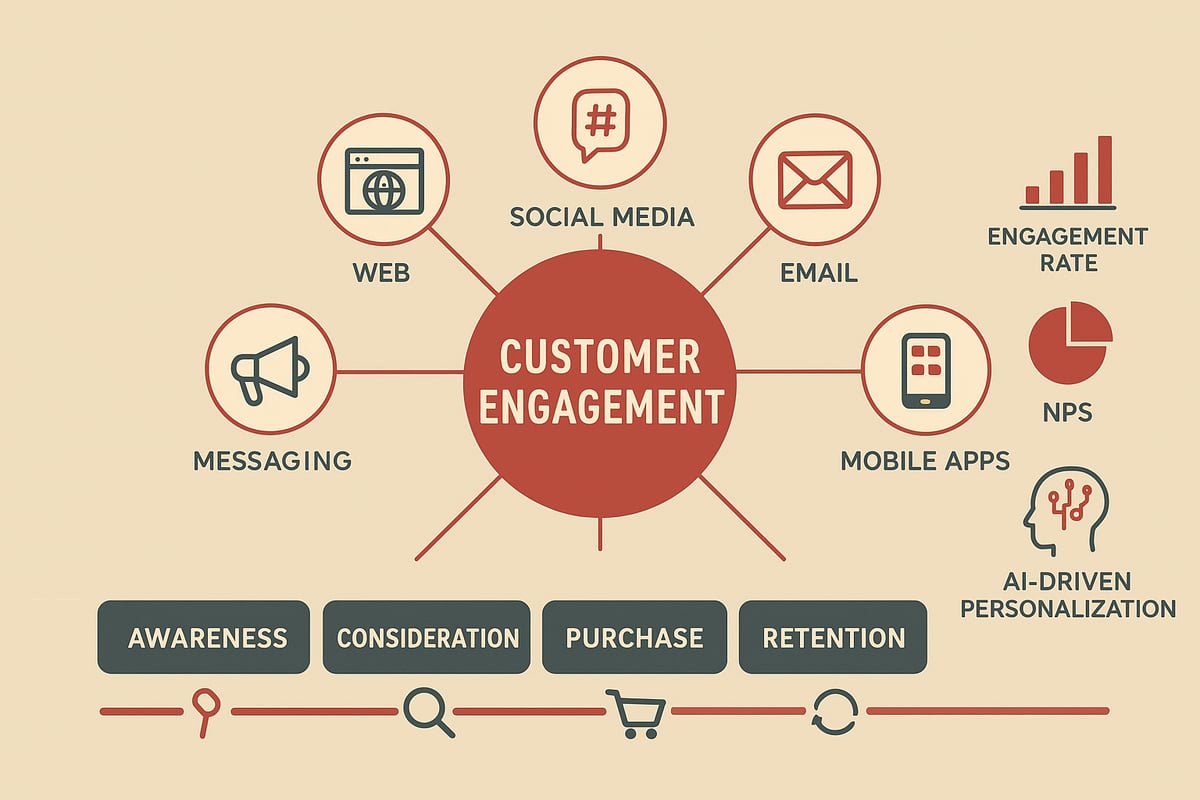
The landscape of customer engagement in digital marketing is shaped by a mix of channels. Core platforms include social media, email, websites, mobile apps, and messaging tools. In recent years, conversational AI and voice assistants have emerged as vital parts of the mix, creating more natural interactions.
Integrating offline and online efforts is now a best practice. Brands leverage WhatsApp, SMS, and AI chatbots to connect with customers wherever they are. These channels allow for seamless, real-time engagement, ensuring brands remain present throughout the customer journey.
A multi-channel approach is essential to meet evolving customer expectations and drive consistent engagement.
The Customer Engagement Lifecycle
Customer engagement in digital marketing follows a defined lifecycle: awareness, consideration, purchase, retention, and advocacy. Each stage offers unique opportunities for brands to connect and deliver value.
- Awareness: Capture attention with compelling content and ads.
- Consideration: Nurture interest via educational resources and personalized messaging.
- Purchase: Guide decisions through real-time support and clear calls-to-action.
- Retention: Encourage repeat interactions with loyalty programs and follow-ups.
- Advocacy: Inspire word-of-mouth with referral incentives and community building.
Mapping strategies to each phase ensures every customer touchpoint is optimized for maximum engagement and satisfaction.
Essential Customer Engagement Metrics & Analytics
Understanding and optimizing customer engagement in digital marketing begins with robust metrics and analytics. Brands in 2026 must go beyond surface-level data, focusing on actionable insights that reveal how customers interact across touchpoints. Let’s explore the essential metrics, advanced analytics, omnichannel measurement, and benchmarking strategies every digital marketer needs.
Core Metrics to Track in 2026
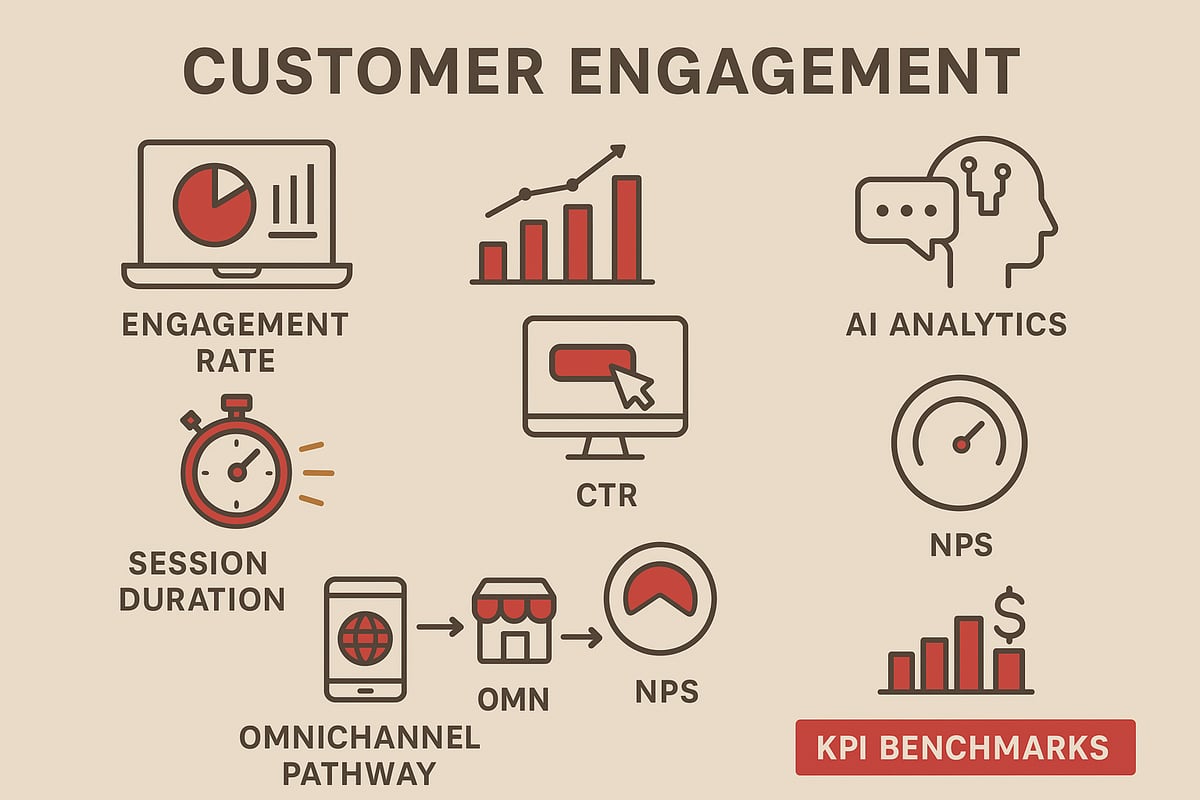
Tracking the right metrics is essential for measuring customer engagement in digital marketing. Start with engagement rate, which reflects the percentage of users interacting with content. Session duration and click-through rate (CTR) help gauge how deeply visitors connect with your website or app.
Conversion rate remains a cornerstone, showing the effectiveness of your engagement efforts. Net Promoter Score (NPS) and Customer Satisfaction (CSAT) provide qualitative insights, while Customer Lifetime Value (CLV) quantifies long-term impact. Event-based metrics, such as feature usage and content interaction, offer granular views of user behavior. Tools like heatmaps and session replays reveal patterns in customer journeys that are often missed by traditional analytics.
Advanced Analytics and AI-Powered Insights
In 2026, AI transforms how brands analyze customer engagement in digital marketing. Machine learning algorithms process vast datasets, uncovering patterns and predicting customer behavior with remarkable accuracy. Predictive analytics can flag potential churn or identify upsell opportunities before they arise.
Real-time dashboards and sophisticated data visualization platforms empower teams to act quickly on emerging trends. For example, AI tools now distill customer feedback into actionable themes, enabling brands to personalize experiences at scale. According to AI-driven personalization boosts engagement, 87% of organizations leveraging AI-powered personalization see significant improvements in customer engagement in digital marketing. These advancements allow marketers to make informed decisions and create more meaningful connections with their audiences.
Measuring Omnichannel Engagement
Today’s customer engagement in digital marketing spans multiple platforms, making unified measurement critical. Integrating data from web, mobile, email, and even offline touchpoints gives brands a complete view of the customer journey. Attribution modeling helps marketers understand which channels contribute most to conversions and engagement.
Unified analytics platforms are indispensable for tracking cross-channel interactions in real time. These systems break down data silos, ensuring every touchpoint is accounted for. For instance, a customer might engage with a brand on social media, receive a personalized email, and make a purchase in-store. Measuring these touchpoints holistically is the key to optimizing engagement strategies.
Setting Benchmarks and KPIs
Setting clear benchmarks is fundamental to improving customer engagement in digital marketing. Start by researching industry standards for metrics like engagement rate, CTR, and CLV. Top-performing brands often set ambitious, yet achievable, KPIs to drive continuous progress.
A/B testing and ongoing experimentation are vital for refining strategies and surpassing benchmarks. Regularly review performance data, adjust goals, and celebrate incremental improvements. By aligning benchmarks with your unique business objectives, you ensure that engagement efforts directly support long-term growth and customer loyalty.
Strategies for Boosting Customer Engagement
To succeed with customer engagement in digital marketing, brands must deploy a blend of data-driven tactics and human-centered strategies. In 2026, the most effective approaches integrate personalization, interactivity, community building, and seamless omnichannel experiences. Let us explore these core strategies in detail.
Personalization at Scale
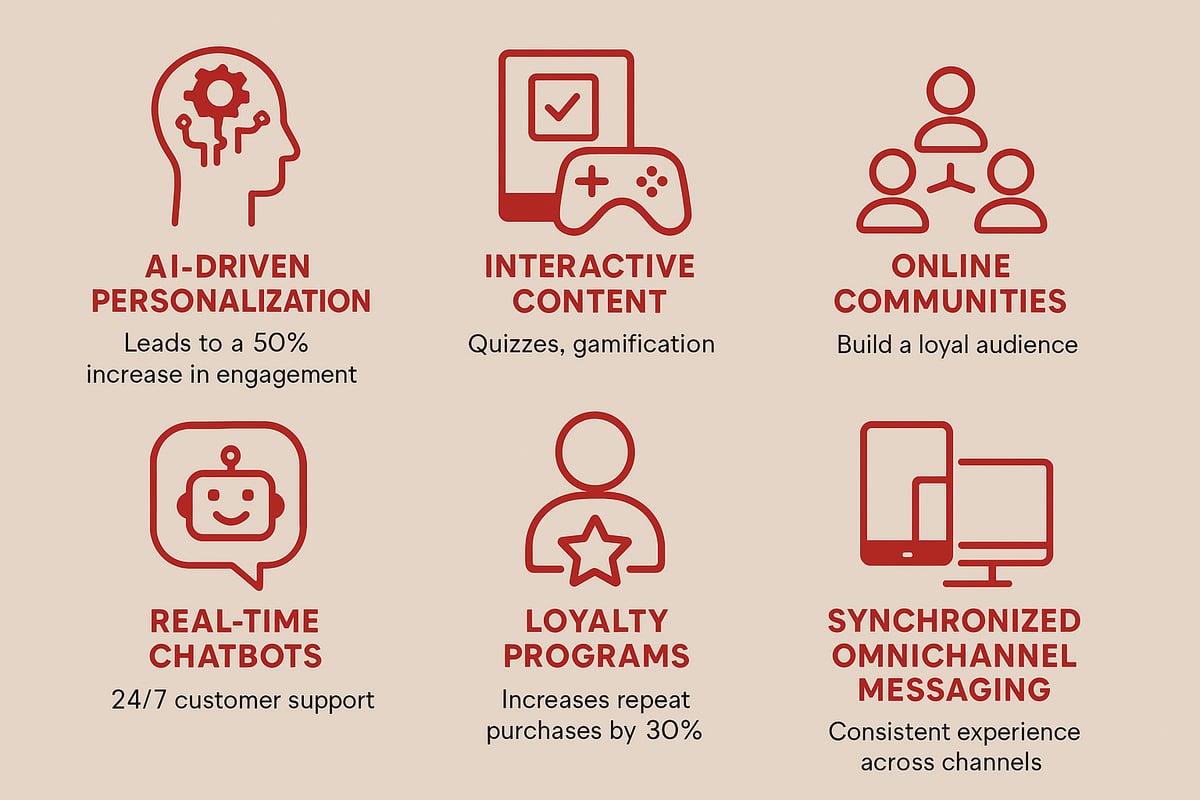
Personalization is the foundation of customer engagement in digital marketing. In 2026, AI enables brands to tailor content, product recommendations, and experiences to each user's needs and behaviors. Dynamic website elements, personalized email sequences, and real-time offers all drive higher engagement and conversion rates.
First-party data is essential for building detailed customer profiles. Brands use this data to segment audiences, deliver relevant messages, and anticipate customer needs. For example, e-commerce platforms boost conversions with AI-powered product suggestions based on browsing and purchase history.
Key tactics include:
- Automated product and content recommendations
- Location-based and behavioral targeting
- Adaptive website and app interfaces
For a deeper dive into why personalization is pivotal for customer engagement in digital marketing, see Why Personalized Marketing Matters.
Interactive Content and Experiences
Interactive experiences are revolutionizing customer engagement in digital marketing. Brands using quizzes, polls, calculators, and interactive videos see longer session times and higher repeat visits. Gamification, such as badges or leaderboards, motivates users to return and participate more frequently.
Consider these interactive formats:
- Quizzes and polls to collect preferences
- Interactive infographics and videos for storytelling
- Calculators to personalize solutions or pricing
Media companies often leverage interactive storytelling, keeping audiences engaged and encouraging social sharing. These approaches foster two-way communication and make the brand experience memorable.
Community Building and Social Engagement
Building strong communities is central to customer engagement in digital marketing. Brands are forming groups on social platforms and developing owned communities to nurture ongoing relationships. These forums enable customers to share experiences, offer feedback, and support each other.
Effective strategies include:
- Launching branded groups on popular networks
- Hosting live events or webinars for direct interaction
- Encouraging user-generated content and peer-to-peer support
Healthcare brands, for example, create patient forums that empower members and build trust. These communities serve as ongoing touchpoints, increasing both retention and advocacy.
Real-Time Communication and Conversational Marketing
Timely, personalized communication is now a key driver of customer engagement in digital marketing. Chatbots, live chat, and AI-powered assistants help brands interact with customers instantly across multiple channels. Messaging apps like WhatsApp and SMS provide direct, convenient touchpoints for personalized offers and support.
Best practices for real-time engagement:
- Deploy AI chatbots for 24/7 support
- Use live chat to guide complex purchase decisions
- Personalize messages based on user actions and preferences
Retailers leveraging real-time chat see increased conversion rates and higher satisfaction, as customers receive answers exactly when they need them.
Loyalty Programs and Retention Initiatives
Loyalty programs are proven mechanisms for strengthening customer engagement in digital marketing. Points-based rewards, VIP tiers, and exclusive offers incentivize repeat business and deepen relationships. Integrating loyalty programs into apps and digital platforms makes tracking and redeeming rewards seamless.
Elements of effective loyalty programs:
- Mobile integration for easy access
- Personalized rewards based on purchase history
- Exclusive content or early product access
Retail brands adopting app-based loyalty programs report higher retention rates and greater lifetime value. These initiatives turn satisfied customers into loyal advocates.
Omnichannel Journey Orchestration
Orchestrating seamless experiences across all touchpoints is essential for customer engagement in digital marketing. Automation platforms let brands synchronize messaging and offers via email, SMS, apps, and websites. This ensures customers receive consistent, relevant communications as they move through the engagement lifecycle.
Key components of omnichannel orchestration:
- Centralized data for unified customer profiles
- Automated triggers for lifecycle events
- Consistent branding and tone across channels
Brands that coordinate messaging across platforms see improved engagement metrics and stronger customer loyalty. Mapping strategies to each stage of the customer journey creates a cohesive and satisfying experience.
Tools and Technologies Powering Engagement in 2026
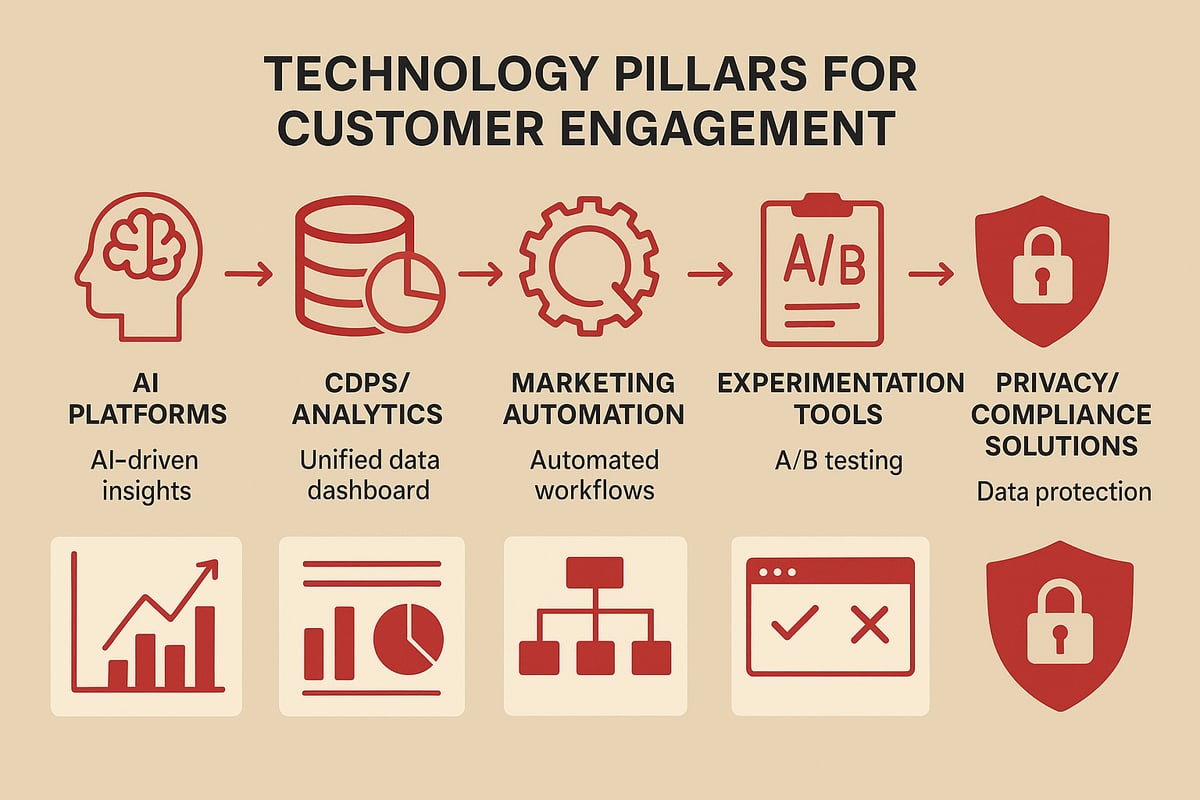
Staying ahead in customer engagement in digital marketing requires embracing the latest technologies. In 2026, brands rely on a powerful toolset to foster meaningful interactions, streamline data, and ensure trust with every customer touchpoint.
AI and Machine Learning Platforms
Artificial intelligence is transforming customer engagement in digital marketing by enabling brands to understand and predict customer behavior. AI-driven solutions automate segmentation, personalize recommendations, and provide real-time support.
Today, leading platforms use natural language processing to interpret customer intent and sentiment. Machine learning models identify buying patterns and trigger actions such as tailored offers or proactive service. For example, AI agents can sense when a customer may need help and instantly provide resources or escalate to a human agent.
According to AI techniques revolutionize digital marketing, advanced algorithms now deliver more customized and efficient experiences, deepening engagement and supporting informed decision-making. As AI continues to evolve, its role in customer engagement in digital marketing will only grow.
Customer Data Platforms (CDPs) and Unified Analytics
Customer Data Platforms (CDPs) have become essential for managing customer engagement in digital marketing. CDPs centralize data from web, mobile, social, and offline sources, creating unified customer profiles.
Unified analytics tools then visualize this data, making it easy for marketing teams to identify trends, segment audiences, and track engagement across all touchpoints. Brands benefit from 360-degree insights that fuel real-time personalization.
For instance, a CDP can integrate purchase history, browsing behavior, and support interactions, enabling targeted campaigns and personalized product recommendations. Unified analytics platforms further simplify performance tracking and attribution, helping teams optimize customer engagement in digital marketing efficiently.
Marketing Automation and Journey Builders
Marketing automation platforms streamline customer engagement in digital marketing by orchestrating emails, SMS, push notifications, and more. Visual journey builders let marketers map out each step of the customer journey, ensuring timely and relevant interactions.
These tools automate lead nurturing, onboarding, and retention flows. For example, B2B companies can trigger personalized content based on user actions, while retail brands send automated cart reminders or loyalty offers.
Key features include drag-and-drop workflows, behavior-based triggers, and real-time performance monitoring. By automating repetitive tasks, teams free up time for strategic planning and creative initiatives, all while boosting customer engagement in digital marketing.
Interactive and Experimentation Tools
Interactive tools play a vital role in customer engagement in digital marketing. Platforms offering A/B testing, heatmaps, and session replays allow brands to experiment with content, layouts, and features, optimizing for higher engagement.
Feature experimentation tools enable marketers to test new site elements or app functionalities before rolling them out widely. For example, media companies use interactive quizzes and dynamic videos to increase time-on-site and content interaction.
Lists and tables simplify comparison of engagement metrics, while session replays reveal friction points in the customer journey. With these insights, brands continually refine their digital experiences, driving better customer engagement in digital marketing.
Privacy, Security, and Compliance Solutions
As digital regulations evolve, privacy and security solutions are critical for customer engagement in digital marketing. Brands must ensure data transparency and comply with standards like GDPR and CCPA.
Modern platforms provide robust consent management, encryption, and audit trails. Transparent data policies build trust, while automated compliance checks reduce risk.
Healthcare brands, in particular, lead the way with advanced data governance and privacy features. Ensuring that every engagement is secure and compliant not only protects customers but also strengthens brand reputation, making privacy a cornerstone of customer engagement in digital marketing.
Personalization, Privacy, and Trust: The New Engagement Imperatives
In 2026, brands face new imperatives for customer engagement in digital marketing. As personalization becomes more sophisticated, privacy and trust are now at the forefront of every engagement strategy. Companies must navigate evolving regulations while delivering relevant, meaningful experiences that foster long-term loyalty.
Balancing Personalization with Privacy
Balancing personalization and privacy is critical for customer engagement in digital marketing. In 2026, regulations like GDPR and CCPA set strict standards for data collection and usage. Brands must secure clear consent before leveraging personal data for targeted experiences.
Transparent data policies build trust, showing customers how their data is used to improve engagement. For example, leading companies now provide privacy dashboards, allowing users to manage preferences in real time. By aligning personalization efforts with privacy best practices, brands ensure compliance and foster genuine relationships. Explore more about Online and Digital Marketing Strategies that support responsible engagement approaches.
Building Trust Through Authenticity
Trust is the foundation of customer engagement in digital marketing. Customers expect brands to communicate authentically, using genuine stories and consistent messaging that reflect company values. Brands that avoid manipulative tactics and focus on transparency gain deeper loyalty.
Values-driven marketing is rising, as audiences seek brands whose actions match their promises. For instance, companies sharing behind-the-scenes content or highlighting ethical sourcing practices build credibility. Authenticity increases engagement, driving advocacy and long-term retention.
Managing Customer Feedback and Sentiment
Listening to feedback is essential for customer engagement in digital marketing. Brands gather input across channels—web, social, email, and apps—to understand sentiment and improve experiences. Advanced AI tools now analyze feedback efficiently, surfacing actionable insights from large datasets.
By monitoring real-time sentiment, brands adapt quickly to customer needs. For example, companies use AI to identify emerging trends and respond promptly to concerns. This agile approach builds trust, showing customers their voices matter and fueling continuous improvement.
Ethical Use of AI and Automation
Ethical AI is a cornerstone of customer engagement in digital marketing. As automation powers personalization and support, brands must ensure fairness, transparency, and accountability in every interaction. Clear guidelines help avoid bias and respect user autonomy.
Organizations now review algorithms regularly, auditing for unintended consequences. By establishing ethical AI frameworks, brands maintain customer trust and compliance. Responsible automation not only elevates engagement but also safeguards brand reputation in a rapidly evolving digital world.
Future Trends in Customer Engagement for Digital Marketing
The landscape of customer engagement in digital marketing is evolving rapidly as brands adapt to new technologies and rising consumer expectations. Staying ahead means understanding the trends shaping how brands connect with audiences in 2026 and beyond.
The Rise of Predictive and Proactive Engagement
AI-driven predictive analytics is redefining customer engagement in digital marketing. Brands can now anticipate customer needs and behaviors before they happen, enabling proactive outreach and tailored offers. For example, e-commerce brands use machine learning to predict which customers may churn and send targeted retention incentives.
This shift from reactive to proactive engagement means brands can resolve pain points before they escalate. Predictive models help marketers craft hyper-relevant messaging, increasing satisfaction and long-term loyalty. As a result, customer engagement in digital marketing is becoming more data-driven and anticipatory, driving higher ROI and deeper relationships.
Integration of Voice, AR, and Emerging Technologies
Emerging technologies like voice assistants and augmented reality are transforming customer engagement in digital marketing. Voice-enabled devices allow users to interact with brands through natural language, while AR creates immersive experiences for product demos and virtual try-ons.
A compelling example is the use of gamified voice competitions, as demonstrated in the Gamified voice competitions enhance user engagement study. These interactive experiences not only foster brand loyalty but also increase engagement rates by making interactions fun and memorable. As brands adopt these tools, customer engagement in digital marketing will become more interactive and dynamic.
Hyper-Personalization and Micro-Moments
Hyper-personalization is taking center stage in customer engagement in digital marketing. Brands leverage real-time data to deliver tailored content, offers, and experiences at precisely the right moment. Micro-moments—those brief windows when customers are ready to act—are now opportunities for brands to provide instant value.
AI and automation enable marketers to recognize these moments and respond with personalized recommendations or support. This level of customization ensures customers feel understood and valued throughout their journey. As micro-moments multiply across channels, brands that excel at hyper-personalization will build stronger, more loyal audiences.
The Evolution of Metrics and Measurement
As privacy regulations grow stricter, traditional metrics are giving way to new ways of measuring customer engagement in digital marketing. Real-time, event-based analytics allow brands to track behavioral patterns and sentiment without compromising user privacy. Metrics like session engagement, intent signals, and content interaction are now prioritized over legacy indicators.
Here’s a summary of evolving metrics:
| Legacy Metric | Emerging Metric |
|---|---|
| Page Views | Session Engagement |
| Email Opens | Micro-Moment Actions |
| CTR | Intent-Based Signals |
Brands now rely on unified dashboards to visualize cross-channel engagement and adapt strategies quickly. This evolution ensures measurement keeps pace with changing consumer behaviors and regulatory landscapes.
Preparing for the Next Wave of Digital Transformation
To thrive in the future, brands must embrace agility in customer engagement in digital marketing. This involves investing in flexible technology stacks, fostering a culture of experimentation, and upskilling teams for rapid adaptation. Those who continuously learn and innovate will be best positioned to respond to shifting trends and new opportunities.
Successful brands are already leveraging AI, automation, and real-time analytics to refine engagement strategies. By staying curious and proactive, organizations can future-proof their approach to customer engagement in digital marketing and lead the next era of digital transformation.
As you look to strengthen your customer engagement strategies in the competitive landscape of 2026, seeing real-world examples can be invaluable. At Red Van Creative, we’ve spent decades helping brands across industries foster authentic connections through innovative website design, branding, SEO, and targeted advertising—all built on a foundation of local expertise and trusted relationships. If you’re curious how these actionable tactics come to life, I invite you to explore the results we’ve achieved for clients just like you. Let’s inspire your next move together—See Our Work / View Our Portfolio.