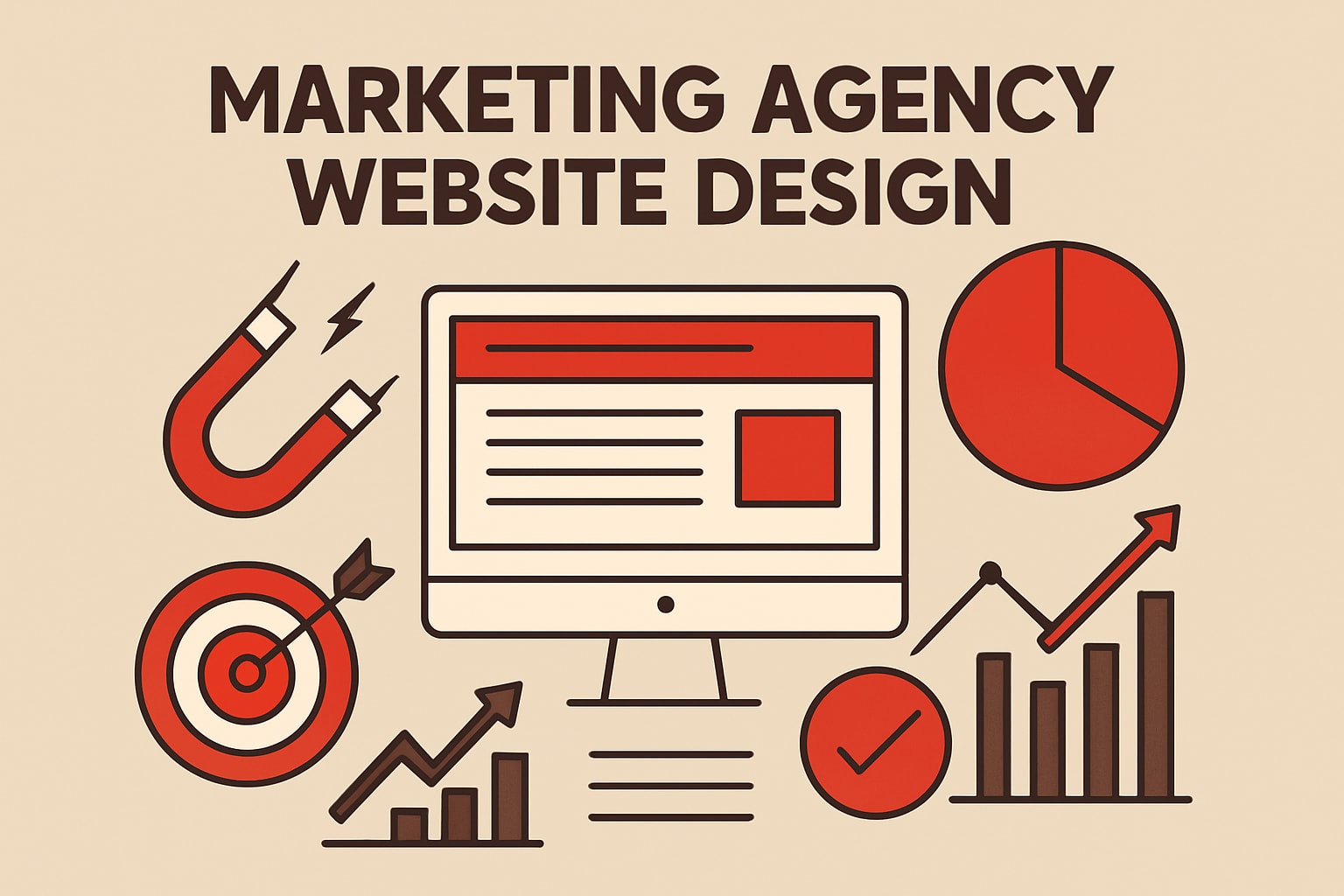
In 2026, your website is the face of your marketing agency—it is the first impression, the primary driver of client acquisition, and a cornerstone of brand credibility.
Navigating the evolving landscape of marketing agency website design is essential to stand out and win more business. This guide offers a clear roadmap, highlighting the latest trends and actionable strategies for building a high-performing site this year.
You will discover emerging design approaches, must-have website features, user experience best practices, and effective branding integration. We will also walk through practical steps for building or revamping your agency’s online presence.
Did you know that agencies with modern, optimized websites see up to twice the client inquiries? Stay ahead of the curve and use these insights to elevate your agency’s digital impact.
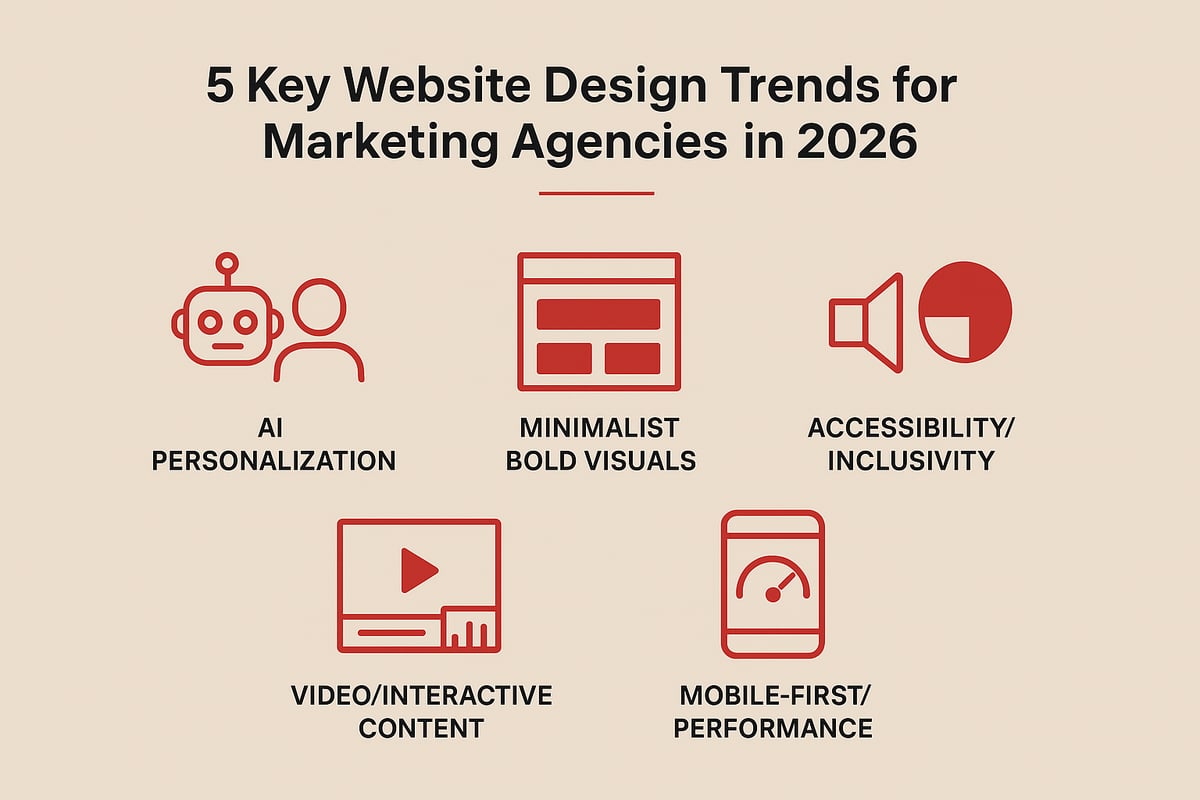
Key Website Design Trends for Marketing Agencies in 2026
Staying ahead in marketing agency website design requires a clear understanding of the trends shaping the digital landscape in 2026. Agencies are embracing new technologies, visual styles, and user experience strategies to engage and convert more clients than ever before.
Emphasis on Personalization and AI-driven Experiences
Personalization takes center stage in marketing agency website design for 2026. Agencies now deploy AI-powered content recommendations, ensuring each visitor sees services and case studies tailored to their interests. Dynamic landing pages adapt in real time, customizing layouts and calls-to-action based on user behavior.
AI chatbots provide instant consultations, guiding visitors through services or answering questions on demand. According to competitor research, 78% of agencies have seen conversion rates climb by leveraging these personalized experiences. For a deeper look at how AI is transforming web personalization, explore AI-Powered Personalization in Web Design.
Agencies using this advanced approach to marketing agency website design find themselves building stronger client relationships and gaining a competitive edge.
Minimalist Aesthetics with Bold Visuals
Minimalism continues to define marketing agency website design in 2026, but with a twist: bold visuals and engaging micro-animations. Clean layouts with generous white space help users focus on content, while vibrant color palettes and interactive hero sections bring energy and movement to the page.
Agencies are incorporating animated infographics and expressive elements to capture attention without overwhelming visitors. This design philosophy not only enhances visual appeal but also streamlines navigation, reducing cognitive overload and supporting a seamless browsing experience.
As a result, marketing agency website design achieves clarity, impact, and memorability.
Accessibility and Inclusivity as Standard
Accessibility is no longer optional in marketing agency website design. Agencies are committed to meeting ADA and WCAG 2.2 standards, implementing voice navigation, high-contrast modes, and alternative text for all visuals.
Multiple language options ensure content is available to a broader audience. Industry surveys reveal a 20% increase in client inquiries when agencies improve site accessibility. By prioritizing inclusivity, agencies demonstrate a commitment to serving all users, removing barriers, and positioning themselves as leaders in ethical digital practice.
This approach makes marketing agency website design more welcoming and effective for everyone.
Seamless Integration of Video and Interactive Content
Video and interactive content are now integral to marketing agency website design. Agencies showcase video case studies, explainer videos, and interactive portfolios that invite users to explore recent work in engaging ways.
Live streams for webinars and Q&A sessions bring real-time value to the website, while interactive dashboards display ongoing project results transparently. Data shows that incorporating these elements increases average session duration by 30%.
By blending traditional content with interactive media, marketing agency website design keeps visitors engaged and encourages deeper exploration of agency capabilities.
Mobile-First and Performance-Optimized Design
In 2026, mobile-first thinking is a fundamental principle of marketing agency website design. Agencies deliver responsive layouts, accelerated mobile pages (AMP), and progressive web apps (PWAs) to guarantee seamless experiences across devices.
Fast load times are achieved through lightweight frameworks and optimized assets, ensuring users stay engaged. With 60% of agency website traffic now coming from mobile devices, prioritizing mobile UX is essential for capturing and converting leads.
Performance optimization in marketing agency website design directly impacts user satisfaction and business growth.
Essential Features Every Marketing Agency Website Needs
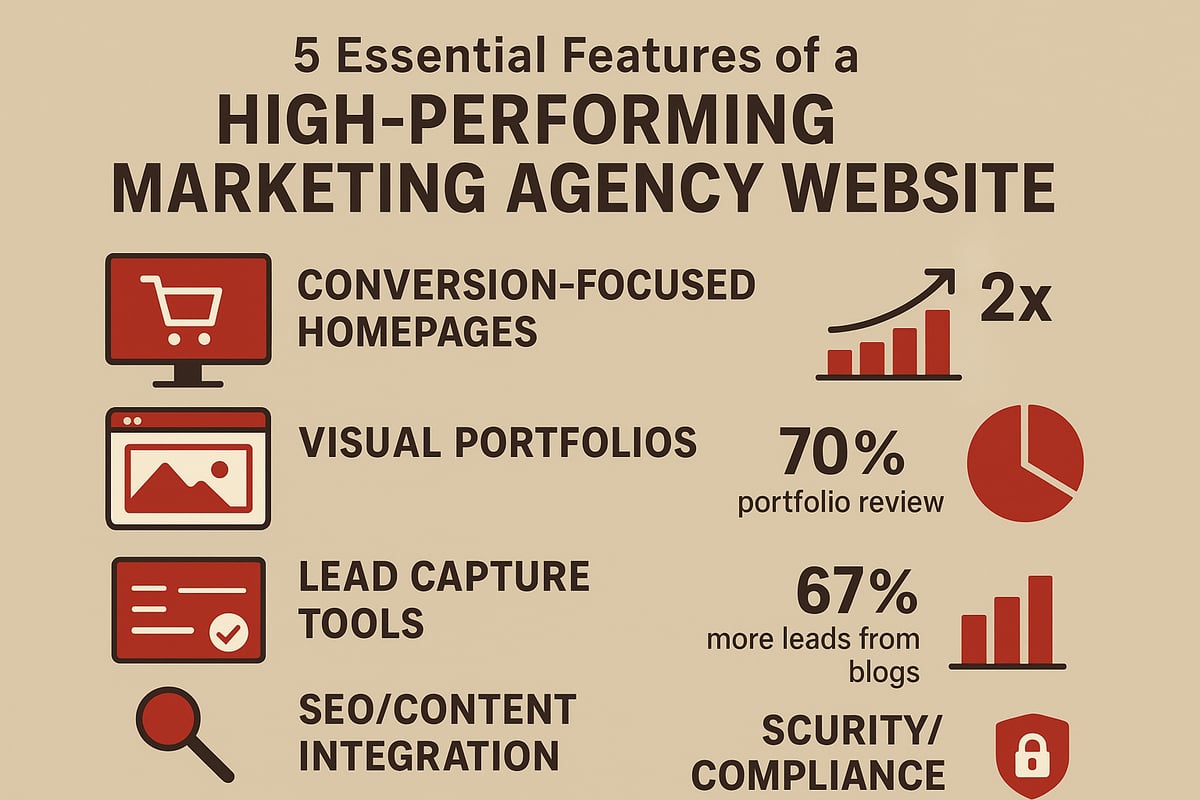
A high-impact marketing agency website design is built on features that drive real results. Today’s agency websites must blend conversion strategies, engaging portfolios, seamless lead capture, strong SEO, and robust security to stand out. Let’s break down the must-have elements that define the best in marketing agency website design.
Conversion-Focused Homepages
The homepage is the digital front door for any marketing agency website design. It should present a clear value proposition and a compelling call to action above the fold, making it immediately obvious what sets your agency apart.
Highlight social proof, such as client testimonials, partner logos, or industry awards, to build trust quickly. Interactive service selectors can help visitors find relevant solutions fast. Agencies that invest in optimizing their homepages for conversion typically see double the lead generation compared to those that do not.
- Value proposition and CTA up front
- Social proof elements
- Interactive navigation features
Robust Portfolio and Case Studies
A standout portfolio is central to marketing agency website design, offering proof of expertise and measurable results. Present visual galleries with filters for industry or service type, giving prospects an easy way to explore your agency’s success stories.
In-depth case studies should detail challenges, solutions, and outcomes, ideally using interactive elements like before-and-after sliders for design projects. According to industry data, 70% of potential clients review an agency’s portfolio before making contact, underscoring its importance.
| Portfolio Feature | Benefit |
|---|---|
| Visual Galleries | Showcase versatility |
| Case Studies | Build credibility |
| Interactive Elements | Increase engagement |
Streamlined Contact and Lead Capture
Effective marketing agency website design makes it simple for visitors to get in touch or request a consultation. Use multi-step forms to guide users through the process, live chat for instant responses, and scheduling integrations for booking meetings.
AI-powered chatbots can qualify leads around the clock. Streamlining your contact forms, such as reducing the number of required fields, significantly boosts completion rates—agencies report up to a 40% increase.
- Multi-step forms
- Live chat and chatbots
- Integrated scheduling tools
SEO and Content Marketing Integration
A successful marketing agency website design must include robust SEO and content strategies. Incorporate a blog, resource library, and downloadable whitepapers to attract and nurture leads. Use schema markup and follow on-page SEO best practices to boost visibility.
For each core service, create dedicated landing pages optimized for relevant keywords. Agencies with active blogs generate 67% more leads per month. For more on how web design and marketing work together, see Web design and marketing services.
- Blog and resources section
- SEO-optimized service pages
- Schema markup for search engines
Security, Privacy, and Compliance
Trust is a non-negotiable foundation of any marketing agency website design. Ensure your site uses HTTPS and complies with GDPR or CCPA, providing clear privacy policies for visitors. Secure client portals enable safe project collaboration and document sharing.
Offer NDA downloads and secure file upload options to give clients peace of mind. Prominently displaying security features and compliance certifications can enhance your agency’s credibility with prospective clients.
- HTTPS and privacy compliance
- Secure client portals
- Visible security indicators
User Experience (UX) Best Practices for Agency Websites
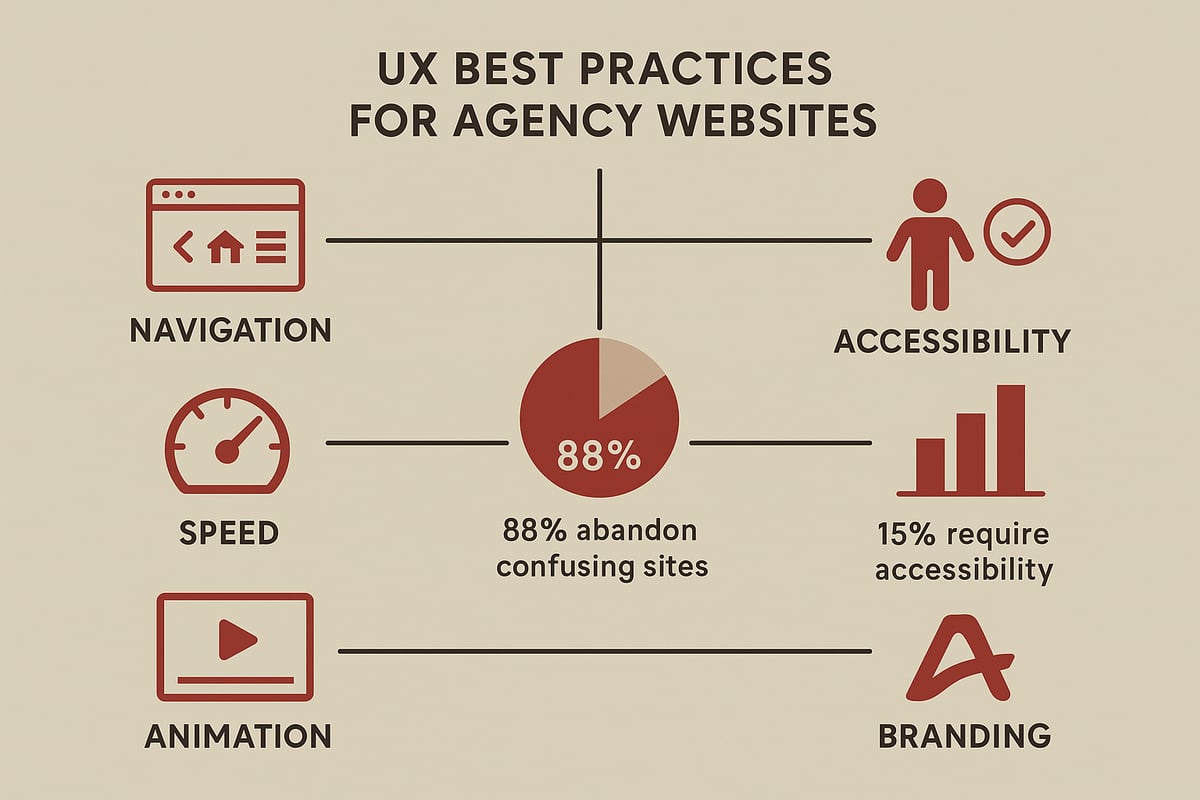
A seamless user experience is the foundation of effective marketing agency website design. Agencies that prioritize intuitive navigation, swift performance, accessibility, engaging interactions, and consistent branding see measurable improvements in client engagement and conversion rates. Explore these best practices to ensure your agency’s website excels in 2026.
Intuitive Navigation and Site Architecture
Clear navigation is essential in marketing agency website design. Visitors should find information quickly without confusion. Use simple menu structures and logical page hierarchies to guide users through services, case studies, and contact options.
Effective agencies implement breadcrumb navigation and mega-menus for large offerings. Sticky navigation bars ensure menu access even while scrolling. Consider a well-organized sitemap to help users and search engines.
- Simple main menu with clear labels
- Breadcrumbs for orientation
- Sticky header for quick access
According to industry data, 88% of users abandon sites with confusing navigation. For more actionable advice, explore these Creative UI and UX design tips.
Fast Load Times and Performance Optimization
Fast performance is non-negotiable in marketing agency website design. Compress images and use code minification to speed up your site. Leverage content delivery networks for global reach and enable lazy loading on media-heavy pages.
Agencies that achieve sub-2 second load times see higher engagement. Every extra second of delay reduces conversion rates by 7%. Optimize assets and scripts for a frictionless experience.
- Compress all large images
- Minify CSS and JavaScript
- Utilize a reliable CDN
Prioritize performance to keep users engaged and drive results.
Accessibility and Inclusive Design
Accessibility is now a standard in marketing agency website design. Make your site usable for everyone by supporting keyboard navigation, adding ARIA labels, and ensuring compatibility with screen readers. Test color contrast and offer adjustable font sizes for better readability.
Agencies can also provide dyslexia-friendly fonts and alternative text for visuals. With 15% of users requiring accessible features, inclusive design is both ethical and practical.
- Keyboard-friendly navigation
- Screen reader compatibility
- High-contrast color schemes
Improving accessibility broadens your audience and demonstrates commitment to inclusivity.
Engaging Micro-Interactions and Animations
Micro-interactions boost engagement in marketing agency website design. Use hover effects, animated buttons, and subtle feedback cues to guide user actions. Well-placed transitions and progress bars add clarity without being distracting.
For example, animated progress bars in portfolios illustrate project stages. Micro-interactions can increase user engagement by 22%.
- Animated buttons for CTAs
- Subtle hover transitions
- Progress indicators in case studies
Thoughtful animations create a memorable and interactive experience for every visitor.
Consistent Branding and Visual Identity
Consistency is crucial in marketing agency website design. Use cohesive color schemes, typography, and iconography across all pages. Integrate branded illustrations and photography to reinforce your agency’s unique identity.
Maintain a unified brand voice, from website copy to visuals. Agencies with consistent branding see a 23% increase in revenue, according to industry reports.
- Unified color palette and fonts
- Branded icon sets and imagery
- Consistent messaging throughout
A strong, consistent visual identity builds trust and sets your agency apart in a competitive market.
Integrating Branding and Storytelling into Website Design
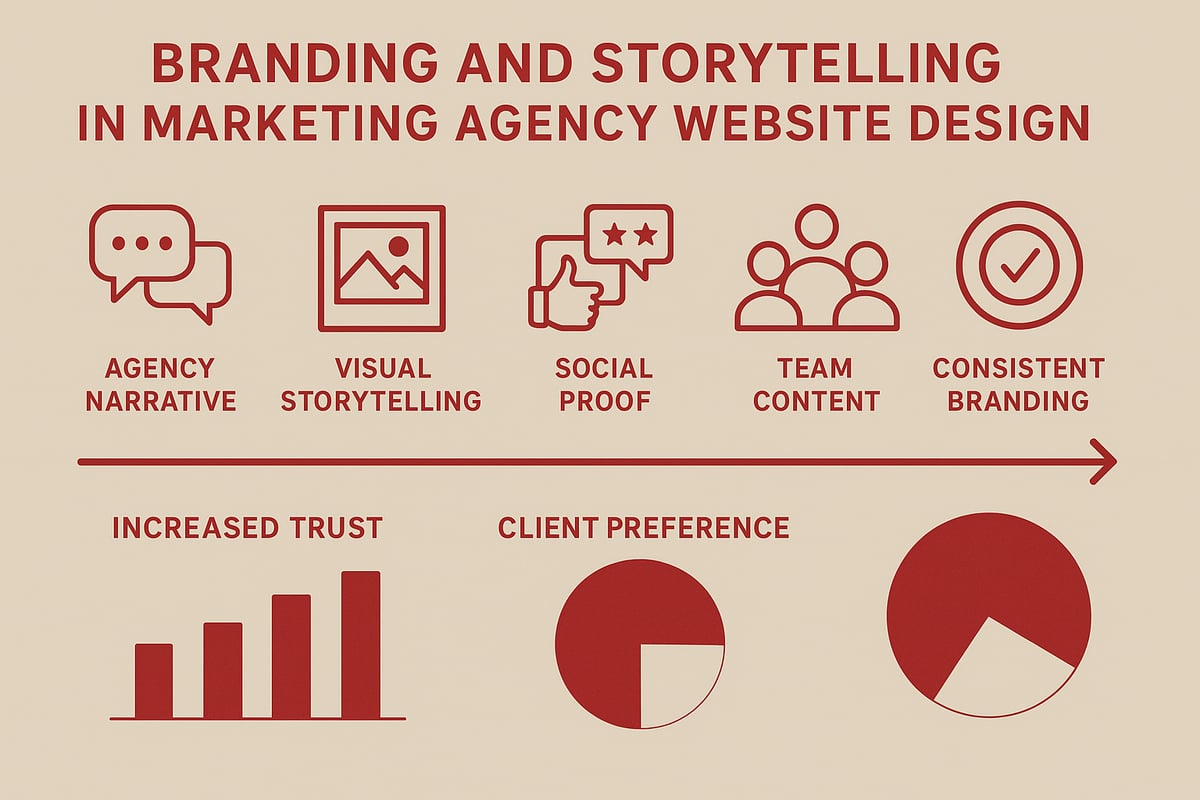
A successful marketing agency website design must do more than showcase services; it needs to tell a compelling brand story. By weaving storytelling and branding into every aspect, agencies can forge deeper connections with potential clients and stand out in a crowded digital landscape.
Crafting a Compelling Agency Narrative
The foundation of any marketing agency website design is a strong, authentic narrative. Agencies should create story-driven “About Us” pages, highlighting their journey, mission, and unique value.
Timeline graphics and milestone highlights make the brand’s evolution tangible. Including leadership bios and video introductions from founders adds a personal touch, helping visitors relate to the agency’s story.
A well-crafted narrative can differentiate an agency, building emotional resonance and trust with clients from the very first interaction.
Visual Storytelling Elements
Visual storytelling is a powerful tool in marketing agency website design. Custom illustrations, infographics, and icon sets help communicate complex ideas quickly and memorably.
Photography that showcases agency culture and real client work adds authenticity. Interactive timelines and project journeys further immerse visitors in the brand’s process.
Data shows that visual content is processed 60,000 times faster than text, making it crucial for increasing engagement and retention on agency websites.
Showcasing Results and Social Proof
Trust is essential in marketing agency website design. Displaying client testimonials, reviews, and video endorsements gives credibility to the agency’s claims.
Award badges and media mentions help reinforce expertise. Rotating testimonial carousels and dynamic case study displays keep content fresh and persuasive.
This strategic use of social proof not only builds confidence but also increases conversion rates by assuring prospective clients of the agency’s track record.
Humanizing the Brand with Team Content
Clients want to know who they are working with, making team content a vital part of marketing agency website design. Detailed team bios, behind-the-scenes features, and staff spotlights introduce the people behind the agency’s work.
Interactive team directories and video Q&As foster transparency and connection. Virtual office tours offer a glimpse into agency culture, helping clients feel personally connected and more likely to engage.
Consistency Across All Touchpoints
Consistency in branding is critical for a cohesive marketing agency website design. Unified messaging, visual identity, and tone should flow seamlessly from the website to social media and digital ads.
Establishing cross-channel branding guidelines ensures every client interaction reinforces the agency’s promise. For deeper insights, explore the power of brand consistency online and how it shapes perception and trust.
Consistent branding not only enhances recognition but also drives measurable results, making it a cornerstone of high-performing agency websites.
Step-by-Step Guide to Building or Redesigning an Agency Website in 2026
A successful marketing agency website design in 2026 demands a strategic, stepwise approach. Whether you are building from scratch or revamping an existing site, following a clear process ensures your agency stands out and delivers results.
Step 1: Define Your Goals and Target Audience
Start by clarifying what you want your marketing agency website design to achieve. Are you focused on lead generation, building brand awareness, or attracting top talent? Each goal shapes your site’s features and messaging.
Develop detailed audience personas. Identify key industries, decision-maker roles, and client pain points. For example, B2B agencies may emphasize case studies, while B2C agencies might prioritize interactive features. Aligning your design choices with clear objectives and audience insights creates a strong foundation for every next step.
Step 2: Plan Site Structure and Content Strategy
Map out your site’s architecture with a comprehensive sitemap. List out all essential pages, such as Services, Portfolio, About, and Blog. Prioritize high-impact pages that support your goals and enhance the marketing agency website design.
Conduct a content inventory to assess what you have and identify gaps. Research SEO opportunities and define target keywords for each page. A well-structured site improves navigation and supports both user experience and search engine performance. Agencies that plan their site structure carefully typically see improved search rankings and user engagement.
Step 3: Design Wireframes and Visual Concepts
Create wireframes to outline your site’s layout and flow. Start with low-fidelity sketches, then move to high-fidelity prototypes for key pages. Mood boards help define the visual direction, including color palettes, typography, and imagery that reflect your brand.
Embrace modern trends such as minimalist layouts and strong content focus, which improve clarity and conversion rates. For inspiration, explore Minimalist Web Design with Strong Content Focus to see how leading agencies use simplicity to their advantage. Early prototyping of interactive elements helps minimize costly changes during development.
Step 4: Develop and Optimize the Website
Select a flexible CMS and tech stack that fits your needs. WordPress and headless CMS solutions are popular choices for marketing agency website design due to their scalability and ease of integration with third-party tools.
Focus on mobile responsiveness, accessibility, and fast load times. Use modular design systems for efficiency and future growth. Apply on-page SEO best practices, including schema markup and optimized metadata. Testing your site on multiple devices ensures a seamless experience for all visitors, building credibility and trust with potential clients.
Step 5: Test, Launch, and Continuously Improve
Before launch, conduct thorough usability testing to identify any pain points. Use A/B testing for key elements such as calls to action or contact forms. Set up website analytics to track performance and gain insights into user behavior.
Develop a launch strategy that includes internal reviews and stakeholder feedback. After going live, monitor the site closely and gather client input for ongoing improvements. Continuous optimization keeps your marketing agency website design competitive and ensures it evolves with industry trends and user expectations.
Future-Proofing Your Marketing Agency Website
The digital landscape is evolving rapidly, and future-proofing your marketing agency website design is now more critical than ever. Agencies that adapt to technological shifts, prioritize security, and ensure scalability will remain ahead. By anticipating trends and making strategic improvements, you can safeguard your site’s relevance and effectiveness for years to come.
Embracing Emerging Technologies
Staying at the forefront of technology is essential for any marketing agency website design. AI-driven personalization, voice search optimization, and AR/VR integrations are rapidly becoming standard. Agencies are now offering virtual consultations and interactive demos, enhancing both engagement and lead generation.
A recent study shows that 40% of agencies plan to adopt AR or VR by 2027. Integrating these technologies not only impresses clients but also sets your agency apart. For agencies aiming to lead in innovation, exploring Sustainable and Accessible Web Design Practices is crucial, as sustainability and accessibility are increasingly intertwined with tech advancements.
Staying Ahead of Design and UX Trends
Proactive agencies consistently monitor design and UX trends to keep their marketing agency website design fresh and engaging. Continuous learning, competitor benchmarking, and user feedback analysis are essential practices. Agencies that frequently update features based on analytics and user behavior maintain a competitive edge.
Adapting to new typography, layout, and interactive trends ensures your site never feels outdated. Regularly revisiting your site’s design ensures it aligns with user expectations and industry standards. This commitment to innovation keeps your agency relevant, memorable, and effective in attracting new clients.
Prioritizing Security and Compliance
Security and compliance have become non-negotiable in marketing agency website design. Clients now demand visible security features, privacy protection, and up-to-date compliance with regulations like GDPR and CCPA. Regular security audits and swift updates to meet evolving privacy laws are vital.
Agencies are increasingly implementing advanced authentication methods, such as biometrics, to protect client data. According to industry data, 65% of clients consider security a top factor when choosing an agency. Demonstrating a commitment to privacy and safety builds trust and credibility with every site visitor.
Building Scalable and Flexible Web Platforms
A scalable marketing agency website design ensures your site can grow alongside your business. Modular design systems and headless CMS solutions allow for seamless integration of new tools and features as your needs evolve. Migrating to cloud hosting platforms further enhances flexibility and performance.
Scalability is not just about traffic—it means your site can adapt to new service offerings, markets, and technologies without major overhauls. Investing in flexible infrastructure today guarantees a strong return on investment and keeps your agency’s digital presence resilient and future-ready.
Now that you’ve explored the latest trends and actionable tips for designing a standout marketing agency website in 2026, you can see how strong branding, seamless user experience, and authentic storytelling make all the difference. At Red Van Creative, we believe real results come from building genuine connections and showcasing your agency’s best work with clarity and confidence. If you’re ready to see how these strategies come to life, I invite you to See Our Work / View Our Portfolio for inspiration and proven success across industries. Let’s elevate your agency’s online presence together.