
Staying ahead in the fast-changing world of digital media marketing is more crucial than ever as we approach 2026. Businesses face new challenges and opportunities driven by evolving consumer behaviors, emerging technologies, and shifting regulations. This guide is designed to help you thrive by offering actionable strategies, data-driven insights, and future-focused advice. Whether you are looking to master audience targeting, optimize content, or leverage analytics for growth, you will find proven tactics tailored for the upcoming year. Get ready to gain a competitive edge and unlock success with practical steps and the latest knowledge in digital media marketing.
Understanding the 2026 Digital Media Marketing Landscape
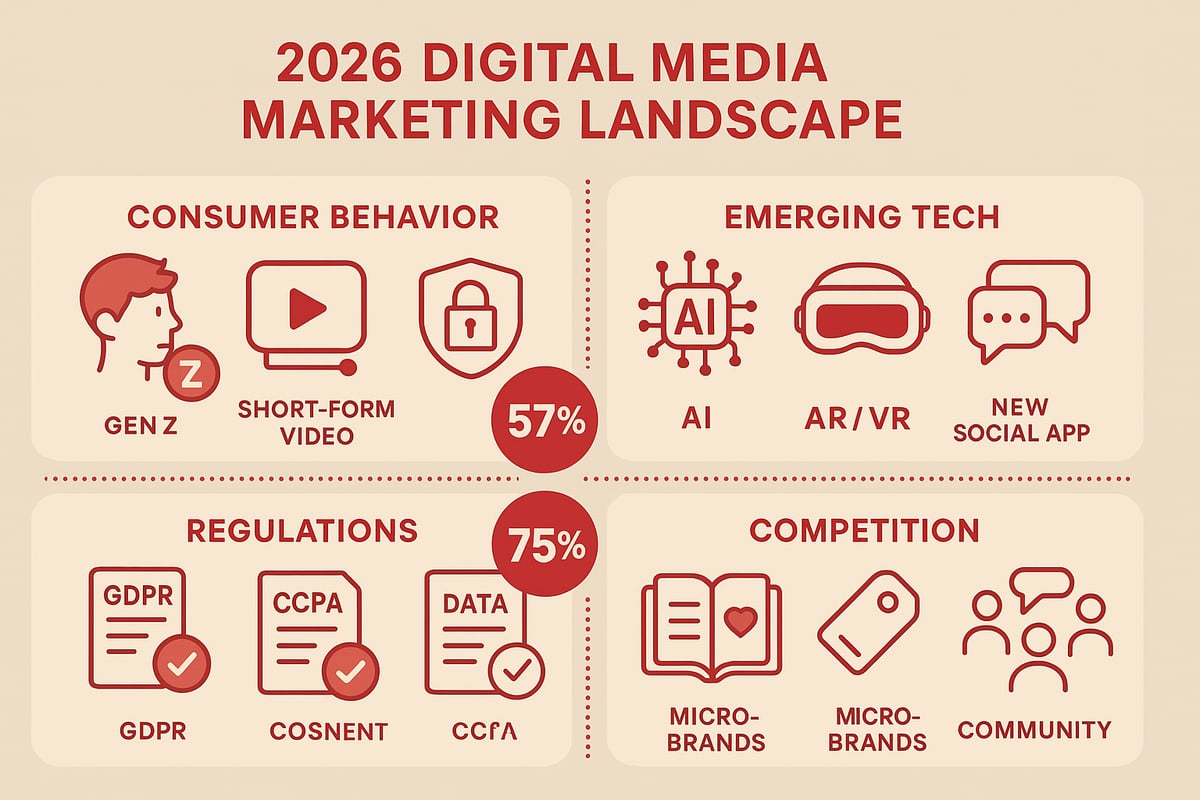
Staying ahead in digital media marketing requires a deep understanding of the evolving landscape. In 2026, businesses face a dynamic environment shaped by shifting consumer behaviors, rapid technological advances, regulatory pressures, and a more competitive market. Let us explore the most critical changes influencing digital media marketing success.
Key Shifts in Consumer Behavior
Consumer preferences are driving a transformation in digital media marketing. Audiences now expect hyper-personalized experiences tailored to their interests and values. Authentic brand interactions are prioritized, and consumers are quick to disengage from messaging that feels generic.
Short-form video content dominates, with platforms like TikTok and Reels leading engagement. Interactive content such as polls and quizzes is highly favored. At the same time, growing privacy concerns mean users want transparency about how their data is used. Over 75% of Gen Z prefer brands that deliver personalized experiences, highlighting the need for brands to adapt their digital media marketing strategies accordingly.
Emerging Technologies and Platforms
Innovation is accelerating the pace of change in digital media marketing. AI-driven content creation and automation tools are becoming standard, empowering marketers to deliver timely, relevant messaging at scale. Augmented reality and virtual reality are no longer niche, as AR-powered ads and immersive shopping experiences rise in popularity.
New social and decentralized platforms are attracting younger demographics, shifting the landscape away from traditional channels. According to the 2026 Digital Marketing Trends Report, AR-powered advertising is projected to grow by 30% year over year through 2026, underscoring the importance of embracing these technologies in digital media marketing plans.
Regulatory and Privacy Changes
The regulatory environment for digital media marketing is becoming stricter. Global standards such as GDPR and CCPA have been joined by new privacy laws introduced in 2026, requiring brands to rethink their data strategies. The decline of third-party cookies is pushing marketers toward first-party data collection, which demands clear consent protocols and transparent communication.
Businesses are adapting by investing in secure data infrastructure and prioritizing user trust. In fact, 60% of marketers plan to increase their investment in first-party data, making privacy compliance a central pillar of digital media marketing.
Competitive Landscape and Brand Authenticity
Competition is intensifying as micro-brands and niche players leverage digital media marketing to capture market share. Standing out requires more than just visibility—brands must tell compelling stories and foster genuine communities.
There is a noticeable shift from chasing vanity metrics to focusing on meaningful engagement. Brands with strong storytelling capabilities experience 23% higher engagement rates, proving that authenticity and community-building are vital for digital media marketing success in 2026.
Building a Future-Proof Digital Media Marketing Strategy
Staying ahead in digital media marketing requires a proactive approach and a willingness to evolve. As the landscape becomes more complex, businesses must embrace strategic planning, data-driven decisions, and adaptability to ensure long-term growth.
Setting Clear Objectives and KPIs
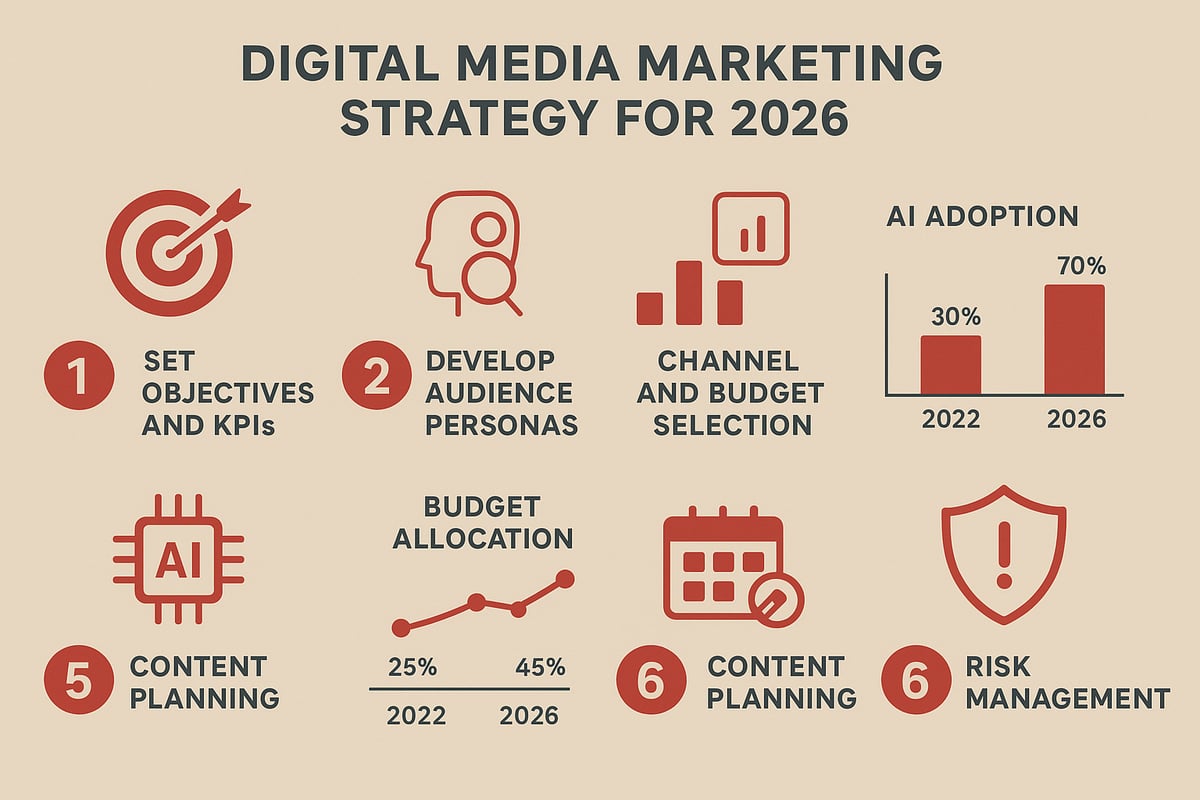
A successful digital media marketing strategy starts with clear objectives aligned with your business goals. Define what success looks like, whether it’s boosting brand awareness, driving engagement, or increasing conversions.
Use the SMART framework (Specific, Measurable, Achievable, Relevant, Time-bound) to set precise goals. For example, aiming to grow your social media following by 25 percent in six months is both actionable and trackable.
Identify key performance indicators (KPIs) for each objective. Common KPIs include reach, engagement rate, click-through rate, and conversion rate. For deeper insights into strategic goal-setting, explore Digital marketing agency strategies.
Audience Segmentation and Persona Development
Understanding your audience is at the core of digital media marketing. Start by building detailed personas using first-party and behavioral data. Segment your audience by demographics like age, gender, and location, as well as psychographics such as values and interests.
Consider intent-based factors, such as purchase readiness or content preferences. Advanced segmentation allows personalized messaging, which can double your return on investment.
Regularly update personas to reflect changes in customer behavior and emerging trends. This ensures that your campaigns remain relevant and effective.
Channel Selection and Budget Allocation
Selecting the right channels is crucial for maximizing the impact of your digital media marketing efforts. Evaluate each platform based on where your audience is most active and engaged.
Balance your investment across paid, owned, and earned media. Many brands are shifting up to 45 percent of digital budgets to emerging platforms in 2026.
A sample budget allocation table might look like this:
| Channel | Budget (%) |
|---|---|
| Social Media | 35 |
| Paid Search | 20 |
| Influencer | 15 |
| Emerging Apps | 20 |
| Email/CRM | 10 |
Review performance regularly and adjust allocations to maximize ROI.
Integrating AI and Automation
Embracing AI is transforming digital media marketing. AI tools can optimize campaigns in real time, analyze massive datasets, and deliver predictive analytics. Automation streamlines tasks like scheduling posts, reporting, and personalizing content.
AI-driven campaigns often achieve 30 percent higher conversion rates. Use machine learning to segment audiences, recommend content, and refine ad targeting.
As AI technology evolves, stay informed about new tools and best practices to retain your competitive edge and enhance campaign efficiency.
Content Planning and Editorial Calendars
Consistent, high-quality content is essential for digital media marketing success. Develop content themes that align with your brand values and audience interests.
Use editorial calendars to schedule posts, ensuring regular touchpoints across platforms. This approach allows quick adaptation to trending topics or real-time events.
Incorporate a mix of evergreen and timely content. Editorial calendars also streamline collaboration within teams, helping maintain brand voice and messaging consistency.
Risk Management and Crisis Planning
In digital media marketing, risks range from platform outages to negative publicity. Prepare by establishing clear protocols for crisis response and reputation management.
Designate team roles, create escalation procedures, and draft template responses for common scenarios. Monitor platforms for early warning signs, allowing rapid intervention.
Regularly review and update your crisis plan. Proactive risk management enables brands to respond faster and protect long-term reputation in an unpredictable landscape.
Content Creation and Distribution Strategies for 2026
Staying competitive in digital media marketing requires a strategic approach to content creation and distribution. As the landscape evolves, brands must embrace innovation and adapt quickly to connect with their target audiences.
Short-Form and Interactive Video Content
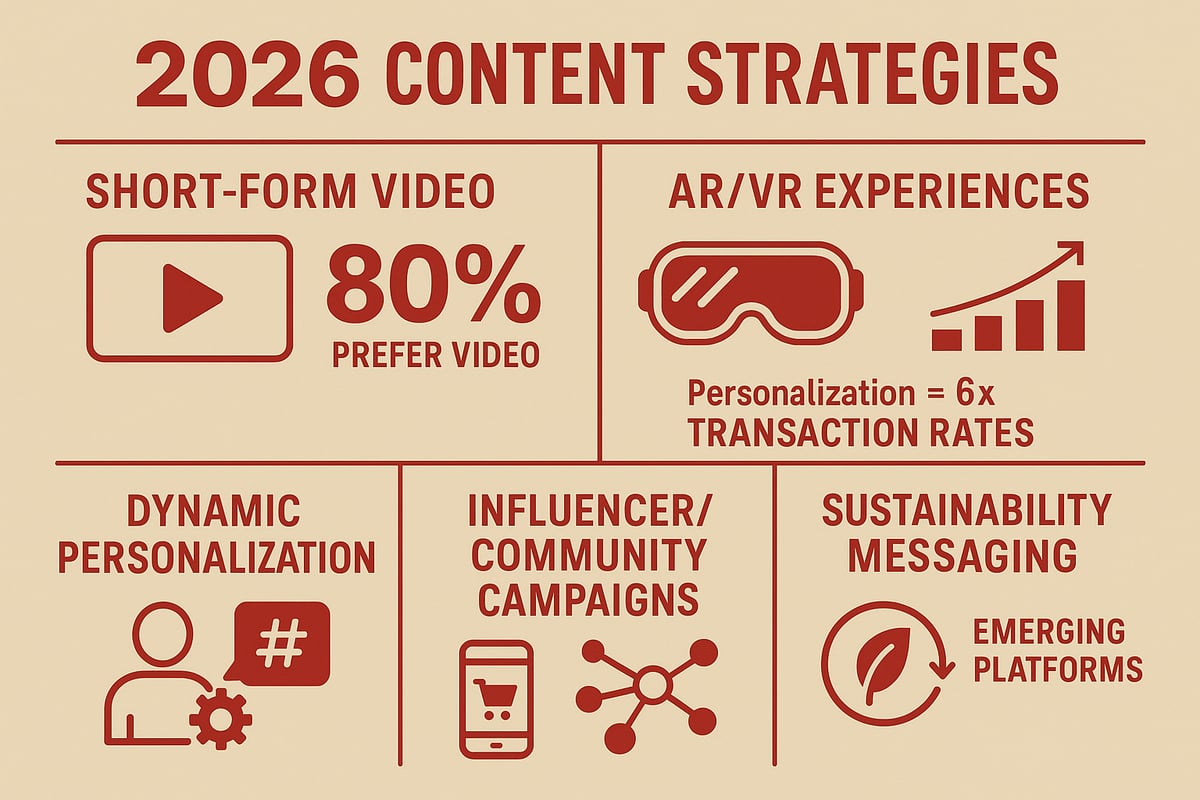
Short-form video continues to dominate digital media marketing, with platforms like TikTok, Instagram Reels, and YouTube Shorts leading the charge. Audiences crave quick, engaging content, making videos under 60 seconds essential for brand visibility.
Interactive elements such as polls, quizzes, and shoppable videos boost engagement and encourage participation. According to Wyzowl, 80% of social users now prefer video content, underlining the need to prioritize this format.
Brands should experiment with creative storytelling, behind-the-scenes glimpses, and user-generated challenges to maximize reach in digital media marketing.
AR/VR and Immersive Experiences
Augmented reality and virtual reality are transforming digital media marketing by offering immersive brand experiences. Branded AR filters, virtual try-ons, and 3D product demos enhance product discovery and drive higher engagement.
Virtual events and VR showrooms allow brands to connect with audiences in innovative ways, creating memorable interactions. AR campaigns are proven to increase dwell time by 25 percent as reported by Snap Inc. in 2025.
Integrating AR/VR into digital media marketing strategies helps brands stand out and deliver value beyond traditional content.
Personalization and Dynamic Content
Personalization is at the core of effective digital media marketing in 2026. Brands are leveraging AI to deliver dynamic ads and personalized landing pages tailored to user preferences and behaviors.
This approach drives relevance and significantly boosts transaction rates. Experian reports that personalized content can yield six times higher transaction rates compared to generic messaging.
Utilizing customer data responsibly while respecting privacy ensures trust and long term loyalty in digital media marketing.
Influencer and Community-Driven Campaigns
Influencer partnerships remain a powerful force in digital media marketing, especially when brands collaborate with micro and nano influencers for authenticity. Community-driven campaigns on platforms like Discord, Reddit, and private groups foster loyal brand advocates and spark organic conversations.
According to Sprout Social, community-led efforts see 50 percent higher engagement rates. For brands seeking expert support, partnering with effective content marketing companies can amplify campaign results and nurture lasting brand communities.
Building genuine relationships is key to sustainable success in digital media marketing.
Multichannel and Omnichannel Distribution
A robust digital media marketing strategy relies on seamless distribution across multiple channels. Synchronizing messaging on social media, email, web, and emerging platforms ensures a consistent brand presence and maximizes touchpoints.
Automation tools streamline cross channel publishing, maintaining efficiency and agility. Aberdeen Group highlights that omnichannel campaigns achieve an impressive 89 percent customer retention rate.
Brands should regularly review analytics to refine their multichannel approach and optimize digital media marketing performance.
Sustainability and Social Responsibility Messaging
Modern audiences expect brands to champion sustainability and social causes through digital media marketing. Highlighting eco-friendly practices, ethical sourcing, and community initiatives builds trust and resonates with value driven consumers.
Nielsen’s research shows that 70 percent of consumers prefer brands with clear sustainability commitments. Incorporating transparent messaging and sharing real impact stories can differentiate a brand in a crowded market.
Aligning digital media marketing with social responsibility not only drives engagement but also strengthens long term brand loyalty.
Optimizing Digital Media Platforms for Maximum Impact
Optimizing digital media marketing platforms in 2026 requires a strategic, data-driven approach. As the landscape evolves, brands must adapt to new technologies, shifting consumer behaviors, and platform-specific trends. The following best practices will help you maximize the impact of your digital media marketing efforts, ensuring your brand stands out and drives measurable results.
Social Media Platform Best Practices
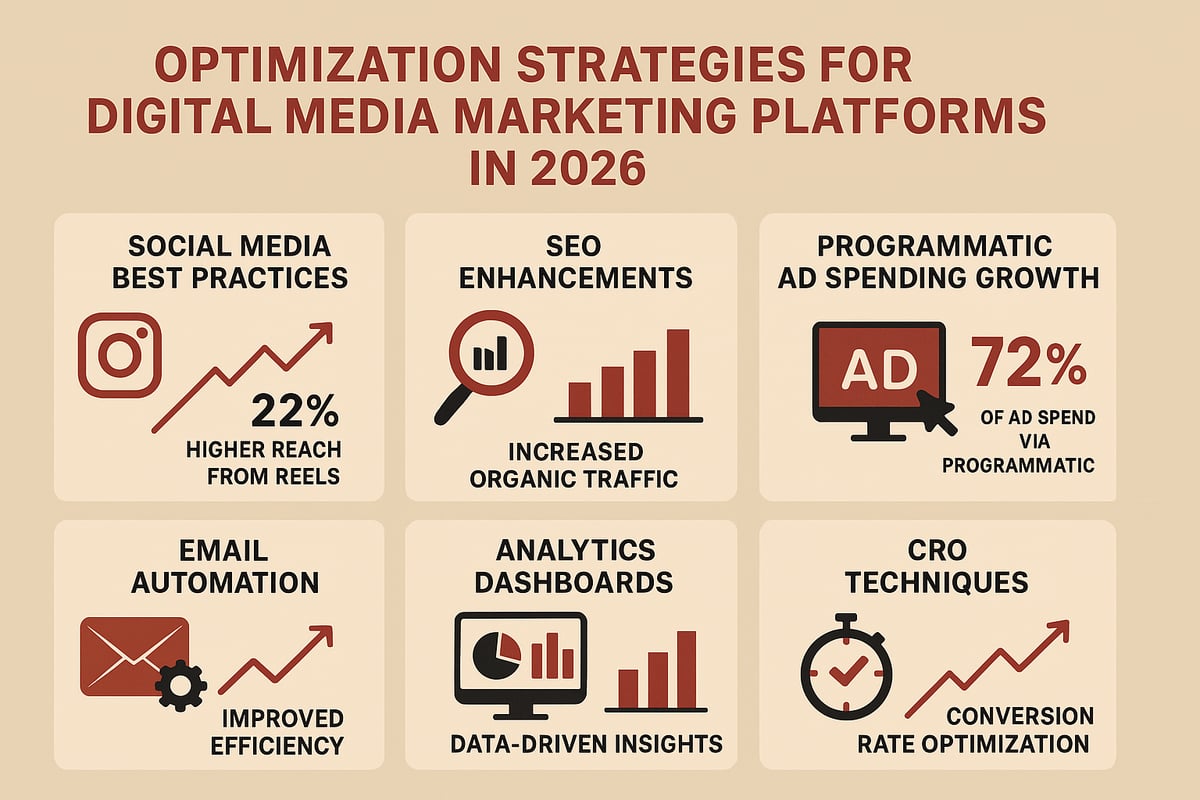
Success in digital media marketing relies on tailoring content to each social platform’s unique features and audience expectations. Brands should optimize visuals, leverage trending formats like Reels or Stories, and use hashtags strategically. According to Meta, Instagram Reels generate 22% higher reach compared to static posts, highlighting the importance of platform-specific content.
Utilize analytics to track engagement and adjust your strategy accordingly. For a deeper dive into proven methods, explore social media optimization best practices to ensure your digital media marketing campaigns achieve maximum visibility and interaction.
SEO and Website Optimization
A robust SEO strategy is foundational for digital media marketing success in 2026. Focus on Core Web Vitals, mobile-first design, and fast-loading pages to enhance user experience. Implement semantic SEO and structured data to improve search visibility and attract qualified traffic.
Organic search remains a dominant channel, with 64% of website traffic originating from search engines. By prioritizing technical SEO and regularly updating your content, you position your brand for sustained visibility and authority within the digital media marketing landscape.
Paid Media and Programmatic Advertising
Investing in paid media and programmatic advertising offers precision targeting and scalability for digital media marketing campaigns. Programmatic ads now account for 72% of digital ad spend, as marketers seek greater efficiency and advanced audience segmentation.
Experiment with interactive and AR ad formats to engage users in fresh ways. For up-to-date figures on digital advertising growth and platform shares, review the latest digital marketing statistics for 2026. Allocate budgets dynamically, guided by real-time data and campaign performance.
| Ad Format | % of Spend (2026) | Growth Rate |
|---|---|---|
| Programmatic | 72% | +15% |
| Interactive/AR | 18% | +30% |
| Traditional Banner | 10% | -8% |
Email Marketing and Automation
Email remains a powerful pillar of digital media marketing with automation driving significant results. Personalize campaigns using behavioral triggers and integrate email with your CRM and social platforms for unified messaging.
Automated emails have been shown to generate 320% more revenue than non-automated campaigns. Maintain list hygiene, test subject lines, and ensure mobile-friendly designs to maximize open and conversion rates across your digital media marketing initiatives.
Leveraging Data and Analytics
Harnessing unified analytics is essential for optimizing digital media marketing performance. Use dashboards to monitor metrics across channels and apply predictive analytics for smarter decision-making.
Data-driven marketers are 1.5x more likely to achieve revenue goals. Track key performance indicators and use insights to refine your approach continually, ensuring that your digital media marketing strategies remain agile and effective in a fast-changing environment.
Conversion Rate Optimization (CRO) Techniques
Conversion rate optimization is vital for translating digital media marketing traffic into measurable business outcomes. Employ A/B testing for landing pages, CTAs, and creative assets to identify what resonates best with your audience.
Gather user feedback to uncover friction points and iterate on your digital media marketing assets. Brands leveraging CRO best practices can boost conversions by up to 40%, making it a cornerstone of high-performing digital campaigns.
Measuring Success and Iterating for Growth
Success in digital media marketing hinges not just on execution, but on the ability to measure, analyze, and evolve. As the landscape transforms, a data-driven approach ensures your strategies remain effective and future-proof.
Key Metrics and Performance Indicators
Measuring the right metrics is foundational for digital media marketing success. Focus on core indicators like engagement rate, reach, conversions, and customer lifetime value to track progress.
| Metric | 2026 Benchmark | Why It Matters |
|---|---|---|
| Engagement Rate | >3% | Indicates audience interest |
| Conversion Rate | 2-5% | Measures campaign efficacy |
| Lifetime Value | $200+ | Guides retention strategies |
Set benchmarks aligned with your industry. Regularly review these metrics to adapt your digital media marketing efforts and maintain a competitive edge.
Attribution Modeling and ROI Analysis
Understanding what drives results in digital media marketing requires robust attribution modeling. Multi-touch attribution evaluates each channel’s contribution, giving a comprehensive view of the customer journey.
Calculate ROI for every campaign by comparing investment to returns. Adjust budgets to prioritize high-performing channels. Brands leveraging advanced attribution models are achieving 35% greater budget efficiency, which directly impacts digital media marketing profitability.
Customer Feedback and Social Listening
Listening to your audience is crucial for refining digital media marketing strategies. Analyze reviews, comments, and sentiment across platforms to understand evolving preferences.
Social listening tools identify trends and pain points twice as quickly as manual monitoring. For deeper insights, explore customer engagement in digital marketing to discover proven tactics for connecting with your audience and fostering loyalty in digital campaigns.
Continuous Testing and Experimentation
The most successful digital media marketing teams embrace continuous testing. Weekly A/B and multivariate tests across channels reveal what resonates, fueling faster growth.
Experimentation is key to adaptation. Brands that test campaigns consistently grow 20% faster. To further optimize, consider how AI integration in marketing strategies enhances experimentation by automating insights and accelerating campaign improvements.
Upskilling Teams and Staying Current
Empowering your team with the latest skills is vital for digital media marketing excellence. Invest in ongoing training, certifications, and industry events to keep your workforce ahead.
Teams that prioritize learning are 50% more effective. Encourage knowledge sharing and regular upskilling, ensuring your digital media marketing approaches remain innovative and relevant.
Future-Proofing with Agility and Innovation
Agility is the backbone of lasting success in digital media marketing. Foster a culture where experimentation and fast pivots are celebrated. Monitor competitor strategies and industry disruptors to stay proactive.
Agile marketing teams respond to market changes three times faster. By embedding innovation and adaptability, you safeguard your digital media marketing investments and position your brand for sustained growth.
As you look to put these digital media marketing strategies into action for 2026, it’s important to see what successful, future-focused campaigns actually look like in practice. At Red Van Creative, we’ve spent over 25 years helping brands across industries build genuine connections and achieve measurable results—combining creative vision with data-driven execution. If you’re curious how a holistic approach to website design, branding, SEO, and targeted advertising can help your business stand out in a crowded digital landscape, I invite you to See Our Work / View Our Portfolio.