
The marketing industry is evolving rapidly, and 2026 is poised to be the most competitive year yet. Businesses across every sector are driving a surge in demand for digital and integrated marketing solutions. For those looking to start a marketing agency, the potential for lucrative growth and flexible work has never been greater.
This guide delivers a clear, actionable blueprint to help you launch and scale your agency successfully. You will find every essential stage covered, from market research and business planning to niche selection, legal setup, service development, team building, client acquisition, scaling, and staying ahead of emerging trends.
Step 1: Research the 2026 Marketing Landscape
In 2026, the marketing world is more dynamic than ever. Before you start a marketing agency, understanding the landscape is essential. The industry is shaped by rapid digital transformation, evolving consumer habits, and a surge in demand for integrated solutions. Agencies that thrive in this environment are those who ground their strategies in solid research and data.
If you want to start a marketing agency that stands out, you need insight into where the market is headed, who your ideal clients are, and what internal strengths or gaps you must address. This foundational research will shape every decision, from service offerings to outreach tactics.
Understanding Industry Trends and Opportunities
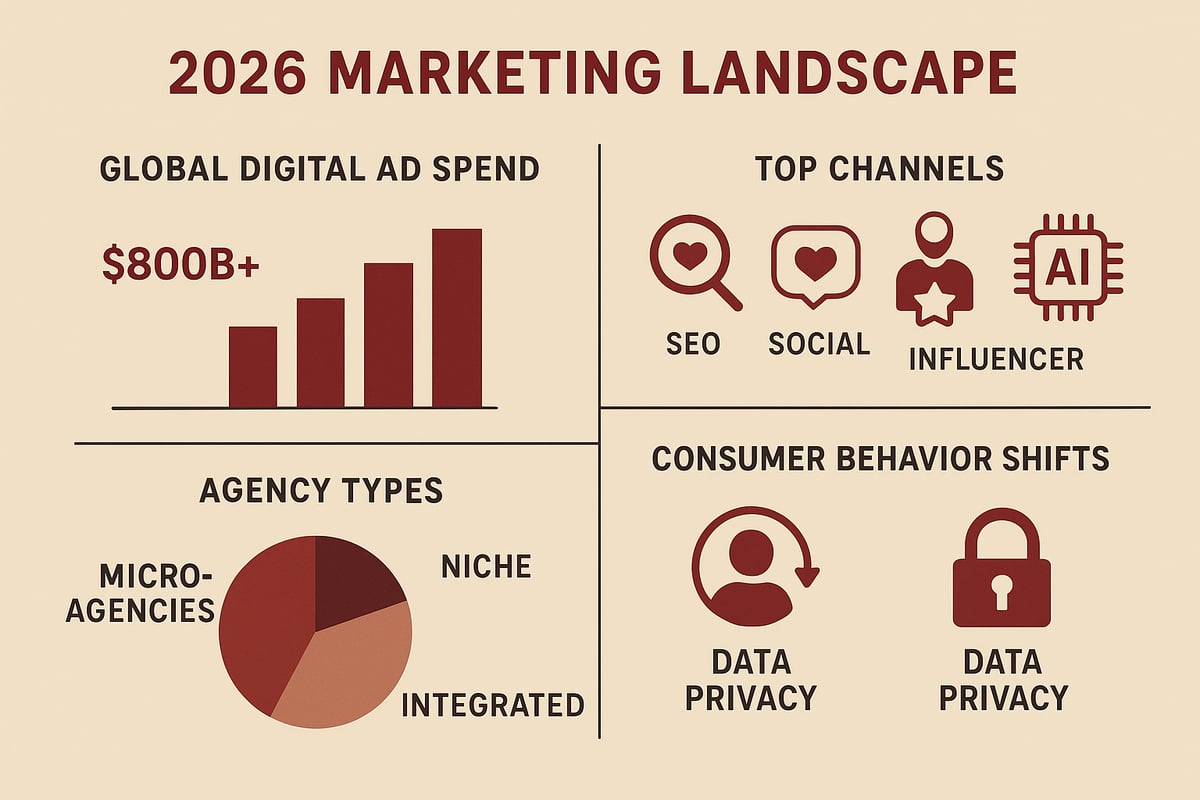
To successfully start a marketing agency, you must analyze where marketing dollars are flowing. Global digital ad spend is projected to surpass $800 billion by 2026, according to Statista. This growth is fueled by brands seeking measurable results and omnichannel presence.
Top-performing channels include SEO, social media, influencer partnerships, and AI-driven campaigns. Social platforms continue to evolve, with new features driving engagement and commerce. Consumer behavior has shifted since the pandemic, with Gen Z favoring authentic, value-driven content and demanding privacy.
AI and automation are transforming how agencies deliver results, while data privacy regulations like GDPR and CCPA are reshaping targeting strategies. The rise of specialized micro-agencies and niche-focused firms means competition is fierce, but also opens doors for innovation.
Integrated, omnichannel marketing is no longer optional. Agencies leveraging automation and analytics are outpacing traditional firms. For a deeper look at what’s shaping the future, review the 10 marketing trends to watch out for in 2026. Staying ahead of these trends is key if you want to start a marketing agency with long-term potential.
Identifying Your Target Market and Ideal Clients
The next step to start a marketing agency is defining your ideal clients. Decide whether you will focus on B2B or B2C, and which industry verticals—such as healthcare, SaaS, or e-commerce—offer the most promise. The remote work revolution has expanded opportunities globally, but local markets can still be lucrative.
Understand your clients’ pain points, such as lead generation, brand awareness, or digital transformation. Research which client types your competitors serve, and look for service gaps you can fill. Platforms like LinkedIn, Clutch, and industry forums help validate market demand.
For example, agencies specializing in healthcare digital marketing saw a 30 percent year-over-year growth in 2025, according to LinkedIn Pulse. Knowing your clients’ lifetime value and focusing on retention will help you build a sustainable agency. To start a marketing agency that truly meets market needs, you must align your services with these insights.
Assessing Skills, Resources, and Gaps
To start a marketing agency that delivers results, evaluate your current skills and resources. Essential skills include strategy, analytics, creative execution, project management, and sales expertise. List your strengths honestly and identify where you need partners or hires.
Benchmark your capabilities against competitor agencies. Review their team structures, technology stacks, and certifications. Are you equipped with the right tools and alliances to compete? If not, consider strategic partnerships or upskilling.
For example, agencies with in-house data analysts achieve 25 percent higher ROI for their clients, as highlighted by Rippling. By addressing your gaps and building the right foundation, you set your agency up for scalable success. When you start a marketing agency with a well-rounded team, you can deliver exceptional value to clients.
Step 2: Define Your Niche and Unique Value Proposition
Selecting the right niche is the cornerstone when you start a marketing agency. In today’s crowded landscape, generalists struggle to stand out. Specialization not only sharpens your offer but also builds credibility with prospective clients. Agencies that focus on a well-defined segment consistently report higher margins and faster growth.
Choosing a Profitable and Sustainable Niche
To successfully start a marketing agency, first evaluate which niches promise both profitability and sustainability. Niche specialization offers several advantages: higher project margins, easier targeting of ideal clients, and more effective messaging. Agencies that serve a specific industry or offer a specialized service often secure contracts faster and retain clients longer.
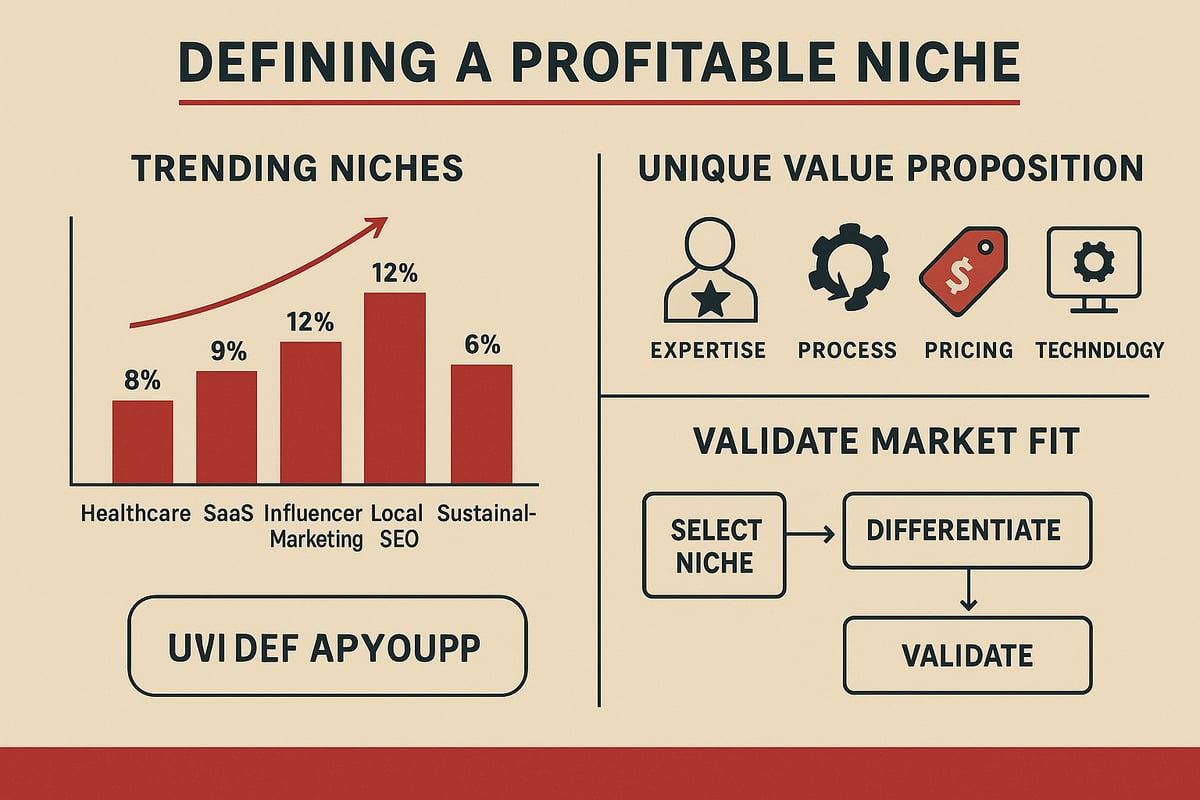
Consider these trending niches for 2026:
- Influencer marketing for e-commerce and lifestyle brands
- Digital marketing for healthcare providers
- SaaS-focused performance marketing
- Local SEO for small and medium businesses
- Sustainability-focused branding and communications
According to LinkedIn data, niche agencies achieve client acquisition rates twice as fast as generalist firms. When choosing your niche, analyze competition density and barriers to entry. For example, social media agencies serving e-commerce brands experienced 40 percent growth in 2025, highlighting robust demand.
Use a table to compare niche opportunities:
| Niche | 2025-2026 Growth Rate | Competition Level |
|---|---|---|
| Healthcare Marketing | 30 percent | Moderate |
| SaaS Marketing | 25 percent | High |
| Local SEO | 20 percent | Moderate |
| Influencer Marketing | 35 percent | High |
| Sustainability | 22 percent | Low |
Carefully assess which niche aligns with your expertise and long-term goals before you start a marketing agency.
Crafting Your Unique Value Proposition (UVP)
A compelling UVP is essential when you start a marketing agency, as it communicates why clients should choose your services over the competition. Your UVP may highlight specialized expertise, proprietary processes, innovative technology, or flexible pricing models. Clear messaging builds trust and positions your agency as the go-to expert in your chosen niche.
Consider these UVP examples:
- “Data-driven campaigns for healthcare organizations”
- “Affordable, high-impact local SEO for SMBs”
- “Performance-based influencer marketing for startups”
Study competitor UVPs to identify areas of differentiation. If most agencies in your niche emphasize creative design, you might focus on measurable results or analytics-driven strategies. Early testimonials or case studies can validate your UVP and provide social proof. For instance, if your pilot projects deliver superior ROI, showcase those results prominently.
When you start a marketing agency, ensure every touchpoint—website, proposals, social profiles—reinforces your UVP. Consistency fosters trust and attracts clients seeking your specific value.
Validating Your Niche and UVP with Market Research
Market validation is vital before you fully start a marketing agency. Begin by conducting surveys and interviews with potential clients in your target sector. Analyze competitor offerings and identify service gaps using platforms like LinkedIn, Clutch, and industry-specific forums. Testing your messaging through landing pages or targeted social media ads can reveal what resonates.
Gather feedback from professional communities and adjust your positioning as needed. For deeper insights on refining your agency’s focus, review Digital marketing agency insights, which details proven strategies for market alignment.
Track response rates, monitor engagement, and remain flexible. If your initial UVP or niche does not gain traction, iterate based on feedback and new data. This agile approach ensures your efforts to start a marketing agency are grounded in real market demand and set up for sustainable growth.
Step 3: Build Your Business Foundation
Laying a robust foundation is essential when you start a marketing agency. This step ensures your agency is legally compliant, financially sound, operationally efficient, and capable of delivering value from day one. Each building block in this phase supports sustainable growth and long-term success.
Legal, Financial, and Structural Setup
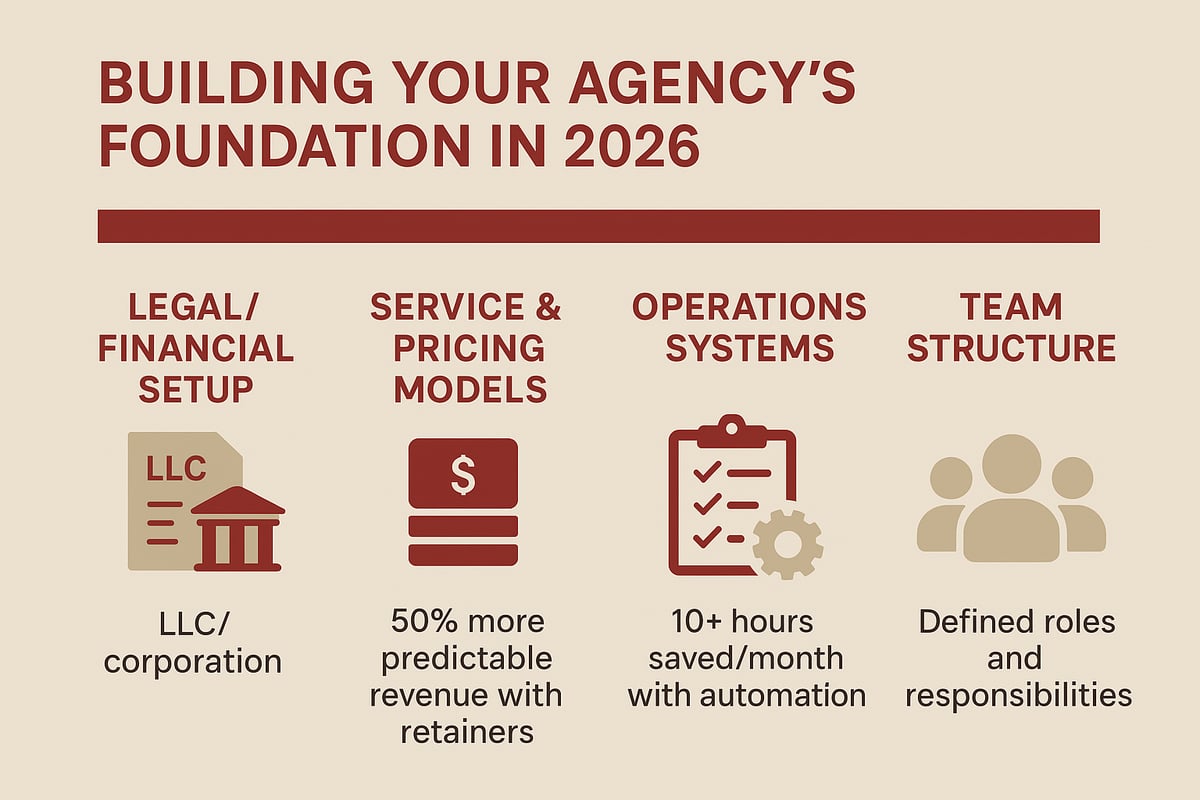
The first step to start a marketing agency is choosing the right business structure. Consider an LLC, S Corp, or partnership, each offering different liability protections and tax benefits. Register your agency, secure necessary licenses, and open a dedicated business bank account to separate finances.
Stay updated with regulations like GDPR and CCPA if you plan to serve global clients. Setting up accounting tools and forecasting systems will help you track revenue, manage expenses, and plan for growth. Agencies leveraging automated payroll and HR platforms report saving over 10 hours per month.
Avoid common pitfalls by ensuring all contracts are clear and enforceable. For more insights on foundational errors to avoid when you start a marketing agency, review this helpful guide on marketing mistakes to avoid.
Developing Your Service Offering and Pricing Models
To successfully start a marketing agency, define your core services based on market demand and your expertise. Offerings may include:
- SEO and content marketing
- Pay-per-click (PPC) management
- Social media campaigns
- Branding and analytics
- Website design and development
Decide whether you’ll use a retainer, project-based, or performance-pricing model. Compare competitor pricing to ensure your rates are competitive yet profitable. Many agencies bundle services, making upselling easier and increasing client value.
Consider creating service packages that address specific client pain points. Agencies relying on retainer agreements enjoy 50 percent more predictable revenue, making financial planning more reliable as you start a marketing agency.
Building a Scalable Operations System
A streamlined operations system is crucial when you start a marketing agency. Implement project management tools like Asana, Trello, or ClickUp to track tasks, deadlines, and deliverables. Develop standard operating procedures (SOPs) for onboarding, reporting, and client communication to ensure consistency.
Setting up a CRM and marketing automation platform helps you nurture leads efficiently. Automated systems free up your time for strategic work and client engagement. Agencies with documented workflows and scalable processes can expand twice as fast, making operations a key area of focus as you start a marketing agency.
Assembling Your Core Team or Outsourcing Network
Building a skilled team is the backbone when you start a marketing agency. Identify essential roles such as:
- Marketing strategist
- Account manager
- Creative professionals (designers, copywriters)
- Web developers and data analysts
Decide if you’ll hire full-time employees or contract freelancers for flexibility and cost savings. Platforms like Upwork and LinkedIn are valuable resources for sourcing talent quickly. Hybrid teams are common among leading agencies, offering agility and specialized expertise.
Benchmark your team structure against competitors to identify gaps. As you start a marketing agency, having the right mix of skills and experience will set you apart and help you deliver superior results for your clients.
Step 4: Develop a High-Impact Brand and Online Presence
Launching with a memorable brand and a compelling online presence sets the stage for your agency’s success. In a crowded market, the way you start a marketing agency visually and strategically will define your reputation and client appeal. Let’s break down the essential steps for building a brand that stands out and drives growth.
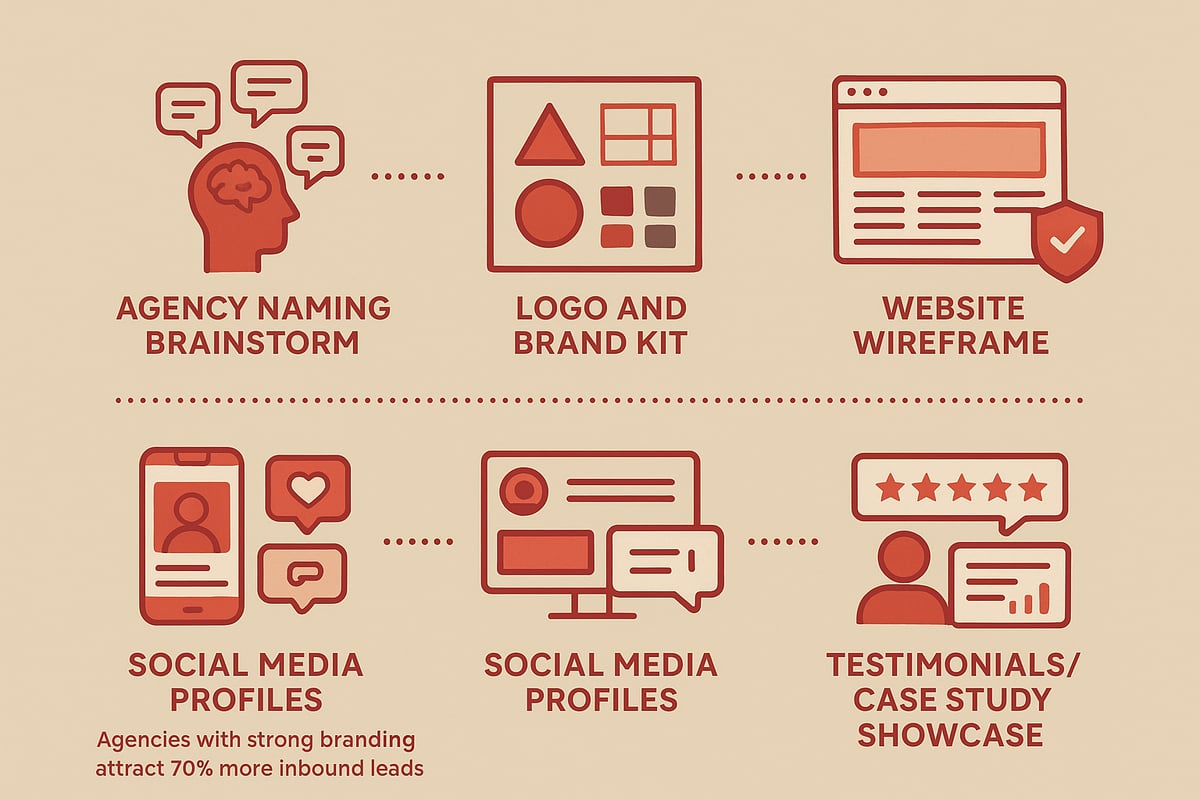
Naming, Branding, and Positioning Your Agency
Choosing the right name is your first step to start a marketing agency that resonates. Aim for names that are easy to pronounce, relevant to your niche, and available as a domain. Once you select a name, design a logo and visual identity that reflect your values and expertise.
Brand consistency is vital. Develop brand guidelines for colors, fonts, and messaging. Consistent branding builds trust and recognition, helping you attract qualified leads. For an in-depth look at this, read Building a strong brand.
When you position your agency, clarify your unique value proposition in every touchpoint. Agencies with strong branding attract 70% more inbound leads, making this a critical investment as you start a marketing agency.
Creating a Conversion-Focused Website
Your website is your digital storefront. To start a marketing agency that converts visitors into clients, include these core pages:
- Home: Clear UVP and value
- About: Team bios and mission
- Services: Detailed offerings
- Case Studies: Real results
- Contact: Easy forms and scheduling
Integrate trust signals such as testimonials, certifications, and client logos. Optimize all copy for SEO, using clear language and target keywords. Ensure fast load times and mobile responsiveness to reduce bounce rates.
Agencies with case studies on their sites close 40% more deals. Incorporate lead capture forms and calendar tools for seamless prospect engagement. Prioritize user experience, making it easy for clients to reach you as they start a marketing agency search.
Establishing Social Media and Content Marketing Channels
Identify where your ideal clients spend time online. For B2B, LinkedIn is essential. For visual or consumer-focused niches, Instagram and Facebook are effective. Build and optimize profiles on two to three platforms initially.
Develop a content calendar including:
- Weekly blog posts or LinkedIn articles
- Short videos or webinars
- Infographics and visual posts
Engage in industry groups and participate in relevant conversations. Agencies posting weekly on LinkedIn see up to three times more inbound inquiries. Use content to showcase thought leadership and demonstrate your expertise to those looking to start a marketing agency partnership.
Building Authority with Early Portfolio and Testimonials
To quickly build credibility, offer discounted or pro bono work in exchange for permission to publish results. Document before-and-after metrics for each client project. Collect testimonials that highlight your process and outcomes.
Aim to create at least three case studies showcasing measurable impact. Agencies with a robust portfolio convert 25% more prospects. Use these success stories across your website and social channels to reinforce your ability to start a marketing agency that delivers tangible results.
Step 5: Launch, Market, and Win Your First Clients
Bringing your vision to life is the most thrilling stage when you start a marketing agency. At this point, your preparation meets the real world, and your actions will determine how quickly you gain traction. A successful launch means much more than going live—it’s about building momentum, credibility, and a client roster that will fuel your growth.
Creating a Go-to-Market Strategy
The first step to start a marketing agency is to develop a focused go-to-market strategy. Set clear launch goals, such as acquiring your first five clients or reaching a specific revenue target within three months. Leverage your professional network for referrals, as personal connections remain one of the most effective ways to secure early business.
Combine networking with targeted outreach, including personalized cold emails, direct messages, and introductions at virtual or local events. For actionable ideas, explore this Creative marketing strategies guide to boost your agency’s visibility from the outset. A structured approach ensures your launch is both strategic and measurable.
Leveraging Freelance Platforms and Partnerships
To start a marketing agency with strong momentum, establish a presence on top freelance platforms like Upwork, Fiverr, and Clutch. These platforms provide immediate access to clients actively seeking marketing expertise. Create compelling profiles that showcase your niche, skills, and previous results.
Pitch to relevant RFPs and join agency directories to expand your reach. Build partnerships with complementary service providers, such as web developers and PR firms, to offer bundled solutions that increase your value proposition. These collaborations help you reach broader audiences and add credibility as you start a marketing agency.
Offering Introductory Packages and Proof of Concept
Launching with attractive introductory offers can be a powerful way to start a marketing agency and win your first clients quickly. Consider limited-time discounts, bundled packages, or free audits to lower the barrier for early adopters.
Pilot projects allow clients to experience your expertise with minimal risk. Clearly outline deliverables and timelines to set expectations. By demonstrating measurable results, you build trust and lay the foundation for long-term relationships. These proof-of-concept engagements are essential when you start a marketing agency and need to establish credibility.
Mastering Sales, Proposals, and Client Onboarding
A polished sales process is crucial as you start a marketing agency. Develop a customizable proposal template that addresses specific client pain points and showcases your unique solutions. Highlight case studies and testimonials to provide social proof and instill confidence in your services.
Streamline client onboarding with checklists, welcome kits, and clear communication protocols. Efficient onboarding not only impresses new clients but also sets the stage for smooth collaboration. When you start a marketing agency, a seamless sales and onboarding experience often leads to higher client retention and satisfaction.
Delivering Results and Building Referrals
Delivering on your promises is the fastest way to accelerate growth when you start a marketing agency. Set clear KPIs and reporting cadences from the beginning to ensure transparency. Exceed client expectations on initial projects to foster loyalty and generate word-of-mouth referrals.
After successful delivery, proactively request testimonials and case studies. These assets validate your expertise and help convert future prospects. Over time, referrals become a primary growth channel, so building strong client relationships is indispensable as you start a marketing agency.
Step 6: Scale, Optimize, and Future-Proof Your Agency
Scaling after you start a marketing agency is essential for long-term success. As you grow, optimizing systems, nurturing talent, expanding services, and adapting to market trends will keep your agency ahead of the curve. Let us break down each area critical for future-proofing your agency.
Streamlining Operations and Automating Repetitive Tasks
To efficiently scale when you start a marketing agency, prioritize automation. Use project management tools for workflow, automate billing, and set up templated client communications. Reporting dashboards can provide real-time insights, freeing up your team for strategic work.
Consider implementing tools for task scheduling, invoicing, and campaign performance tracking. These help minimize manual errors and let your agency deliver consistent results.
Agencies that automate reporting save over eight hours monthly per account manager. By streamlining daily operations, you create space for innovation and growth, reinforcing your ability to start a marketing agency that stands out in a crowded market.
Hiring, Training, and Retaining Top Talent
Your team is your agency’s backbone. To successfully start a marketing agency, develop a recruitment process focused on both skill and cultural fit. Invest in ongoing training, such as certifications from Google or LinkedIn Learning, to keep skills current.
Foster a supportive, growth-oriented environment. Regular workshops, mentorship programs, and clear career paths help retain top performers. Agencies with structured training programs grow 1.5 times faster than those without.
Remember, a positive workplace culture attracts high-quality candidates. When you start a marketing agency, prioritize both talent acquisition and retention to ensure sustainable, scalable growth.
Expanding Service Offerings and Revenue Streams
As you start a marketing agency and gain more clients, analyze their evolving needs. Consider expanding your services—add influencer marketing, AI-based analytics, or video production to your portfolio. Multi-service agencies see up to 35 percent higher client retention.
Upsell or cross-sell new offerings to your current clients. You can also develop digital products or online courses to diversify revenue. This approach not only increases income but also deepens client relationships.
A table below summarizes potential new services and their benefits:
| Service | Benefit |
|---|---|
| Influencer Marketing | Expanded reach |
| Video Production | Higher engagement |
| AI Analytics | Better campaign insights |
Monitoring Industry Trends and Adapting to Change
To future-proof your business after you start a marketing agency, stay on top of industry shifts. Follow marketing news, attend webinars, and participate in conferences. Rapid adoption of new platforms, like TikTok Shop or Threads, can provide a first-mover advantage.
Explore the The 6 Marketing Trends to Watch in 2026 for insights on emerging channels and the integration of entertainment, social, and commerce. Proactive trend monitoring ensures your agency remains relevant and competitive.
Adapt your strategies as new regulations, technologies, and consumer behaviors emerge. This agility is crucial if you want to successfully start a marketing agency that thrives in a dynamic environment.
Measuring Success and Adjusting Strategy
Consistent measurement is vital after you start a marketing agency. Track key performance indicators like revenue growth, client retention, ROI, and Net Promoter Score. Use dashboards to visualize progress and identify trends.
Schedule quarterly reviews to assess what is working and what needs adjustment. Solicit feedback from clients to refine service offerings and enhance satisfaction.
Agencies that conduct regular reviews report a 20 percent increase in profitability. By making data-driven decisions, you ensure your plan to start a marketing agency is both resilient and primed for ongoing growth.
Step 7: Navigating Challenges and Ensuring Long-Term Success
Launching and growing your agency is only the beginning. To truly start a marketing agency that thrives, you must be prepared to tackle ongoing challenges and lay the groundwork for lasting success. This final step focuses on practical strategies to help your agency remain competitive, resilient, and future-ready.
Overcoming Common Agency Pitfalls
Every entrepreneur who wants to start a marketing agency must anticipate and manage common obstacles. Scope creep, unclear boundaries, and shifting client expectations can quickly erode profit and morale. To avoid these pitfalls, set clear contracts, define deliverables, and communicate boundaries from the outset.
Here are practical steps for prevention:
- Use detailed proposals and statements of work.
- Establish regular check-ins to align on goals.
- Train your team to spot and address early signs of project drift.
Agencies with well-structured contracts and transparent communication avoid nearly half of potential disputes. Remember, the key to long-term success when you start a marketing agency is consistency in process and expectations.
Ensuring Financial Stability and Growth
To successfully start a marketing agency, you need to master financial management. Prioritize cash flow by favoring retainer agreements and upfront deposits. Use financial forecasting tools to plan for hiring, expansion, and lean periods.
Consider these financial stability essentials:
| Tip | Impact |
|---|---|
| Retainer models | Predictable revenue |
| Upfront payments | Improved cash flow |
| Diversified client base | Reduced risk during downturns |
| Regular financial reviews | Early detection of issues |
Agencies with at least ten clients are twice as resilient in economic downturns. By embedding these habits early when you start a marketing agency, you secure a foundation for sustainable growth. For further insights on measuring effectiveness, review the 7 trends that will impact media and marcoms in 2026.
Building a Strong Agency Culture and Reputation
A positive culture is vital when you start a marketing agency, as it drives retention, innovation, and client satisfaction. Foster transparency and collaboration to build trust within your team. Prioritize work-life balance and open communication to prevent burnout.
Key elements of a strong agency culture:
- Encourage ongoing training and professional development.
- Recognize achievements and reward innovation.
- Keep feedback loops open between leadership and staff.
Agencies with high employee satisfaction experience significantly lower turnover. Building a reputation for excellence and integrity helps you attract both top talent and loyal clients as you start a marketing agency.
Planning for the Future: Exit Strategies and Legacy
Long-term planning is essential for anyone looking to start a marketing agency with a lasting impact. Consider future exit strategies, such as acquisition, merger, or succession planning. Document your processes so the agency can operate independently of founders.
Here is a future-focused checklist:
- Develop leadership within your team.
- Systematize operations and client management.
- Keep an eye on industry trends, especially regarding AI and analytics, as highlighted in the 9 Top Marketing Trends of 2026.
Nearly one in five agencies plan for acquisition within a decade. If you start a marketing agency with legacy in mind, you ensure it remains adaptable and valuable for years to come.
As you embark on building your own marketing agency in 2026, it helps to see how experienced teams put these strategies into action. We’ve spent over 25 years refining our approach—combining website design, branding, SEO, and targeted advertising to create real connections between brands and their customers. If you’re curious how a holistic, relationship-driven approach looks in practice, I encourage you to explore our portfolio. You’ll find real-world examples across industries like healthcare, oil and gas, construction, and retail that showcase what’s possible when consistency and creativity come together.
See Our Work / View Our Portfolio