
Are digital marketing and online marketing really the same? In 2026, the answer is less clear than ever. Many professionals use these terms interchangeably, yet the differences between them can shape your entire marketing strategy.
Understanding where online marketing digital marketing overlap, and where they diverge, is essential for making smart decisions about your budget, campaign planning, and return on investment. As technology evolves, so do the tactics and channels available to your business.
This article will demystify the two concepts, provide real-world examples, and share the latest data. Ready to find out which approach best fits your business goals? Let’s dive in.
Defining Digital Marketing and Online Marketing in 2026
Understanding the distinction between online marketing digital marketing has never been more important for businesses in 2026. As these approaches evolve, the overlap increases, but their unique features can dramatically impact your strategy, budget, and results.
What is Digital Marketing?
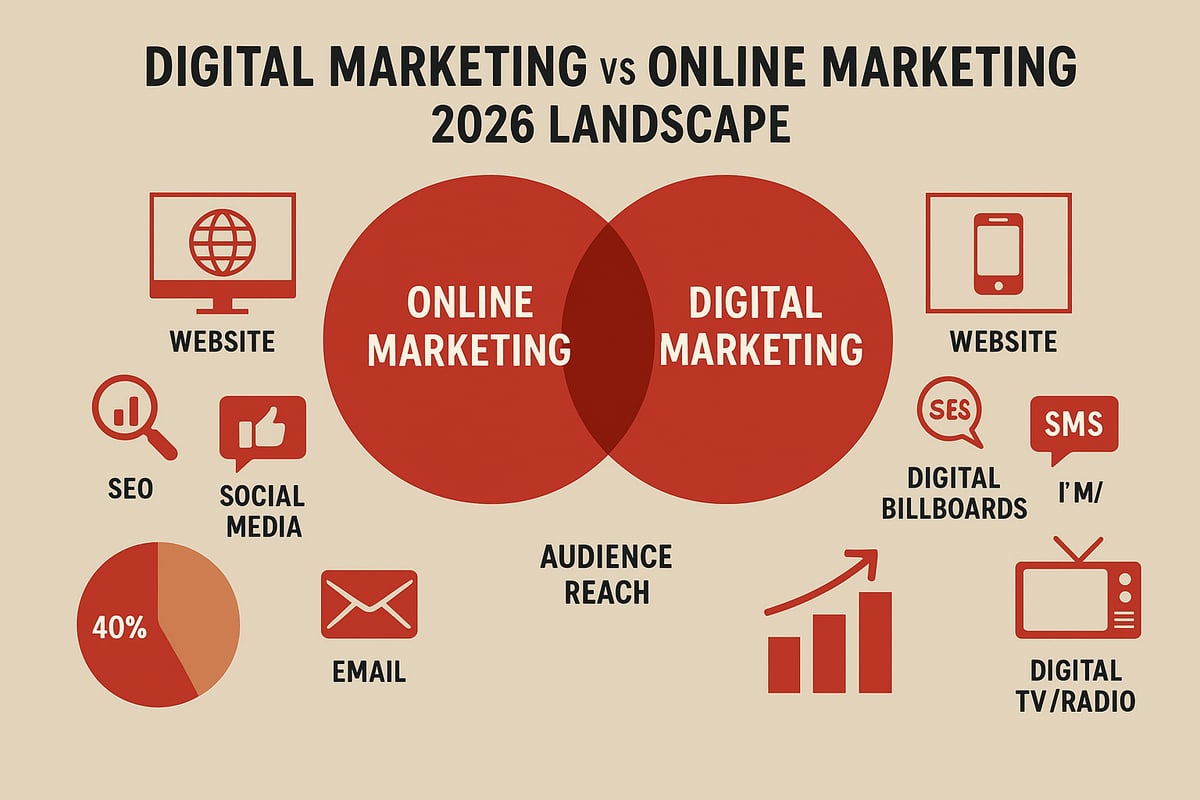
Digital marketing in 2026 refers to the use of digital channels, both online and offline, to promote products and services. This approach covers a broad spectrum of technologies that store, process, or transmit data, making it more comprehensive than online-only tactics.
Key components of digital marketing include websites, SEO, social media, email, digital billboards, SMS, and digital TV or radio. For example, a business might run a Google Ads campaign while also sending SMS reminders and displaying targeted messages on digital signage within retail spaces.
A recent industry report highlights that companies now allocate 72% of their entire marketing budgets to digital strategies, reflecting the shift toward data-driven, real-time marketing. This approach enables brands to reach audiences across multiple touchpoints, adapting campaigns on the fly for maximum impact.
Digital marketing is not confined to internet-based activities. It leverages any digital technology to engage consumers, offering a wider scope than online marketing digital marketing typically encompasses.
What is Online Marketing?
Online marketing is a subset of digital marketing, focused exclusively on internet-based channels. It uses tools and platforms that require an active internet connection, such as SEO, social media, email campaigns, website marketing, and PPC ads.
Commonly referred to as internet marketing or e-marketing, online marketing enables businesses to connect with target audiences through web-based journeys. For instance, an e-commerce brand might deploy a Facebook PPC campaign to reach specific demographics or launch an email sequence to nurture leads.
Online marketing digital marketing strategies are often viewed as modern alternatives to traditional offline marketing. Their effectiveness lies in the ability to foster deep engagement with users who are already online, utilizing data to personalize content and measure results with precision.
Unlike digital marketing, online marketing does not include offline digital tactics like SMS or digital billboards. This makes it ideal for brands looking to maximize engagement in markets with high internet penetration.
Why the Confusion?
The confusion between online marketing digital marketing arises from their overlapping channels. Both use platforms like websites, email, and social media, which leads many to use the terms interchangeably.
Industry experts, such as Simon Kingsnorth, frequently blend the terminology in their content and book titles, further blurring the distinction. As a result, businesses and professionals often conflate the two, which can complicate budget allocation and campaign measurement.
Clarifying the difference is essential for accurate planning and execution. For a deeper look at how these terms diverge in practice, see this Digital Marketing vs Online Marketing – Key Differences guide.
Key Differences Between Digital Marketing and Online Marketing
Understanding the distinction between online marketing digital marketing is crucial for crafting effective strategies in 2026. While both approaches leverage digital tools, their differences shape how brands connect with audiences and drive results.
Channels Used
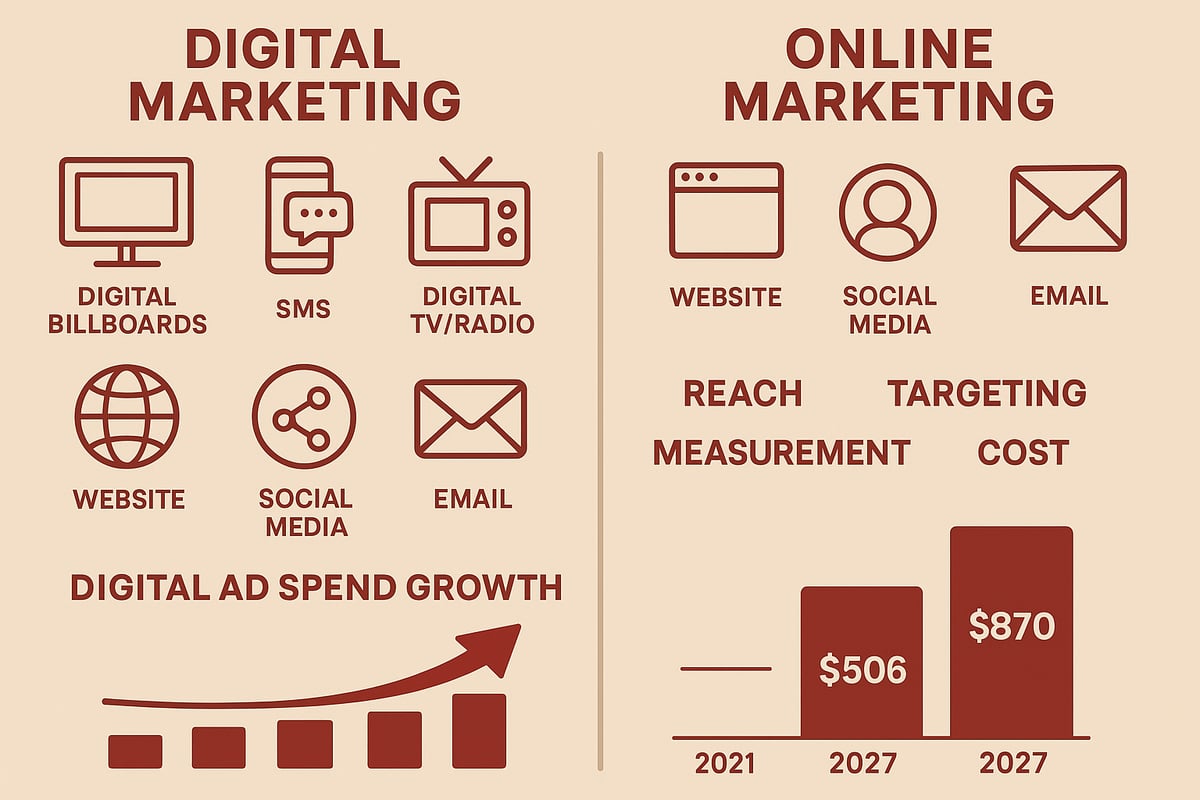
Digital marketing offers a broad toolkit that includes both online and offline digital channels. This means brands can reach consumers through websites, SEO, social media, email, digital billboards, SMS, and digital TV or radio. In contrast, online marketing digital marketing focuses only on internet-based channels like websites, email, social media, and PPC ads.
A digital billboard on a busy street is a digital marketing channel, but not an online one. Instagram ads, however, count as both. This distinction matters for campaign planning and measuring true reach.
Here’s a visual comparison of key channels:
| Channel | Digital Marketing | Online Marketing |
|---|---|---|
| Website | ✔ | ✔ |
| SEO | ✔ | ✔ |
| Social Media | ✔ | ✔ |
| ✔ | ✔ | |
| PPC Ads | ✔ | ✔ |
| Digital Billboards | ✔ | ✖ |
| SMS | ✔ | ✖ |
| Digital TV/Radio | ✔ | ✖ |
The rise in digital ad spend, projected to hit $870B by 2027, highlights the growing importance of both approaches. For more up-to-date stats and trends, see Digital Marketing Statistics 2025: Latest Stats and Trends.
Audience Reach and Consumer Groups
The audience reach for online marketing digital marketing strategies varies significantly. Digital marketing can engage both online and offline consumers. For example, SMS campaigns or digital billboards reach people who may not actively use the internet.
Online marketing, in contrast, targets only those with internet access. Email newsletters or social media campaigns are only effective if the recipient is online. This makes online marketing digital marketing especially valuable in regions with high internet penetration, while digital marketing is useful for reaching broader or less connected audiences.
Consider a local event: SMS notifications might reach older demographics, while Instagram ads attract younger, web-savvy participants. This dual approach ensures no segment is left behind.
Targeting and Personalization
Targeting capabilities are a defining difference between online marketing digital marketing. Online marketing provides precise targeting using demographics, behaviors, interests, and even location data. Marketers can retarget website visitors with tailored ads for higher conversion rates.
Digital marketing, especially its offline elements like TV, radio, or SMS, offers less granular targeting. A TV commercial can build brand awareness at scale, but it cannot personalize the message to individual viewers.
Online marketing digital marketing strategies rely on data-driven personalization to enhance engagement and ROI. In contrast, digital marketing’s broad approach helps build recognition across diverse groups.
Cost Structure and Budget Flexibility
Budget considerations are key when comparing online marketing digital marketing. Digital marketing often requires larger investments for offline channels such as TV, radio, or billboards. These campaigns involve higher production and media buying costs, and adjustments can be expensive.
Online marketing, however, is generally more budget-friendly and flexible. With PPC or social media ads, marketers can set daily limits, pause campaigns, and reallocate funds in real time. This flexibility makes online marketing digital marketing attractive to small businesses and startups looking for cost control.
A $10,000 TV spot and a $500 Facebook ad campaign offer vastly different entry points, but each serves a strategic purpose depending on your goals.
Measurement, Analytics, and Optimization
Measuring success in online marketing digital marketing campaigns depends on the channels used. Online marketing excels in real-time analytics, offering dashboards to track conversions, user behavior, and ROI. Tools like Google Analytics provide detailed insights that allow for rapid optimization.
Digital marketing’s offline elements, such as billboards or radio, rely more on estimates, surveys, or indirect tracking. While online components are easily measured, offline tactics add complexity and may require additional resources for analysis.
Online marketing digital marketing empowers marketers to quickly test, optimize, and scale campaigns, while digital marketing’s offline side demands more patience and resource allocation for measurement.
Campaign Flexibility and Adaptability
Campaign flexibility is another area where online marketing digital marketing diverge. Online marketing enables instant adjustments: campaigns can be paused, tweaked, or scaled within minutes. This agility is crucial in fast-paced markets, allowing brands to respond to trends and consumer feedback rapidly.
Digital marketing’s offline channels, like TV or radio, require advance planning and incur higher costs for changes. Reshooting a commercial or updating a billboard takes time and resources. This slower adaptation can impact overall ROI.
For brands seeking to maximize responsiveness, online marketing digital marketing offers the speed and adaptability needed for success in 2026.
Real-World Examples: How the Differences Play Out
Understanding the difference between online marketing digital marketing becomes much clearer when we look at real-world scenarios. Each approach offers unique opportunities for businesses to connect with their audiences, depending on the channels and strategies they use.
Digital Marketing Example: Offline Digital Channels
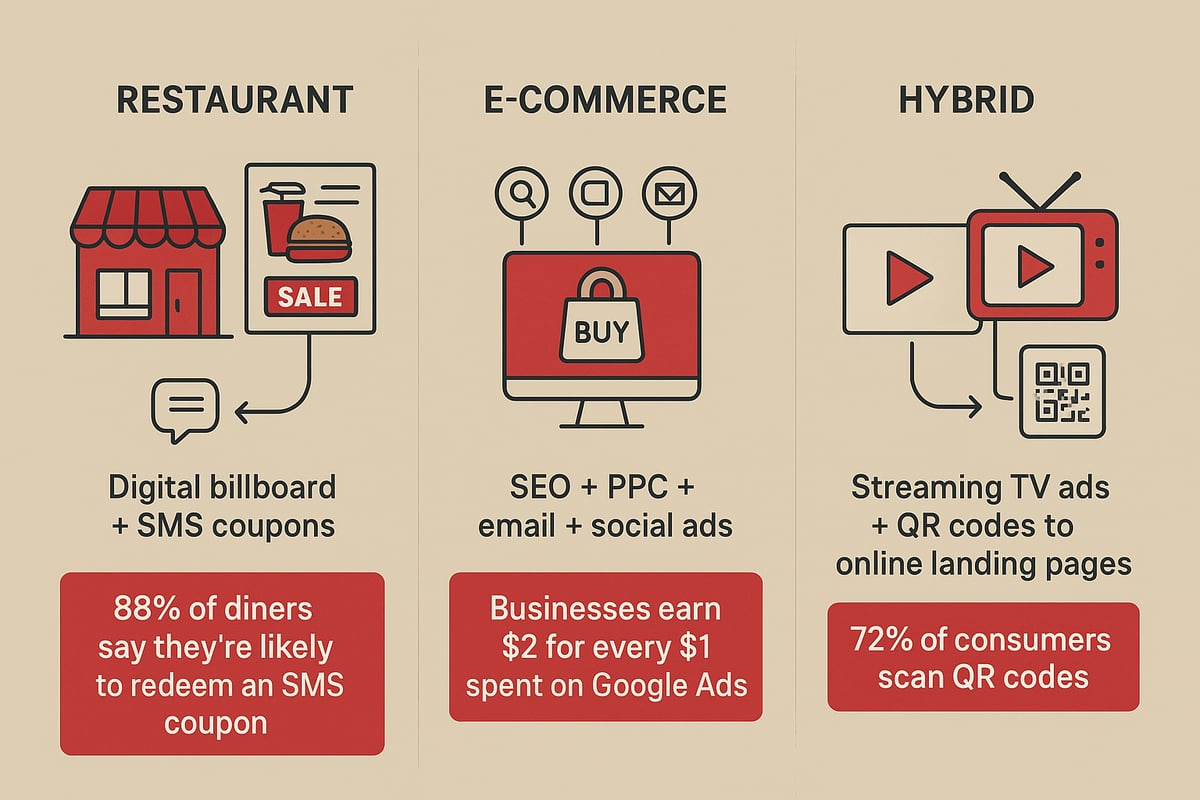
Imagine a local restaurant aiming to boost lunch traffic. They invest in digital billboards around the city, displaying enticing meal deals during peak hours. To enhance engagement, the billboard features a QR code and a short code for SMS coupons. Customers scan or text to receive a discount, driving immediate visits.
This campaign does not depend solely on internet access. It reaches commuters, pedestrians, or anyone passing by, regardless of their online activity. The use of SMS and digital signage illustrates how digital marketing leverages both online and offline digital channels.
By blending physical presence with digital technology, the restaurant maximizes its reach. This example highlights how online marketing digital marketing strategies can work together, but also where digital marketing stands apart by engaging audiences beyond the web.
Online Marketing Example: Internet-Only Campaigns
Now consider an e-commerce brand launching a new product. Their campaign is entirely online, utilizing SEO to attract organic search traffic, PPC ads on Google and Facebook, email drip campaigns, and retargeted social ads. Every touchpoint exists on the internet, requiring users to be connected.
Personalization is at the heart of this strategy. The brand uses browsing and purchase data to tailor ads and emails for specific segments. For example, a Wall Street Journal Facebook PPC ad targets users interested in business subscriptions, tracking clicks and conversions with precision.
This approach showcases the depth of online marketing digital marketing methods. Measurement is granular, and campaigns can be tweaked in real time for maximum ROI. Unlike digital billboards or SMS, these efforts only reach those online, but the targeting and analytics are unmatched.
The Blurring Line: Hybrid Campaigns
As marketing evolves, the boundaries between online marketing digital marketing grow less distinct. Take the example of streaming TV ads. When viewed on a connected TV, these ads are part of digital marketing, but if delivered via an internet platform, they fall under online marketing as well. Brands often add QR codes to print or digital signage, directing consumers to campaign-specific landing pages—bridging offline and online experiences.
Hybrid campaigns are increasingly common. For instance, a retail brand may combine in-store digital kiosks, SMS alerts, and social media ads for a new product launch. This mix allows them to reach customers wherever they are, online or offline, and track engagement across all channels.
According to the Digital 2026: Global Overview Report, 91% of consumers are more likely to engage with brands offering relevant digital experiences. This stat underscores why businesses must understand the interplay between online marketing digital marketing. Success now depends on creating seamless journeys that integrate both approaches, adapting measurement and attribution models to fit the hybrid reality.
Strengths and Limitations of Each Approach
Choosing between online marketing digital marketing strategies is critical for businesses aiming to maximize reach, engagement, and ROI. Both approaches offer unique advantages and face specific challenges, especially as the marketing landscape evolves in 2026.
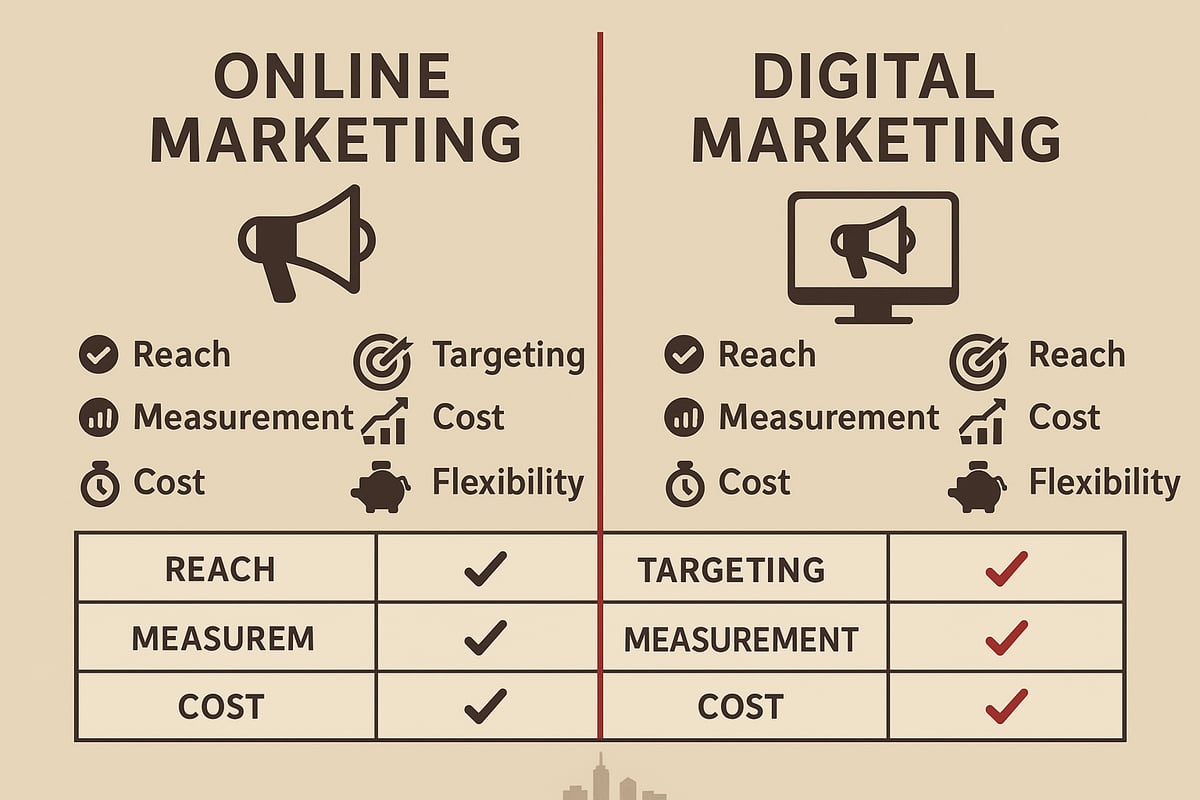
Strengths of Digital Marketing
Digital marketing stands out for its broad audience reach and ability to support omnichannel strategies. By combining both online and offline digital channels, businesses can engage diverse consumer groups regardless of their internet usage.
- Broader audience: Reaches both online and offline consumers via digital billboards, SMS, digital TV, and more.
- Omnichannel integration: Allows seamless campaigns across web, social, signage, and traditional digital formats.
- Brand awareness: Amplifies brand visibility in communities with mixed digital maturity, such as retail, healthcare, and construction sectors.
- Versatility: Enables creative campaigns that blend online marketing digital marketing tactics for maximum impact.
For example, a local healthcare provider might use digital billboards to build awareness while offering online appointment booking, ensuring comprehensive coverage.
Limitations of Digital Marketing
Despite its strengths, digital marketing has measurable constraints. Offline channels often lack the precise analytics and flexibility that online marketing provides.
- Harder measurement: Offline tactics like TV and billboards rely on estimated impressions and post-campaign surveys, making ROI harder to prove.
- Higher costs: Production and media buying for TV, radio, and signage can strain budgets, especially for smaller businesses.
- Less precise targeting: Offline outreach is typically broader and less personalized than digital-first campaigns.
- Slower adjustments: Campaign changes require advance planning and can take weeks to implement.
These factors mean that while digital marketing is powerful for awareness, it can lag behind online marketing digital marketing in terms of agility and measurable conversions.
Strengths of Online Marketing
Online marketing digital marketing strategies excel at targeting, personalization, and measurement. Internet-based channels empower businesses to connect with specific audiences and optimize campaigns in real time.
- Granular targeting: Platforms allow for detailed segmentation by demographics, behavior, and interests.
- Real-time analytics: Dashboards and tools provide immediate feedback on campaign performance.
- Cost efficiency: Flexible budgets, pay-per-click options, and rapid testing make it accessible for businesses of all sizes.
- Rapid optimization: Marketers can test and refine ads or landing pages quickly, maximizing ROI.
An e-commerce site, for example, can adjust PPC ads based on conversion data within hours, a level of adaptability unique to online marketing digital marketing.
Limitations of Online Marketing
Online marketing digital marketing approaches are not without their challenges. The focus on internet-based channels means some audiences are left out, and the digital space is more crowded than ever.
- Limited reach: Excludes consumers who are not online or prefer offline touchpoints.
- Digital fatigue: Constant exposure can lead to ad blindness and increased use of ad blockers.
- High competition: Saturation raises ad costs, especially in popular sectors.
- Platform vulnerability: Algorithm changes on Google or Meta can impact visibility overnight.
For example, a social media campaign may see reach decline due to increased competition or privacy changes, limiting the effectiveness of online marketing digital marketing alone.
Red Van Creative: Bridging Digital & Online Marketing for Local Businesses
Red Van Creative, based in Houston, specializes in unified strategies that combine online marketing digital marketing for local impact. Their creative marketing strategies for local business demonstrate how a holistic approach can maximize both reach and ROI.
The Role of Landing Pages and Conversion Optimization in Both Approaches
Landing pages are the unsung heroes at the intersection of online marketing digital marketing. They serve as the linchpin for campaigns, connecting both online and offline tactics into a cohesive user journey. Whether your audience clicks a social ad, scans a QR code from a digital billboard, or responds to an SMS offer, landing pages provide a unified destination for engagement and conversion.
Landing Pages: The Universal Touchpoint
Landing pages are the bridge between online marketing digital marketing strategies. They are designed for a single purpose, such as capturing leads, driving event sign-ups, or promoting new products. With a landing page, you can guide users from any channel to a focused experience that encourages action.
For example, a QR code on a digital billboard can lead viewers to a campaign-specific landing page. This approach helps track offline-to-online conversions, allowing marketers to see exactly how many people engaged after seeing an offline ad. Customizable landing pages ensure messaging matches the source, boosting relevance and conversion rates.
Landing pages also support integration with email campaigns, a key tactic for both online marketing digital marketing. For more on how to optimize this channel, explore Email Marketing Strategies.
Measurement and Personalization with Landing Pages
A major benefit of landing pages in online marketing digital marketing is the ability to measure and personalize every touchpoint. Online marketing channels like PPC, SEO, and email allow for granular tracking of source, user behavior, and conversion rates through landing pages.
Marketers can assign unique URLs or UTM parameters for each campaign, making it easy to identify which channels drive results. A/B testing on landing pages enables rapid experimentation with headlines, images, and calls-to-action, directly impacting conversion rates.
Offline digital marketing tactics, such as SMS or signage, can also use landing pages to pull users into the digital funnel. Personalized experiences, powered by segmented data, create a seamless transition from first touch to conversion, regardless of channel.
Integrating Landing Pages into Omnichannel Strategies
The true power of landing pages emerges when they become the hub of an omnichannel strategy that unites online marketing digital marketing. Consistent messaging from ad to landing page builds trust and recognition, which is vital for both brand awareness and conversions.
A typical omnichannel campaign might use TV, social ads, and in-store digital signage to drive users to a single, tailored landing page. This unified approach enables marketers to collect data from every interaction, analyze the entire customer journey, and retarget audiences across both online and offline channels.
Landing pages simplify attribution, making it easier to measure the ROI of integrated campaigns that blend online marketing digital marketing.
Future Trends: AI, Personalization, and Analytics
Looking forward, AI is set to revolutionize how landing pages serve online marketing digital marketing. Predictive analytics will drive real-time optimization, while dynamic content adapts pages to each visitor’s preferences or location.
To stay ahead of these trends, marketers should follow insights like those found in Digital Marketing Trends 2026, which explores the future of personalization and analytics in online marketing digital marketing.
Choosing the Right Approach for Your Business in 2026
Selecting between online marketing digital marketing strategies in 2026 is not just a matter of preference. It requires a thoughtful analysis of your audience, industry trends, available resources, and future readiness. The right approach can elevate your brand, maximize ROI, and future-proof your marketing investments.
Industry and Audience Considerations
Understanding your audience’s preferences and your industry’s digital maturity is foundational when deciding between online marketing digital marketing. For sectors like retail, healthcare, or construction, where offline engagement remains vital, digital marketing’s broader reach can make a significant impact. For example, a construction firm may use digital billboards alongside web-based lead forms to capture both walk-by and online prospects.
Digital-native industries, such as e-commerce or SaaS, typically benefit more from the depth and precision of online marketing. These businesses thrive on targeted campaigns, personalized messaging, and rapid data-driven iterations. Assess whether your customer base is primarily online, offline, or a blend, and align your strategy accordingly.
For businesses operating in specific regions, leveraging local expertise can be invaluable. The Digital Marketing in Houston page offers insights into tailoring digital strategies for local markets, illustrating how a nuanced approach can drive stronger results.
Budget, Resources, and ROI Expectations
Budget plays a pivotal role in shaping your online marketing digital marketing decisions. Online marketing typically offers greater flexibility, allowing businesses to start small, test campaigns, and scale based on performance. Pay-per-click ads, social media boosts, and email campaigns can be adjusted in real time, making them accessible for businesses of all sizes.
Digital marketing, which encompasses both online and offline channels, often requires more substantial investments. Television, radio, and digital billboards demand higher production and placement costs, but can deliver broad brand awareness and reach. Consider the expected ROI for each channel, and align spending with your business goals.
Evaluate available resources, such as in-house expertise, technology, and creative assets. A balanced mix, tailored to your budget and capacity, can help you maximize both reach and efficiency in your 2026 marketing strategy.
Strategic Integration: The Omnichannel Imperative
In today’s landscape, the most successful brands rarely rely on a single approach. Integrating online marketing digital marketing into a unified, omnichannel strategy creates seamless customer journeys and amplifies results. By combining online tactics like search ads and email with offline digital assets such as SMS campaigns or in-store digital signage, you can engage audiences at every touchpoint.
Unified data collection is key. Track customer interactions across all channels to inform future campaigns and personalize messaging. For example, a national brand launching a new product might pair social ads with SMS reminders and in-store screens, ensuring consistent messaging and maximizing exposure.
Omnichannel strategies are especially effective in industries with diverse customer behaviors and preferences. The ability to adapt and integrate channels is now a crucial competitive advantage.
Emerging Technologies and Future-Proofing
The rapid evolution of technology continues to reshape online marketing digital marketing. Artificial intelligence is driving smarter audience segmentation, predictive analytics, and personalized content delivery. Augmented reality and virtual reality are opening new doors for immersive experiences, both online and in-store.
Internet of Things (IoT) devices, such as smart signage and connected kiosks, expand the reach of digital marketing. Meanwhile, online marketing is evolving with the rise of voice search, social commerce, and new advertising platforms.
Staying ahead requires continuous learning and adaptability. Monitor privacy regulations, invest in data-driven personalization, and be ready to pivot as new technologies emerge. Businesses that proactively embrace innovation will maintain their edge in a crowded marketplace.
Actionable Steps for Marketers in 2026
To make the most of your online marketing digital marketing efforts, start with a comprehensive audit of your current channels and performance. Define clear objectives for reach, engagement, and conversions to guide your strategy.
Invest in analytics tools that measure both online and offline impact. Test hybrid campaigns to discover the optimal channel mix for your audience. Stay informed about digital trends and shifts in consumer behavior, and refine your approach regularly.
For additional guidance on implementing effective online strategies, review the Online Marketing Agency Overview for practical solutions tailored to various business needs. Ultimately, a proactive, data-driven mindset will help you navigate the dynamic landscape of 2026 and achieve sustainable growth.
As you’ve seen, understanding the difference between digital marketing and online marketing can truly shape the way you connect with your audience—whether you’re reaching them on the web or through creative offline channels. If you’re curious about how these strategies come to life for real businesses, I invite you to explore some of our recent projects. You’ll see how we blend innovative design, targeted messaging, and holistic marketing to drive results across a variety of industries. Ready to get inspired and envision what’s possible for your brand?
See Our Work / View Our Portfolio