
In 2026, marketing digital design will determine which brands dominate the digital landscape and which get left behind. With 75% of users judging a brand by its website design and design-driven companies outperforming competitors two to one, the right approach matters more than ever. Marketing digital design blends visual appeal with strategy, driving conversions and building trust with every digital touchpoint. This comprehensive guide defines what marketing digital design is, explores its essential elements, outlines a step-by-step strategy, highlights emerging trends, and shares pro tips for future-proof campaigns. Use these actionable insights to elevate your digital marketing design and lead your brand to success in 2026.
What Is Marketing Digital Design?
Today, marketing digital design stands as the backbone of every high-performing digital campaign. It shapes how brands communicate visually and ensures messaging cuts through the noise online. But what exactly does this discipline include, and why is it so vital for business success?
Defining Digital Marketing Design
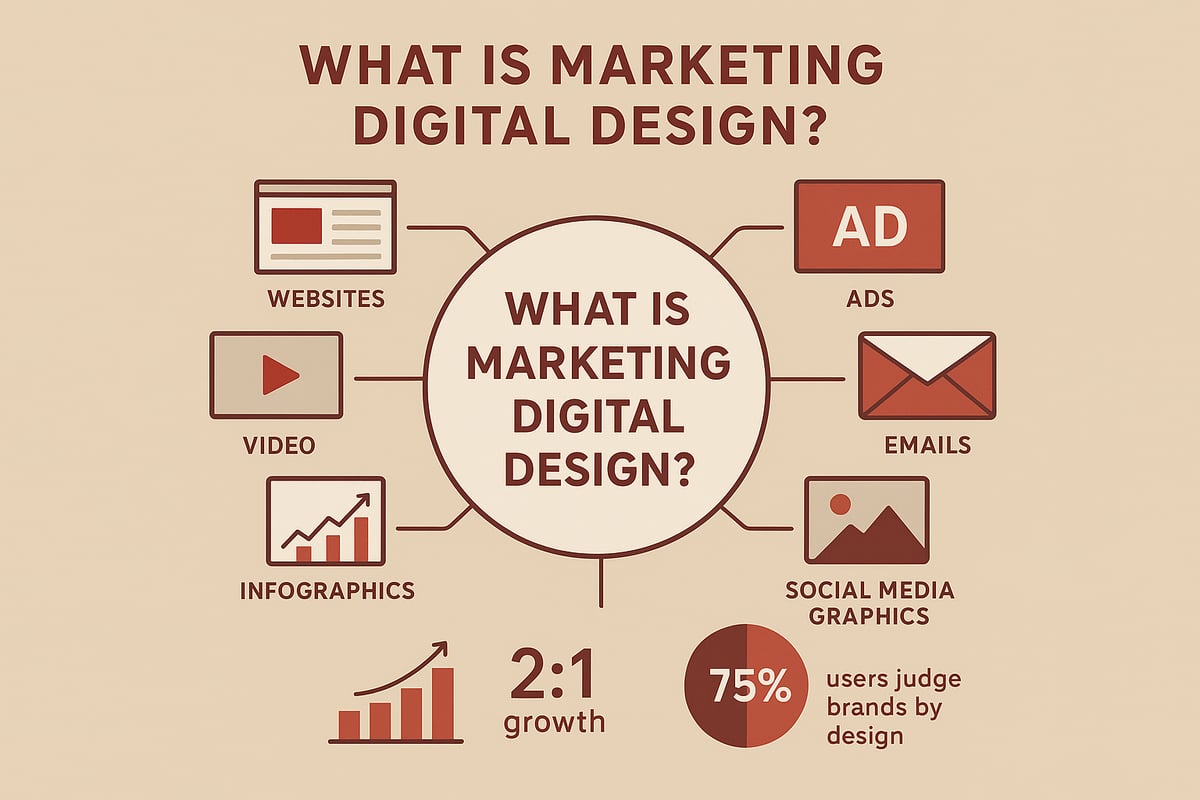
Marketing digital design refers to the strategic creation of visuals and content tailored for digital channels. This discipline covers everything from websites and landing pages to ads, emails, and social media graphics. The goal is to blend aesthetics with functional design, ensuring brand consistency while maximizing user engagement.
According to the McKinsey Design Index study, design-forward companies outperform competitors by 2:1 in revenue growth. For example, a well-designed landing page can double conversion rates, making the impact of marketing digital design measurable and significant.
The Role of Design in Digital Marketing Success
Design acts as a powerful growth driver in digital marketing digital design. It increases click-through rates, conversions, and enhances brand perception. Effective design works hand-in-hand with copywriting, user experience, and storytelling to build holistic campaigns that resonate with audiences.
A Forrester statistic reveals that good user experience can boost website conversion rates by up to 400 percent. This means that strong ad creatives and engaging visuals are not just attractive—they turn impressions into real sales. Marketing digital design is essential for moving users from curiosity to conversion.
Key Benefits of Effective Digital Marketing Design
Implementing marketing digital design brings several key benefits. Consistent branding builds trust and credibility, making users more likely to engage. Clear layouts and strong calls-to-action drive higher engagement rates.
Accessibility is another advantage—using proper contrast, readable typography, and descriptive alt text ensures your brand reaches a wider audience. According to an Adobe study, 38 percent of users stop engaging if digital design is unattractive. In short, effective marketing digital design keeps users interested and loyal.
Types of Digital Marketing Design Assets
There is a wide spectrum of assets within marketing digital design. These include:
- Website and landing page layouts
- Social media visuals and stories
- Email marketing templates
- PPC and display ad creatives
- Content marketing assets such as infographics, eBooks, and case studies
- Video and motion graphics
Each asset type serves a unique purpose but shares the same mission: to communicate your brand message clearly and compellingly. Mastering these assets ensures your marketing digital design delivers results across every digital touchpoint.
Essential Elements of High-Impact Digital Design
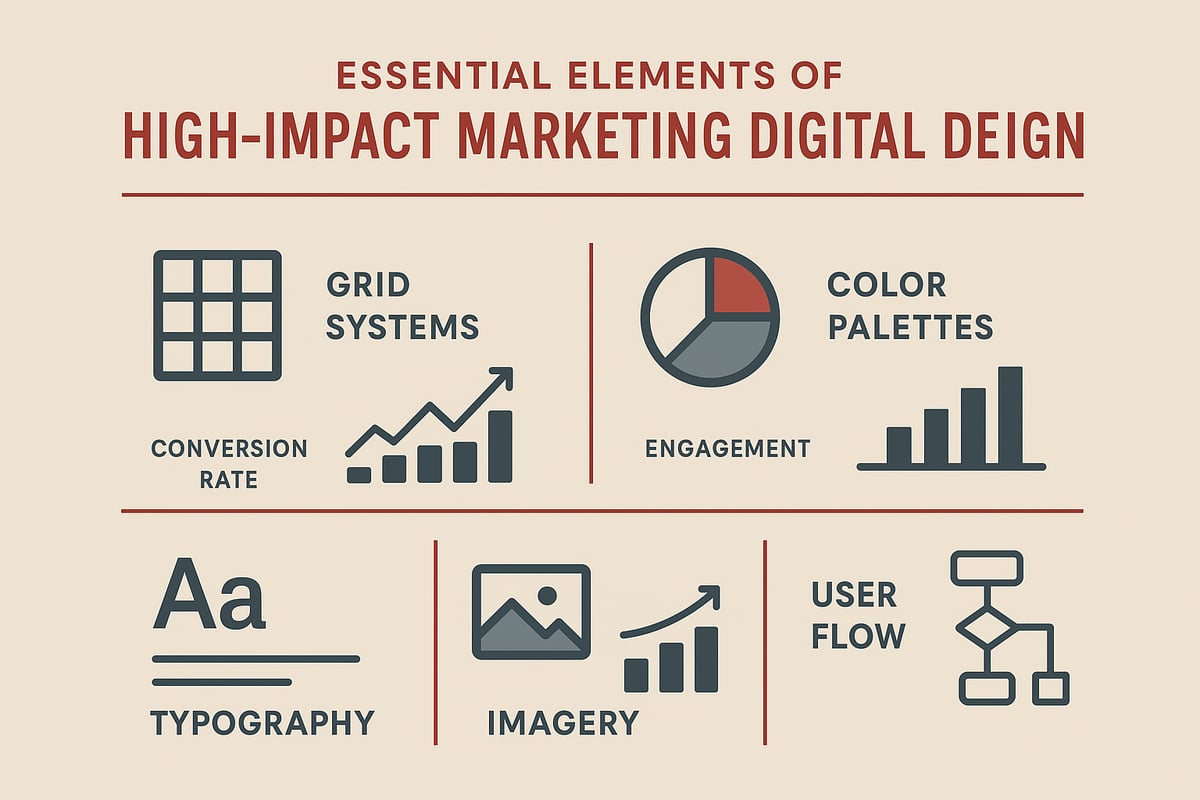
High-impact marketing digital design is built on a foundation of proven principles that maximize engagement and drive results. Each element, from layout to imagery, plays a unique role in shaping user perception and influencing action.
Visual Hierarchy & Grid Systems
Effective marketing digital design starts with a strong visual hierarchy. Grids provide structure, ensuring every element is aligned and balanced. This guides users naturally from headlines to calls to action, creating a seamless browsing experience.
A well-organized homepage uses clear navigation and prominent CTAs, making it easy for visitors to find information and act. Grids help maintain consistency across devices, which is essential for building trust and credibility.
Consider how a structured layout reduces cognitive load. Users can quickly scan content, identify key messages, and navigate without frustration. This strategic approach is fundamental to high-performance marketing digital design.
Color, Contrast, and Brand Consistency
Color is a powerful tool in marketing digital design. Strategic color choices evoke emotion, highlight key areas, and guide users through content. High contrast improves readability, making your content accessible to all audiences.
Consistency in color palettes reinforces brand identity across every channel. When users see familiar colors, trust and recognition grow. For a deeper look at why this matters, explore the importance of brand consistency in digital marketing.
Vibrant colors in PPC or social ads can capture attention in crowded feeds. Whether bold or subtle, cohesive color use is central to memorable marketing digital design.
Typography and Readability
Typography is more than just picking fonts; it shapes the voice of your marketing digital design. The right combination of headline and body fonts ensures clarity and reinforces your brand’s personality.
Use bold headlines to capture attention, while legible body text supports easy reading on any device. Scalable type adapts to screens of all sizes, improving accessibility and engagement.
For example, statement fonts in headlines create a strong first impression, while clean web fonts make long-form content inviting. Thoughtful typography is a cornerstone of effective marketing digital design.
Imagery, Artwork, and Iconography
Imagery sets the tone for marketing digital design. Custom photography and illustrations build a unique brand identity, while stock assets offer flexibility when resources are limited.
Icons and shapes influence perception. Organic shapes feel friendly, while geometric icons suggest precision. Product images should reflect quality and lifestyle, connecting emotionally with your audience.
High-quality visuals inspire confidence in your brand. When imagery aligns with your message, marketing digital design becomes more persuasive and memorable.
Alignment, Spacing, and User Flow
Alignment and spacing are subtle but crucial aspects of marketing digital design. Consistent alignment creates a polished, professional look that builds trust.
White space prevents clutter, allowing users to focus on what matters most. Logical user flow leads visitors from entry point to conversion, reducing friction at every step.
A well-structured email layout, for example, guides the reader with clear sections and bold CTA buttons. Proper spacing and flow enhance the impact of marketing digital design, making every interaction count.
Step-by-Step Guide: Building a Winning Digital Marketing Design Strategy for 2026
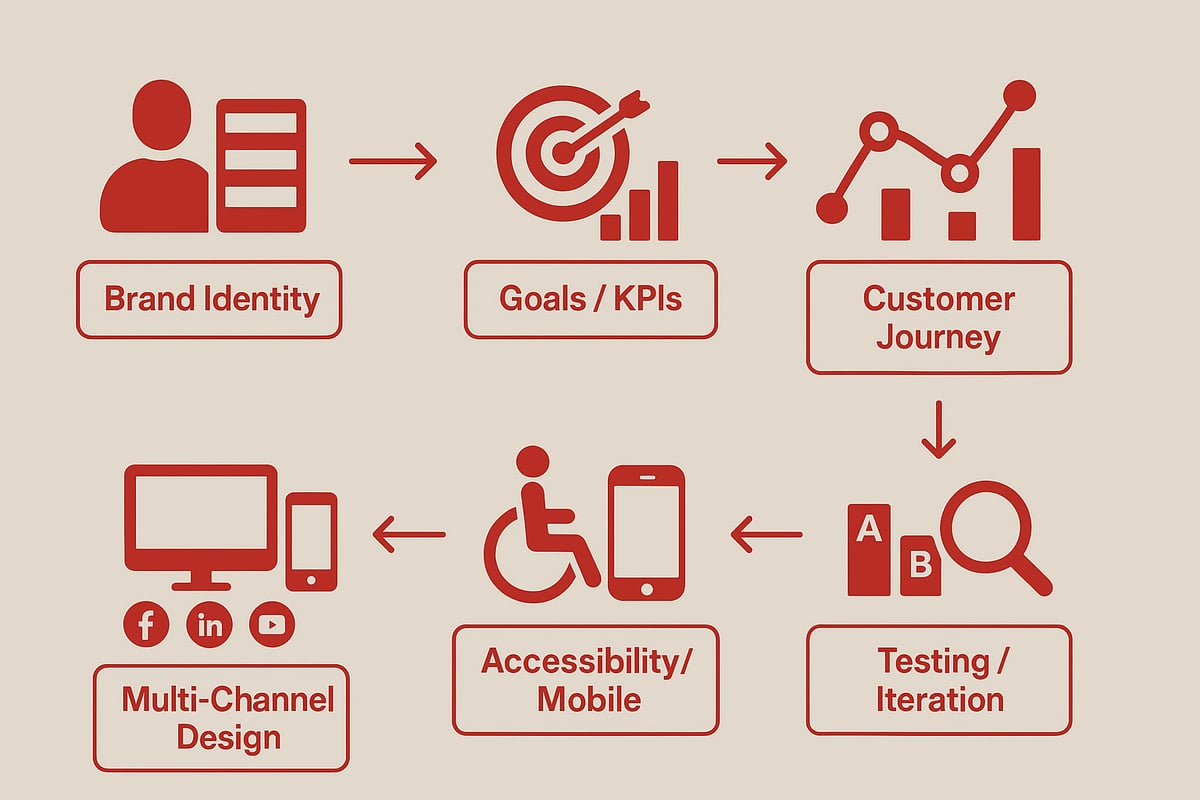
A strong marketing digital design strategy is built on a clear, actionable process. Each step in this guide helps you align design with business goals and user needs, ensuring your brand thrives in the digital landscape of 2026.
Step 1: Define Brand Identity and Audience
The foundation of marketing digital design success is a well-defined brand identity. Start by clarifying your brand voice, values, and unique visual characteristics. Pinpoint what makes your brand memorable and distinct.
Next, build detailed buyer personas. Consider demographics, behaviors, motivations, and pain points. Are you targeting Gen Z consumers who value authenticity, or B2B executives who prioritize professionalism?
A clear understanding of your audience guides every design choice. For example, vibrant colors and playful graphics may resonate with younger audiences, while a restrained palette and structured layouts suit corporate buyers.
Aligning your marketing digital design with both your brand DNA and audience expectations creates consistent, compelling experiences across all touchpoints.
Step 2: Set Measurable Goals and KPIs
Every effective marketing digital design initiative starts with measurable objectives. Define what success looks like for your campaign—do you want to increase website traffic, capture more leads, or drive ecommerce sales?
Choose relevant KPIs such as:
- Conversion rate
- Click-through rate (CTR)
- Bounce rate
- Customer retention
Establish benchmarks before launching new designs. Use A/B testing to compare variations and identify what resonates with your audience.
Let your data inform every design iteration. For instance, if a new landing page layout boosts conversions by 20 percent, apply those learnings across your marketing digital design assets to maximize ROI.
Step 3: Map the Customer Journey and Touchpoints
To make your marketing digital design work harder, map out the full customer journey. List every digital touchpoint where users interact with your brand, including your website, email campaigns, social media, digital ads, and downloadable content.
Design assets tailored to each stage—awareness, consideration, decision—help guide users smoothly from discovery to conversion. Examples include:
- Welcome emails for new subscribers
- Retargeting ads for cart abandoners
- Post-purchase thank-you content
A holistic approach to marketing digital design ensures users encounter a seamless, persuasive experience, no matter where they connect with your brand.
Step 4: Design for Multi-Channel Consistency
Consistency is crucial in marketing digital design. Users expect a cohesive brand experience across all digital channels, from your website to Instagram stories and LinkedIn posts.
Adapt your visual assets for each platform, adjusting dimensions and formats as required. Repurpose core visuals to maintain brand recognition while optimizing for channel-specific engagement.
For actionable tips on consistent website and campaign visuals, consider reviewing the dos and don’ts of website design. Applying these best practices helps your marketing digital design remain effective and recognizable everywhere your audience engages.
Step 5: Optimize for Accessibility and Mobile
Modern marketing digital design must be accessible and mobile-first. Follow accessibility guidelines such as high contrast, descriptive alt text, and keyboard navigation support to reach all users.
Design with mobile in mind—responsive layouts, fast loading times, and touch-friendly buttons are essential. Test your assets on multiple devices to ensure a flawless experience.
Mobile-optimized email templates, for example, often see higher engagement rates than desktop-only versions. Prioritizing accessibility and mobile responsiveness in your marketing digital design widens your reach and improves performance.
Step 6: Test, Analyze, and Iterate
Continuous improvement is the hallmark of successful marketing digital design. Implement A/B and multivariate testing to identify what works best for your audience.
Leverage user data from heatmaps, analytics platforms, and direct feedback. Adjust elements like CTA placement, imagery, and copy based on insights.
Establish a regular review cycle to refine your designs. Iteration allows you to adapt quickly to changing trends and user behaviors, ensuring your marketing digital design remains effective and future-proof.
Leading Digital Design Trends for 2026
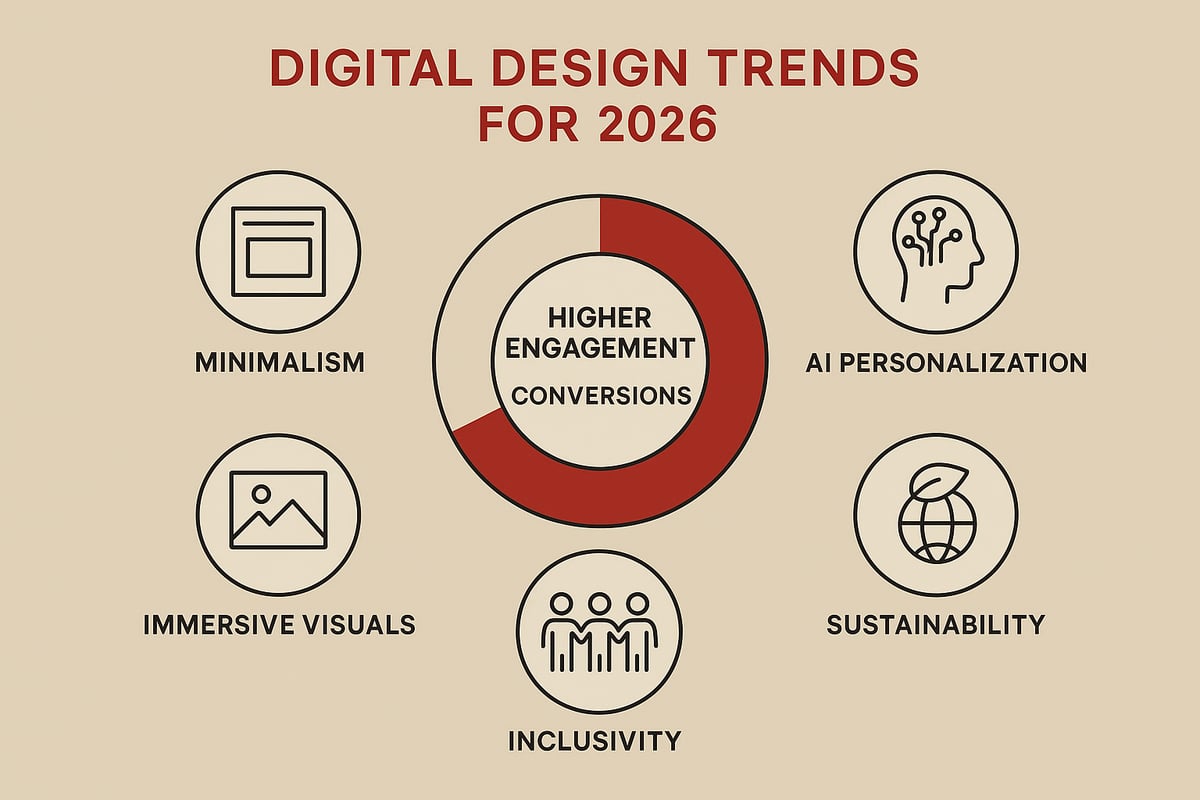
The landscape of marketing digital design is rapidly evolving as brands compete for attention in a crowded digital world. Staying ahead means understanding and applying the top trends shaping user experience and campaign performance in 2026. Let us explore the five trends every marketing leader needs to know.
Minimalism & Clean Aesthetics
Minimalism is a defining principle in marketing digital design for 2026. Brands are simplifying layouts, reducing clutter, and emphasizing whitespace to create a calm, focused user experience. Clean aesthetics not only improve visual appeal but also support faster load times and seamless mobile browsing.
Consider landing pages with limited color palettes and straightforward messaging. These designs help users find information quickly and encourage action. Minimalist approaches also reduce cognitive overload, making it easier for visitors to engage with calls to action.
Key benefits include:
- Improved readability and navigation
- Enhanced mobile performance
- Stronger brand recall
Minimalist marketing digital design ensures every element serves a purpose.
Dynamic Personalization & AI-Driven Design
Personalization is taking center stage in marketing digital design. AI-driven platforms now tailor visuals, messaging, and layouts in real time, creating unique experiences for every user. Dynamic content blocks and adaptive imagery adjust based on user behavior, location, or device.
For example, personalized email graphics can reflect a customer’s browsing history or purchase patterns. AI tools also optimize ad creatives to boost engagement and conversions. According to the Forrester UX impact analysis, brands investing in superior UX see up to a 400% increase in conversion rates.
Embracing AI in marketing digital design helps brands stay agile and relevant.
Immersive Visuals: Video, Animation & Interactivity
The rise of immersive visuals is transforming marketing digital design strategies. Short-form videos, interactive infographics, and micro-animations now capture user attention and drive higher engagement. Brands use animation to guide users, highlight features, and create memorable interactions.
Animated CTAs and interactive product demos invite users to explore and participate rather than passively consume information. These elements increase dwell time and make campaigns more shareable on social platforms.
Key examples:
- Interactive quizzes or polls in social feeds
- Motion graphics in email headers
- Animated hero sections on landing pages
Immersive marketing digital design creates deeper connections with audiences.
Authenticity, Inclusivity & Accessibility
Modern audiences expect brands to reflect real-life diversity and ensure accessibility for all users. Authentic imagery, inclusive language, and accessible design practices are now cornerstones of marketing digital design. This includes using real customer photos, representing different age groups, abilities, and backgrounds, and following accessibility guidelines.
Accessible design, such as high-contrast elements and descriptive alt text, not only meets ethical standards but also broadens reach. Inclusive marketing digital design builds trust and fosters loyalty across demographics.
Brands adopting these principles see stronger customer relationships and higher retention rates.
Sustainable & Ethical Design Practices
Sustainability is emerging as a non-negotiable aspect of marketing digital design. Brands are choosing eco-friendly visuals, minimizing data-heavy assets, and communicating transparent, responsible messaging. This responds to consumer demand for ethical business practices.
For instance, showcasing sustainable packaging or using digital assets that require less bandwidth reduces environmental impact. Ethical design also means avoiding manipulative tactics and prioritizing user well-being.
Sustainable marketing digital design positions brands as leaders in responsibility while enhancing reputation and long-term loyalty.
Channel-Specific Strategies: Applying Design to Key Marketing Platforms
Navigating the evolving digital landscape requires channel-specific strategies tailored to each platform. The right marketing digital design approach not only elevates brand presence but also ensures that every touchpoint delivers a seamless, engaging experience. Let’s break down essential tactics for 2026 across core marketing channels.
Website & Landing Page Design
A website serves as the digital storefront, making marketing digital design crucial for first impressions and conversions. Focus on clear navigation, high-contrast calls to action, and fast load times to reduce bounce rates. Consistent branding, professional product imagery, and user-centric layouts help build trust.
Leverage best practices such as grid-based layouts, logical content flow, and accessible color schemes. For inspiration and actionable tips, explore creative website design strategies to see how leading brands structure high-performing sites. Remember, a well-designed homepage can drive measurable increases in engagement and sales.
Email Marketing Design
Email remains a powerful channel, but only when marketing digital design is optimized for clarity and mobile responsiveness. Use clean, uncluttered layouts that highlight headlines and visuals. Make sure CTA buttons stand out and are easy to tap on any device.
Personalization is key. Include dynamic elements such as user names or relevant content blocks to boost open and click rates. Narrative-driven campaigns with compelling visuals help tell your brand story and guide users toward conversion. Test different templates regularly to ensure consistent performance across devices.
Social Media Design
Social platforms demand agile and visually impactful marketing digital design. Create assets tailored to each channel, such as Instagram stories, Facebook carousels, or LinkedIn banners. Use trends like collage layouts, branded AR filters, and interactive polls to increase engagement.
Maintain a cohesive visual identity across platforms. Schedule content to ensure regular updates and leverage user-generated content for authenticity. Consistency in colors, fonts, and messaging reinforces brand recognition and trust, driving higher interaction rates with your audience.
PPC & Digital Ad Design
PPC and display ads require marketing digital design that captures attention in seconds. Prioritize simplicity, bold visuals, and a single clear value proposition. Make sure text is legible, even on small screens, and that CTA buttons are instantly recognizable.
According to Wilderness Agency UX/UI statistics, good UX in ad creatives can significantly raise conversion rates and lower acquisition costs. Regularly test ad variations to identify what resonates best. Use contrasting colors and minimal copy for maximum impact.
Content Marketing Design (Blogs, Case Studies, Infographics)
Content marketing thrives on visual storytelling, making marketing digital design central to engagement. Use infographics, branded illustrations, and digestible layouts to communicate complex information efficiently.
| Asset Type | Visual Elements | Engagement Impact |
|---|---|---|
| Blog Posts | Feature images, pull quotes | High time-on-page |
| Case Studies | Interactive tiles, graphs | Increased credibility |
| Infographics | Icons, data visualization | Higher shareability |
Consistent use of headings, subheadings, and visual cues makes content easy to scan. Well-designed case studies and infographics can drive backlinks and expand reach.
Video & Motion Graphics
Video and motion graphics are increasingly vital in marketing digital design, especially for social and paid ads. Short-form videos capture attention, while animated explainers clarify complex products or services.
Use eye-catching hero sections, animated CTAs, and product demos to boost engagement. Optimize videos for mobile viewing by keeping them brief and ensuring fast load times. Integrate branding elements such as logos and color palettes to reinforce your brand throughout every video asset.
Pro Tips & Best Practices for Future-Proof Digital Marketing Design
Staying ahead in marketing digital design requires not just creativity, but a strategic, data-driven mindset. The following expert tips will help you adapt, thrive, and future-proof your digital campaigns as the landscape evolves.
Data-Driven Design Decisions
Leverage analytics and user feedback to guide every aspect of your marketing digital design process. Regularly review heatmaps, click paths, and conversion data to understand what resonates with your audience.
Set up scheduled performance audits for your digital assets. Use metrics like bounce rate, time on page, and CTA click-through to identify areas for improvement.
For example, referencing Forrester and Adobe studies can help validate investment in UX enhancements. Let data inform design tweaks, from adjusting color contrast to repositioning CTAs, ensuring each change supports measurable business goals.
Collaboration Between Designers, Marketers, and Developers
Seamless teamwork is essential for effective marketing digital design. Foster open communication between creative, technical, and strategic team members to unify vision and execution.
Implement shared design systems and asset libraries to maintain consistency and streamline updates. Unified brand guidelines help ensure every campaign, from email to landing page, aligns with your core identity.
Regular cross-functional meetings can surface new ideas and catch potential issues early. This collaborative approach results in holistic, high-performing campaigns that leverage the strengths of every team member.
Staying Ahead with Continuing Education and Inspiration
The marketing digital design landscape evolves rapidly. Stay current by following leading design blogs, attending webinars, and enrolling in online courses focusing on the latest trends and techniques.
Analyze top competitors to uncover inspiration and benchmark your performance. Explore resources like Shopify and Landingi, and review creative UI and UX design principles to deepen your understanding of effective design strategies.
Encourage your team to share insights and new discoveries. Continuous learning ensures your skills and ideas remain fresh, relevant, and competitive in the market.
Tools & Resources for 2026 Success
Invest in advanced tools to streamline your marketing digital design workflow. Platforms like Figma, Adobe XD, and Canva enable rapid prototyping, team collaboration, and brand consistency.
Adopt AI-powered personalization and automation solutions to deliver tailored experiences at scale. Use A/B testing software to optimize creative assets, ensuring your campaigns remain agile and effective.
Establish a toolkit that supports design, analysis, and iteration. The right resources empower your team to innovate, adapt quickly, and maintain a competitive edge.
You’ve just explored the essential strategies and future-focused principles that will shape digital marketing design success in 2026. If you’re ready to see how these ideas come to life, I encourage you to take a closer look at real-world examples from a team that’s been delivering authentic results for over 25 years. Our portfolio showcases how Red Van Creative blends compelling visuals, user-focused design, and brand consistency for clients across diverse industries. Let’s turn inspiration into action—see what’s possible and imagine how your brand could stand out in the digital landscape.
See Our Work / View Our Portfolio