

In 2026, the pace of change in digital marketing is nothing short of remarkable. AI-powered tools, evolving data privacy regulations, and omnichannel strategies are redefining how brands connect with audiences.
Staying ahead in digital marketing is not just about keeping up, it is about seizing new opportunities and adapting to emerging technologies. This essential guide will equip you with expert strategies, tools, and insights designed for success.
We will explore the latest trends, must-have channels, proven tactics, and practical steps to future-proof your marketing approach. Use this guide as your blueprint for digital marketing excellence in the year ahead.
The Digital Marketing Landscape in 2026: Trends & Transformations
The landscape in digital marketing is undergoing dramatic change as we look toward 2026. Rapid technological advancements, evolving consumer expectations, and a heightened focus on privacy are converging to reshape how brands engage their audiences. To remain competitive, marketers must understand these shifts and adapt their strategies accordingly.
Key Digital Marketing Trends Shaping 2026
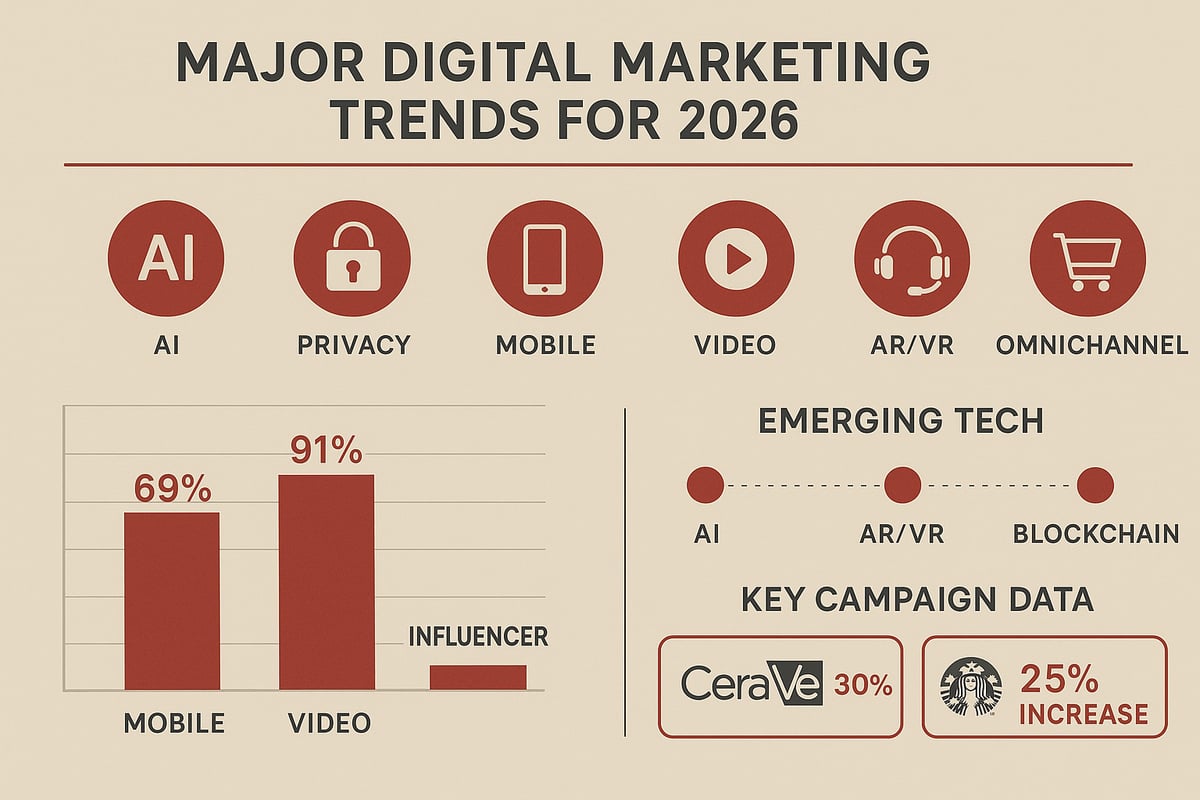
Several pivotal trends are driving transformation in digital marketing. The surge in AI-powered tools is enabling brands to optimize campaigns, generate content, and analyze data at unprecedented scale. Marketers are also prioritizing privacy-first strategies, adapting to stricter data regulations and the shift away from third-party cookies.
Mobile continues to dominate, with 69% of the global population now using mobile devices. Video has become essential, as 91% of businesses leverage it for marketing. New social platforms are emerging, and user behaviors are evolving rapidly. Omnichannel and integrated marketing strategies are expanding to ensure seamless customer experiences. Personalization at scale, powered by first-party data, is crucial for delivering tailored interactions in digital marketing.
For a detailed breakdown of these shifts, explore the Top Digital Marketing Trends to Watch in 2026, which highlights predictive analytics, short-form video, and hyperlocal targeting as key areas of focus in digital marketing.
The Impact of Emerging Technologies
Emerging technologies are fundamentally altering the landscape in digital marketing. AI chatbots now deliver instant, context-aware customer support, while automation streamlines repetitive tasks and campaign management. Predictive analytics is transforming how marketers forecast trends and personalize outreach.
AR and VR are gaining traction, offering immersive brand experiences that captivate consumers. Blockchain technology is enhancing transparency and trust in digital advertising by verifying ad delivery and combating fraud. These advancements make it imperative for marketers to stay informed and agile in digital marketing.
Consumer Behavior Shifts
Consumer expectations are shifting rapidly in digital marketing. Audiences now demand authentic, value-driven interactions with brands. With shorter attention spans, they prefer snackable, interactive content over lengthy formats.
Seamless, cross-device experiences are no longer optional. Users expect to move fluidly between mobile, desktop, and physical touchpoints without friction. These behavioral changes require marketers to rethink how they connect and engage in digital marketing, ensuring every interaction feels relevant and genuine.
Examples & Data
Real-world examples highlight the power of innovation in digital marketing. CeraVe’s influencer-driven campaign generated 32 billion impressions and drove a 25% sales increase by leveraging viral video content and authentic endorsements.
Starbucks stands out with its Rewards app, setting a benchmark for omnichannel loyalty and real-time engagement. The app seamlessly integrates mobile, web, and in-store experiences, demonstrating how brands can create consistent, rewarding journeys in digital marketing.
| Campaign | Approach | Results |
|---|---|---|
| CeraVe | Influencer & video marketing | 32B impressions, +25% sales |
| Starbucks | Omnichannel loyalty integration | Industry-leading engagement |
These cases underscore the measurable impact of strategic innovation in digital marketing.
Core Channels & Tactics for Digital Marketing Success
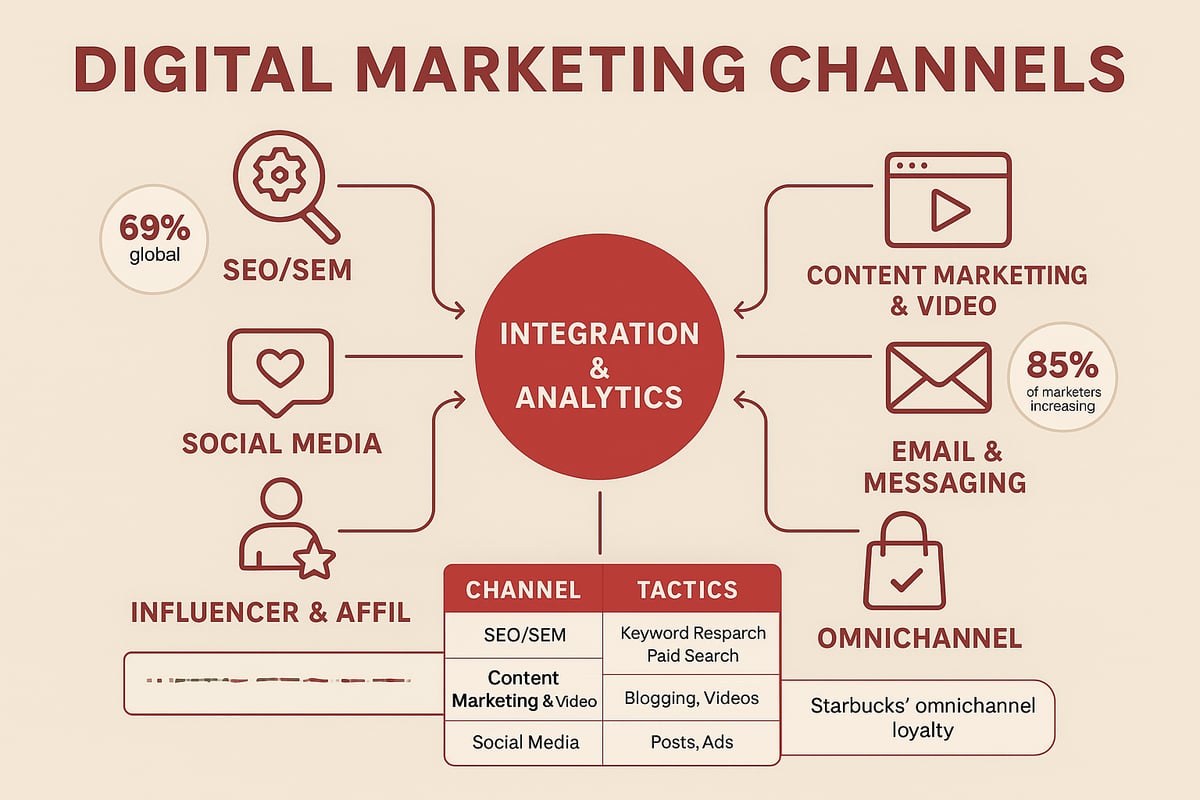
Navigating the complex world of channels and tactics in digital marketing is essential for success in 2026. Marketers must master both foundational and emerging strategies to stay competitive. Explore how each core channel contributes to a future-ready marketing approach.
Search Engine Optimization (SEO) and Search Engine Marketing (SEM)
SEO and SEM remain foundational in digital marketing, delivering both immediate and long-term visibility. Focus on optimizing for non-branded and branded keywords, leveraging local SEO, and building authority through off-page strategies.
Paid search and PPC campaigns require careful keyword research and high-converting landing pages. Integration of SEO and SEM ensures your brand appears at every relevant touchpoint in digital marketing. By combining organic and paid tactics, you maximize reach and adapt to shifting search behaviors.
| Tactic | SEO | SEM |
|---|---|---|
| Targeting | Branded, Non-branded, Local | Intent-driven Keywords |
| Optimization | On-page, Off-page, Technical | Landing Pages, Ad Copy |
| Measurement | Organic Traffic, Rankings | CTR, Conversions |
Aligning these strategies secures a holistic search presence in digital marketing.
Content Marketing & Video
Content in digital marketing must be versatile, covering blogs, ebooks, webinars, and especially video. Video marketing is seeing explosive growth, with 85% of marketers planning to boost their investment.
Short-form and interactive videos cater to changing consumer preferences. A leading example is CeraVe’s viral influencer campaign, which drove 32 billion impressions and a 25% sales increase. Consistent, high-quality content in digital marketing builds trust and drives engagement across the customer journey.
Social Media Marketing
Social media in digital marketing demands agility and platform diversity. Brands must evaluate where their audience spends time, from TikTok and Instagram to WeChat and emerging platforms.
Social listening tools help monitor trends and sentiment, while active engagement fosters loyalty. Promotion strategies should be tailored to each platform’s strengths in digital marketing, ensuring your message resonates and stands out in crowded feeds.
Email & Messaging Marketing
Email remains a cornerstone in digital marketing, especially as a first-party data channel amid privacy changes. Marketers should prioritize database hygiene and segment audiences for personalized campaigns.
SMS and messaging apps like WhatsApp offer direct, real-time communication. With the loss of third-party cookies, maintaining strong email and messaging strategies in digital marketing is more important than ever for nurturing leads and driving conversions.
Influencer & Affiliate Marketing
Influencer and affiliate tactics in digital marketing leverage authentic voices and third-party endorsements. Collaborating with influencers, including micro-influencers, expands reach to highly engaged audiences.
Affiliate marketing relies on robust tracking and transparent attribution models. These approaches in digital marketing build credibility and allow brands to tap into new customer segments with measurable ROI.
Omnichannel Integration
Omnichannel strategies unify every touchpoint in digital marketing, creating seamless experiences across digital and traditional channels. Brands like Starbucks excel by synchronizing campaigns and loyalty programs in real-time across app, web, and in-store.
For more on the evolution of omnichannel and personalization, see 2026 Digital Marketing Trends We’re Watching.
Integrated campaigns in digital marketing boost engagement, retention, and brand loyalty.
Key Arguments & Insights
The most effective results in digital marketing come from combining channels, leveraging analytics, and embracing continuous experimentation. Use dashboards to measure performance and identify what resonates.
Regular testing, from A/B to multivariate, ensures adaptability in digital marketing. Brands that embrace data-driven insights and cross-channel integration consistently outperform competitors.
Building a Future-Proof Digital Marketing Strategy
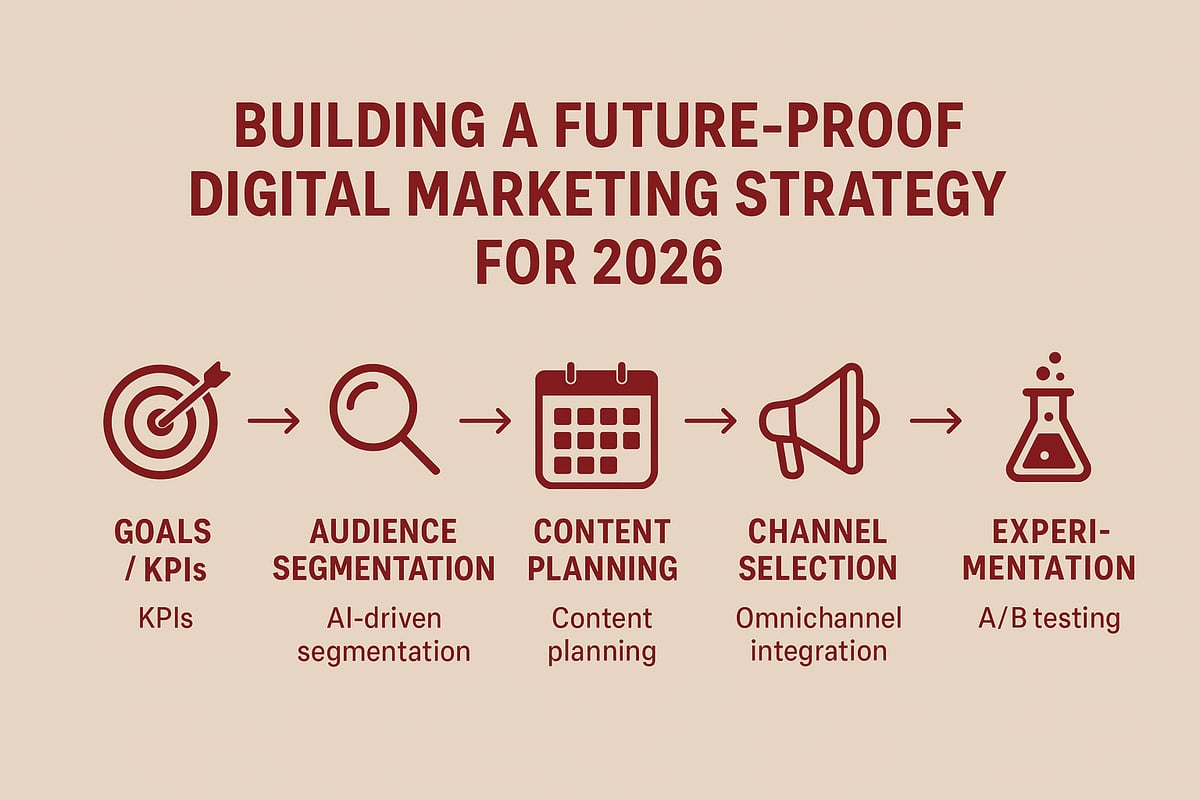
Adapting to rapid change is essential in digital marketing. As we look toward 2026, building a future-proof strategy means proactively anticipating shifts, integrating new technologies, and keeping customer needs at the forefront. A robust approach in digital marketing will help your business remain agile, resilient, and ready for whatever comes next.
Setting Goals and KPIs
A successful approach in digital marketing begins with clear, measurable goals. Align your marketing objectives with your broader business vision to ensure every tactic supports growth. Select relevant KPIs for each channel, such as website traffic, engagement rates, conversion percentages, and customer retention.
Consider using a table to compare KPIs for different channels:
| Channel | KPI Example |
|---|---|
| SEO | Organic traffic |
| Social Media | Engagement rate |
| Open/click rates |
Tracking these metrics in digital marketing empowers you to evaluate performance, allocate resources wisely, and make informed decisions for continuous improvement.
Audience Research & Segmentation
Understanding your audience is crucial in digital marketing. Leverage data analytics and AI tools to segment your audience based on demographics, behaviors, and preferences. Create detailed buyer personas to personalize messaging and offers effectively.
Use surveys, website analytics, and social listening platforms to gather actionable insights. AI-driven segmentation enables you to identify emerging trends and shifts in consumer behavior faster than ever before. When you tailor your approach in digital marketing to specific segments, you boost engagement and build lasting customer relationships.
Content Planning & Calendar Development
Effective content planning in digital marketing maps your messaging to every stage of the customer journey. Develop a content calendar that balances evergreen topics with trending themes to maintain relevance and drive sustained engagement.
Break down your calendar as follows:
- Awareness: Educational blog posts, videos
- Consideration: Webinars, ebooks, case studies
- Decision: Product demos, testimonials
Consistent scheduling and variety in digital marketing content keep your brand top-of-mind and encourage repeat interactions, helping you establish authority in a crowded marketplace.
Channel Selection & Budget Allocation
Selecting the right channels in digital marketing is vital for maximizing ROI. Evaluate which platforms—such as search, social, email, or video—deliver the best results for your audience and objectives. Allocate budget across paid, owned, and earned media based on performance data.
Integrate touchpoints for a seamless omnichannel experience. For an in-depth look at foundational strategies in digital marketing, explore Online Marketing & Digital Marketing. Smart allocation ensures every dollar spent supports your goals and adapts to shifting digital landscapes.
Experimentation and Iteration
Continuous experimentation in digital marketing drives growth and innovation. Implement A/B testing and multivariate experiments to refine messaging, creative, and targeting. Use analytics dashboards to monitor results and pivot strategies in real time.
For example, Starbucks’ omnichannel loyalty strategy delivers real-time updates across app, web, and in-store, setting a benchmark for agile marketing. By fostering a culture of testing and adaptation in digital marketing, your organization can stay ahead of trends and sustain long-term success.
Leveraging Data, Analytics, and AI for Competitive Advantage
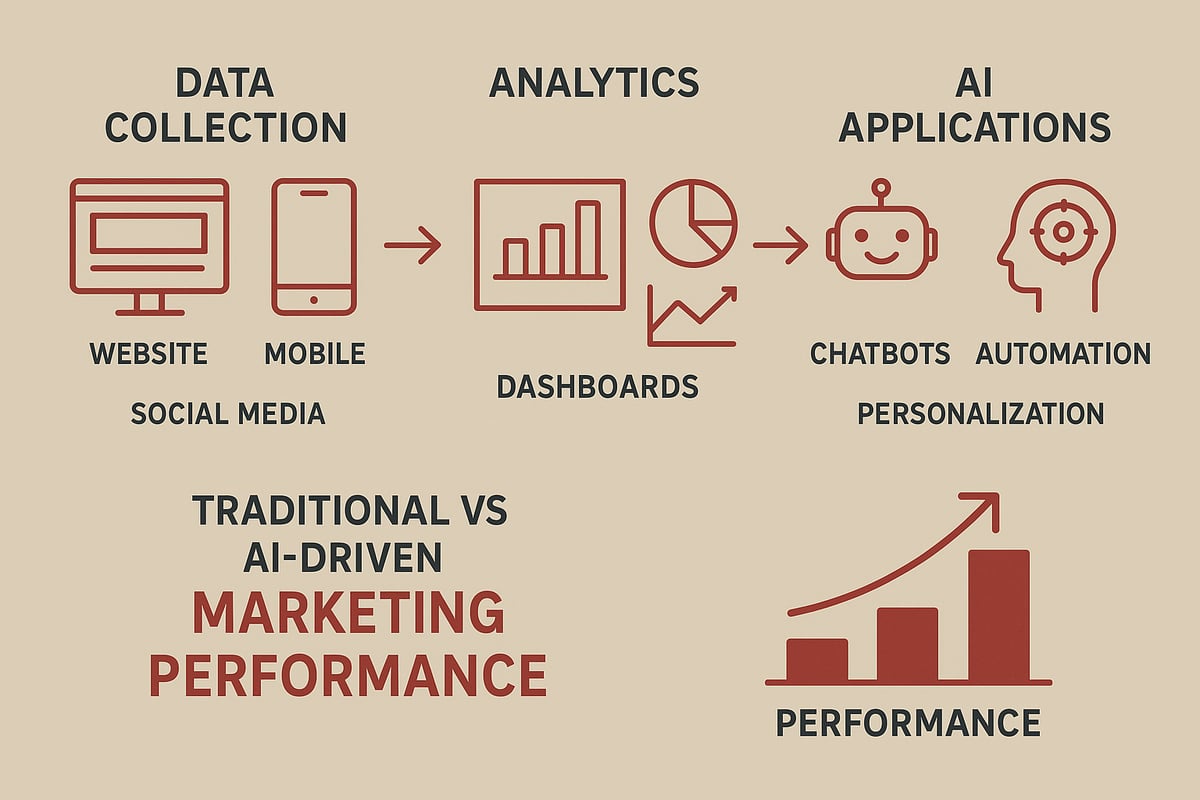
Data, analytics, and AI have become the backbone of success in digital marketing. Brands that effectively harness these tools can uncover actionable insights, optimize campaigns in real time, and personalize customer experiences at scale. As we move into 2026, the ability to interpret and act on data will define competitive advantage.
Harnessing Analytics for Insightful Decision-Making
Analytics provide the foundation for every strategic move in digital marketing. With robust dashboards, marketers can track key metrics across channels, such as engagement rates, conversion paths, and customer lifetime value.
- Identify high-performing campaigns quickly
- Map the customer journey to refine touchpoints
- Optimize budgets based on real-time results
Modern analytics platforms offer predictive insights, helping teams anticipate trends and adjust strategies proactively. Using analytics in digital marketing allows brands to make data-driven decisions, ensuring resources are allocated to the most impactful areas. Teams that master analytics will outpace competitors and drive measurable growth.
AI and Automation in Digital Marketing
AI is revolutionizing the way brands operate in digital marketing. From content generation to predictive analytics, AI-driven solutions help marketers work smarter and faster.
Automation tools streamline repetitive tasks such as email scheduling, social posting, and ad management. This frees up human teams to focus on creative strategy and relationship building. AI-powered chatbots enhance customer service, delivering instant responses and personalized recommendations.
Integrating AI in digital marketing enables real-time optimization, allowing marketers to pivot quickly as trends shift. Brands that invest in AI and automation will see increased efficiency, reduced costs, and improved campaign outcomes.
Personalization at Scale
Personalization is no longer optional in digital marketing. With first-party data, brands can deliver tailored experiences that resonate with individual customers. Dynamic content, customized product recommendations, and targeted messaging all contribute to higher engagement and loyalty.
According to Accenture, 91% of consumers prefer brands that recognize and personalize their experience. AI makes it possible to scale these efforts across every channel and touchpoint. For deeper insight on why personalization is crucial, see Why Personalized Marketing Matters.
Personalization in digital marketing builds trust, increases conversion rates, and positions brands as customer-centric leaders.
Experimentation and Performance Measurement
Continuous experimentation is vital in digital marketing. Running A/B and multivariate tests helps uncover what resonates best with target audiences. Performance measurement tools track results so teams can iterate quickly.
- Test subject lines, visuals, and calls to action
- Analyze attribution models for channel impact
- Adjust budgets based on performance data
Experimentation in digital marketing ensures strategies remain agile and responsive to changing market dynamics. Brands that embrace testing refine their approach and consistently deliver better outcomes.
Data Privacy and Compliance
Data privacy is a top priority in digital marketing as regulations like GDPR and CCPA evolve. Marketers must ensure transparent data collection practices and secure customer information.
Educating teams and customers about data usage fosters trust. Adapting to privacy-first frameworks, such as cookie-less tracking and explicit consent, is essential. Compliance in digital marketing not only avoids legal risks but also builds lasting brand credibility.
As privacy laws change, brands that prioritize ethical data practices will stand out for their integrity and customer focus.
Organizational Readiness: Skills, Teams, and Transformation
Preparing for success in digital marketing in 2026 means more than adopting new tools or platforms. It requires a strategic commitment to building the right skills, fostering agile teams, and embracing organizational transformation. Companies that invest in their people and processes will be best positioned to lead in digital marketing as the landscape evolves.
Developing Digital Marketing Talent
Success in digital marketing in 2026 starts with talent. Teams will need strong data literacy, proficiency with AI and automation, storytelling expertise, and a keen understanding of user experience. Upskilling is essential, whether through workshops, online courses, or certifications.
Investing in digital marketing education helps your team keep up with rapid change. Consider leveraging resources like Building a Digital Marketing Team to identify and develop the right mix of capabilities. Encourage ongoing learning so your organization remains adaptable and innovative in digital marketing.
Structuring for Agility and Innovation
To thrive in digital marketing in 2026, organizations must be agile. Cross-functional collaboration between marketing, sales, and IT ensures quick responses to market shifts. Create small, empowered teams that can test and launch new ideas rapidly.
Fostering a culture of experimentation is critical. Encourage team members to propose, test, and iterate on new tactics in digital marketing. This approach not only drives innovation but also builds resilience when responding to emerging technologies and trends.
Leadership and Change Management
Leadership plays a pivotal role in digital marketing transformation. Executives must champion change and align the organization around shared digital objectives. Set clear metrics and communicate progress regularly to keep teams focused and motivated.
Change management requires buy-in from all stakeholders. Invest in leadership development, such as executive education programs, to strengthen digital fluency. By guiding teams through transformation, leaders help ensure sustainable growth in digital marketing.
Partnering with Experts and Agencies
Sometimes, the best way to accelerate progress in digital marketing is to partner with specialized agencies or consultants. Evaluate potential partners based on their expertise, industry experience, and proven results.
Collaborate when you need access to niche skills or want to scale quickly. Establish clear expectations and communication channels to maximize the value of these partnerships. Strategic alliances can fill gaps and bring fresh perspectives to your digital marketing initiatives.
Navigating Challenges & Seizing Opportunities in 2026
Navigating challenges and seizing opportunities in digital marketing requires a proactive, strategic approach. As 2026 approaches, marketers face a landscape shaped by evolving privacy laws, fierce competition, rapid technological change, and the relentless demand for measurable results. How can you thrive in digital marketing amid these dynamics? Let us break it down.
Overcoming Data Privacy and Regulatory Hurdles
Data privacy is front and center in digital marketing for 2026. With regulations like GDPR and CCPA evolving, brands must prioritize transparency and compliance. This means educating both teams and customers on how data is collected and used.
To stay ahead, implement robust consent management tools, update privacy policies regularly, and ensure your data practices align with local and global laws. For more on privacy-first data strategies and their impact, see The Top 10 Digital Marketing Trends For 2026.
Standing Out in a Saturated Digital Space
Competition in digital marketing is more intense than ever. To differentiate your brand, focus on building authenticity and trust through consistent messaging and transparent communication. Audiences want brands that share clear values and deliver genuine interactions.
Consider leveraging storytelling and unique value propositions. Interactive content, such as polls and short-form videos, can also boost engagement, helping your brand stay memorable in a crowded field.
Adapting to Rapid Technological Change
Staying agile is essential in digital marketing as technology evolves. New platforms, algorithm updates, and tools like AI and AR/VR are reshaping how brands connect with consumers. Early adoption and continuous learning are key.
Encourage your team to monitor trends and experiment with emerging tech. Investing in R&D or pilot programs allows you to test new features before competitors. Insights from The Top 10 Digital Marketing Trends For 2026 highlight the importance of adapting quickly to maintain relevance and effectiveness in digital marketing.
Measuring Success and Demonstrating ROI
Proving value in digital marketing means using robust measurement strategies. Attribution modeling, multi-touch analytics, and real-time dashboards are essential for understanding channel performance and campaign impact.
Focus on metrics that matter: conversion rates, customer lifetime value, and retention. Regularly report findings to stakeholders, and use insights to refine your approach. Brands that harness analytics are better positioned to pivot and capture new opportunities in digital marketing.
Actionable Steps for Digital Marketing Success in 2026
Success in digital marketing demands a strategic, step-by-step approach. The landscape is rapidly evolving, making it critical to follow a clear path and adapt to new opportunities. Use these actionable steps as your blueprint for thriving in digital marketing throughout 2026.
Step 1: Audit Your Current Digital Marketing Efforts
Begin by evaluating every aspect of your presence in digital marketing. Review channel performance, content quality, and analytics setup. Identify gaps in skills, technology, and processes. This foundational audit ensures you understand your strengths and areas for improvement in digital marketing.
Step 2: Set Clear Goals and Define Success Metrics
Next, establish SMART objectives that align with business outcomes in digital marketing. Define key performance indicators for each channel and campaign. Clear, measurable goals keep your team focused and enable you to track progress effectively in digital marketing.
Step 3: Invest in Technology and Talent
Stay ahead by adopting AI-powered tools and automation platforms in digital marketing. Upskill your team or partner with specialized agencies when needed. Investing in both the right technology and human expertise is essential for scaling your efforts in digital marketing.
Step 4: Develop and Execute an Omnichannel Strategy
Integrate digital and traditional touchpoints to deliver a seamless customer journey. Personalize messaging and offers using first-party data. For deeper insights on omnichannel and content trends, see Digital Marketing Trends for 2026: 10 Strategies to Stay Ahead. An effective omnichannel approach maximizes engagement and retention in digital marketing.
Step 5: Monitor, Measure, and Optimize Continuously
Implement dashboards and analytics to track progress across all channels. Use data-driven insights to iterate and refine your strategies. Continuous optimization is crucial for maintaining a competitive edge and achieving results in an ever-changing market.
Step 6: Stay Agile and Future-Focused
Review emerging trends, platforms, and regulatory changes regularly. Foster a culture of innovation and adaptability within your team. Draw inspiration from brands like Starbucks, which exemplifies omnichannel excellence, and CeraVe, whose influencer campaigns showcase adaptability in digital marketing.
As you look ahead to mastering digital marketing in 2026, it helps to see how proven strategies come to life in real-world campaigns. At Red Van Creative, we’ve spent over 25 years helping brands build authentic connections—combining data-driven tactics, creative storytelling, and a genuine local touch. If you’re curious about how these principles translate into measurable results for industries like oil and gas, healthcare, construction, and retail, I invite you to take a closer look at our work. You might find inspiration for your own journey by exploring our projects:
See Our Work / View Our Portfolio