

The financial services industry faces unique challenges when it comes to content marketing. Between strict regulatory requirements, complex products that demand careful explanation, and customers who demand both expertise and trustworthiness, creating effective content requires specialized knowledge. A financial services content marketing agency brings the expertise needed to navigate these complexities while building genuine connections with audiences who are making critical financial decisions. From wealth management firms to insurance providers, financial institutions need partners who understand both marketing strategy and the nuanced regulations that govern every piece of content.
Understanding the Specialized Role of Financial Services Content Marketing
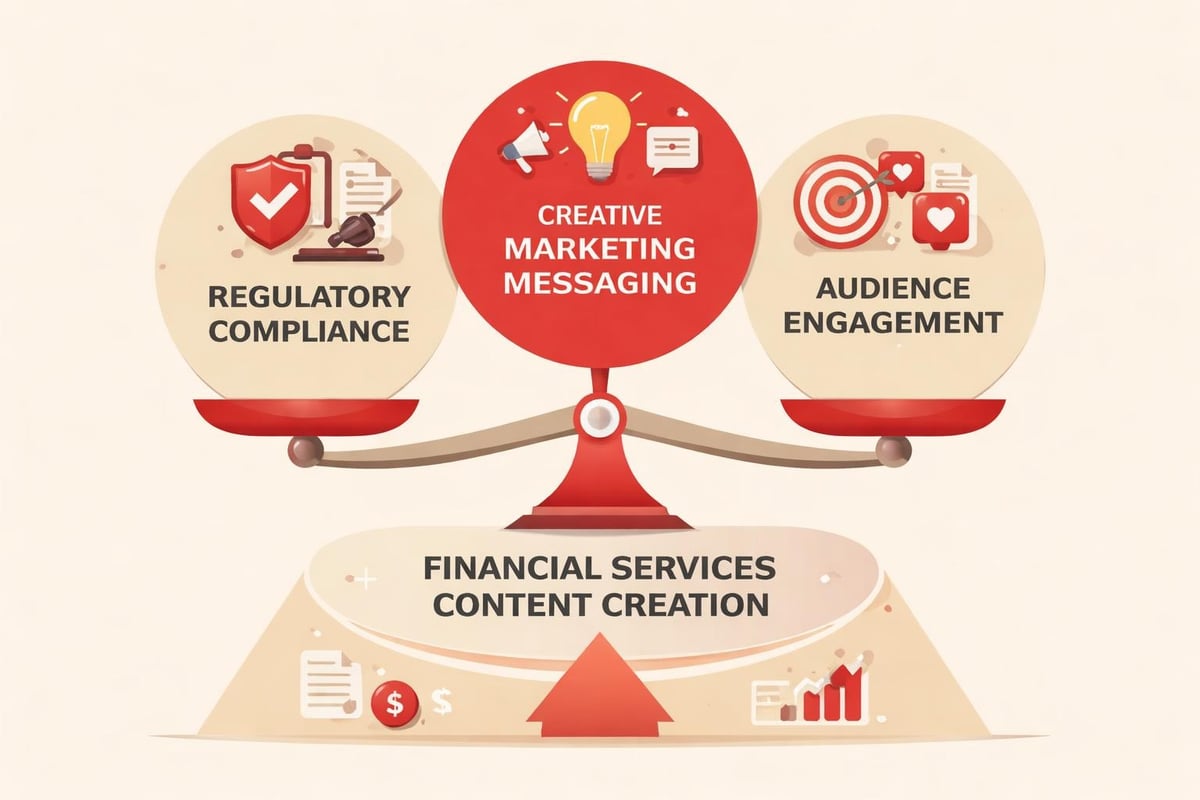
Financial content marketing differs fundamentally from other industries due to regulatory oversight and the high stakes involved in financial decisions. A financial services content marketing agency must balance creativity with compliance, ensuring every blog post, whitepaper, and social media update meets strict legal standards while remaining engaging and accessible.
The regulatory landscape includes requirements from bodies like the SEC, FINRA, and state insurance departments. These organizations scrutinize marketing materials to protect consumers from misleading claims or inadequate disclosures. Content must be accurate, balanced, and transparent while avoiding language that could be construed as guarantees or promises about future performance.
Why Generic Marketing Agencies Fall Short
Traditional digital marketing agencies often lack the specialized knowledge required for financial services. They may not understand the difference between suitable and fiduciary standards, the importance of risk disclosures, or how to position complex products like variable annuities or structured notes. This knowledge gap can lead to compliance violations, wasted resources, and missed opportunities to connect with sophisticated audiences.
A financial services content marketing agency brings industry-specific expertise that includes:
- Regulatory knowledge across multiple jurisdictions and product types
- Financial literacy to accurately explain complex concepts
- Risk management understanding to properly frame investment content
- Compliance review processes built into content workflows
- Industry terminology that resonates with professional audiences
Working with specialists who understand content marketing for financial services ensures your messaging hits the mark without crossing regulatory lines.
Strategic Content Approaches for Financial Institutions
Financial services organizations need content strategies that build trust while demonstrating expertise. The most effective approaches focus on education rather than hard selling, recognizing that financial decisions involve careful research and consideration.
Educational Content That Builds Authority
Creating genuinely helpful educational content positions your organization as a trusted resource rather than just another vendor. This approach aligns with what financial consumers actually want-guidance, clarity, and actionable insights.
Effective educational content formats include:
- Comprehensive guides explaining complex topics like estate planning or retirement income strategies
- Market commentary that provides context without making predictions
- Case studies demonstrating how specific strategies helped clients (with appropriate disclaimers)
- Interactive calculators and tools that provide personalized insights
- Video tutorials breaking down complicated concepts into digestible segments
The key is providing value first and building relationships over time. According to best practices for financial services content marketing, adhering to Google's Your Money or Your Life (YMYL) guidelines ensures content meets standards for accuracy and trustworthiness.
Thought Leadership and Industry Insights
Financial professionals and institutional clients respond to content that demonstrates deep expertise and forward-thinking perspectives. Thought leadership content establishes your organization as an industry leader while creating opportunities for media coverage and speaking engagements.
| Content Type | Purpose | Frequency | Audience Level |
|---|---|---|---|
| White Papers | Deep analysis of industry trends | Quarterly | Professional/Institutional |
| Research Reports | Original data and insights | Bi-annually | All levels |
| Executive Perspectives | Leadership viewpoints | Monthly | Decision-makers |
| Industry Forecasts | Forward-looking analysis | Annually | Professional/Retail |
This content requires substantial research and expertise but delivers long-term value by positioning your brand as an authoritative voice.
Navigating Compliance While Maintaining Engagement
The tension between compliance requirements and engaging content represents one of the biggest challenges in financial services marketing. A financial services content marketing agency must master this balance, creating content that satisfies legal teams while still capturing audience attention.
Building Compliant Content Workflows
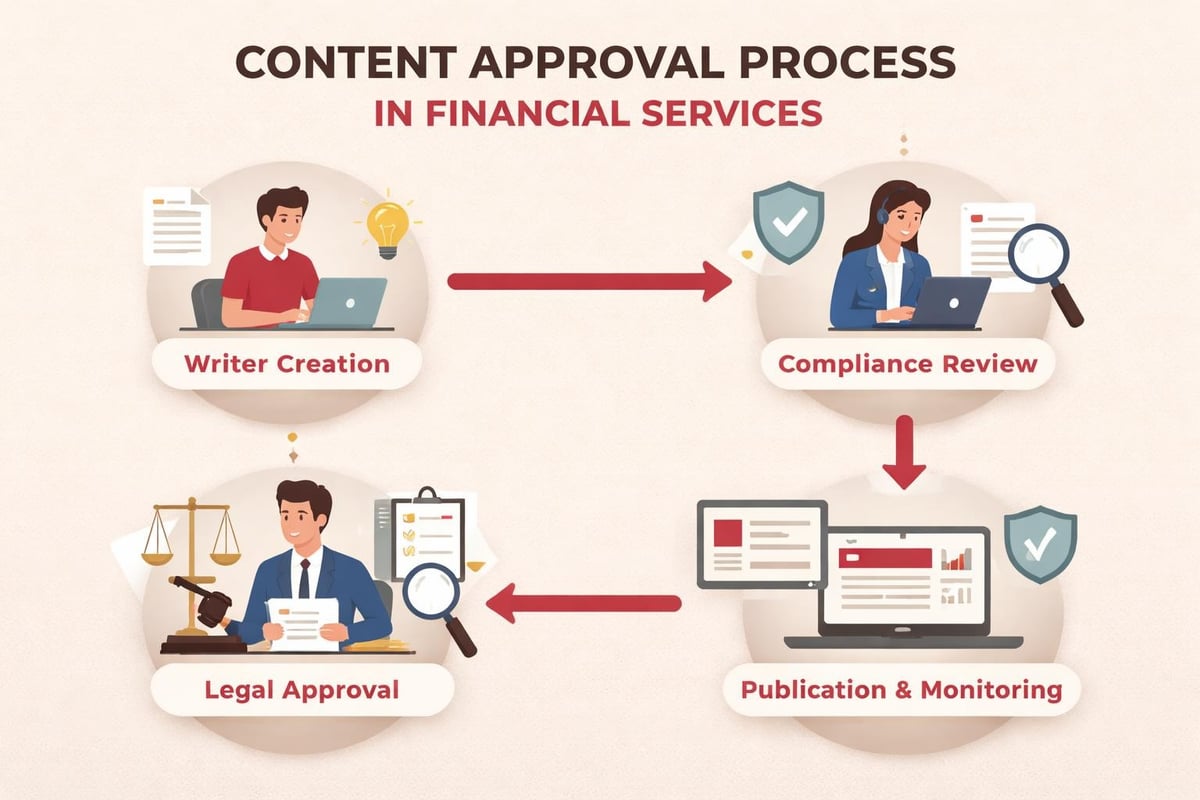
Successful financial content requires structured workflows that build compliance into every stage of production. This starts with writer education and extends through multiple review layers before publication.
Pre-production compliance involves briefing content creators on specific requirements for each piece, including:
- Required disclaimers and disclosures
- Prohibited claims or terminology
- Approval processes and timelines
- Archive and retention requirements
- Social media monitoring protocols
During production, content teams should work closely with compliance officers to address questions before they become problems. This collaborative approach prevents the frustration of extensive rewrites and maintains project momentum.
Post-publication monitoring ensures content remains compliant even as regulations evolve. Regular audits identify pieces that need updates or removal, while social media monitoring catches inappropriate comments or questions that require official responses.
Making Complex Topics Accessible
Financial topics often involve technical concepts that can alienate general audiences. The challenge is explaining these concepts clearly without oversimplifying to the point of inaccuracy or triggering compliance concerns.
Effective techniques include:
- Analogies and metaphors that relate financial concepts to everyday experiences
- Visual explanations using charts, infographics, and diagrams
- Layered content providing basic explanations with links to deeper technical details
- Concrete examples showing how abstract concepts apply in real situations
- Consistent terminology avoiding jargon or defining it clearly when necessary
A digital marketing and branding agency with financial services experience knows how to strike this balance while maintaining brand voice and regulatory compliance.
Multi-Channel Distribution for Maximum Impact
Creating excellent content represents only half the equation. A financial services content marketing agency must also excel at strategic distribution across channels where financial audiences actively engage.
Email Marketing for Financial Services
Email remains one of the most effective channels for financial services content distribution. It allows for personalization, segmentation, and direct communication with prospects and clients who have explicitly opted in.
Effective email strategies segment audiences based on:
- Client status (prospect, client, former client)
- Product interest (retirement, investment, insurance, lending)
- Life stage (accumulation, pre-retirement, retirement, estate planning)
- Engagement level (highly engaged, moderately engaged, inactive)
- Account value (high-net-worth, mass affluent, retail)
This segmentation enables highly relevant content delivery that respects the recipient's specific interests and needs. For instance, pre-retirees receive content about retirement income strategies, while young professionals get content about wealth accumulation and debt management.
Social Media Strategies That Comply
Social media for financial services requires careful navigation of platform-specific regulations and archiving requirements. Different platforms serve different purposes within a comprehensive strategy.
LinkedIn functions as the primary platform for B2B financial services and professional relationship building. Content here should emphasize thought leadership, industry insights, and professional development.
Twitter (X) works well for real-time market commentary, quick insights, and engaging with industry conversations. The character limits demand concise communication that still meets compliance standards.
YouTube provides opportunities for longer-form educational content, client testimonials (with proper disclosures), and explainer videos that build trust through visual communication.
Understanding how to leverage your business on social media while maintaining compliance requires both platform expertise and regulatory knowledge.
Content Marketing Metrics That Matter for Financial Services
Measuring content marketing effectiveness in financial services requires metrics that align with the industry's longer sales cycles and relationship-driven approach. A financial services content marketing agency should track indicators that demonstrate progress toward meaningful business outcomes.
Engagement Metrics Beyond Vanity Numbers
Page views and social media followers provide surface-level insights but don't indicate whether content drives business results. More meaningful metrics include:
| Metric | What It Measures | Why It Matters |
|---|---|---|
| Time on Page | Content depth and relevance | Indicates genuine interest vs. bounce |
| Repeat Visitors | Audience building | Shows growing brand affinity |
| Email Click-Through Rate | Content relevance | Measures alignment with audience needs |
| Content Downloads | Lead generation quality | Demonstrates serious interest |
| Video Completion Rate | Content engagement | Shows message resonance |
These metrics reveal whether content actually engages audiences and moves them toward conversion.
Attribution and ROI Tracking
Financial services sales cycles often span months or years, making direct attribution challenging. Multi-touch attribution models provide more accurate pictures of how content contributes to eventual conversions.
First-touch attribution identifies which content initially attracted prospects, while last-touch attribution shows what finally convinced them to convert. Linear attribution distributes credit equally across all touchpoints, and time-decay attribution gives more weight to recent interactions.
The most sophisticated approach combines quantitative attribution data with qualitative research through client surveys asking how prospects discovered your firm and what content influenced their decision-making.
Adapting to Evolving Audience Expectations
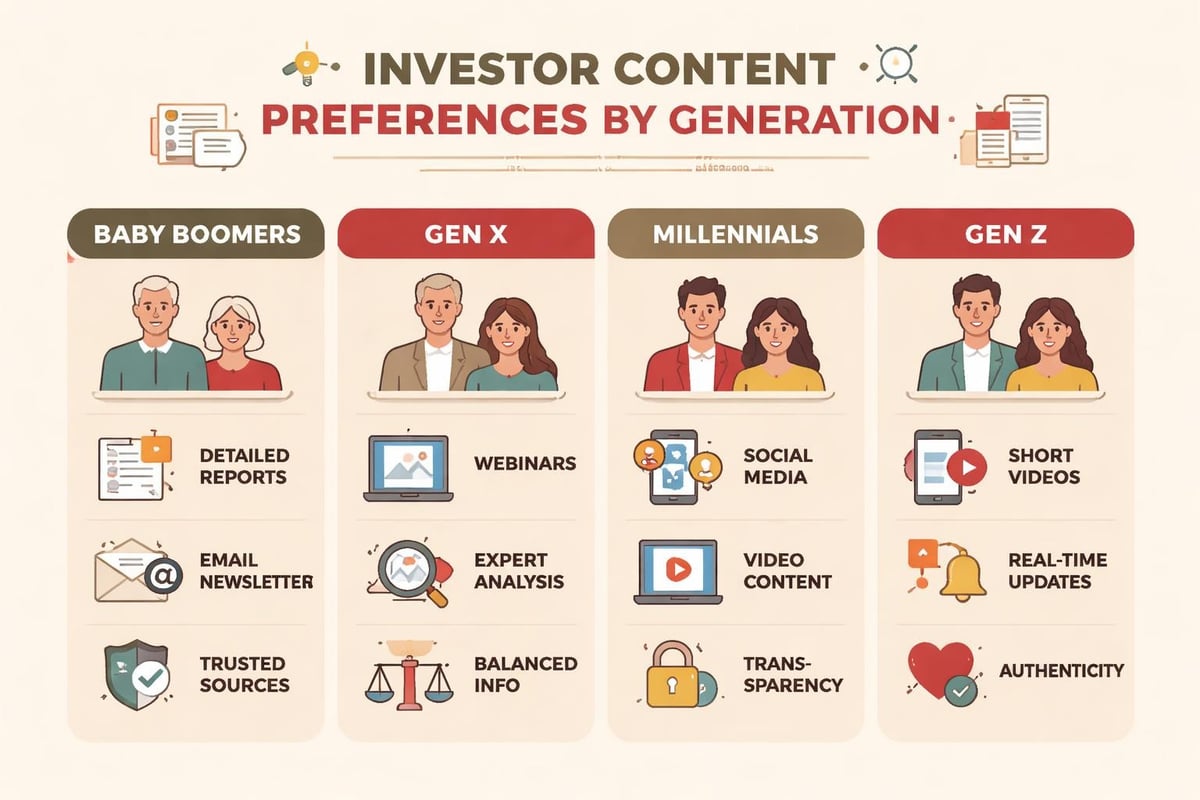
The financial services audience has changed dramatically in recent years. Younger investors expect mobile-first experiences, transparent communication, and authentic brand personalities that contrast sharply with traditional financial marketing.
Reaching Next-Generation Investors
Millennials and Gen Z bring different expectations, communication preferences, and financial priorities. Content marketing strategies for financial services must evolve to meet these audiences where they are.
These generations prioritize:
- Mobile optimization for all content experiences
- Transparency about fees, conflicts of interest, and product limitations
- Values alignment including ESG considerations and social responsibility
- Interactive experiences rather than passive content consumption
- Authenticity over polished corporate messaging
Content that resonates with younger audiences often features real employee stories, behind-the-scenes insights, and honest discussions about financial challenges. This humanized approach builds trust with audiences skeptical of traditional financial institutions.
Video Content and Visual Storytelling
Video has become essential for financial services content marketing, with platforms like YouTube serving as search engines for financial education. Creating effective video content requires understanding both production quality standards and regulatory requirements for visual media.
Short-form video (under 60 seconds) works well for:
- Quick tips and actionable insights
- Market updates and commentary
- Social media engagement
- Mobile-first audiences
Long-form video (5-20 minutes) serves:
- Detailed educational content
- Product explanations and demonstrations
- Webinars and virtual events
- In-depth thought leadership
Both formats require proper disclosures, typically displayed on-screen during relevant segments and included in video descriptions.
Partnering with Specialized Content Marketing Expertise
Financial institutions face a critical decision: build in-house content capabilities or partner with a financial services content marketing agency. Each approach offers distinct advantages depending on organizational resources, timelines, and strategic priorities.
In-House vs. Agency Partnership Models
Building in-house teams provides direct control and deep organizational knowledge but requires significant investment in hiring, training, and technology. A financial services content marketing agency brings established expertise, diverse perspectives, and scalable resources.
Hybrid models often work best, with in-house teams handling day-to-day content needs while agencies provide specialized expertise for major initiatives, strategic planning, and creative campaigns. This approach combines institutional knowledge with fresh perspectives and proven methodologies.
When evaluating potential agency partners, look for:
- Demonstrated financial services experience with similar organizations
- Compliance knowledge specific to your regulatory environment
- Strategic thinking beyond tactical execution
- Technology capabilities for content management, distribution, and measurement
- Cultural fit aligned with your organizational values and communication style
Working with agencies that understand marketing campaigns across multiple industries while specializing in financial services ensures both breadth and depth of expertise.
Technology and Tools for Content Success
Modern content marketing requires technology infrastructure that supports creation, compliance, distribution, and measurement. A financial services content marketing agency should leverage platforms that streamline workflows while maintaining regulatory oversight.
Essential technology components include:
- Content management systems with robust approval workflows and version control
- Marketing automation platforms enabling personalized content delivery at scale
- Social media management tools with archiving and compliance monitoring
- Analytics platforms providing comprehensive performance insights
- Digital asset management organizing and protecting content libraries
Integration between these systems creates efficient workflows that reduce manual effort while improving consistency and compliance.
Creating Content That Converts Prospects to Clients
The ultimate goal of financial services content marketing is business growth through new client acquisition and existing client expansion. A financial services content marketing agency must connect content strategy directly to revenue outcomes.
Mapping Content to the Client Journey
Financial services buying journeys involve multiple stages from initial awareness through consideration and decision-making. Effective content strategies provide the right information at each stage.
Awareness stage content focuses on:
- Industry trends and market insights
- Financial planning fundamentals
- Common challenges and pain points
- Educational resources without product promotion
Consideration stage content includes:
- Product comparisons and explanations
- Service differentiators and unique value propositions
- Client success stories and testimonials
- Interactive tools and calculators
Decision stage content provides:
- Detailed product information and disclosures
- Fee schedules and cost comparisons
- Next steps and onboarding processes
- Advisor introductions and meeting scheduling
Understanding social media marketing strategy helps financial firms deliver stage-appropriate content through the channels where prospects actively engage.
Leveraging Multiple Content Formats
Different audiences prefer different content formats, and comprehensive strategies leverage this diversity to maximize reach and engagement. According to research on content marketing for financial institutions, multichannel distribution significantly improves content performance.
Written content includes blog posts, whitepapers, case studies, and e-books that provide in-depth information for readers who prefer text-based learning.
Visual content encompasses infographics, charts, slide presentations, and image-based social media posts that communicate key concepts quickly and memorably.
Audio content through podcasts and audio articles serves multitasking audiences who consume content during commutes or workouts.
Interactive content like calculators, assessments, and configurators engage audiences while collecting valuable data about their needs and preferences.
This format diversity ensures your content reaches audiences regardless of their preferred consumption method.
Building Long-Term Content Assets
The most valuable content creates lasting value rather than serving single-use purposes. A financial services content marketing agency should develop evergreen assets that continue attracting and converting prospects for years.
Evergreen vs. Timely Content Balance
Effective content strategies balance evergreen resources with timely pieces that capitalize on current events and trends. Evergreen content provides foundational education on topics that remain relevant regardless of market conditions or regulatory changes.
Strong evergreen topics include:
- Fundamental financial concepts like compound interest, diversification, and risk tolerance
- Life stage planning addressing consistent needs around marriage, children, career changes, and retirement
- Product education explaining how specific financial instruments work
- Planning processes outlining steps for comprehensive financial planning
Timely content responds to:
- Market movements and economic developments
- Regulatory changes affecting products or planning strategies
- Tax law updates creating planning opportunities
- Industry trends reshaping how financial services operate
The ideal mix includes approximately 70% evergreen content that builds lasting value with 30% timely pieces that drive immediate engagement.
Content Refresh and Optimization Strategies
Even evergreen content requires periodic updates to maintain accuracy and search performance. Regular content audits identify pieces needing refresh, consolidation, or retirement.
Refresh priorities include:
- High-traffic pages with declining performance
- Strong backlink profiles worth preserving and improving
- Near-miss rankings sitting just outside first-page results
- Outdated statistics or regulatory references
- Underperforming CTAs that could drive more conversions
Updated content often regains and exceeds previous performance levels, making refresh initiatives highly cost-effective compared to creating entirely new pieces.
Industry-Specific Content Considerations
Different financial services segments require tailored content approaches reflecting their unique audiences, products, and regulatory environments. A financial services content marketing agency must adapt strategies accordingly.
Wealth Management and Advisory Firms
Wealth management content focuses on building advisor credibility and demonstrating investment expertise while navigating strict SEC and FINRA regulations around performance claims and testimonials.
Effective approaches include:
- Market commentary providing context without predictions
- Planning insights demonstrating comprehensive wealth management capabilities
- Advisor profiles humanizing the firm and highlighting expertise
- Client experience content showing service quality and relationship approach
For firms serving online branding needs, consistency across all digital touchpoints reinforces professional credibility.
Banking and Credit Unions
Banking content must balance product promotion with genuine financial education while complying with truth-in-lending regulations and avoiding unfair or deceptive practices.
Community focus differentiates local institutions from national banks, emphasizing personal service, local decision-making, and community investment.
Digital experience content helps customers maximize online and mobile banking features while addressing security concerns and building confidence in digital channels.
Financial wellness programs position banks as partners in customers' financial success rather than just transaction processors.
Insurance Providers
Insurance content requires carefully balancing product information with educational value while avoiding claims about coverage or benefits that require individual underwriting.
Risk education helps prospects understand exposures they may not have considered, creating natural transitions to insurance solutions.
Claims process transparency builds confidence that the company will deliver when customers need it most.
Life stage content addresses insurance needs as families grow, careers progress, and retirement approaches.
Financial services content marketing demands specialized expertise that balances regulatory compliance with genuine audience engagement. Success requires understanding complex products, navigating strict regulations, and creating content that builds trust over extended sales cycles. Whether you're a wealth management firm, bank, or insurance provider, partnering with experts who understand your unique challenges accelerates content marketing success. Red Van Creative brings over 25 years of experience building authentic connections between brands and their audiences across diverse industries, including the specialized expertise needed for financial services content that drives real business results.