

In today’s crowded digital landscape, brands face constant competition for attention. Those that create memorable, engaging interactions are the ones that truly stand out and thrive. Experience branding is the key to forging deeper, lasting connections with your audience in 2026. This guide delivers actionable strategies, showcases emerging trends, and highlights real-world examples to help you implement an experience-driven approach. Discover how experience branding has evolved, learn step-by-step methods for building your strategy, see how technology can enhance your efforts, and measure your impact effectively. Ready to elevate your brand and inspire loyalty? Dive in and transform your approach today.
Understanding Experience Branding in 2026
In 2026, brands face a rapidly changing marketplace, where consumers expect more than just products or services. Experience branding has emerged as the solution for brands seeking to stand out and foster deep loyalty. This approach goes beyond logos and slogans, focusing on building lasting emotional connections through every interaction.
Defining Experience Branding
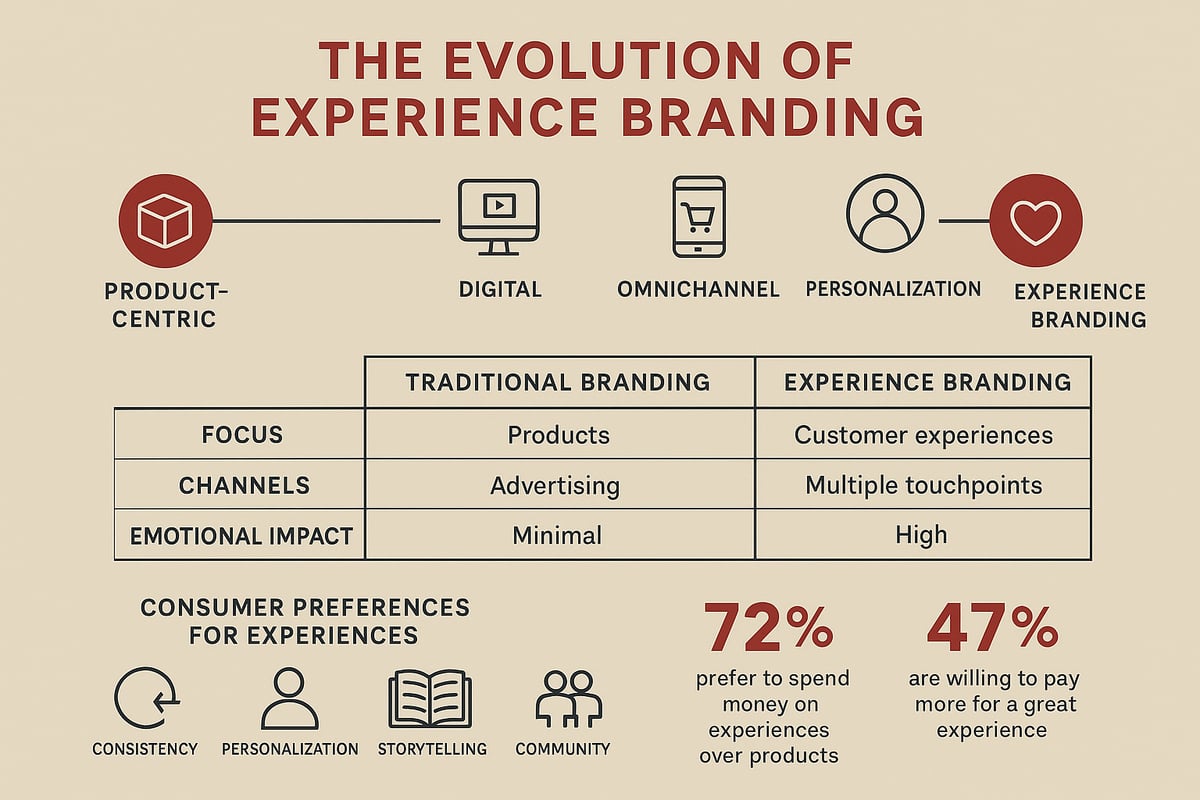
Experience branding refers to designing and delivering holistic, multi-sensory brand interactions that engage customers on emotional and memorable levels. Unlike traditional branding, which centers on visual identity and messaging, experience branding encompasses every touchpoint, from digital to physical environments. Brands leverage all senses, ensuring each encounter feels intentional and cohesive.
Emotional engagement is at the heart of experience branding. Brands that evoke positive feelings and create lasting memories see stronger loyalty, as customers are more likely to return and advocate for experiences that resonate deeply.
Evolution of Experience Branding
The journey to experience branding began with a shift from product-centric strategies to customer-centric ones. In the early 2000s, brands focused on product features and price. As digital channels expanded, so did the need for consistency across platforms.
Key milestones include the rise of omnichannel marketing and personalization. Brands like Apple created seamless ecosystems, integrating devices, retail, and support. Nike transformed retail into immersive experiences, while Starbucks introduced the “third place” concept, providing a welcoming environment beyond home and work.
These innovations set the stage for experience branding, where every interaction is part of a unified story.
Why Experience Branding Matters in 2026
Experience branding is more important than ever in 2026. According to PwC, 73 percent of consumers value experiences over products. Forrester reports that experience-driven brands grow revenues 1.4 times faster than competitors.
With increasing competition and digital noise, brands must forge deeper connections to stand out. Experience branding enables companies to cut through the clutter, creating moments that customers remember and share. This emotional bond translates into greater loyalty, higher lifetime value, and increased advocacy.
Core Elements of Experience Branding
Several core elements define successful experience branding:
- Consistency across all touchpoints, ensuring customers receive the same message and feel at every interaction.
- Personalization, using data-driven insights to tailor experiences.
- Brand storytelling, creating emotional resonance through compelling narratives.
- Community and co-creation, involving customers in shaping the brand.
Maintaining consistency is particularly crucial. Brands that deliver a unified experience across physical, digital, and service channels build trust and recognition. To understand why consistency is foundational, explore Why Brand Consistency Matters.
Key Challenges and Opportunities
Brands pursuing experience branding in 2026 face several challenges and opportunities:
- Balancing advanced technology with authentic human interaction.
- Managing brand consistency in a fragmented, multi-channel landscape.
- Leveraging AI and automation without sacrificing genuine engagement.
- Embracing hybrid experiences that blend online and offline touchpoints.
While technology offers powerful tools, brands must ensure human elements remain central. The opportunity lies in crafting experiences that feel both innovative and authentic, adapting quickly to shifting consumer expectations.
Step-by-Step Guide to Building an Experience Brand
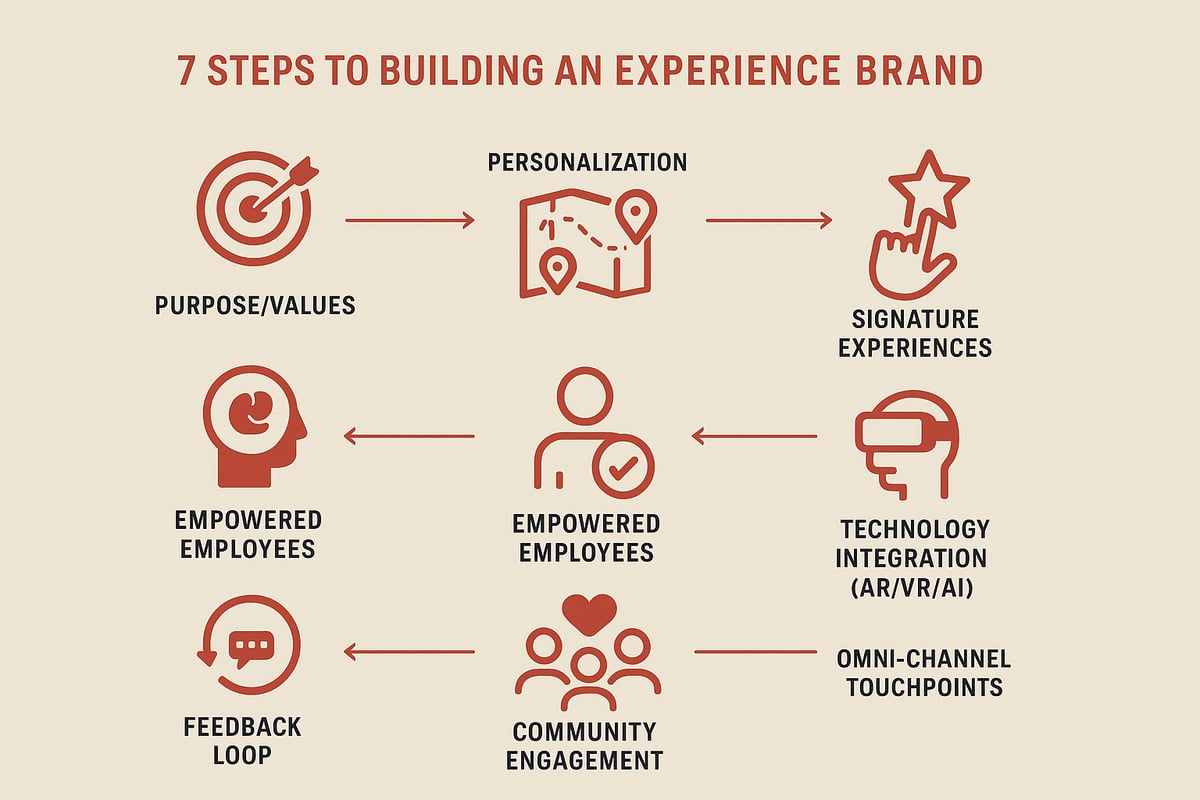
Building a powerful experience branding strategy requires intention, structure, and a willingness to evolve. By following these steps, you can transform your brand into a memorable force that stands out and resonates deeply with customers.
Step 1: Define Your Brand Purpose and Values
Effective experience branding starts with a clear sense of purpose and authentic values. Your brand’s mission should go beyond selling products by addressing what you stand for and how you improve lives.
Align your purpose with what matters to your audience. Brands like Patagonia lead through environmental activism, while Dove champions body positivity. These values are woven into every customer interaction.
When you define and communicate your purpose, you foster trust and set your brand apart. A strong foundation in purpose ensures every experience feels meaningful, genuine, and consistent with your identity.
Step 2: Map the Customer Journey
Understanding your customer’s journey is essential for impactful experience branding. Begin by identifying all touchpoints, from initial awareness to post-purchase loyalty.
Use customer journey mapping and empathy maps to visualize how people interact with your brand. This process highlights moments where you can delight or support customers.
Disney, for example, crafts seamless guest experiences from online planning to in-park magic. By mapping journeys, you uncover opportunities to create memorable interactions that drive loyalty and positive sentiment.
Step 3: Craft Signature Brand Experiences
Differentiation in experience branding often comes from signature moments that surprise and delight. Design experiences that engage the senses, such as sound, scent, or visuals, to create lasting memories.
Consider how Singapore Airlines elevates service with attentive staff, luxurious amenities, and signature scents. These elements become part of the brand’s identity.
Focus on experiences that reflect your values and resonate emotionally. When customers encounter these unique moments, they are more likely to remember your brand and share their positive experiences.
Step 4: Integrate Technology Seamlessly
Technology is a powerful enabler of experience branding, but it must serve to enhance—not replace—human connection. Invest in tools like AR, VR, AI chatbots, and personalization engines to create immersive and intuitive experiences.
Sephora, for example, uses virtual try-on technology to help customers explore products online while maintaining a personal touch. The key is to ensure technology feels natural and supportive.
By blending digital innovation with empathy, your brand can offer convenience, relevance, and delight at every interaction, strengthening trust and engagement.
Step 5: Empower Employees as Brand Ambassadors
Your employees are the frontline of experience branding. Equip them with training, resources, and incentives to deliver consistent, high-quality service that reflects your brand’s values.
A strong internal culture translates into exceptional customer experiences. Ritz-Carlton empowers staff to resolve issues and exceed expectations, building guest loyalty through genuine care.
Encourage employees to share their insights and stories. When your team feels connected to your purpose, they become passionate advocates, amplifying your brand’s message organically.
Step 6: Encourage Community and Co-Creation
Building a thriving community is integral to experience branding. Engage customers through user-generated content, brand communities, and loyalty programs that invite participation.
LEGO Ideas and Peloton’s digital community are prime examples of brands leveraging co-creation. For local businesses, Creative Marketing Strategies for Local Businesses offers practical ways to foster memorable connections and advocacy.
By inviting your audience to contribute, you transform customers into partners, fueling brand growth and powerful word-of-mouth marketing.
Step 7: Gather Feedback and Iterate
Continuous improvement is the hallmark of successful experience branding. Use real-time feedback tools, Net Promoter Score (NPS), and social listening to capture insights directly from your audience.
Adopt an agile approach: test new ideas, learn from results, and optimize based on data. Starbucks’ “My Starbucks Idea” platform is a great example of co-creating with customers and refining experiences.
Regular iteration ensures your brand remains relevant, responsive, and aligned with evolving customer expectations, securing long-term loyalty.
The Role of Technology in Experience Branding
Technology is reshaping experience branding at every stage of the customer journey. From AI-powered personalization to immersive virtual environments, brands in 2026 are leveraging advanced tools to create seamless, memorable interactions. As digital expectations rise, understanding the evolving tech landscape is essential for brands seeking authentic engagement.
Personalization and Predictive Analytics
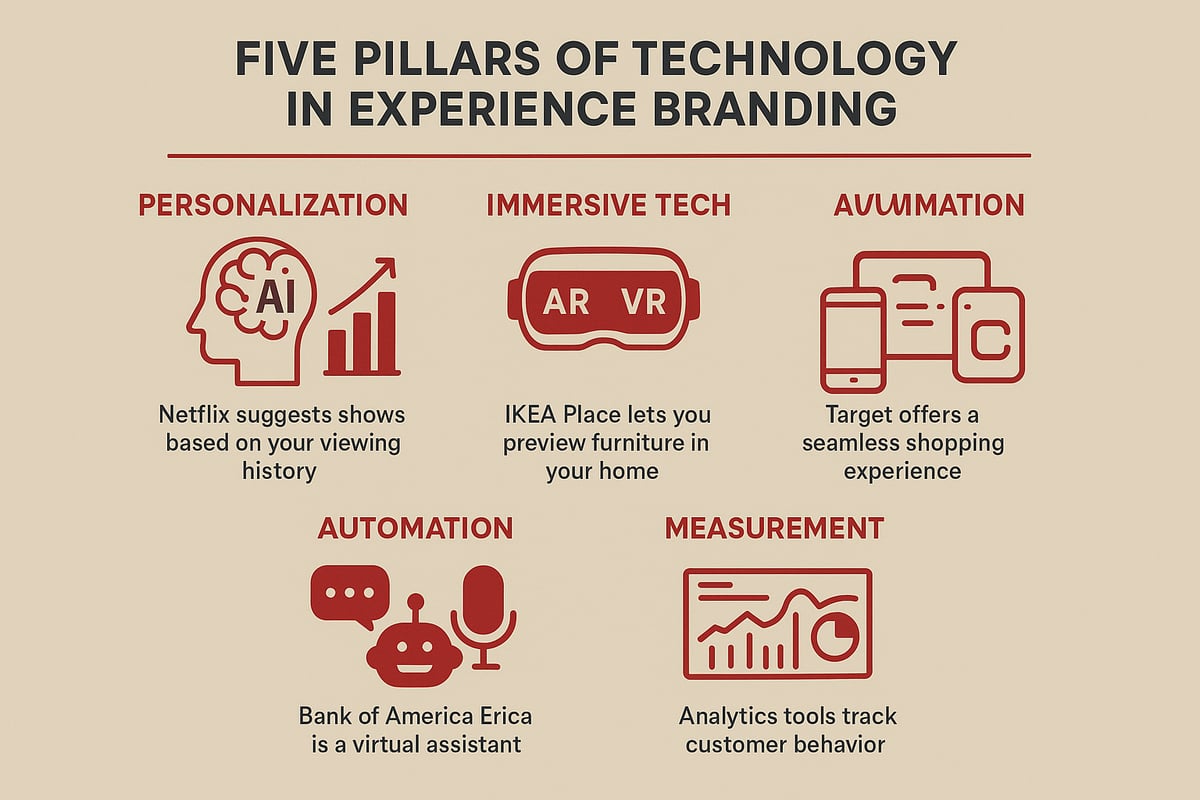
Personalization has become the cornerstone of experience branding. Brands use artificial intelligence to analyze customer data, predict preferences, and deliver tailored recommendations in real time. This approach not only increases engagement but also drives loyalty by making each interaction feel unique.
Netflix is a prime example, using predictive analytics to curate content based on individual viewing habits. However, with advanced personalization comes greater responsibility. Brands must prioritize data privacy and maintain transparency to build trust.
For a deeper dive into why personalized strategies are critical in today’s saturated market, see Personalized Marketing in a Saturated Market.
Immersive Technologies: AR, VR, and XR
Immersive technologies are transforming experience branding by turning passive consumers into active participants. Augmented reality (AR), virtual reality (VR), and extended reality (XR) allow brands to create interactive environments that engage multiple senses.
IKEA’s Place app lets customers visualize furniture in their homes using AR, reducing uncertainty and enhancing satisfaction. Nike’s virtual showrooms offer a digital-first shopping journey, blending entertainment with commerce. These innovations make brand experiences more dynamic, memorable, and emotionally resonant.
Omnichannel Integration
Seamless omnichannel integration is a must for effective experience branding. Consumers expect consistent messaging and experiences whether they interact online, in-store, or through mobile apps. Brands unify data across touchpoints to personalize communications and streamline service.
Target excels at this with drive-up and curbside pickup, connecting digital orders to physical fulfillment. This strategy improves convenience and reinforces the brand’s reliability. Omnichannel approaches ensure every customer feels recognized and valued, regardless of how they engage.
Automation and Conversational AI
Automation tools, including chatbots and voice assistants, are vital in scaling experience branding while maintaining a human touch. Conversational AI can handle routine inquiries instantly, freeing employees for more complex tasks and enhancing overall satisfaction.
Bank of America’s Erica chatbot exemplifies this trend, offering personalized financial guidance and support around the clock. The challenge lies in balancing efficiency with empathy, ensuring automated interactions remain friendly and helpful.
Measuring and Optimizing Tech-Driven Experiences
To maximize the impact of technology in experience branding, brands must measure and refine their strategies continuously. Key metrics include engagement rates, satisfaction scores, and conversion rates. Advanced analytics platforms, heatmaps, and A/B testing provide actionable insights for ongoing improvement.
| Metric | Tool/Method | Example Use |
|---|---|---|
| Engagement | Analytics platform | Track site interactions |
| Satisfaction (CSAT) | Surveys | Post-purchase feedback |
| Conversion | A/B testing | Optimize landing pages |
By adopting a data-driven mindset, brands can adapt quickly, ensuring their technology investments deliver meaningful, memorable experiences.
Measuring the Impact of Experience Branding
Understanding how to measure the impact of experience branding is essential for any business aiming to maximize customer loyalty and growth. Accurate measurement guides future strategies and helps prove the value of investments in customer experiences.
Key Experience Branding Metrics
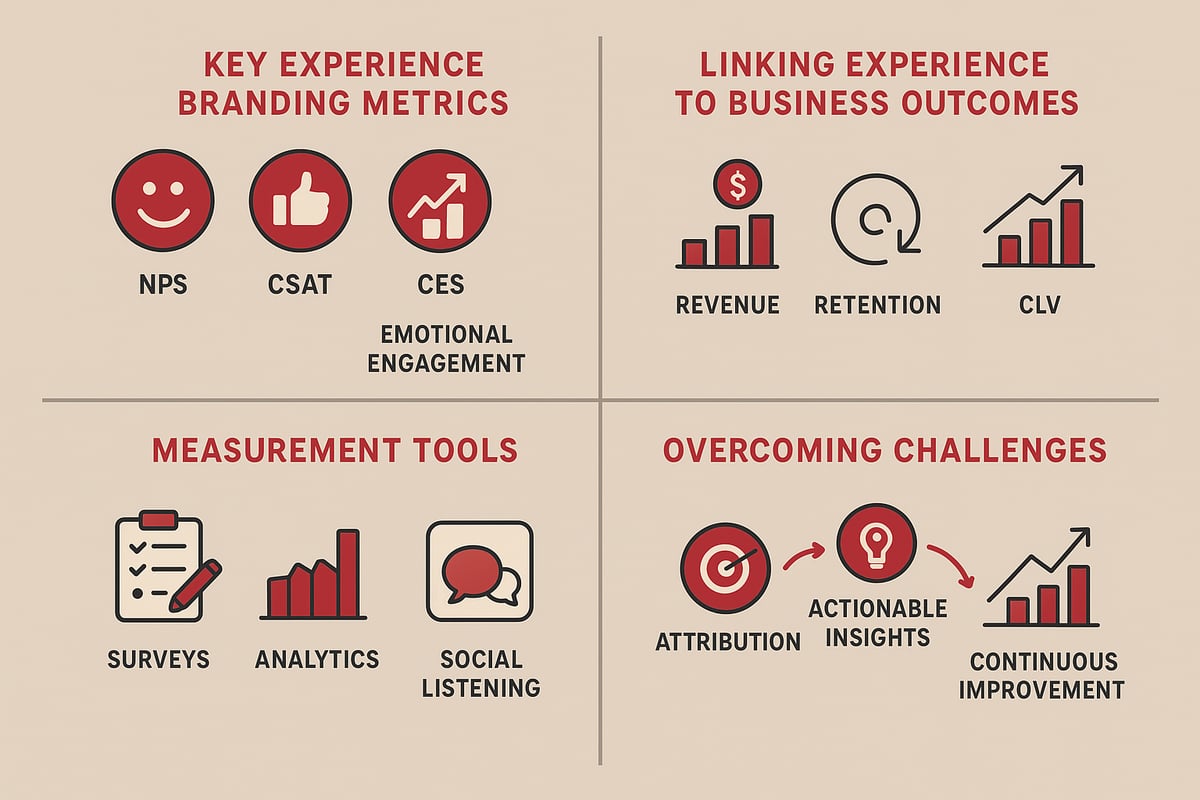
The foundation of measuring experience branding lies in selecting the right metrics. Commonly used indicators include:
- Net Promoter Score (NPS): Gauges customer likelihood to recommend your brand.
- Customer Satisfaction (CSAT): Reflects how well you meet customer expectations.
- Customer Effort Score (CES): Measures ease of interaction across touchpoints.
- Emotional Engagement Scores: Quantify the depth of customer connection.
Brands like Zappos rely on these metrics to track customer-centric performance. Recent experiential marketing statistics show that experience branding boosts brand loyalty and advocacy, reinforcing the importance of measuring these dimensions regularly.
Linking Experience to Business Outcomes
Experience branding directly influences business results. When measured effectively, metrics reveal strong correlations with revenue growth, retention, and customer lifetime value (CLV). According to Forrester, companies leading in customer experience outperform competitors by 26 percent in stock performance.
Southwest Airlines showcases this link through loyalty programs that foster repeat business and long-term relationships. By aligning experience branding with business KPIs, organizations can demonstrate tangible ROI and justify further investment in enhancing the customer journey.
Tools and Techniques for Measurement
A robust experience branding measurement strategy blends quantitative and qualitative tools. Popular options include:
- Surveys for NPS, CSAT, and open-ended feedback
- Real-time feedback platforms for immediate insights
- Social listening tools to monitor brand sentiment
- Analytics dashboards for tracking behaviors across digital channels
Apple, for example, uses post-purchase surveys to refine its experience branding. Combining multiple data sources allows brands to capture a holistic view and make informed decisions for continuous improvement.
Overcoming Measurement Challenges
Measuring experience branding impact presents several challenges. Multi-touch customer journeys complicate attribution, making it difficult to pinpoint which interactions drive outcomes. Vanity metrics can distract from meaningful insights if not managed properly.
To address these issues, prioritize actionable metrics and foster a culture of ongoing optimization. Encourage teams to embrace feedback, iterate on processes, and focus on long-term experience branding growth rather than short-term gains. This approach ensures that measurement leads to real, sustainable improvements.
Future Trends in Experience Branding
The landscape of experience branding is evolving rapidly, driven by technology, shifting consumer values, and new expectations for personalization and connection. Brands looking to succeed in 2026 must anticipate these changes and adapt their strategies accordingly. Let us explore the most influential trends shaping the future of experience branding and how your organization can leverage them for a competitive edge.
Hyper-Personalization and AI
Hyper-personalization is set to redefine experience branding in 2026. Advanced AI will enable brands to anticipate individual needs, delivering relevant content, offers, and services before customers even ask. Predictive analytics can optimize every interaction, from product recommendations to support. However, ethical considerations and data privacy will become increasingly important. Transparency about data use and consent will be crucial for trust. Amazon’s anticipatory shipping, where products are sent before an order is placed, exemplifies how predictive AI is reshaping customer journeys. Embracing hyper-personalization ensures your experience branding remains relevant and deeply engaging.
Sustainability and Purpose-Driven Experiences
Consumers in 2026 will demand more from brands, expecting them to prioritize purpose and sustainability in every touchpoint. Experience branding must now include eco-friendly packaging, ethical sourcing, and even carbon-neutral events. According to Nielsen, 73 percent of consumers prefer sustainable brands, making purpose-driven initiatives a core differentiator. Adidas is leading by example, using recycled materials in its products and communicating this commitment through immersive brand experiences. Purpose-driven experience branding not only attracts conscious consumers but also fosters loyalty and advocacy.
Phygital Experiences: Blending Physical and Digital
The boundary between physical and digital is fading, resulting in the rise of phygital experiences. In experience branding, this means integrating hybrid events, interactive retail, and digital twins to create seamless engagement. Nike’s SNKRS app connects digital sneaker drops with in-store activations, offering a unified brand journey. For brands seeking deeper insights into these trends, the State of Digital Experience Report 2025 analyzes how businesses can enhance customer engagement through integrated digital experiences. The future of experience branding will rely on bridging online and offline for a cohesive, memorable presence.
The Rise of Micro-Communities and Niche Branding
Experience branding is becoming more focused, as brands build micro-communities around shared passions and interests. Platforms like Discord, Reddit, and private social groups allow for authentic connection and exclusive content. By fostering these niche communities, brands can achieve higher engagement and loyalty. Glossier’s approach to community-driven marketing, where customers co-create products and content, highlights the power of this trend. As micro-communities grow, experience branding will be about creating genuine relationships and cultivating brand advocates in focused segments.
Real-World Success Stories in Experience Branding
Experience branding comes alive when we look at brands that have set new standards for customer connection and loyalty. The following success stories illustrate how experience branding drives both emotional engagement and measurable results. For more examples, explore these Branding Case Studies.
Apple: The Ecosystem Effect
Apple is a leader in experience branding by delivering seamless integration across devices, retail, and customer support. Shoppers visiting an Apple Store encounter hands-on demos, knowledgeable staff, and a space designed for exploration. This ecosystem approach ensures customers interact with Apple’s brand at every touchpoint, reinforcing loyalty and supporting premium pricing. The company’s focus on experiential retail, combined with product innovation, makes Apple a benchmark for experience branding. Its ability to evoke emotion and trust stems from consistency and attention to every detail of the customer journey.
Nike: Community and Innovation
Nike’s approach to experience branding centers on fostering a global community and embracing innovation. The Nike Run Club app, AR-powered flagship stores, and athlete partnerships create immersive, interactive experiences for fans. Nike’s storytelling remains consistent across digital and physical channels, encouraging customers to participate and share. Through co-creation and digital engagement, Nike turns consumers into brand advocates. Experience branding is embedded in every aspect of Nike’s strategy, from product launches to community events, ensuring the brand remains relevant and deeply connected to its audience.
Airbnb: Belonging Anywhere
Airbnb’s experience branding strategy is built on personalized recommendations and authentic local experiences. By enabling guests to connect with hosts and communities worldwide, Airbnb transforms travel into a feeling of belonging. User-generated content, detailed reviews, and curated experiences reinforce trust and engagement. The brand’s focus on community-led storytelling has shifted industry expectations for hospitality. Through experience branding, Airbnb delivers value beyond accommodation, building loyalty and differentiation in a crowded market.
Small Business Example: Local Coffee Shops
Local coffee shops excel at experience branding by creating unique atmospheres, offering personalized service, and hosting community events. These businesses leverage digital loyalty programs and social media to engage customers both online and offline. By focusing on authentic interactions and memorable experiences, they compete successfully against larger chains. For a deeper look at holistic brand building for small businesses, see Building a Strong Brand Identity. Experience branding helps local shops foster lasting relationships and turn everyday visits into meaningful moments.
Partnering with Experts: Elevate Your Experience Branding Strategy
To truly excel in experience branding, partnering with a seasoned agency can make all the difference. Red Van Creative, Houston’s leading experience branding agency, brings over 25 years of expertise in holistic branding, digital marketing, and strategic storytelling.
Their team specializes in branding, website design, SEO, digital campaigns, and fractional CMO leadership. By focusing on consistent messaging, they help brands build trust and loyalty, which is proven to drive measurable results. For insights into how consistency impacts consumer trust, see these Brand Consistency ROI Statistics.
Red Van Creative’s award-winning approach ensures your brand stands out with genuine, memorable experiences. If differentiation is your goal, collaborating with experts is the next step.
As you look to elevate your brand through authentic, experience-driven strategies, seeing real-world results can spark new ideas and confidence in your own journey. We’ve explored how consistency, creativity, and local connection shape memorable brand experiences—and these principles are at the heart of what we do every day. If you’re curious about how these strategies come to life across diverse industries, I invite you to See Our Work / View Our Portfolio. This is a chance to discover the impact of genuine branding and start envisioning what’s possible for your business in 2026 and beyond.