
The digital world is changing fast, and electronic marketing strategies are now at the heart of business growth in 2026. Companies of all sizes face fierce competition as industries embrace digital transformation at an unprecedented pace.
To succeed, you need more than just traditional tactics. This article reveals nine cutting-edge electronic marketing strategies designed for both B2B and B2C brands. These approaches promise to boost engagement, drive results, and future-proof your marketing efforts.
Are you ready to stay ahead? Discover proven strategies and take action to elevate your marketing in 2026.
The Evolving Landscape of Electronic Marketing in 2026
Electronic marketing strategies are undergoing a rapid transformation as we approach 2026. Businesses are navigating a landscape defined by innovation, regulation, and shifting customer expectations. Staying ahead demands a keen understanding of the forces reshaping the digital marketplace.
Technological Advancements Drive Change
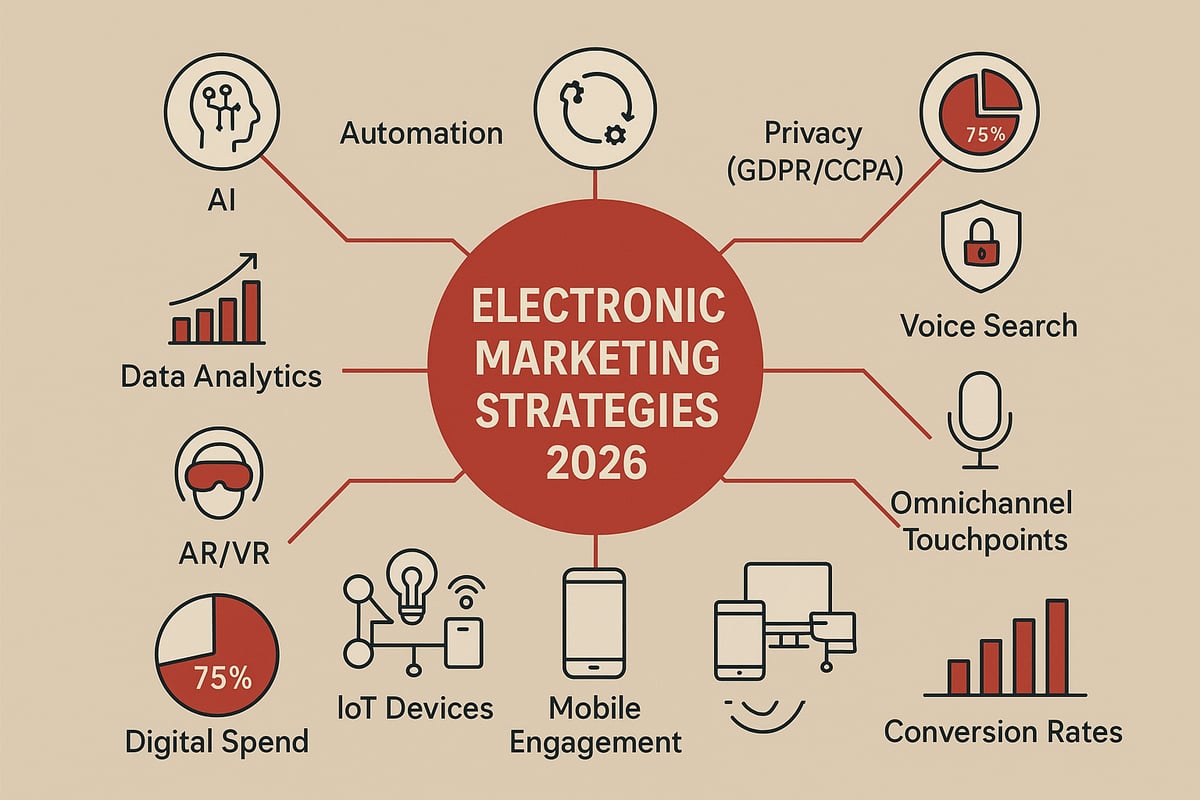
Artificial intelligence, automation, and advanced data analytics are now central to electronic marketing strategies. AI enables brands to deliver personalized content in real time, while automation streamlines everything from lead nurturing to campaign optimization.
Machine learning algorithms analyze vast datasets, predicting trends and user behavior with unprecedented accuracy. Tools like predictive analytics and dynamic content creation are no longer optional—they are fundamental for brands aiming to remain competitive.
Privacy Regulations and the Demand for Personalization
Privacy regulations, such as GDPR and updated CCPA guidelines, are tightening data usage standards. Consumers expect transparency and control over their information, yet they also want experiences tailored to their preferences.
This paradox challenges marketers to develop electronic marketing strategies that balance compliance with personalization. Brands are investing in consent management platforms and privacy-first data models, ensuring trust while still delivering relevant content.
Emergence of New Digital Channels
The proliferation of new digital platforms is reshaping how electronic marketing strategies are executed. Voice search is becoming mainstream with smart assistants like Alexa and Google Assistant driving conversational queries.
Visual search tools, such as Google Lens and Pinterest Lens, are transforming product discovery. Augmented and virtual reality, alongside IoT devices, offer immersive touchpoints for brands to engage audiences in innovative ways.
According to the Digital 2026: Global Overview Report, over 75% of marketing budgets are projected to shift to digital channels by 2026, underscoring the importance of adapting to these emerging technologies.
Shifting Consumer Behaviors
Mobile usage continues to soar, with consumers demanding instant access to information and seamless experiences across devices. Omnichannel engagement is now a baseline expectation, not a differentiator.
Customers move fluidly between platforms—web, mobile, social, smart devices—requiring electronic marketing strategies that deliver consistent, frictionless journeys. Brands must be present, responsive, and relevant at every digital touchpoint to capture attention and drive loyalty.
Challenges and the Need for a Future-Focused Approach
Despite these opportunities, marketers face mounting challenges such as ad fatigue, content oversaturation, and declining organic reach. Audiences are more discerning, often tuning out generic messaging.
Leading brands like Nike, with AR-powered try-on campaigns, and Spotify, leveraging AI-driven playlists, illustrate the power of adapting to this new environment. Success depends on adopting a holistic, future-focused approach to electronic marketing strategies—one that integrates technology, creativity, data, and customer-centricity.
To thrive in 2026, marketing teams must embrace innovation, prioritize agility, and continuously refine their strategies to meet evolving market demands.
9 Essential Electronic Marketing Strategies for 2026
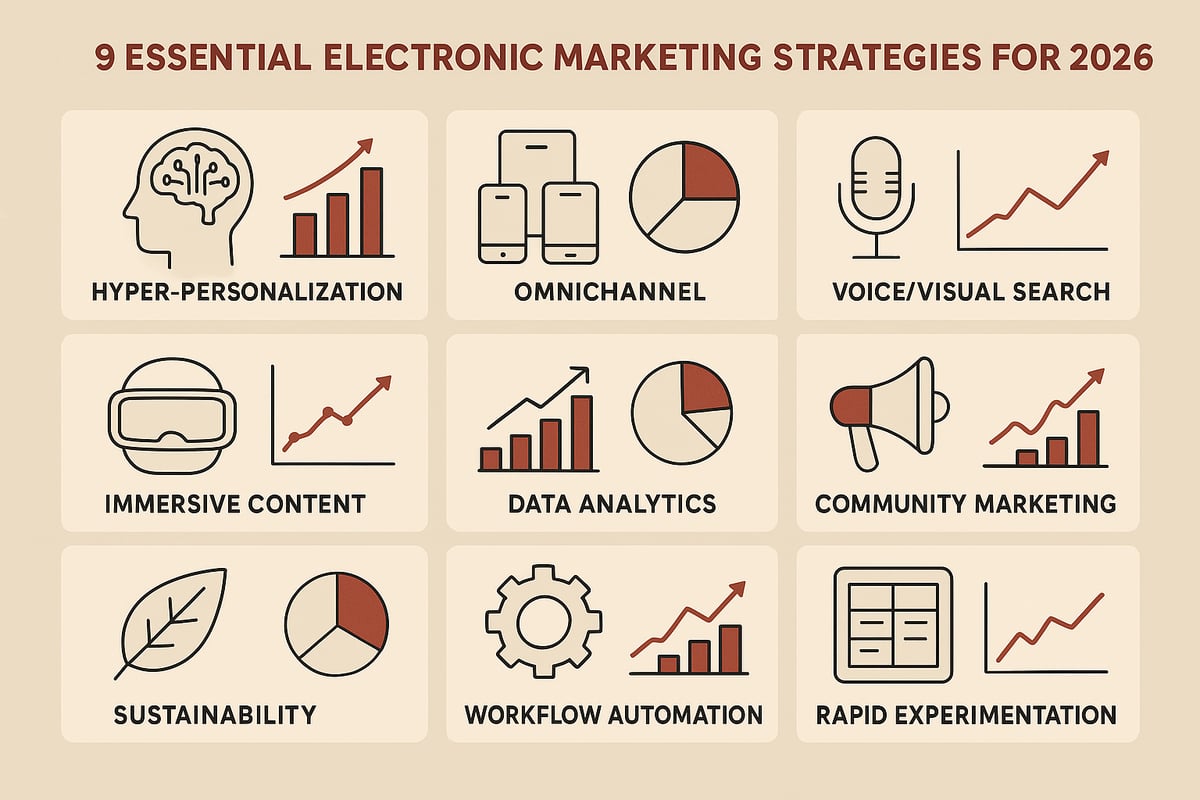
The landscape of digital business is more competitive than ever, and only those who leverage the most advanced electronic marketing strategies will thrive in 2026. To help your brand lead the charge, we break down nine essential tactics every marketer should master. Whether you operate in B2B or B2C, these proven approaches will position your business for measurable growth and market resilience.
1. Hyper-Personalization Through AI and Machine Learning
Electronic marketing strategies are rapidly evolving from basic customer segmentation to hyper-personalized, real-time engagement. In 2026, AI and machine learning empower brands to analyze consumer data at scale, delivering tailored content, offers, and experiences that drive loyalty.
Dynamic website content adapts instantly based on user behavior, while individualized email campaigns and predictive product recommendations ensure each touchpoint feels relevant. For instance, Netflix's content suggestions and Amazon's smart product recommendations are industry benchmarks for personalization.
According to Experian, personalized emails generate six times higher transaction rates compared to generic messaging. Both small and large businesses can start by integrating machine learning tools into their CRM or marketing automation platforms, ensuring they deliver precise experiences at every stage.
However, privacy remains a priority. Marketers must comply with regulations such as GDPR and CCPA, implementing transparent data practices and obtaining user consent. For a deeper dive into why personalized marketing is crucial, explore Why Personalized Marketing Matters.
To sum up, the brands that excel with electronic marketing strategies in 2026 will be those who harness AI for true personalization, while maintaining ethical data stewardship.
2. Omnichannel Marketing Integration
Omnichannel marketing has matured significantly, becoming a cornerstone of effective electronic marketing strategies in 2026. This approach ensures customers receive a seamless, unified experience across web, mobile, email, social media, and emerging platforms like smart speakers or augmented reality.
Leading brands such as Starbucks and Disney have mastered this, integrating loyalty programs and content across every touchpoint. Tools like customer data platforms (CDPs) and unified analytics allow brands to synchronize messaging, track interactions, and refine campaigns in real time.
Research from Aberdeen Group reveals that companies with robust omnichannel engagement retain 89 percent of their customers, far surpassing single-channel approaches. Consistent branding and messaging are key to building trust and recognition, especially as consumers expect instant and cohesive responses.
Common pitfalls include siloed data, inconsistent voice, and fragmented customer journeys. Address these by centralizing data sources and establishing clear brand guidelines. Omnichannel electronic marketing strategies not only boost retention but also drive higher lifetime value by meeting customers wherever they are.
3. Voice and Visual Search Optimization
The rise of voice assistants like Alexa and Google Assistant, along with visual search tools such as Google Lens and Pinterest Lens, is reshaping electronic marketing strategies. By 2026, Gartner predicts that half of all searches will be voice or visual-based, making optimization essential for discoverability.
To capitalize on this trend, focus on conversational keywords, implement schema markup, and optimize images with descriptive alt text and structured data. Home Depot, for example, leverages visual search to help customers find products with a simple photo.
Voice and visual search improve accessibility and streamline the user experience, especially on mobile devices. Brands adopting these electronic marketing strategies will benefit from increased engagement and broader reach.
Start by updating your website for voice queries, ensuring content is concise and answers common questions. For visual search, prioritize high-quality images and relevant metadata. These steps will future-proof your marketing efforts and position your brand at the forefront of digital innovation.
4. Interactive and Immersive Content Experiences
Interactive content is redefining electronic marketing strategies by fostering deeper engagement and higher conversion rates. Formats such as quizzes, polls, shoppable videos, and AR or VR experiences invite consumers to participate rather than passively consume.
Brands like IKEA and Sephora have pioneered AR apps, allowing users to visualize products in their own environment or try on cosmetics virtually. According to Demand Metric, interactive content generates twice as many conversions as static formats.
Best practices include aligning content type with your audience's preferences and selecting platforms that support immersive experiences. While production costs and technology adoption can be challenging, the payoff in engagement and brand loyalty is significant.
To succeed with electronic marketing strategies in this area, start small with polls or quizzes, then expand to more complex AR or VR initiatives as your audience grows more comfortable with interactive media.
5. Data-Driven Decision Making and Predictive Analytics
Data-driven decision making is at the heart of effective electronic marketing strategies in 2026. Leveraging big data and advanced analytics empowers marketers to optimize campaigns, predict customer behavior, and maximize ROI.
Predictive analytics tools, such as Google Analytics 4, HubSpot, and Salesforce Einstein, enable brands to forecast churn, identify high-value customers, and reduce cart abandonment. For example, eCommerce brands using predictive models have seen notable drops in lost sales and improved targeting.
However, integrating disparate data sources and ensuring accuracy remain challenges. Talent gaps in analytics can also hinder progress. According to Forrester, companies utilizing predictive analytics achieve a 20 percent higher ROI on marketing spend.
To overcome obstacles, invest in training and select platforms that simplify data integration. Successful electronic marketing strategies in 2026 will rely on actionable insights and a culture of continuous measurement and improvement.
6. Influencer and Community-Driven Marketing
Influencer marketing has evolved beyond celebrity endorsements to include micro and nano-influencers who drive authentic engagement within niche communities. Community-driven platforms like Reddit and Discord, along with structured brand ambassador programs, are now vital components of electronic marketing strategies.
Brands such as Gymshark and Glossier have built loyal followings by empowering real customers to share their stories. Mediakix reports that 89 percent of marketers find influencer marketing delivers ROI comparable or better than other channels.
For best results, prioritize partnerships with influencers who align with your brand values. Authenticity and transparency are crucial to avoid risks like influencer fraud or misalignment.
Track performance through clear metrics and encourage community participation through contests or exclusive access. These electronic marketing strategies foster trust, advocacy, and organic growth across digital channels.
7. Sustainable and Ethical Digital Marketing Practices
Consumer demand for sustainability and ethical business practices is influencing electronic marketing strategies more than ever. In 2026, successful brands integrate eco-friendly messaging, transparent data use, and inclusive content into their campaigns.
Patagonia's environmental activism and Ben & Jerry's social justice initiatives are leading examples. According to the Edelman Trust Barometer, 73 percent of consumers prefer brands that reflect their personal values.
To implement these electronic marketing strategies, prioritize authentic storytelling, disclose data practices clearly, and ensure content is accessible and diverse. Avoid greenwashing by substantiating sustainability claims with real actions and results.
Challenges include balancing profitability with purpose and navigating evolving regulations. Nonetheless, ethical marketing builds long-term loyalty and differentiates your brand in a crowded market.
8. Marketing Automation and Workflow Optimization
Marketing automation has reached new heights in 2026, streamlining electronic marketing strategies and enabling brands to deliver personalized customer journeys at scale. Platforms like HubSpot, Marketo, and Mailchimp, combined with custom AI bots, automate repetitive tasks and enhance efficiency.
Lead nurturing, trigger-based messaging, and real-time segmentation are now standard practices. Invesp reports that 80 percent of businesses using automation experience increased lead generation.
Selecting the right tools and integrating them with existing systems is vital. Avoid over-automation, which can make interactions feel impersonal. Balance technology with human touchpoints to maintain strong customer relationships.
To optimize workflow, map out your customer journey and identify processes ripe for automation. These electronic marketing strategies free up resources, allowing teams to focus on creativity and strategic growth.
9. Agile Marketing and Rapid Experimentation
Agile marketing is transforming electronic marketing strategies by fostering rapid adaptation, iterative testing, and cross-functional collaboration. The agile methodology, borrowed from software development, uses sprints and real-time analytics to refine campaigns quickly.
Brands running micro-campaigns and A/B/n tests can respond to shifting trends and consumer feedback with unprecedented speed. According to the CMO Council, agile marketing teams are three times more likely to achieve their goals.
To implement agile processes, start with small pilot projects, establish regular feedback loops, and empower teams to make data-driven decisions. Overcome challenges like team buy-in and resource allocation by communicating clear benefits and celebrating quick wins.
Agile electronic marketing strategies position your brand to stay ahead of competitors and continuously improve performance in a dynamic digital environment.
Building a Future-Proof Electronic Marketing Team
Adapting to the rapid evolution of electronic marketing strategies requires assembling a team that is both agile and forward-thinking. As digital landscapes shift, organizations must ensure their marketing departments possess the technical expertise, creativity, and adaptability needed to sustain growth in 2026 and beyond.
Key Skills and Roles Needed for 2026 Success
To excel with electronic marketing strategies in 2026, teams must blend analytical and creative talents. Core skills include data analysis, AI fluency, creative content development, user experience design, and mastery in cross-channel strategy.
Emerging roles are reshaping how brands approach digital campaigns. Consider the following table:
| Role | Key Skillset |
|---|---|
| Marketing Technologist | AI tools, automation, integration |
| Data Privacy Officer | Compliance, data ethics |
| AR/VR Content Creator | Immersive tech, interactive media |
| Content Strategist | Storytelling, personalization |
B2B and B2C organizations may structure teams differently, but both need a balance of technical and creative roles. Continuous learning is vital, as evolving electronic marketing strategies demand ongoing upskilling to keep pace with innovation.
Leveraging External Expertise and Partnerships
No single team can master every aspect of electronic marketing strategies in today’s complex environment. Knowing when to tap into external agencies or consultants can provide the specialized skills or bandwidth needed for campaign success.
Collaborating with technology providers, influencers, and content creators enables brands to access fresh perspectives and advanced capabilities. For example, many companies avoid costly missteps by reviewing resources like Marketing Mistakes to Avoid when evaluating potential partners.
Successful partnerships are built on clear communication, shared goals, and an understanding of how each contributor supports broader electronic marketing strategies. Selecting the right partners is essential for scaling growth and staying ahead of the competition.
How Red Van Creative Can Accelerate Your Electronic Marketing Strategy
Red Van Creative is a Houston-based digital marketing agency with over 25 years of expertise in electronic marketing strategies. Their holistic, relationship-driven approach covers branding, website design, SEO, and targeted advertising.
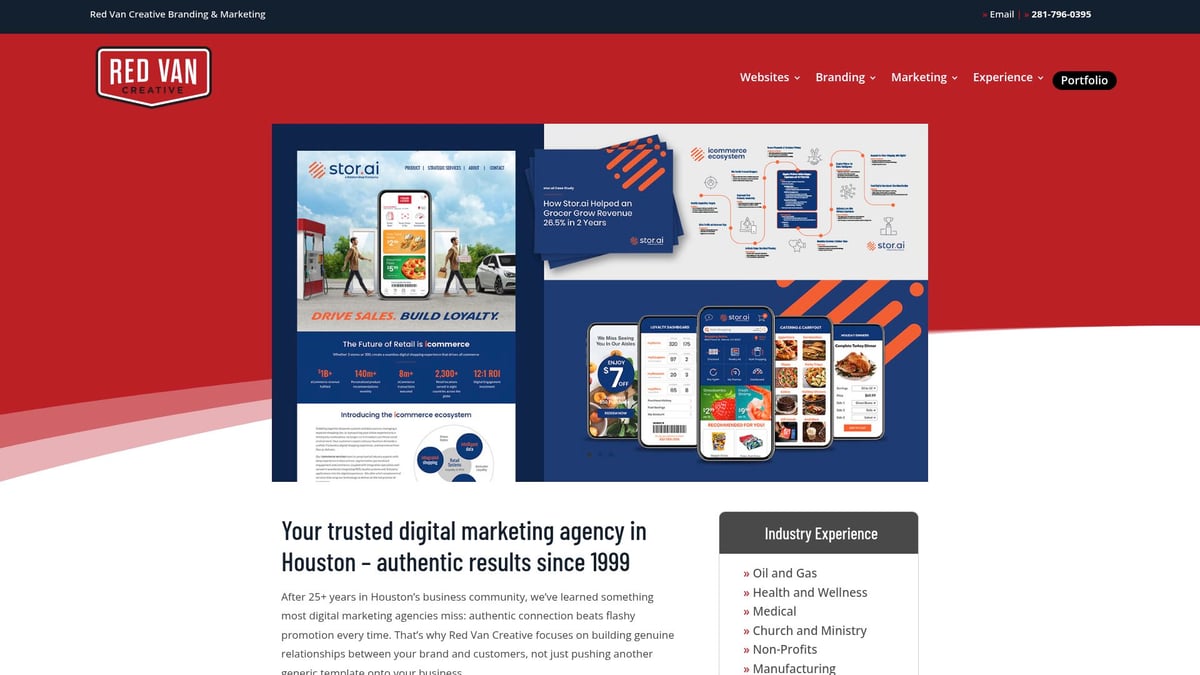
With award-winning creative solutions and a flexible, client-centric service model, Red Van Creative helps organizations integrate the latest digital strategies across diverse industries. By leveraging their experience, your team can build future-ready marketing campaigns that drive measurable results.
Now that you’ve explored these nine essential electronic marketing strategies and seen how forward-thinking brands are reshaping the digital landscape, you might be wondering what these ideas look like in action. At Red Van Creative, we’ve spent over 25 years helping businesses across industries bring innovative marketing campaigns to life—always with a focus on genuine connection and measurable results. If you’re ready to see how a holistic, results-driven approach translates into real-world success, I invite you to See Our Work / View Our Portfolio. Let’s build your future-ready marketing strategy together.
Article written using RankPill.