

Is your business prepared to thrive in the rapidly shifting digital landscape of 2026? The ability to build and lead a high-performing digital marketing team is now essential for sustaining growth and staying ahead of the competition.
This guide will show you how to structure, scale, and future-proof your digital marketing team with the latest roles, skills, and strategies. From navigating AI-driven platforms to overcoming skill gaps and fragmented campaigns, you’ll find proven frameworks and actionable steps tailored to startups, SMBs, and enterprises. Use this resource to confidently assemble a team that drives measurable results and secures your marketing success for the future.
The Evolving Landscape of Digital Marketing Teams in 2026
The digital marketing team of 2026 looks nothing like its predecessor from just a few years ago. Rapid advances in AI, automation, and omnichannel strategies have transformed how teams operate, collaborate, and drive results. Today, every digital marketing team must adapt quickly to stay ahead of emerging trends and shifting customer behaviors.
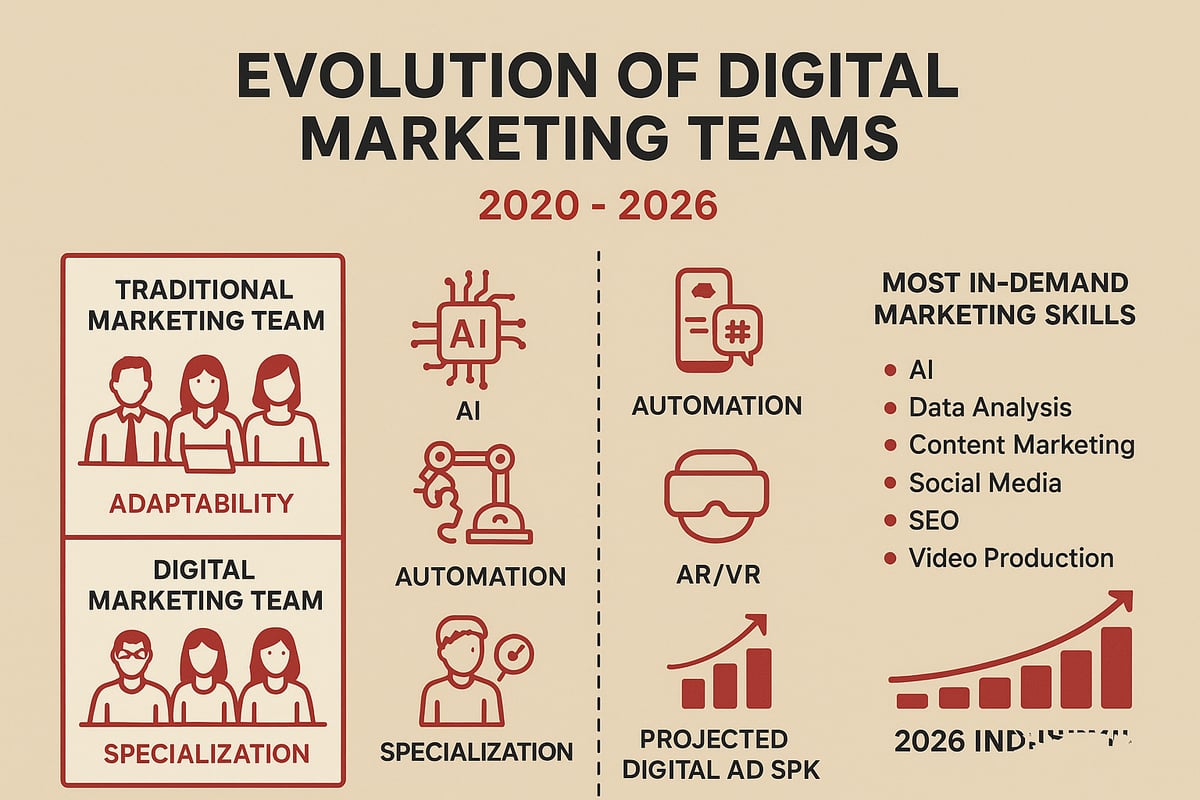
AI and automation have redefined roles within every digital marketing team. Where once teams relied on manual campaign management and static content, today’s professionals use intelligent tools for personalization, predictive analytics, and real-time optimization. Omnichannel marketing is now standard, requiring seamless integration of social, search, email, and even immersive experiences like AR and VR. Team members must be comfortable using automation platforms and interpreting complex data to guide their strategies.
A key differentiator between a digital marketing team and traditional marketing teams is adaptability. Digital teams are highly specialized, with roles focused on SEO, paid media, content creation, and analytics. They track granular metrics like customer lifetime value and multi-touch attribution, unlike traditional teams that often prioritize reach and frequency. The rise of new platforms, from emerging social channels to voice search and augmented reality, means a digital marketing team must constantly update its skills and channel expertise. For more about upcoming trends and the platforms shaping the future, see Digital Marketing Trends 2026.
Data-driven decision-making is at the heart of every high-performing digital marketing team. Cross-functional collaboration is crucial, as marketers now work closely with product, sales, and IT to deliver unified customer experiences. For example, ecommerce brands have built agile teams with dedicated specialists for performance marketing, CRO, and platform management. B2B SaaS companies prioritize content leadership, account-based marketing, and marketing operations, while local businesses lean on lean teams focused on local SEO and community engagement.
Projections for 2025 and 2026 show digital ad spend continuing to rise, with demand surging for marketers skilled in AI, analytics, and content creation. Organizations face real challenges: keeping pace with technology, addressing talent shortages, and managing remote or hybrid work environments. The most successful digital marketing team leaders invest in ongoing training and flexible structures to attract and retain top talent.
In summary, a future-ready digital marketing team is agile, specialized, and relentlessly customer-centric. Teams that embrace new technology, foster cross-functional collaboration, and prioritize data-driven strategies will be best positioned to thrive in the fast-evolving digital landscape of 2026.
Core Roles and Responsibilities in a 2026 Digital Marketing Team
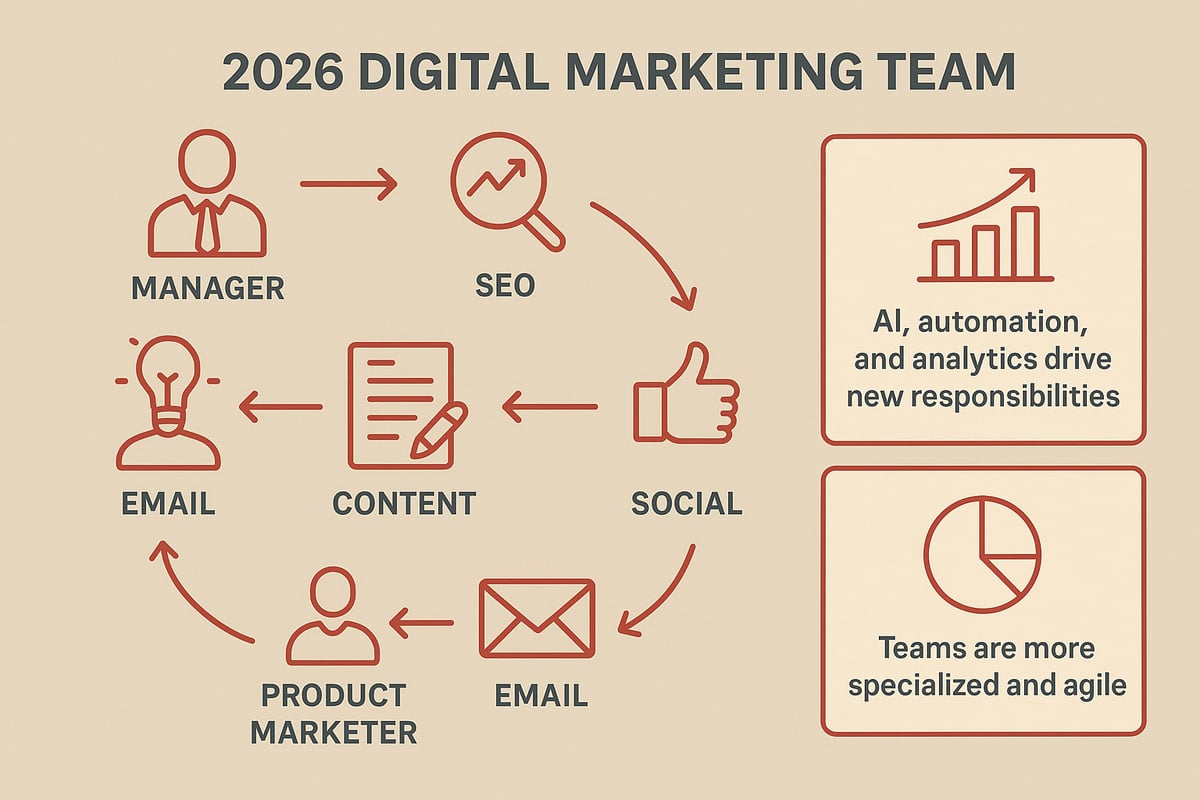
Building a successful digital marketing team in 2026 requires clear definition of roles, responsibilities, and a forward-thinking approach. As businesses adapt to new technologies, each member of the digital marketing team must bring specialized expertise, collaboration skills, and a strong understanding of data-driven strategies.
A well-structured digital marketing team ensures campaigns are cohesive, measurable, and aligned with business growth. Let us break down the core functions that every high-performing digital marketing team needs.
Leadership & Strategy
At the heart of every digital marketing team, leadership provides strategic direction and ensures alignment with overall business objectives. The Digital Marketing Manager or Director orchestrates day-to-day operations, guiding the team through rapidly changing digital trends.
- Digital Marketing Manager/Director: Develops strategy, sets KPIs, and leads cross-functional collaboration.
- Chief Marketing Officer (CMO) / VP Roles: Oversees large or global teams, integrates marketing with sales, product, and customer service.
- Key Skills: Visionary leadership, data-driven planning, adaptability, and stakeholder management.
For example, enterprises often organize their digital marketing team with a CMO at the helm, supported by a VP of Growth and regional marketing leads. This structure allows the digital marketing team to effectively manage large-scale, multi-channel campaigns while remaining responsive to local market needs.
Strong leadership within a digital marketing team promotes agility, innovation, and cohesive execution.
Acquisition & Growth Specialists
Acquisition and growth experts ensure the digital marketing team consistently attracts new customers and drives measurable results. With the evolution of AI and automation, these roles require advanced technical knowledge and a growth mindset.
- SEO Specialist: Focuses on organic traffic, mastering AI-powered search and evolving algorithms.
- Paid Search & Social Marketer: Manages PPC, programmatic ads, and social campaigns, optimizing for ROI.
- Growth Marketer: Leads rapid experimentation, funnel optimization, and user acquisition.
Ecommerce brands often dedicate entire performance marketing teams within their digital marketing team to manage acquisition channels effectively. These specialists collaborate closely to maximize reach and conversion, ensuring that the digital marketing team remains competitive in a crowded marketplace.
By prioritizing data analysis and experimentation, acquisition roles keep the digital marketing team at the forefront of growth.
Content & Engagement Experts
Content and engagement are pivotal for building brand authority and fostering audience loyalty. Within a digital marketing team, these experts craft compelling narratives, manage brand voice, and drive engagement across multiple platforms.
- Content Marketing Manager: Designs content strategy, coordinates writers and multimedia creators.
- Content Writers/Copywriters: Produce SEO-friendly, persuasive content for web, email, and social channels.
- Social Media Manager: Builds brand presence, nurtures community, and manages influencer partnerships.
For B2B organizations, a digital marketing team leverages thought leadership content to nurture leads and establish credibility. Agencies and brands also rely on creative web and social strategies to enhance engagement and amplify reach, as detailed in creative web and social strategies.
A dynamic content and engagement team ensures the digital marketing team connects meaningfully with its audience and adapts to emerging platforms.
Retention & Conversion Roles
Retention and conversion specialists are essential for maximizing the lifetime value of each customer. Their efforts help the digital marketing team turn leads into loyal advocates, using data-driven tactics to optimize every stage of the customer journey.
- Email Marketer: Executes automated campaigns, segmenting audiences for personalized outreach and nurturing relationships. For best practices, see email marketing best practices.
- CRO Specialist: Runs A/B tests, refines landing pages, and increases conversion rates.
- Product Marketer: Aligns product, sales, and marketing efforts for effective go-to-market strategies.
SaaS companies, for instance, often structure their digital marketing team to include onboarding and lifecycle marketing roles, ensuring seamless customer experiences and high retention rates.
By focusing on retention and conversion, a digital marketing team builds sustainable growth and long-term brand loyalty.
Structuring Your Digital Marketing Team by Industry and Business Size
Building a digital marketing team that fits your business is a strategic decision. As digital channels multiply and customer behaviors shift, your team structure must adapt to stay competitive. Whether you operate in ecommerce, B2B, or serve local markets, understanding how to assemble the right digital marketing team is essential.
Industry-Specific Structures
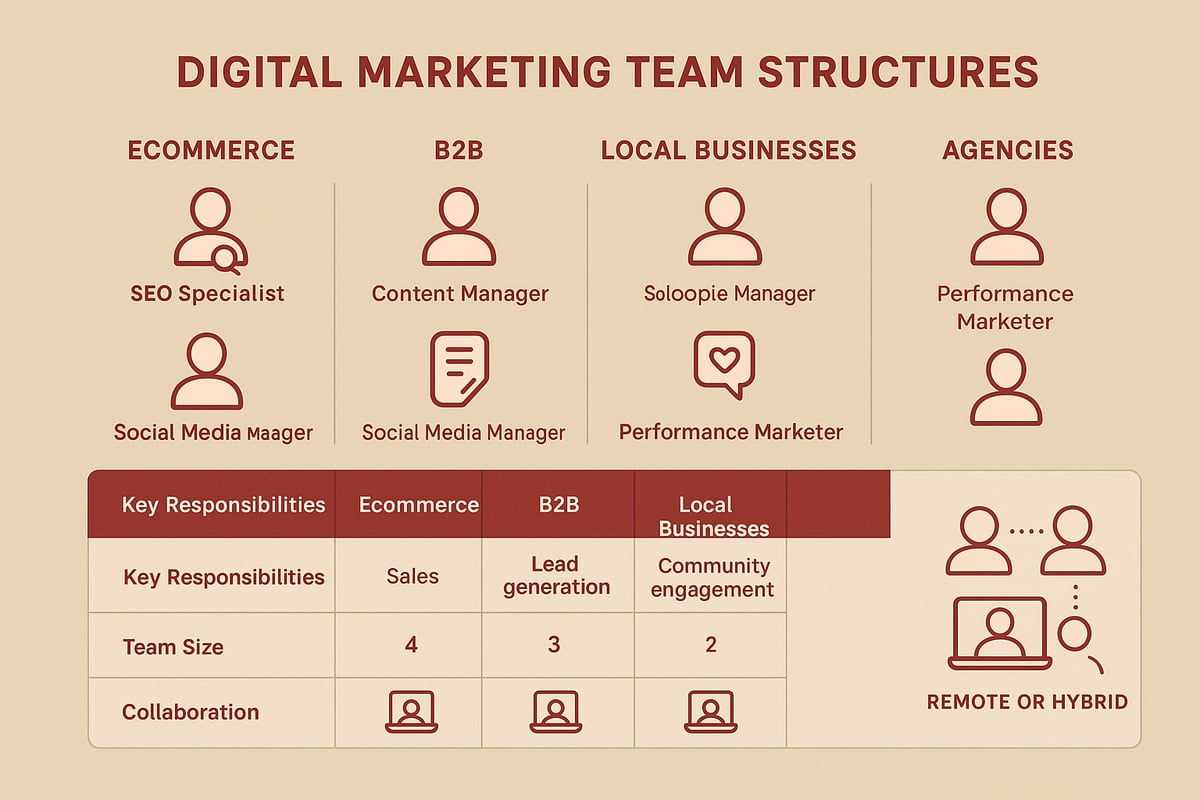
Every industry demands a tailored digital marketing team structure. Ecommerce companies prioritize performance marketing, conversion rate optimization, and platform-specific roles such as Amazon specialists. Their teams rely heavily on data and rapid response to customer trends.
B2B organizations focus on content-driven strategies, account-based marketing managers, and sophisticated marketing operations. These teams often include experts in lead nurturing and long-form content to support sales cycles.
Local businesses operate with leaner digital marketing team setups. The emphasis is on local SEO, community engagement, and cost-effective content creation. Flexibility and multitasking are vital for these compact teams.
Agencies, meanwhile, require flexible, scalable digital marketing team models. Project managers and multi-client specialists are essential to handle diverse client needs and shifting priorities.
| Industry | Key Focus Areas | Typical Roles |
|---|---|---|
| Ecommerce | Performance, CRO, Platforms | PPC, CRO, Platform Experts |
| B2B | Content, ABM, Ops, Nurturing | Content, ABM, Ops, Lead Gen |
| Local Business | Local SEO, Community, Engagement | Local SEO, Social, Content |
| Agency | Flexibility, Scale, Management | PMs, Specialists, Client Leads |
A strong digital marketing team aligns structure with industry needs for sustainable growth.
Team Structures by Company Size
The size of your business directly shapes your digital marketing team. Startups typically build with agile, multi-skilled generalists. These teams handle multiple channels and pivot quickly. As companies transition to growth stages, they introduce more specialists, balancing depth with cross-functional collaboration.
Enterprises develop large digital marketing team departments dedicated to specific channels like SEO, PPC, content, and analytics. Clear reporting lines and role clarity become crucial for managing scale and complexity.
The evolution from generalist to specialist is a key growth driver. For example, a startup may initially combine content and social media into one role. As the company grows, these split into distinct positions, increasing both expertise and output.
For small businesses, structuring a digital marketing team can seem daunting. Resources like the Small business marketing process offer practical frameworks to help SMBs build an effective team, even with limited resources.
Adapting your digital marketing team structure as your organization scales ensures you can seize new opportunities and avoid bottlenecks.
Remote and Hybrid Team Models
Remote and hybrid work have transformed the digital marketing team landscape. Today, collaboration tools like Slack, Asana, and Trello enable asynchronous workflows, allowing teams to tap into a global talent pool.
Each model has unique benefits. Remote digital marketing teams offer access to specialized skills regardless of location and can reduce overhead costs. Hybrid models combine in-person collaboration with the flexibility of remote work, supporting both creativity and efficiency. In-house teams benefit from face-to-face interaction but may face talent shortages.
Best practices for managing remote and hybrid digital marketing teams include:
- Establishing clear communication protocols and regular check-ins
- Leveraging project management platforms for visibility and accountability
- Encouraging a culture of transparency, feedback, and shared goals
For example, agencies often manage distributed digital marketing teams across time zones. This approach maximizes coverage and responsiveness for clients while fostering a diverse, high-performing environment.
By embracing flexible work models, you can build a resilient digital marketing team equipped to meet the demands of the future.
Step-by-Step Guide to Building Your Digital Marketing Team in 2026
Building a digital marketing team in 2026 requires a strategic, agile approach. The landscape is changing rapidly, and assembling the right mix of talent and structure is vital for long-term growth. Follow this step-by-step guide to ensure your digital marketing team is built for success in a fast-evolving marketplace.
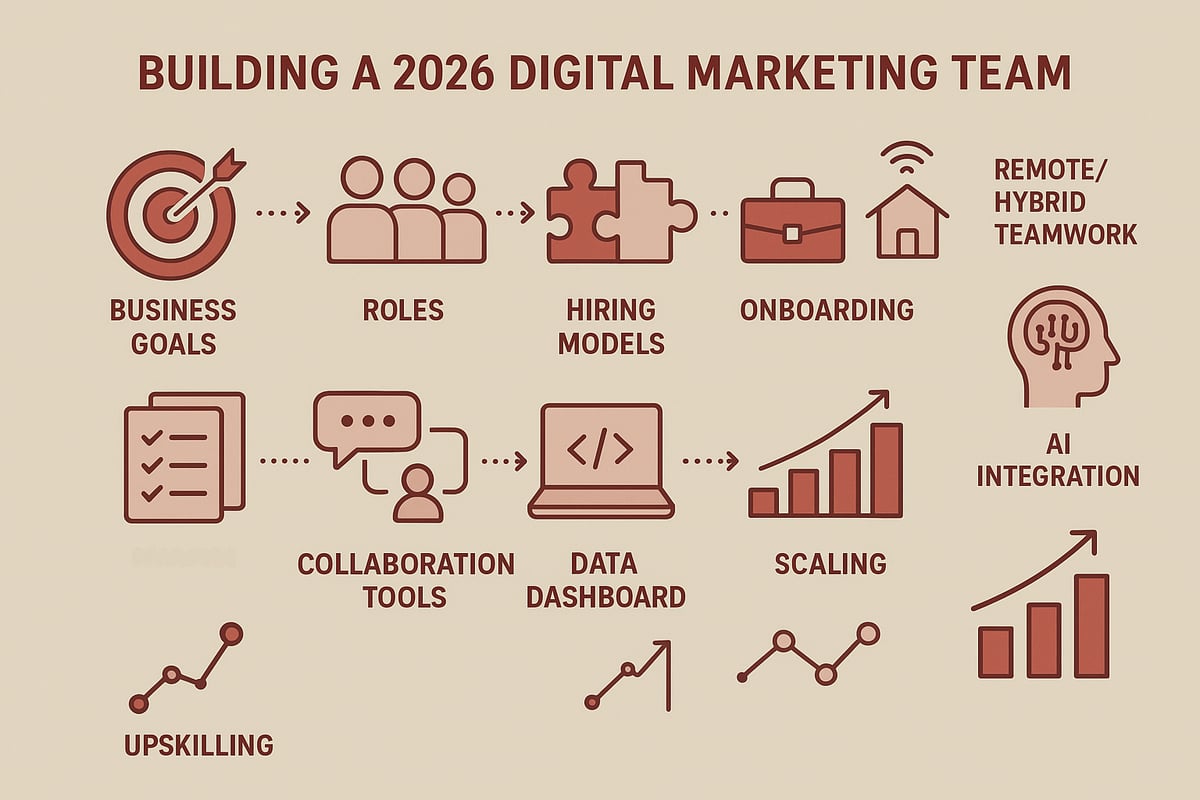
Step 1: Assess Your Business Needs and Goals
Start by clarifying what your business wants to achieve with digital marketing. Define objectives like brand awareness, lead generation, or customer retention. Audit your current digital marketing team to identify strengths and gaps.
Align your desired team structure with your company’s overall vision and growth plans. For example, a B2B startup launching a new product will map specific roles to support its go-to-market strategy.
Ask yourself: What are your immediate priorities, and which capabilities are missing? This assessment forms the foundation for building a digital marketing team that can deliver measurable results.
Step 2: Define Key Roles and Responsibilities
Next, identify the essential roles needed to meet your goals and fit your budget. For early-stage companies, hybrid roles can maximize efficiency, while larger organizations may require specialized positions.
Develop clear job descriptions and key performance indicators for each role. Consider emerging hybrid positions that blend creativity, analytics, and AI expertise. Insights from Emerging roles in marketing and creative show the value of combining analytical and creative skill sets in a modern digital marketing team.
Make your structure scalable — as your business grows, roles can evolve or specialize.
Step 3: Choose Your Hiring Model
Decide whether to build your digital marketing team in-house, partner with an agency, or hire fractional talent. Each approach has its benefits. In-house teams provide greater control and integration, while agencies bring specialized expertise and scalability.
Fractional talent or freelancers offer flexibility for project-based needs. For example, a growth-stage company might use a fractional CMO to lead strategy while outsourcing SEO audits or video production.
Evaluate your needs, budget, and timeline to select the hiring model that optimizes your digital marketing team’s performance.
Step 4: Recruit, Onboard, and Train Talent
Recruiting the right people is critical for a high-performing digital marketing team. Use job boards, employee referrals, and talent networks to attract qualified candidates.
Design an onboarding process tailored for remote or hybrid settings. Provide resources, set clear expectations, and foster early engagement.
Commit to ongoing training through digital certifications, AI tool workshops, and upskilling programs. For example, many successful teams use online academies to keep their digital marketing team ahead of industry trends.
Step 5: Foster Collaboration and Communication
Effective collaboration is the backbone of any digital marketing team. Implement project management tools like Asana, Trello, or Slack to streamline workflows and communication.
Schedule regular check-ins, brainstorming sessions, and feedback loops. Encourage transparency and shared ownership of results.
Agile marketing teams often run weekly sprints and retrospectives, which help the digital marketing team stay aligned and quickly adapt to changing priorities.
Step 6: Measure Performance and Optimize
Establish clear KPIs for every member and campaign in your digital marketing team. Use analytics dashboards to monitor real-time performance and identify trends.
Regularly analyze data, share insights, and act on findings to refine tactics. For example, an ecommerce digital marketing team might optimize campaigns weekly based on conversion rates and customer behavior.
Continually iterate and, when needed, restructure your digital marketing team as business needs evolve.
Step 7: Scale and Adapt for the Future
As your business grows, plan for new roles and emerging technologies within your digital marketing team. Invest in leadership development and succession planning to build internal talent pipelines.
Stay agile by reviewing your team structure and skill sets regularly. For example, integrating AI specialists or data analysts ensures your digital marketing team remains competitive as channels and tools evolve.
A future-ready digital marketing team is always learning, adapting, and positioned to capitalize on new opportunities.
Essential Skills and Tools for High-Performing Digital Marketing Teams
Building a high-performing digital marketing team in 2026 requires a blend of technical expertise, adaptability, and a forward-thinking mindset. As digital marketing evolves, the right mix of skills and tools is critical for driving measurable growth, maximizing ROI, and staying ahead of competitors.
Technical Skills and Tools
A modern digital marketing team must master a range of technical skills to remain effective. Core competencies include SEO, paid media management, analytics, marketing automation, and data visualization. Familiarity with platforms like Google Analytics, HubSpot, and Tableau enables teams to track and optimize every campaign.
Below is a quick comparison of essential tools:
| Area | Top Tools | Purpose |
|---|---|---|
| Analytics | Google Analytics, Tableau | Performance tracking |
| Automation | HubSpot, Marketo | Campaign automation |
| CRM | Salesforce, Zoho | Customer relationship |
| Collaboration | Slack, Asana | Team communication |
Selecting the right tools allows a digital marketing team to streamline workflows and make smarter decisions.
Soft Skills and Team Culture
Technical prowess is only part of the equation. A successful digital marketing team thrives on strong communication, adaptability, critical thinking, and creativity. These soft skills foster collaboration and help teams solve complex problems in dynamic environments.
Encouraging a culture of cross-functional teamwork ensures that ideas flow freely and strategies align with business goals. This adaptability is especially vital as new platforms and technologies reshape the marketing landscape.
Data-Driven Strategies and Ongoing Education
A data-driven culture is at the heart of every high-performing digital marketing team. Using metrics to guide decisions, teams can quickly identify what works and pivot strategies when needed. Advanced analytics and AI-powered dashboards provide real-time insights for campaign optimization.
As AI becomes more integrated, marketers benefit from tools like the AI-Integrated Decision Support System, which supports forecasting and content analytics. Ongoing education is essential, with certifications such as Google Analytics, HubSpot, and industry webinars keeping skills current.
Future Trends, AI, and Summary
The demand for marketers skilled in AI, data analysis, and content creation is set to surge through 2026, according to Digital Marketing Agency Market Size and Trends. Agencies leveraging AI for campaign optimization set the standard for innovation.
A digital marketing team with diverse, up-to-date skill sets consistently outperforms traditional structures. Investing in the right skills and tools ensures your team remains agile, data-driven, and ready to tackle the challenges of tomorrow.
Budgeting, Scaling, and Future-Proofing Your Digital Marketing Team
Building a high-performing digital marketing team in 2026 requires forward-thinking budget strategies. With digital channels evolving rapidly, businesses must allocate resources wisely to attract and retain top marketing talent, invest in the right tools, and remain adaptable as new opportunities emerge.
A robust budget for your digital marketing team should balance in-house salaries, outsourcing costs, and technology investments. While in-house roles provide stability and deep brand knowledge, outsourcing specialized tasks such as advanced analytics or AR/VR content production can be more cost-effective. Investing in leading automation and analytics tools not only boosts efficiency but also keeps your team competitive as platforms and algorithms change.
Scaling your digital marketing team efficiently is crucial, especially as your business grows or pivots. Many organizations leverage fractional roles, freelancers, and agency partnerships to maintain flexibility. For example, supplementing your core team with external experts for specific campaigns or channels, like those specializing in digital marketing in LinkedIn strategy, can deliver results without long-term overhead. This approach allows you to adjust your team structure based on seasonal needs, new product launches, or shifts in consumer behavior.
Future-proofing your digital marketing team means preparing for emerging roles and fostering internal growth. As AI, data privacy, and new platforms reshape the landscape, roles such as AI prompt engineers and data privacy specialists are becoming essential. Prioritizing leadership development and succession planning ensures your team can adapt to evolving demands. Encourage ongoing education, mentorship, and upskilling to keep your talent pipeline strong.
Consider the following table summarizing how enterprises are adjusting their digital marketing team budgets:
| Budget Category | 2023 (%) | 2026 Projected (%) |
|---|---|---|
| In-house salaries | 35 | 30 |
| Outsourcing/freelance | 15 | 20 |
| Technology/tools | 20 | 25 |
| Training/upskilling | 5 | 10 |
| Traditional media | 25 | 15 |
Recent reports indicate that digital marketing spend is projected to account for over 70 percent of total marketing budgets by 2026. Companies that invest in a flexible, scalable digital marketing team are more resilient to market shifts and disruptions. By cultivating a learning-oriented, adaptable culture, your organization positions itself for sustainable growth and long-term success in a constantly changing digital landscape.
Now that you have a clear roadmap for structuring and scaling your digital marketing team for 2026, it helps to see real-world examples in action. If you want to get inspired by how authentic, results-driven marketing looks across different industries, I invite you to explore our portfolio. There, you’ll find how we’ve helped businesses like yours build stronger brands, create lasting customer relationships, and achieve measurable growth—all through a holistic, future-ready approach. Let’s turn your vision into reality: See Our Work / View Our Portfolio