

Did you know the retail industry is being transformed faster than ever by new technologies and changing shopper habits? In 2026, digital marketing for retail is no longer optional—it is essential for survival. Retailers face rising customer expectations and fierce competition, making innovation urgent.
This article reveals 9 powerful digital marketing for retail tactics designed to help you boost engagement, increase sales, and secure long-term growth. Ready to future-proof your business? Dive in and discover the strategies that will set you apart.
The State of Digital Marketing for Retail in 2026
The landscape of digital marketing for retail in 2026 is defined by rapid transformation and rising consumer expectations. Retailers face a marketplace where adaptation is essential and innovation is non-negotiable. Understanding the forces shaping this environment is crucial for staying competitive and achieving sustainable growth.
Evolving Consumer Behaviors and Expectations
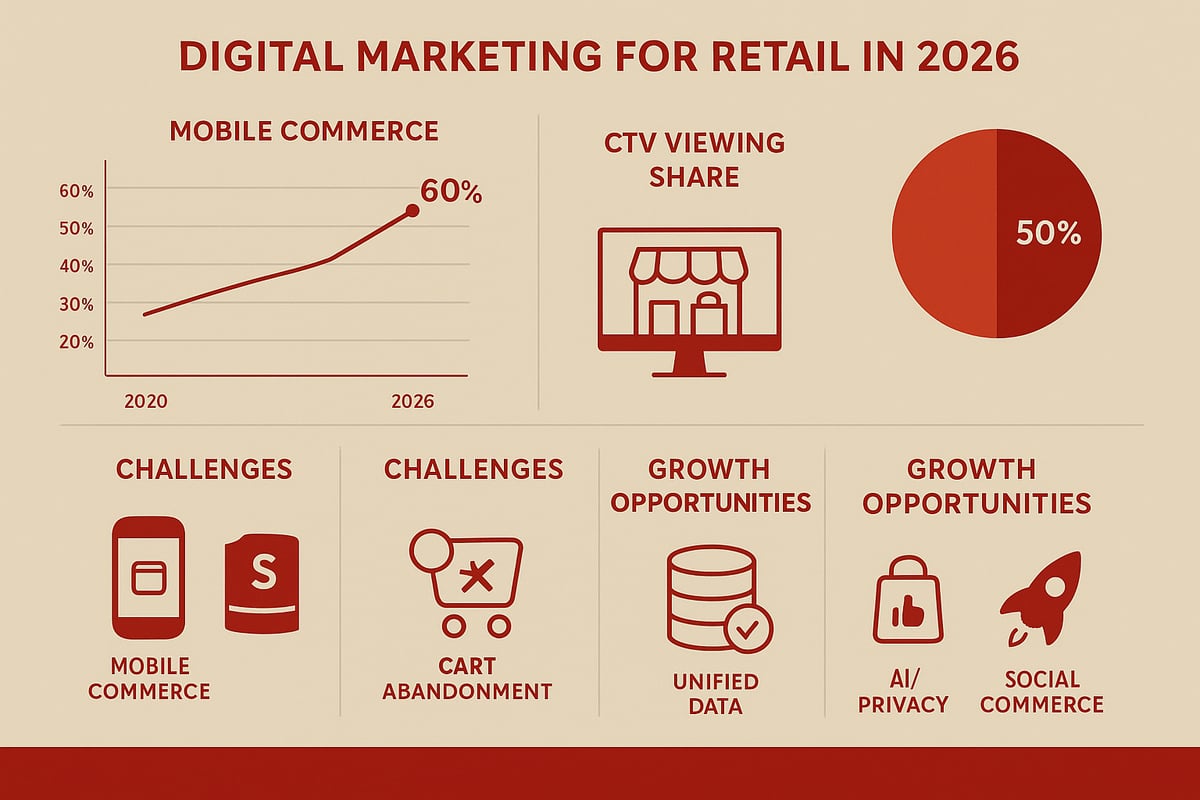
In 2026, digital marketing for retail must address increasingly sophisticated consumer behaviors. Shoppers expect seamless, personalized experiences across every touchpoint, whether browsing on mobile, desktop, or in-store. Mobile commerce is a major driver, projected to account for nearly two-thirds of online sales growth from 2024 to 2028. Omnichannel customers, who engage across multiple platforms, are now spending 9 percent more in physical stores. Social commerce is thriving, with Gen Z and Millennials leading the charge. Meanwhile, growing concerns about data privacy are accelerating the shift towards first-party data strategies.
Key Industry Trends Shaping Retail Marketing
Several trends are redefining digital marketing for retail. Streaming and Connected TV now capture nearly half of U.S. TV viewing, making these channels vital for retail advertising. Retail Media Networks (RMNs) are surging, expected to generate $176.9 billion globally by 2025. AI and automation are mainstream, with 78 percent of organizations using AI in at least one function. Retailers leveraging AI-driven personalization in retail are seeing up to 25 percent higher return on ad spend. AR, VR, and phygital experiences are also enhancing customer engagement. Privacy-first, cookie-less marketing is becoming standard.
Challenges Retailers Must Overcome
Despite these advances, digital marketing for retail faces persistent challenges. Data remains fragmented, and marketing channels often operate in silos, making it difficult to achieve a unified customer view. Cart abandonment rates hover around 70 percent, underscoring ongoing user experience and conversion obstacles. Accurately measuring marketing ROI is complex due to new attribution models and evolving technology. Moreover, retailers must contend with fierce competition from both digital-native disruptors and established brands, making constant innovation a necessity.
Opportunities for Growth and Differentiation
Amid these challenges, digital marketing for retail offers significant opportunities. Retailers can gain a competitive edge by harnessing unified data and AI-driven insights for hyper-personalization. Integrating online, offline, and in-store experiences delivers a holistic journey that builds loyalty and drives sales. Emerging platforms, such as shoppable Connected TV and in-game advertising, present new avenues for engagement. Investing in robust measurement and experimentation frameworks enables retailers to optimize marketing spend and adapt strategies quickly in a rapidly changing environment.
9 Powerful Digital Marketing for Retail Tactics in 2026
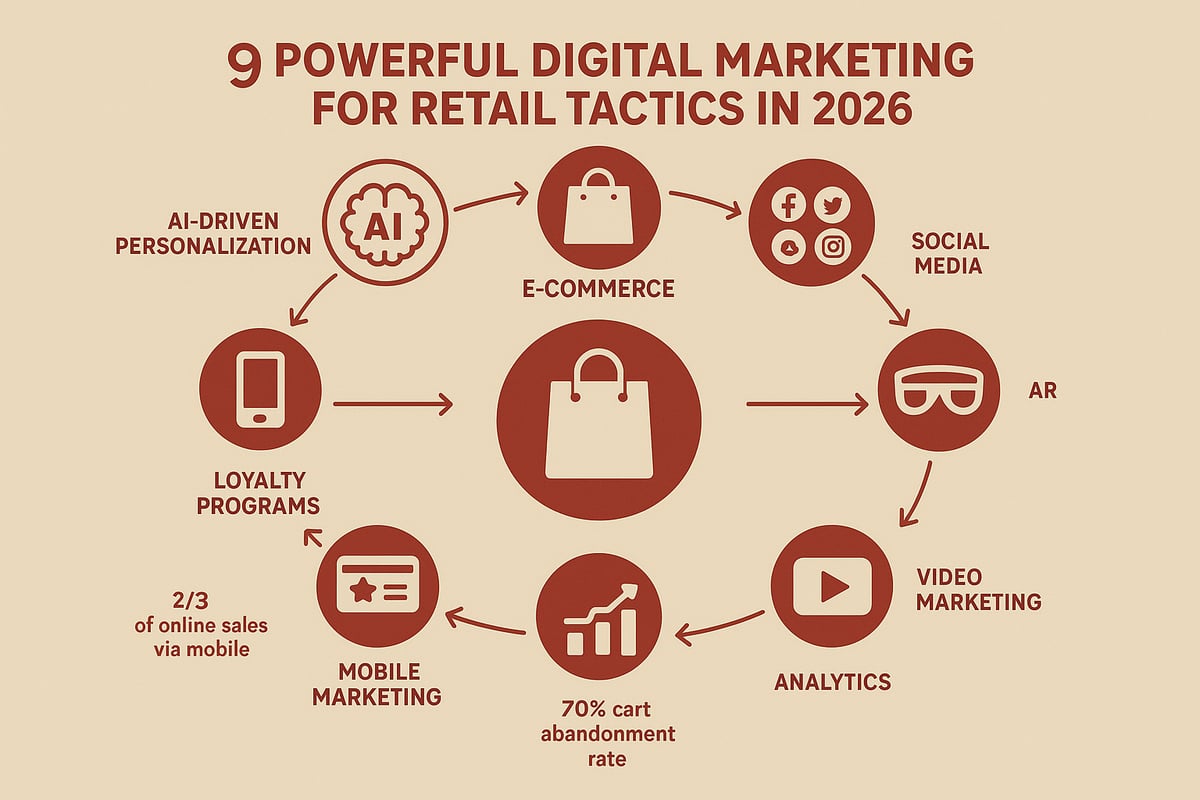
The competitive environment in retail is evolving at breakneck speed. To stand out and thrive in 2026, retailers must embrace innovative digital marketing for retail strategies that not only engage customers but also drive measurable business outcomes. The following nine tactics give you a blueprint to future-proof your retail business, increase engagement, and boost sales.
1. Omnichannel Experience Integration
A seamless customer journey is now the gold standard in digital marketing for retail. Retailers must connect every touchpoint—from websites and mobile apps to physical stores—to deliver a unified experience.
- Implement BOPIS, curbside pickup, and ship-from-store to offer flexibility.
- Use a single inventory and identity engine to synchronize offers and inventory across channels.
- Consistency is key: ensure promotions, pricing, and customer profiles are available everywhere.
Consider this: shoppers using four or more channels spend 9% more in-store. Clienteling tools and loyalty apps further personalize in-store visits, elevating satisfaction. Measuring store lift from digital campaigns and tracking repeat purchases are critical KPIs.
A unified omnichannel approach in digital marketing for retail helps retailers break down silos, creating a holistic view of the customer and driving long-term loyalty.
2. AI-Driven Personalization at Scale
Personalization has become a cornerstone of digital marketing for retail, and AI is propelling it to new heights. By leveraging machine learning and predictive analytics, retailers can anticipate customer needs and deliver individualized experiences at scale.
- Use first-party data from loyalty programs and purchase history to inform recommendations.
- Automate communications such as email, SMS, and push based on real-time behaviors.
- Companies excelling at personalization see up to 40% more revenue than average performers.
Dynamic retargeting—showing shoppers the products they left in their carts or suggesting relevant upsells—can significantly improve conversion rates. It is crucial to balance personalization with privacy, using transparent data practices and consent management.
For deeper insights into why this matters, explore Why Personalized Marketing Matters. AI-powered personalization ensures digital marketing for retail is both effective and customer-centric.
3. Leveraging Retail Media Networks (RMNs)
Retail Media Networks are transforming digital marketing for retail by providing new, high-impact advertising opportunities. By partnering with RMNs, brands access retailer-owned data and premium inventory, reaching shoppers at pivotal decision points.
- Target audiences both on and off retailer platforms, including CTV and digital signage.
- RMNs empower mid-market brands to compete with retail giants.
- Clean-room analytics and incrementality testing allow for precise measurement.
Brands using RMNs report higher ROAS and increased acquisition of new-to-brand customers. Integrating RMN data with broader analytics provides unified insights, making digital marketing for retail more strategic and accountable.
4. Shoppable Social Commerce and Influencer Marketing
Social platforms have become powerful engines for digital marketing for retail, enabling direct purchases and authentic engagement. In 2026, U.S. social commerce sales are set to exceed $141 billion, driven by Gen Z and Millennials.
- Enable shopping directly on platforms like Instagram, TikTok, and Facebook Shops.
- Partner with micro and macro influencers to build trust and spark discovery.
- Use live streams, user-generated content, and interactive polls for deeper engagement.
Social retargeting helps re-engage interested shoppers, while affiliate codes and platform analytics provide clear ROI tracking. Notably, 55% of Gen Z has made a purchase via social media in the past six months, underscoring the importance of social channels in digital marketing for retail.
5. Contextual and Privacy-First Targeting
With privacy regulations tightening and third-party cookies fading, contextual targeting is now essential for digital marketing for retail. This approach uses real-time content signals to reach relevant audiences without compromising privacy.
- Deploy AI-powered tools to place ads alongside relevant articles, videos, or app content.
- Build privacy-safe audiences through transparent consent management.
- Combine contextual data with first-party insights for sharper targeting.
For example, solutions like StackAdapt’s Page Context AI enable keyword and topic-based placements. Incrementality tests ensure campaigns are truly effective. By adapting to browser privacy changes, retailers keep digital marketing for retail compliant and future-ready.
6. Video, CTV, and In-Game Advertising
Streaming and gaming have reshaped consumer attention, offering fresh frontiers for digital marketing for retail. Nearly half of U.S. TV viewing is now streaming, while in-game ads reach younger, highly engaged audiences.
- Create shoppable video ads on CTV and streaming platforms.
- Use interactive video formats to drive direct response and store visits.
- Geo-target ads to boost local foot traffic and measure offline impact.
Shoppable CTV campaigns, for instance, guide viewers from screen to store. Integrating video and gaming channels into digital marketing for retail strategies expands reach and engagement, especially among digital natives.
7. Phygital and In-Store Digital Experiences
Blending the physical and digital worlds—phygital—is a game changer in digital marketing for retail. Retailers use AR try-ons, interactive kiosks, and digital signage to enrich the in-store experience.
- Recognize loyalty members via store apps and deliver tailored offers.
- Capture consented data in-store to refine future campaigns.
- 47% of shoppers say digital screens positively impact their shopping experience.
AR-powered visualization for apparel or home goods helps customers make confident choices. Value-driven incentives encourage data sharing, supporting an integrated digital marketing for retail approach from the store floor to online.
8. Data-Driven Measurement and Attribution
Accurate measurement is the backbone of successful digital marketing for retail. Retailers are moving from last-click models to multi-touch attribution, incrementality, and geo-lift approaches.
- Use brand lift and footfall attribution to gauge both online and offline impact.
- Integrate data from all channels for a holistic performance view.
- Implement continuous testing and experimentation frameworks.
Clean rooms and privacy-safe analytics enable cross-partner measurement while protecting customer data. Measuring incremental store visits from digital campaigns allows retailers to optimize spend and refine their digital marketing for retail strategies.
9. Website & Ecommerce Optimization for Conversion
Optimizing ecommerce platforms is vital for digital marketing for retail, especially as online competition intensifies. Fast load times, mobile-first design, and frictionless checkout are non-negotiable.
- Address barriers such as hidden fees, poor search UX, and slow pages.
- Run A/B tests on product detail pages, search, and checkout flows.
- Use reviews, ratings, and trust badges to build credibility.
About 70% of carts are abandoned due to usability issues, making optimization efforts crucial. On-site personalization and real-time inventory updates further boost conversions. For many, platforms like Shopify enable streamlined omnichannel growth, tying digital marketing for retail directly to revenue.
Building the Foundation: Data, Technology, and Talent
In 2026, building a resilient foundation is non-negotiable for digital marketing for retail. As data, technology, and talent become the backbone of retail innovation, brands must prioritize integration and agility. Without a robust infrastructure, even the most creative campaigns risk falling flat.
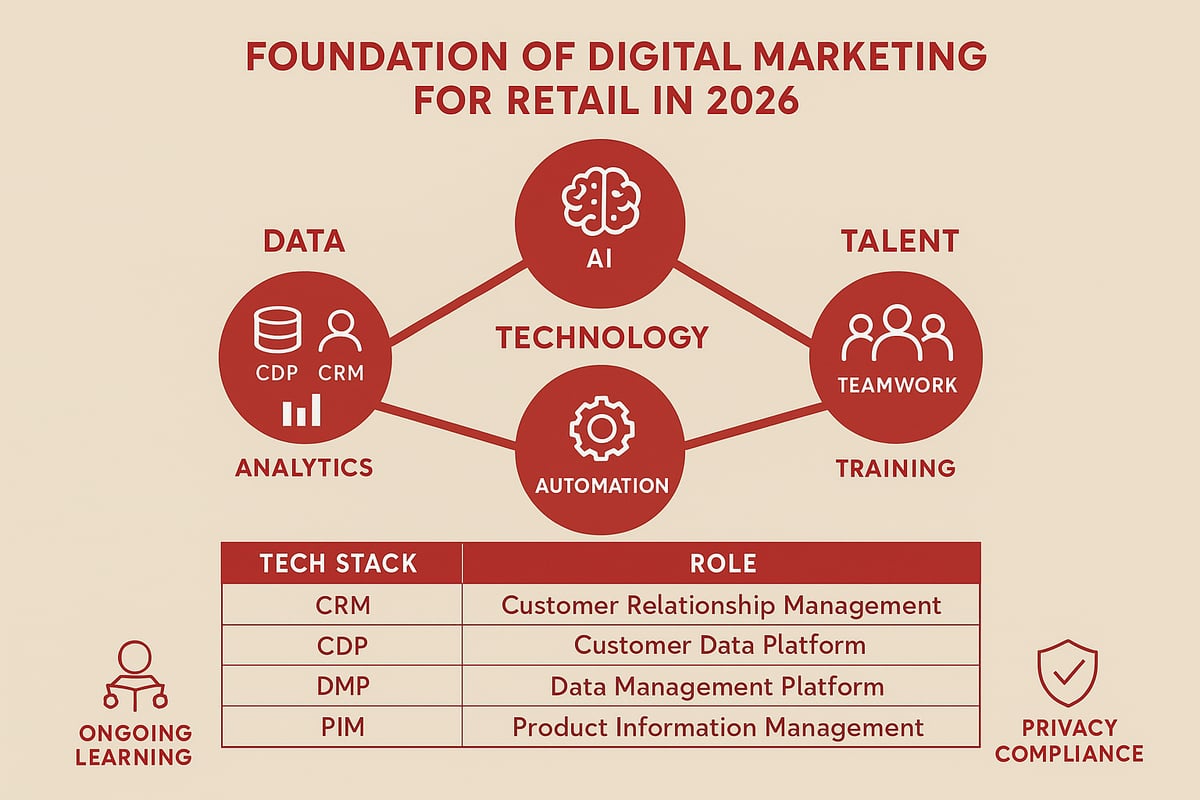
A unified data infrastructure is the starting point. Retailers should leverage tools like customer data platforms (CDPs), CRM systems, and clean data layers to centralize insights. This creates a single source of truth, allowing teams to orchestrate personalized campaigns and optimize every touchpoint in digital marketing for retail.
AI and automation are now essential, not optional. Retailers rapidly adopt AI for segmentation, creative optimization, and real-time reporting. In fact, AI adoption in retail industry is accelerating, with 91% of companies already using or considering AI. These tools empower digital marketing for retail by uncovering trends, predicting shopper behavior, and streamlining workflows.
Privacy compliance is equally critical. With evolving regulations, transparent consent management systems are vital. Retailers must ensure that data use aligns with customer expectations and legal standards, building trust as a pillar of digital marketing for retail.
Cross-functional collaboration fuels innovation. Successful teams blend marketing, IT, analytics, and creative expertise. This synergy enables faster problem-solving and more effective campaign execution. Selecting flexible ecommerce platforms, retail media network partners, and analytics solutions also ensures that the tech stack can scale as business needs evolve.
| Key Tech Stack Components | Purpose |
|---|---|
| CDP/CRM | Centralize customer data |
| AI/Automation Tools | Personalization, analytics, optimization |
| Consent Management | Privacy compliance, trust |
| Flexible Ecommerce Platform | Omnichannel selling |
| Analytics & Measurement | Unified performance insights |
A culture of experimentation and continuous learning sets leading retailers apart. Encouraging regular testing, measurement, and adaptation keeps digital marketing for retail strategies fresh and effective. Investing in ongoing staff training ensures teams stay ahead of trends and maximize new tools.
Real-world examples highlight the value of this approach. For instance, in the Growing Grocery Retail: Stor.ai Case Study, integrated data and technology enabled dramatic gains in customer engagement and operational efficiency.
By focusing on the right blend of data, technology, and talent, retailers create a dynamic foundation that supports sustainable growth and future-proofs digital marketing for retail.
Future-Proofing Retail Marketing: Trends to Watch
The pace of change in digital marketing for retail shows no signs of slowing as we approach 2026. Retailers must proactively monitor the latest trends and prepare their strategies to stay ahead. What should leaders focus on to secure long-term relevance and growth?
Navigating Privacy Regulations and Data Shifts
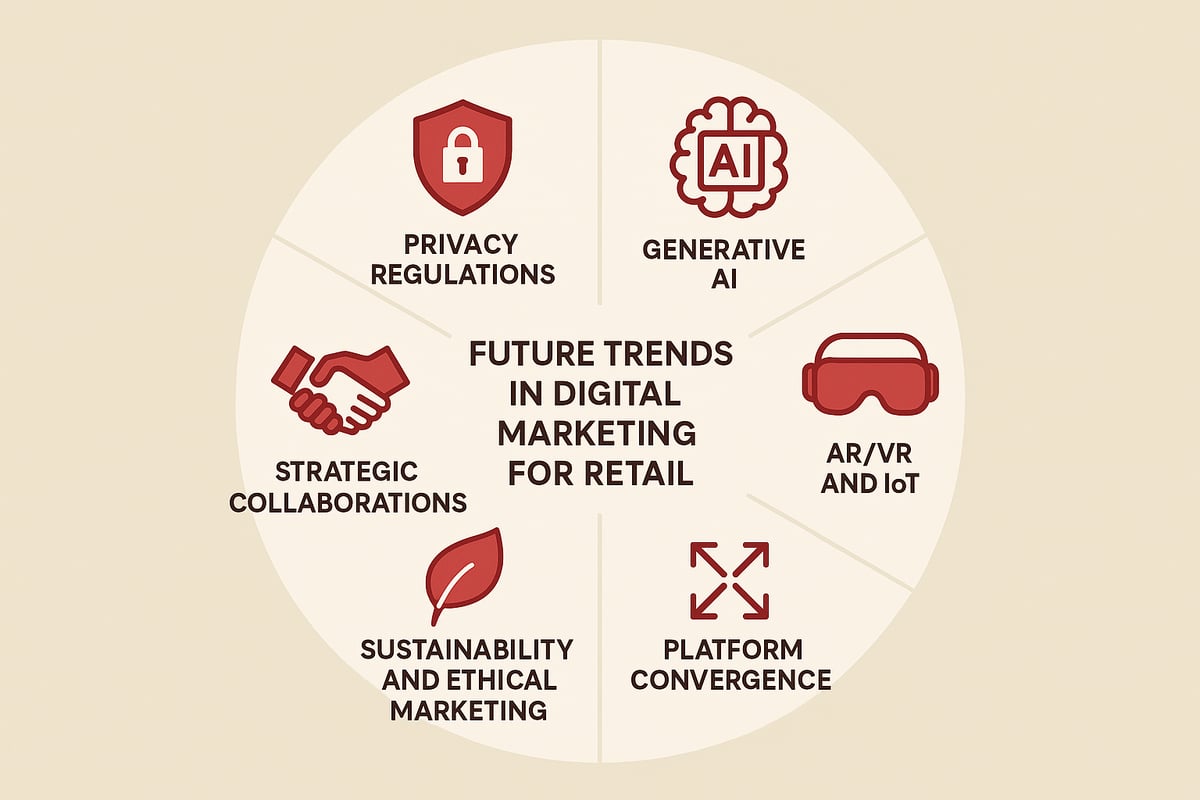
Privacy rules are transforming digital marketing for retail. New laws and browser updates are changing how brands collect and use customer data. Retailers need flexible consent systems, first-party data strategies, and transparent practices. Adapting marketing tactics for a privacy-first world is essential to maintain customer trust and effective targeting.
Generative AI Reshapes Retail Strategies
Generative AI is revolutionizing content creation, product recommendations, and customer support. Over 80% of marketers now use generative AI tools, with 93% of CMOs reporting clear ROI, according to Generative AI’s impact on marketing. Retailers that embed AI in their digital marketing for retail can boost efficiency, personalize experiences, and respond faster to shifting market demands.
Immersive Tech: AR, VR, and IoT-Enabled Shopping
Advancements in AR, VR, and IoT are creating immersive shopping journeys. Smart mirrors, virtual try-ons, and voice assistants are becoming standard in digital marketing for retail, helping shoppers explore products in new ways. Retailers should pilot these technologies to differentiate their brand and increase engagement across all channels.
Platform Convergence and Agile Marketing
Search, social, and retail media are converging, blurring the lines between discovery and purchase. To stay agile, retailers must monitor emerging platforms and shifting consumer attention. In digital marketing for retail, rapid experimentation and cross-platform integration are crucial for capturing demand wherever it arises.
Building Trust: Sustainability and Ethical Marketing
Consumers increasingly demand transparency, ethical practices, and sustainability in digital marketing for retail. Brands that champion eco-friendly initiatives and community-building stand out and foster long-term loyalty. Embedding these values into marketing and brand storytelling will be vital for differentiation.
Partnerships and Scenario Planning for Resilience
Collaboration is a growth lever in digital marketing for retail. Retailers should partner with tech providers, influencers, and other brands to expand reach and drive innovation. Proactive scenario planning enables businesses to stay prepared for disruptions and seize new opportunities as the landscape evolves.
Staying ahead in digital marketing for retail means embracing change, investing in future-ready technologies, and championing ethical, customer-centric strategies. Retailers who track these trends and adapt quickly will be best positioned for enduring success.
As you look ahead to retail success in 2026, it’s clear that embracing innovation and a holistic marketing approach isn’t just an advantage—it’s essential. At Red Van Creative, we’ve spent over 25 years helping brands like yours bridge the gap between digital tactics and genuine customer relationships. If you’re ready to see how these strategies come to life, I invite you to explore real examples of our results-driven work. Discover the creative solutions and measurable impact that set our clients apart—take a moment to See Our Work / View Our Portfolio and get inspired for your next step.