
The digital marketing landscape is evolving at a record pace, making it more challenging for agencies to capture attention and drive results. In 2026, digital marketing agency content is the key differentiator that fuels both growth and client loyalty. Agencies that embrace content innovation will gain a vital edge over competitors.
This article reveals seven innovative digital marketing agency content ideas for 2026. Explore how these strategies can future-proof agency offerings, boost client engagement, and deliver measurable ROI.
The Evolution of Digital Marketing Agency Content in 2026
The landscape of digital marketing agency content is entering a new era in 2026. Consumer behaviors, technology, and content formats are evolving at an unprecedented pace. Agencies that adapt are positioned to stand out and lead the market.
Shifting Consumer Behaviors and Content Consumption
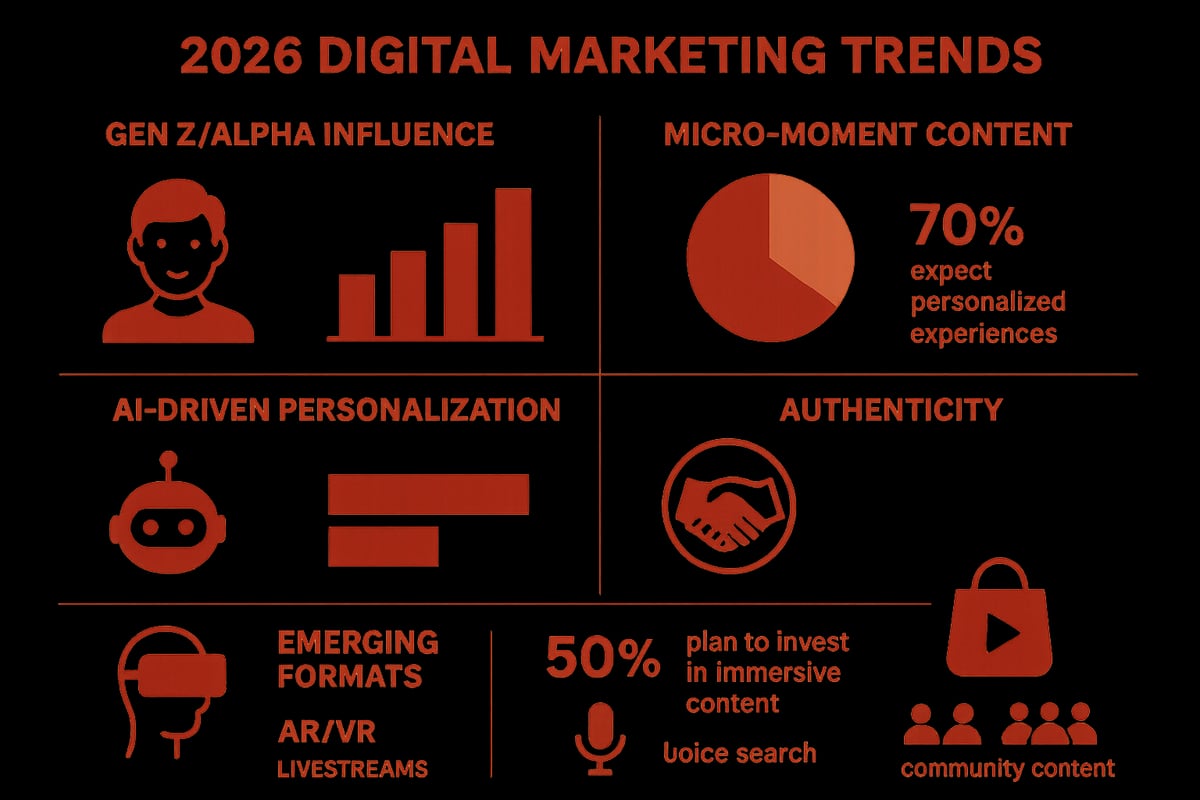
Gen Z and Gen Alpha are at the forefront of shaping digital marketing agency content expectations. These audiences crave fast, snackable content that fits into micro-moments, consuming information on the go through platforms like TikTok and Instagram Reels.
According to industry reports, 70% of consumers now expect personalized, interactive experiences. Agencies are responding by producing short-form videos and interactive posts that engage users quickly. For example, B2B brands use TikTok-style clips to capture professional audiences, proving that digital marketing agency content must evolve to keep pace.
The Role of AI, Automation, and Personalization
Artificial intelligence is transforming digital marketing agency content. AI-driven tools personalize every touchpoint, from dynamic website content to tailored email campaigns. Automation enables agencies to deliver individualized experiences at scale, analyzing user data to adapt messaging in real time.
A prime example is real-time content adaptation, where AI modifies recommendations based on live user behavior. According to Adobe's 2026 Creative Trends Forecast, the integration of AI and human emotion will define standout content strategies, making personalization more impactful than ever.
Importance of Authenticity and Human Connection
Audiences in 2026 seek transparency and relatability from brands. Authentic digital marketing agency content resonates through storytelling, behind-the-scenes glimpses, and user-generated posts. Brands are leveraging employee advocacy to enhance trust and relatability.
User-generated content and authentic narratives foster deeper connections. Agencies that prioritize these elements see improved engagement and long-term loyalty, as consumers align with brands reflecting their own values.
New Formats and Channels Emerging in 2026
The digital marketing agency content ecosystem is expanding rapidly. AR and VR are now mainstream, with immersive experiences like virtual showrooms and AR product try-ons capturing attention. Shoppable livestreams and voice-activated content are gaining traction, offering new ways for brands to connect.
Data reveals that 50% of agencies plan to invest in immersive formats by 2026. This shift requires creativity and technical expertise to deliver compelling content across a broader range of platforms and devices.
| Emerging Format | Agency Investment (2026) |
|---|---|
| AR/VR | 50% |
| Shoppable Livestreams | High |
| Voice-Activated | Growing |
Key Challenges and Opportunities for Agencies
Agencies face the challenge of balancing advanced technology with the creativity that makes content memorable. Navigating privacy regulations and ethical content use adds complexity to digital marketing agency content strategies.
However, these challenges present opportunities. Agencies that embrace innovation, prioritize authenticity, and adopt new formats gain a first-mover advantage. The future belongs to those who combine data-driven insights with human creativity.
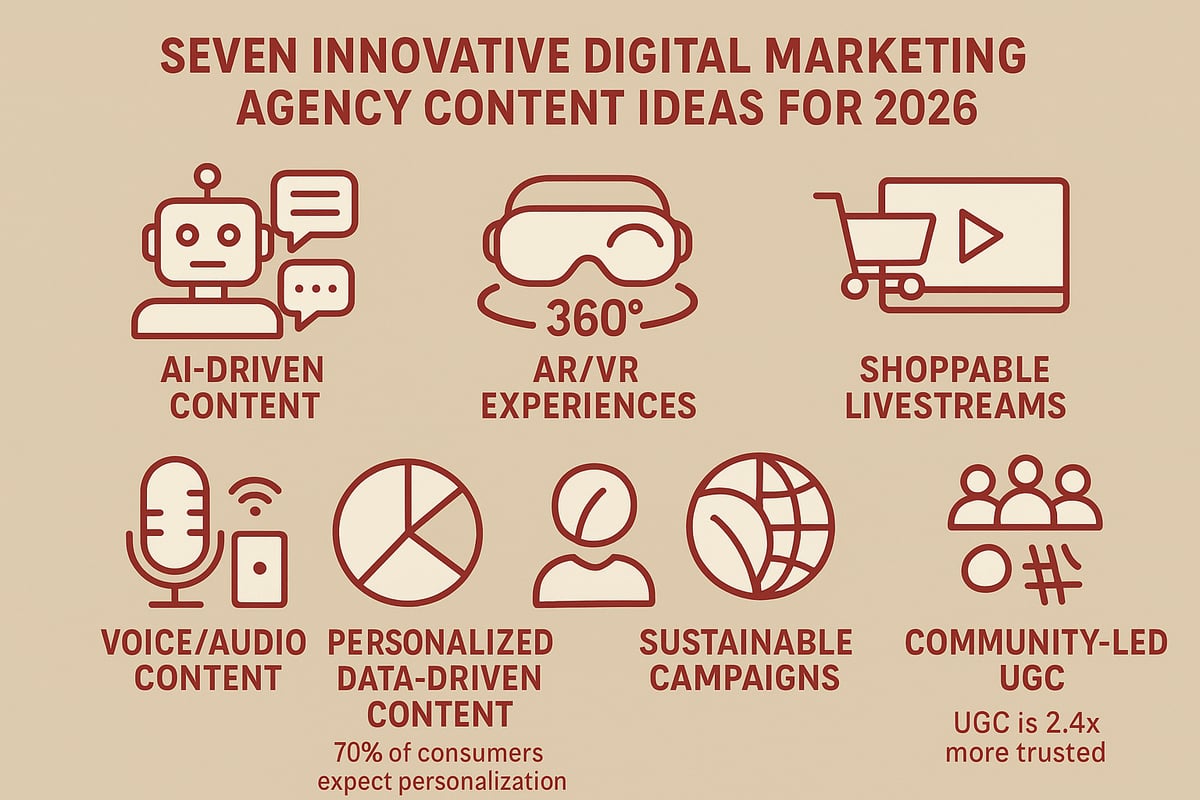
7 Innovative Digital Marketing Agency Content Ideas for 2026
The landscape of digital marketing agency content is evolving at breakneck speed. For agencies aiming to thrive in 2026, standing out requires more than just following trends. It demands bold experimentation, smart use of technology, and a deep understanding of what engages modern audiences.
Below, discover seven cutting-edge digital marketing agency content ideas designed to boost engagement, foster loyalty, and deliver measurable ROI for both agencies and their clients.
1. Interactive AI-Driven Content Experiences
Interactive AI-driven experiences are reshaping digital marketing agency content by making engagement dynamic and personalized. This content adapts in real time, using AI to tailor quizzes, calculators, or interactive videos to each user.
How does it work? AI analyzes user data to adjust questions, recommendations, or outcomes as users interact. For example, agencies can deploy AI-powered assessments that generate custom reports for leads, delivering instant value and capturing valuable first-party data.
Benefits include:
- Higher engagement rates
- Increased dwell time
- Richer audience insights
Recent industry data shows interactive content generates twice as many conversions as static formats. Integration with CRM systems and conversational AI enables even deeper personalization. Ensuring accessibility broadens the reach of digital marketing agency content to all audiences.
Implementation tips:
- Integrate with existing CRM platforms
- Use accessible, conversational interfaces
- Test for usability across devices
Looking ahead, expect more voice-interactive content and AI-powered chatbots, taking digital marketing agency content to new levels of personalization. With over 80% of marketers already using generative AI tools and 93% reporting clear ROI, as highlighted in Generative AI's Impact on Marketing ROI, investing in AI-driven content is a strategic move for agencies.
2. Immersive AR & VR Brand Storytelling
In 2026, immersive AR and VR are transforming digital marketing agency content into unforgettable brand stories. Augmented and virtual reality allow agencies to create virtual showrooms, 360° tours, and interactive product demonstrations.
Picture a B2B onboarding session happening in a VR environment or a retail brand launching a new product with an AR try-on filter. These experiences boost memorability, spark emotional connections, and encourage social sharing.
Key benefits:
- Higher brand recall
- Emotional resonance
- Viral social engagement
A recent survey found 60% of marketers experience stronger engagement with AR/VR campaigns. For agencies, partnering with AR/VR developers and focusing on mobile-first experiences are crucial steps to maximize reach.
Tips for implementation:
- Prioritize mobile compatibility
- Measure engagement through analytics
- Collaborate with tech specialists
The future of digital marketing agency content lies in integrating AR/VR with e-commerce and social platforms, creating seamless journeys from discovery to purchase.
3. Shoppable Livestreams and Social Commerce Content
Shoppable livestreams are redefining digital marketing agency content by merging live video with instant commerce. Platforms like Instagram, TikTok, and YouTube now enable viewers to interact, ask questions, and purchase products during live streams.
This approach drives impulse buying, fosters transparency, and builds community. Social commerce is projected to hit $2 trillion globally by 2026, making this a must-adopt strategy for agencies.
Use cases include:
- Influencer-hosted product launches
- Real-time Q&A sessions with embedded shopping
- Exclusive offers and countdown deals
To maximize results, agencies should collaborate with micro-influencers, use platform analytics, and experiment with AR overlays for added immersion. Integrating shoppable features in digital marketing agency content increases both engagement and conversion rates.
Trends to watch:
- Instant checkout within live streams
- AR-enhanced product showcases
This format is not only effective for retailers but is also gaining traction for B2B and service-based brands.
4. Voice Search & Audio-Optimized Content
Voice search and audio formats are reshaping how digital marketing agency content reaches audiences. As smart speakers and voice assistants become ubiquitous, agencies must tailor content for voice-first interactions.
By 2026, over half of households are expected to own smart speakers. This shift opens doors for branded podcasts, voice-optimized blog posts, audio FAQs, and interactive flash briefings.
Benefits:
- Reach multitasking audiences
- Boost SEO through conversational content
- Build thought leadership with branded audio
For example, agencies can launch podcast series or develop Alexa Skills that answer common client questions. Using structured data and natural language helps content perform well in voice search results.
Tips for success:
- Keep audio segments concise and clear
- Use conversational language
- Regularly update content for relevance
The future holds interactive audio ads and voice-activated shopping, making this an essential part of digital marketing agency content strategies.
5. Data-Driven Personalization at Scale
Personalization has become a non-negotiable for digital marketing agency content. With advanced AI and automation, agencies can segment audiences and deliver hyper-personalized messaging across every touchpoint.
Real-time data powers dynamic email campaigns, personalized landing pages, and targeted social ads. Industry sources report that personalized content delivers six times higher transaction rates.
Core strategies:
- Integrate with Customer Data Platforms (CDPs)
- Leverage predictive analytics for content recommendations
- Maintain compliance with privacy laws
For example, agencies can use AI to adapt website content in real time based on user behavior—improving engagement and driving conversions. As digital marketing agency content becomes more personalized, first-party data collection grows in importance.
Emerging trends:
- Real-time website personalization
- AI-driven content suggestions
This approach not only increases ROI but also builds lasting customer loyalty.
6. Sustainable and Purpose-Driven Content Campaigns
Today’s audiences expect brands to reflect their values. Sustainable and purpose-driven campaigns are now central to digital marketing agency content, highlighting corporate responsibility and social impact.
Seventy-two percent of consumers prefer brands that align with their values. Agencies can showcase ESG initiatives, behind-the-scenes sustainability efforts, or cause marketing stories to build trust and loyalty.
Effective tactics:
- Create video series on eco-friendly practices
- Feature employee voices and authentic stories
- Use real data to support claims
Interactive sustainability reports and live impact dashboards are becoming popular formats, giving audiences transparency into a brand’s positive influence.
Tips:
- Prioritize authenticity
- Engage communities in campaign creation
- Measure and share real impact
Purpose-driven digital marketing agency content not only attracts conscious consumers but also differentiates brands in crowded markets.
7. Community-Led Content & User-Generated Campaigns
Community-led and user-generated content (UGC) is a powerful way to infuse authenticity into digital marketing agency content. Content created by advocates, customers, and brand communities is 2.4 times more trusted than brand-created content.
Agencies can launch branded hashtag campaigns, collect customer testimonials, or build ambassador programs that spotlight real stories. This approach expands reach and encourages ongoing engagement.
Top use cases:
- Social media challenges
- Collaborative content series
- Customer review showcases
To ensure quality, agencies should incentivize participation and moderate submissions. Decentralized platforms and micro-community collaborations are emerging trends, giving digital marketing agency content a grassroots feel.
Strategies for success:
- Spotlight top contributors
- Provide clear participation guidelines
- Foster a sense of belonging
Community-led content transforms audiences into active brand partners, fueling both creativity and trust.
Measuring Success: KPIs and Analytics for Innovative Content
In 2026, measuring the impact of digital marketing agency content requires a more sophisticated approach than ever before. As content formats evolve, agencies must adopt new metrics, advanced analytics, and agile strategies to ensure their campaigns deliver results and demonstrate ROI to clients.
Setting the Right Metrics for New Content Formats
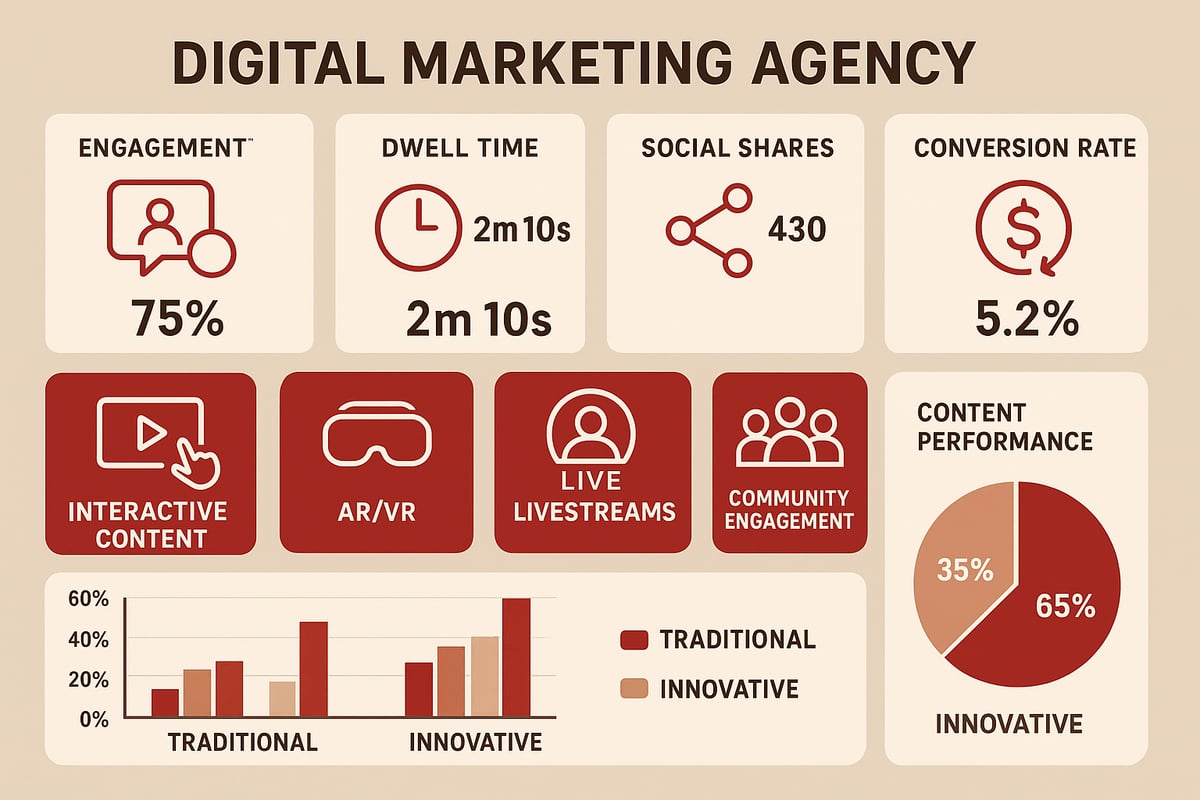
Selecting the right KPIs is essential for tracking the effectiveness of digital marketing agency content. Traditional metrics like page views and clicks are no longer enough. Agencies now measure engagement through dwell time, interactive actions, social shares, and first-party data collected.
Below is a summary of core KPIs for modern content formats:
| Content Type | Key KPIs |
|---|---|
| Interactive Experiences | Engagement Rate, Dwell Time |
| Immersive AR/VR | Time in Experience, Shares |
| Community-Driven | UGC Submissions, Brand Mentions |
| Shoppable Livestreams | Real-Time Purchases, Comments |
Tracking these metrics allows agencies to demonstrate the true value of innovative digital marketing agency content to their clients.
Leveraging Advanced Analytics & AI Tools
To make sense of new content data, agencies are turning to AI-powered analytics platforms. These tools can track sentiment, user intent, and map the entire user journey across multiple touchpoints. Real-time dashboards and predictive analytics provide instant feedback, helping teams optimize campaigns on the fly.
For instance, industry leaders are following Meta's AI-Driven Advertising Automation Plans, integrating AI to automate both content distribution and performance analysis. This approach enables digital marketing agency content to achieve hyper-personalization and scale without sacrificing accuracy.
Attribution Challenges and Solutions
With so many emerging content formats, attribution remains a complex challenge for digital marketing agency content teams. Multi-touch attribution models are critical for understanding which touchpoints drive conversions, especially across devices and platforms.
Agencies are now using advanced tracking systems to follow user interactions from shoppable livestreams or AR experiences all the way to conversion. This granular approach helps optimize budget allocation, ensuring every piece of content contributes to measurable business goals.
Continuous Improvement Through Experimentation
Agile content development cycles are now the norm. Agencies regularly conduct A/B tests on messaging, visuals, and formats to learn what resonates best. This culture of experimentation is essential for maximizing the impact of digital marketing agency content in a rapidly changing environment.
Leaders often draw inspiration from creative marketing strategies that boost visibility, piloting new ideas before scaling them across campaigns. Iterative testing helps agencies quickly adapt and stay ahead of the curve.
Case Studies: Data-Backed Results
Forward-thinking agencies are documenting measurable ROI from innovative digital marketing agency content. For example, interactive campaigns have doubled engagement rates, while shoppable livestreams have driven significant increases in real-time purchases.
The most successful teams prioritize learnings and best practices, using analytics to refine their strategies and consistently deliver value to clients. Continuous analysis ensures that every new content initiative is grounded in data and positioned for long-term success.
Future-Proofing Your Agency’s Content Strategy for 2026 and Beyond
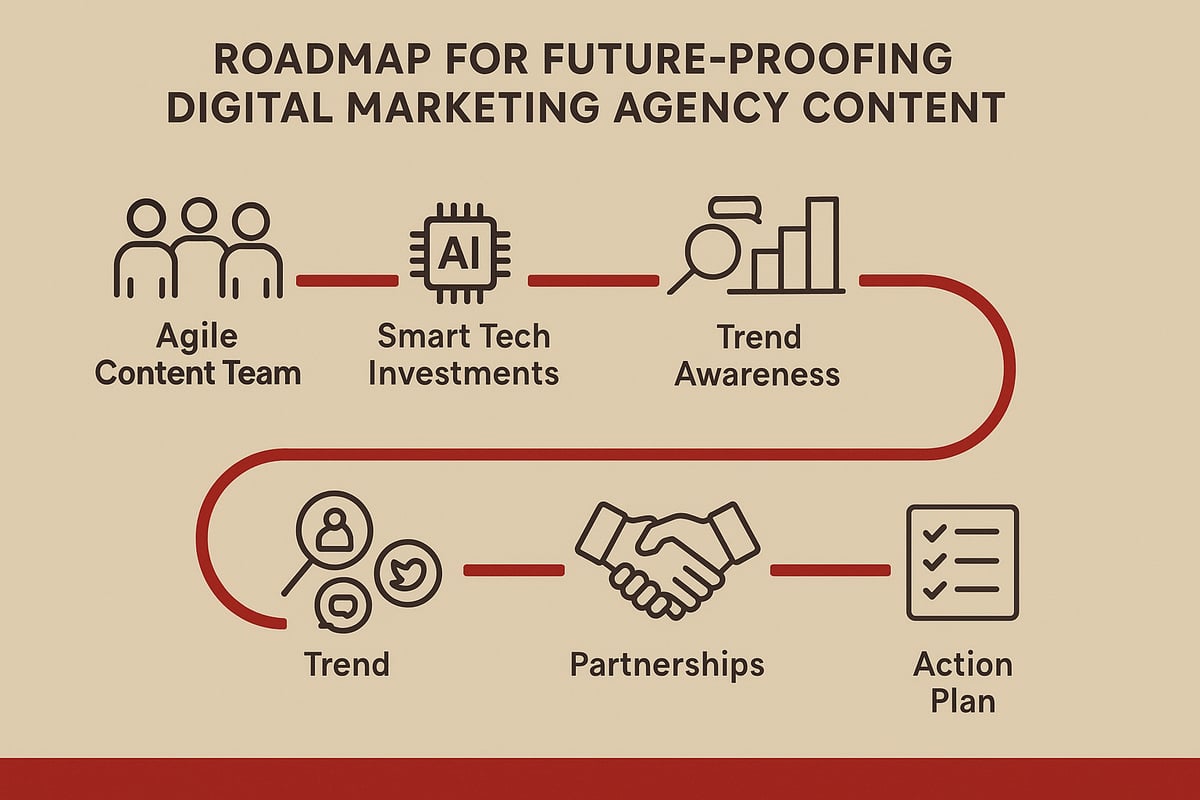
Staying ahead in digital marketing agency content demands a proactive, future-focused approach. The landscape is evolving rapidly, requiring agencies to adapt with agility and vision.
Building an Agile Content Team
To future-proof digital marketing agency content, agencies must prioritize agility in their teams. Cross-functional groups blending creative talent, tech expertise, and analytics skills become essential.
Upskilling is non-negotiable. Invest in ongoing training for AR/VR production, AI-driven content, and audio storytelling. Encourage a culture where rapid iteration, open feedback, and experimentation are the norm. By embedding flexibility and curiosity into team DNA, agencies can quickly pivot their digital marketing agency content as trends shift.
Investing in the Right Technology Stack
Innovation in digital marketing agency content hinges on the right tools. Agencies should evaluate AI content platforms, AR/VR creation suites, and advanced analytics software for maximum impact.
Choosing solutions that integrate seamlessly with existing workflows ensures efficiency. For example, leveraging AI-powered personalization, as shown in recent studies on LLM-Generated Ads: Personalization and Persuasion, can dramatically improve content relevance and engagement. Always assess ROI and scalability when adding new tech to your stack.
Staying Ahead of Trends and Regulations
Monitoring emerging digital marketing agency content trends is vital for long-term growth. Keep a close eye on new platforms, content formats, and evolving consumer preferences.
Regulatory changes, especially regarding data privacy and content ethics, require constant vigilance. Agencies should develop internal processes to ensure compliance and adapt quickly to new policies. Building a culture of experimentation helps teams test ideas early and stay ahead of the curve.
Partnering for Success
Collaboration is a powerful driver for digital marketing agency content innovation. Building strategic partnerships with technology providers, influencers, or niche creators can unlock new audiences and expertise.
Consider co-branded content initiatives or shared campaigns to maximize reach. By pooling resources and creative energy, agencies can deliver fresh, engaging digital marketing agency content that stands out in a crowded market.
Action Plan for 2026
To future-proof your digital marketing agency content strategy, follow this actionable checklist:
- Audit your current content assets and identify gaps.
- Pilot new formats, such as AR/VR or interactive experiences.
- Track performance using advanced analytics.
- Upskill your team in emerging technologies.
- Scale successful initiatives across channels.
A proactive approach ensures your agency remains competitive and ready for what the future brings.
As you look to elevate your agency’s content strategy for 2026, it’s clear that staying ahead means embracing innovation and building genuine connections—values we prioritize every day at Red Van Creative. If you’re curious to see how we’ve already put these forward-thinking ideas into action for a diverse range of clients, I invite you to explore our recent work. Let’s spark some inspiration together and see firsthand what authentic, results-driven digital marketing looks like.
See Our Work / View Our Portfolio