

In 2026, digital businesses stand at a crossroads of opportunity and challenge. The digital landscape is transforming rapidly as new technologies and shifting consumer expectations shape the future.
To stay competitive, digital businesses must embrace innovative strategies, data-driven insights, and operational agility. Only those willing to adapt and evolve will secure their place in the market.
This guide delivers a comprehensive roadmap for building, scaling, and sustaining digital businesses in 2026. Inside, you will find proven strategies, actionable steps, and expert advice to help your business thrive.
We will explore emerging market trends, digital transformation, customer experience, technology adoption, marketing, and how to future-proof your business for long-term success.
Understanding the 2026 Digital Business Landscape
Navigating the 2026 digital business landscape requires a deep understanding of shifting market forces, emerging technologies, and evolving customer expectations. Digital businesses must stay alert to these changes to remain resilient and competitive.
Key Market Trends and Consumer Behaviors
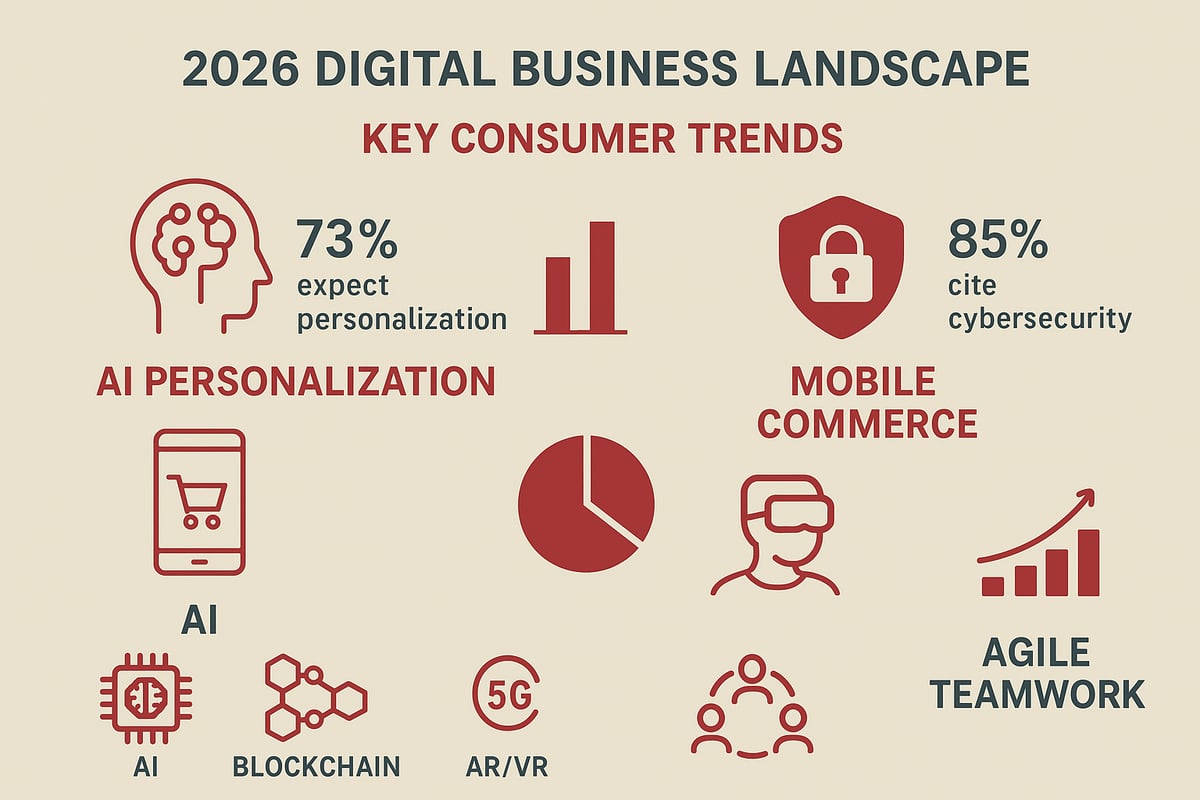
In 2026, digital businesses are shaped by several pivotal trends. AI-driven personalization and automation lead the way, with brands using data to tailor experiences at scale. Privacy and data ethics become more critical as consumers demand transparency. The rise of remote and hybrid workforces drives changes in collaboration and service delivery. Mobile and voice commerce adoption accelerates, with more transactions happening on-the-go. For example, 73% of consumers expect brands to understand their unique needs, showing the demand for hyper-personalized experiences. Global economic fluctuations also force digital businesses to rethink their models and adapt swiftly to stay profitable.
Emerging Technologies Shaping Digital Businesses
The digital businesses of 2026 thrive by embracing transformative technologies. AI, machine learning, and predictive analytics power smarter decision-making and customer engagement. Blockchain increases transparency and security for transactions and data sharing. Augmented and virtual reality offer immersive customer experiences, while 5G networks unlock richer, faster digital interactions. Notably, 60% of e-commerce companies are already leveraging AR to boost conversions. To dive deeper into how these innovations are transforming digital businesses, explore Emerging Technologies Shaping Digital Businesses in 2026. Staying ahead with these tools is essential for any digital business looking to outpace the competition.
Regulatory and Security Considerations
Compliance and security are top priorities for digital businesses in 2026. New regulations, such as updated GDPR and evolving US state laws, require businesses to manage data with care. The threat landscape grows more complex, making robust cybersecurity and risk management critical. Adhering to accessibility standards like WCAG 3.0 ensures inclusivity for all users. According to Gartner, 85% of businesses cite cybersecurity as their top concern this year. Digital businesses that prioritize these areas not only protect themselves but also build trust and credibility with their customers.
Competitive Landscape and Market Saturation
The competitive landscape for digital businesses is more crowded than ever. Digital-first startups proliferate, intensifying the fight for consumer attention. Niche opportunities exist, but mass-market competition remains fierce. Brand differentiation is vital for standing out and capturing market share. Data from CB Insights shows that 40% of digital businesses fail due to a lack of market fit, emphasizing the importance of understanding your audience and offering unique value. Those that invest in brand building and innovation are better positioned to succeed in this saturated environment.
Adaptation and Agility as Success Factors
Adaptation and agility define successful digital businesses in 2026. Rapid pivots in business models, adoption of agile methodologies in product development, and continuous feedback loops are essential for thriving amid uncertainty. McKinsey reports that businesses with agile operations grow revenue 37% faster than their less nimble peers. Embracing change and fostering a culture of innovation enable digital businesses to respond quickly to shifts in technology, consumer behavior, and market conditions, ensuring long-term sustainability.
Laying the Foundation: Planning and Positioning for Success
Setting up digital businesses for long-term growth requires strategic planning, a future-ready model, and robust positioning. The foundation you lay now directly impacts your ability to scale, adapt, and outperform competitors in a fast-evolving landscape.
Defining a Future-Proof Business Model
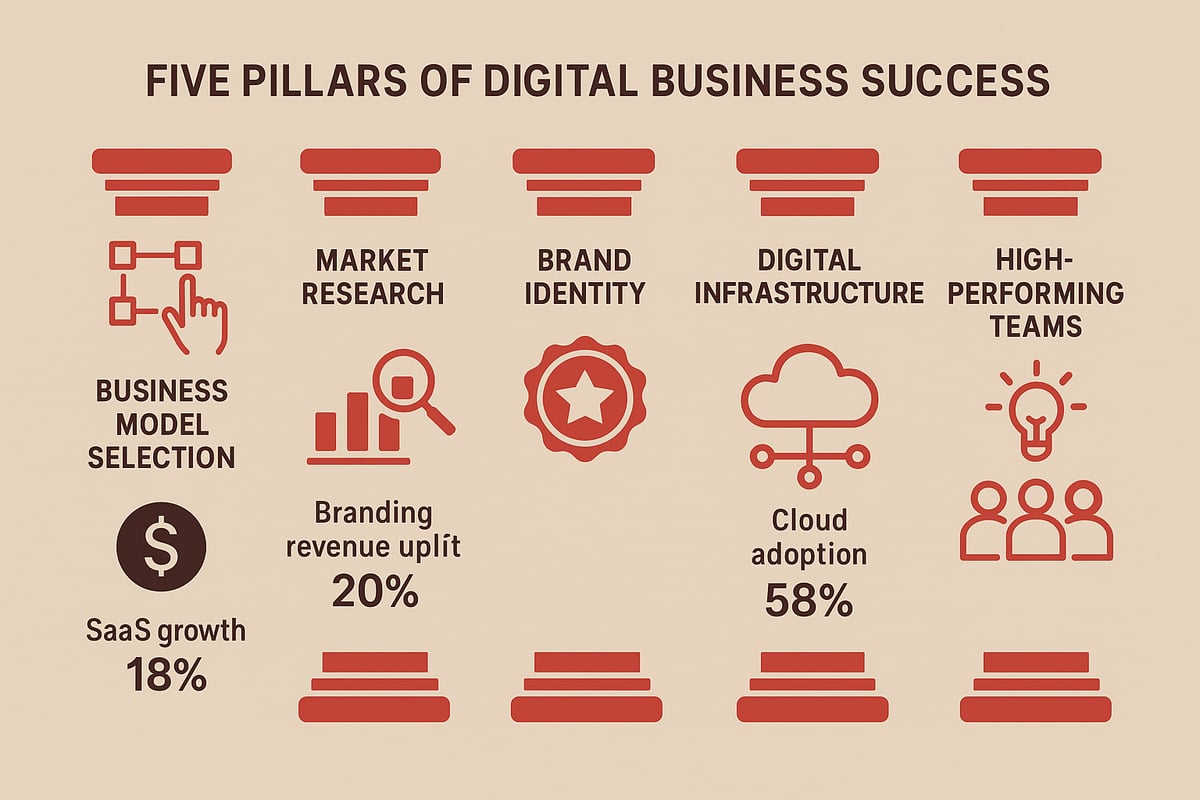
The first step for digital businesses is selecting a business model that can withstand market shifts and evolving consumer needs. Popular options include D2C, B2B, SaaS, marketplace, and hybrid models.
Subscription and recurring revenue strategies are becoming essential, providing predictability and resilience. For example, SaaS models saw an 18% year-over-year growth in 2025, highlighting the scalability and appeal of recurring income for digital businesses.
Choosing the right model means evaluating your value proposition, target market, and growth trajectory. Consider how your business can adapt to future trends and shifts in technology.
Market Research and Opportunity Identification
Comprehensive market research is critical for digital businesses aiming to uncover growth opportunities and reduce risk. Leveraging big data and analytics tools enables you to spot emerging trends, analyze competitors, and identify underserved customer segments.
Successful digital businesses conduct ongoing research, not just at launch. Techniques like SWOT analysis and competitive benchmarking reveal where your strengths align with market gaps. According to Forbes, 64% of startups that thrive engage in continuous market research, ensuring they stay ahead of shifting demands.
Break down your research process into actionable steps:
- Use analytics platforms for real-time insights.
- Map competitor offerings and strategies.
- Survey target customers to validate assumptions.
Building a Distinctive Digital Brand
A compelling brand identity is a key differentiator for digital businesses in crowded markets. Start with a clear brand story and mission that resonates across all digital channels. Invest in visual identity and maintain consistency in your messaging, tone, and design.
Consistency is not just aesthetic—it drives measurable results. Studies show that consistent branding can increase revenue by 23%. To understand why this matters, explore building brand consistency online, which details how cohesive branding strengthens digital businesses.
Remember, your brand should be instantly recognizable and trustworthy at every touchpoint.
Developing a Scalable Digital Infrastructure
Digital businesses require scalable, reliable infrastructure to support growth and agility. Cloud-based solutions are now the standard, offering flexibility to adapt as needs evolve. Choosing the right e-commerce, CMS, or CRM platform is crucial for seamless operations.
API integrations and automation tools streamline workflows and improve efficiency. According to Flexera, 92% of digital businesses now leverage cloud infrastructure, underscoring its importance for modern enterprises.
Consider a checklist for infrastructure readiness:
- Cloud storage and hosting
- Automated backup and security protocols
- Integration capabilities for future tech adoption
Assembling a High-Performing Digital Team
Building a diverse, skilled team is essential for digital businesses to innovate and execute effectively. Decide between in-house and outsourced talent based on your needs and growth goals. Key roles include digital strategists, data analysts, UX/UI designers, and developers.
A culture of learning and innovation helps retain top talent and drives results. Harvard Business Review found that teams with a broad digital skill set outperform peers by 35%.
Encourage professional development and cross-functional collaboration to keep your team agile and responsive to change.
Digital Transformation: Adopting the Right Technologies
Digital transformation is the engine driving success for digital businesses in 2026. Embracing the right technology stack enables companies to innovate, scale, and stay competitive in a rapidly changing landscape. From AI to data security, these pillars set the stage for sustainable growth in digital businesses.
Core Technologies for 2026 Digital Businesses
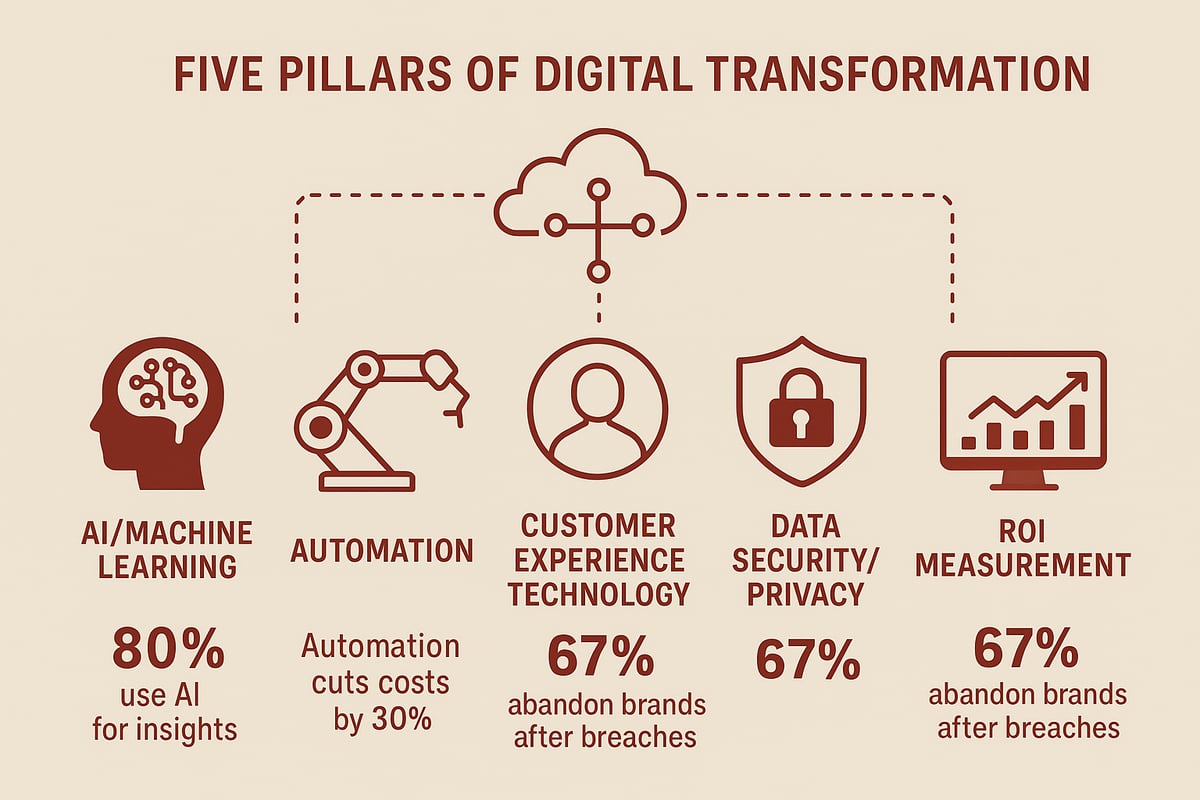
Staying ahead in 2026 requires digital businesses to adopt foundational technologies that enable agility and innovation. Artificial intelligence and machine learning drive personalized experiences and automate complex workflows. Cloud computing offers unmatched scalability and flexibility for digital businesses, allowing rapid deployment and easy integration with other tools. Advanced analytics empower leaders to make data-driven decisions, identifying trends and optimizing performance in real time.
According to PwC, 80 percent of top-performing digital businesses utilize AI to extract customer insights. For those seeking a comprehensive overview of digital-first strategies and infrastructure, the Digital-First Business Success Strategies IDC report offers valuable guidance on building a strong digital foundation.
Automation and Process Optimization
Automation is a game changer for digital businesses, streamlining operations and boosting efficiency. Robotic process automation (RPA) handles repetitive tasks, reducing manual errors and freeing up teams to focus on higher-value work. Workflow automation tools support marketing, sales, and customer support, ensuring smoother handoffs and quicker response times.
By leveraging automation, digital businesses cut operational costs by an average of 30 percent, as reported by Deloitte. This focus on process optimization not only improves productivity but also enhances adaptability in a fast-paced market.
Enhancing Customer Experience with Technology
Exceptional customer experience is a key differentiator for digital businesses. Omnichannel strategies ensure customers enjoy seamless interactions across web, mobile, and social platforms. Personalization engines use AI to tailor content and recommendations, while chatbots provide instant, round-the-clock support.
The impact is significant: Epsilon found that digital businesses offering personalized customer experiences can increase retention rates by 45 percent. Prioritizing technology that enhances every touchpoint helps companies build lasting relationships and stand out from competitors.
Data Security and Privacy Solutions
For digital businesses, protecting customer data is both a responsibility and a competitive advantage. End-to-end encryption, secure cloud storage, and robust authentication protocols safeguard sensitive information. Compliance with evolving global privacy regulations, like GDPR and CCPA, is essential for maintaining trust and avoiding costly penalties.
Implementing a zero-trust security model further strengthens defenses, ensuring access is only granted when necessary. Cisco reports that 67 percent of consumers will abandon digital businesses after a data breach, making security investments mission critical.
Measuring ROI on Technology Investments
To maximize the value of digital transformation, digital businesses must track the return on every technology investment. Setting clear KPIs—such as cost savings, revenue growth, or customer satisfaction—enables leaders to monitor progress and adjust strategies as needed.
| KPI | Sample Metric | Benefit |
|---|---|---|
| Cost Efficiency | Operational savings | Lower overhead, reinvestment opportunities |
| Revenue Growth | Sales increase | Scalable, sustainable expansion |
| Customer Satisfaction | Retention rates | Stronger loyalty, higher CLV |
According to Accenture, digital businesses that consistently measure ROI are twice as likely to reach their targets, ensuring that technology investments drive real, measurable results.
Customer-Centric Strategies for Growth
Customer-centricity is the foundation for digital businesses aiming to drive sustainable growth in 2026. As customer expectations evolve, putting their needs at the center of every decision is essential. This section explores practical strategies for mapping the customer journey, leveraging personalization, building trust, fostering community, and retaining loyal clients.
Mapping the Digital Customer Journey
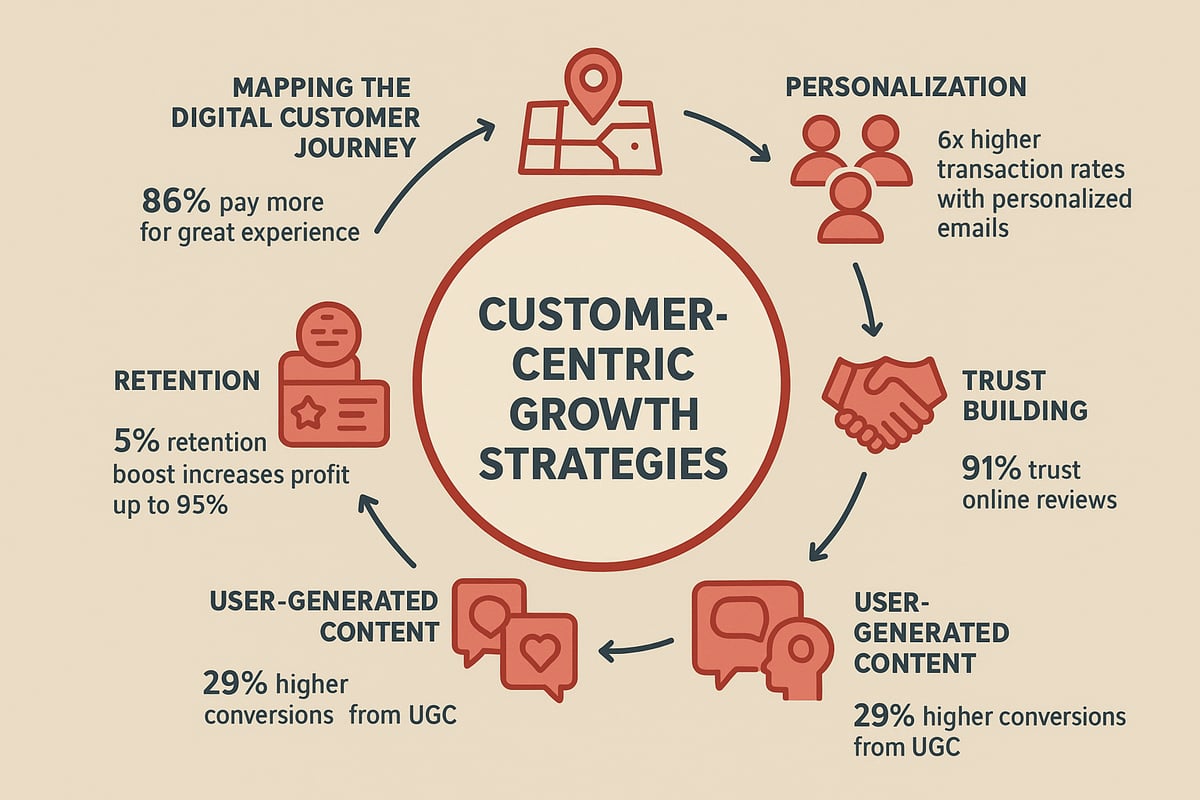
Understanding the digital customer journey is crucial for digital businesses seeking growth. The journey includes every touchpoint, from initial brand awareness to post-purchase support. Identifying key moments and pain points helps businesses create seamless experiences.
Start by mapping out all interactions, such as website visits, social media engagements, and customer service contacts. Use analytics tools to track behavior and gather feedback at each stage. Addressing friction points not only improves satisfaction but also increases loyalty.
A well-defined journey enables digital businesses to tailor their offerings and communications to different customer needs, leading to higher engagement and conversion rates.
Personalization and Segmentation Tactics
Personalization is now a standard expectation, not a luxury. Digital businesses use dynamic content, product recommendations, and behavioral segmentation to deliver relevant experiences. By analyzing data, companies can segment audiences based on demographics, preferences, and online behavior.
For example, personalized emails and targeted messaging significantly boost engagement and sales. According to Experian, personalized emails deliver six times higher transaction rates. In highly competitive environments, personalized marketing in competitive markets gives digital businesses an edge by making every interaction feel unique.
Effective segmentation allows digital businesses to allocate resources efficiently and nurture leads more effectively, driving measurable growth.
Building Trust and Authentic Relationships
Trust is a vital asset for digital businesses. Transparent communication about data use and business practices reassures customers and strengthens brand loyalty. Sharing clear privacy policies and being upfront about changes builds confidence.
Social proof, such as customer reviews, testimonials, and influencer endorsements, further enhances trust. In fact, 91 percent of consumers trust online reviews as much as personal recommendations. Encouraging satisfied customers to share their experiences amplifies authenticity.
To maintain strong relationships, digital businesses should engage with customers regularly, respond to feedback, and show appreciation through loyalty programs or exclusive offers.
Leveraging Community and User-Generated Content
Communities are powerful drivers of engagement for digital businesses. Fostering online forums, social media groups, or brand communities allows customers to connect, share ideas, and support one another.
User-generated content (UGC), including reviews, testimonials, and social media posts, acts as authentic endorsements. Digital businesses benefit from UGC by featuring it on their websites and marketing campaigns. According to Yotpo, UGC increases conversion rates by 29 percent.
Encouraging customers to contribute content not only builds community but also provides valuable insights that can inform product development and marketing strategies.
Customer Support and Retention Strategies
Exceptional support and retention programs are essential for digital businesses to thrive. Multichannel support options, such as live chat, email, and social media, ensure customers can reach out on their preferred platforms.
Proactive retention strategies, like loyalty rewards and personalized follow-ups, keep customers engaged. Even a small improvement in retention can have a big impact: Bain & Company found that increasing retention by five percent boosts profits by up to 95 percent.
Digital businesses that prioritize support and retention enjoy higher lifetime value, stronger referrals, and a solid foundation for long-term success.
Digital Marketing and Acquisition in 2026
In 2026, digital businesses are navigating a marketing landscape shaped by rapid technology changes and shifting consumer expectations. To stand out, it is vital to embrace integrated marketing strategies, leverage data-driven insights, and prioritize authentic engagement across every channel.
Omnichannel Marketing Approaches
Omnichannel marketing is at the heart of success for digital businesses in 2026. Integrating social, search, email, and content marketing ensures your brand delivers a seamless experience wherever customers engage.
- Synchronize messaging and branding across all touchpoints.
- Use unified analytics to track customer journeys.
- Adapt campaigns in real time based on data insights.
Omnichannel campaigns drive 91% higher year-over-year retention, highlighting their impact. For practical tips, review these online marketing strategies for businesses, which are essential for building cohesive campaigns.
Content Marketing and Thought Leadership
Content remains a cornerstone for digital businesses aiming to build authority and trust. In 2026, audiences demand high-value, evergreen resources that inform and inspire.
- Focus on long-form guides, industry reports, and actionable how-tos.
- Embrace video, podcasts, and interactive media to boost engagement.
- Encourage team members to share expertise through guest posts and webinars.
A strong content strategy positions digital businesses as industry leaders and attracts organic traffic. Remember, 70% of buyers prefer articles over traditional ads when learning about new products.
SEO and Voice Search Optimization
SEO is evolving rapidly as voice and mobile search become dominant. Digital businesses must refine their keyword strategies and optimize for natural language queries.
- Use topic clusters and semantic search to capture broader intent.
- Structure content for featured snippets and voice assistants.
- Prioritize mobile performance and fast load times.
By 2026, half of all searches will be voice-based. Explore the top digital marketing trends for 2026 to stay ahead with the latest SEO tactics and future-proof your approach.
Paid Advertising and Performance Marketing
Paid advertising is increasingly driven by AI and automation, allowing digital businesses to maximize reach and return on ad spend.
- Use programmatic platforms to target audiences with precision.
- Employ dynamic creative for personalized ad experiences.
- Monitor and adjust bids using real-time performance data.
Businesses leveraging AI in ad buying see 30% higher ROAS, making performance marketing a must-have in digital acquisition strategies.
Influencer and Partnership Marketing
Influencer and partnership marketing offer digital businesses new avenues to build trust and reach niche communities. Success depends on authentic collaborations and measurable outcomes.
- Identify micro-influencers with loyal, relevant followings.
- Structure partnerships with clear goals and transparent reporting.
- Track influencer ROI using unique codes and performance dashboards.
With 89% of marketers reporting comparable or better ROI from influencers than other channels, this strategy is set to remain a key pillar in digital business growth.
Future-Proofing Your Digital Business
Ensuring your digital businesses can thrive in tomorrow’s market requires a proactive approach. By embracing innovation, preparing for risks, prioritizing ethics, and planning for global growth, you can build resilience and long-term success.
Continuous Innovation and Agility
Continuous innovation is the heartbeat of digital businesses in 2026. Companies that foster a culture of experimentation, rapid prototyping, and learning can quickly respond to market changes. Adopting agile methodologies allows teams to pivot fast, test new ideas, and implement feedback loops efficiently.
Leveraging cutting-edge tools, including generative AI, helps unlock new business models and drive value. To understand the evolving impact of AI, explore Generative AI’s Impact on Business and Society for insights on how this technology shapes digital businesses. Firms that prioritize innovation outperform competitors and set the pace in rapidly changing markets.
Scenario Planning and Risk Management
Scenario planning is essential for digital businesses to withstand disruptions. Identifying potential threats, from cybersecurity breaches to supply chain issues, helps leaders prepare and adapt quickly. Establishing business continuity plans ensures digital operations remain resilient during crises.
Regularly testing these plans and updating them based on emerging risks is crucial. Effective risk management includes cross-functional teams and transparent communication. By integrating scenario planning into regular strategy sessions, digital businesses can minimize downtime and protect critical assets.
Sustainability and Ethical Considerations
Sustainability is no longer optional for digital businesses. Implementing green IT practices, reducing energy consumption, and choosing eco-friendly vendors all contribute to a responsible operation. Ethical considerations, especially around AI and data use, build trust with stakeholders.
Consumers increasingly favor brands that demonstrate social responsibility. Embracing ethical AI, transparent data policies, and responsible sourcing not only future-proofs your company but also enhances brand reputation. Digital businesses that balance profit with purpose will stand out in an increasingly values-driven marketplace.
Scaling and Global Expansion
Scaling digital businesses requires careful planning and adaptability. Localizing products and marketing ensures resonance with diverse audiences. Understanding international regulations, from privacy laws to tax codes, is vital for smooth expansion.
Successful global growth hinges on robust infrastructure and strong local partnerships. Digital businesses should leverage analytics to identify high-potential markets and tailor strategies accordingly. By planning for scalability from the start, organizations can seize new opportunities and achieve sustainable, global success.
As we look ahead to 2026, it is clear that building a resilient digital business means more than just staying on top of trends—it is about forging genuine connections and delivering consistent value, just as we discussed throughout this guide. If you are ready to see how strategic branding, effective website design, and targeted marketing come together for real-world results, I invite you to explore examples from businesses that have thrived with a thoughtful, holistic approach. You can discover how these strategies look in action by checking out our recent projects here:
See Our Work / View Our Portfolio