
In 2026, choosing the right digital agency for small businesses is more critical than ever. The right partner can drive growth, while the wrong choice can waste resources and stall your momentum.
This guide is designed to help small business owners confidently select a digital agency for small businesses that aligns with unique goals and challenges. With so many options available, making an informed decision is key.
You will discover how to navigate the evolving digital agency landscape, assess your business needs, evaluate potential partners, avoid common mistakes, and build a partnership that delivers real results. Ready to unlock your business’s growth potential? Follow this step-by-step guide.
Understanding the Digital Agency Landscape in 2026
Choosing a digital agency for small businesses in 2026 means navigating a rapidly shifting landscape. The market is evolving as new technologies, service models, and customer demands redefine what agencies offer and how they deliver results. To make informed decisions, small business owners must understand the current trends, agency types, technological advancements, and key statistics shaping the industry.
Key Trends Shaping Digital Agencies
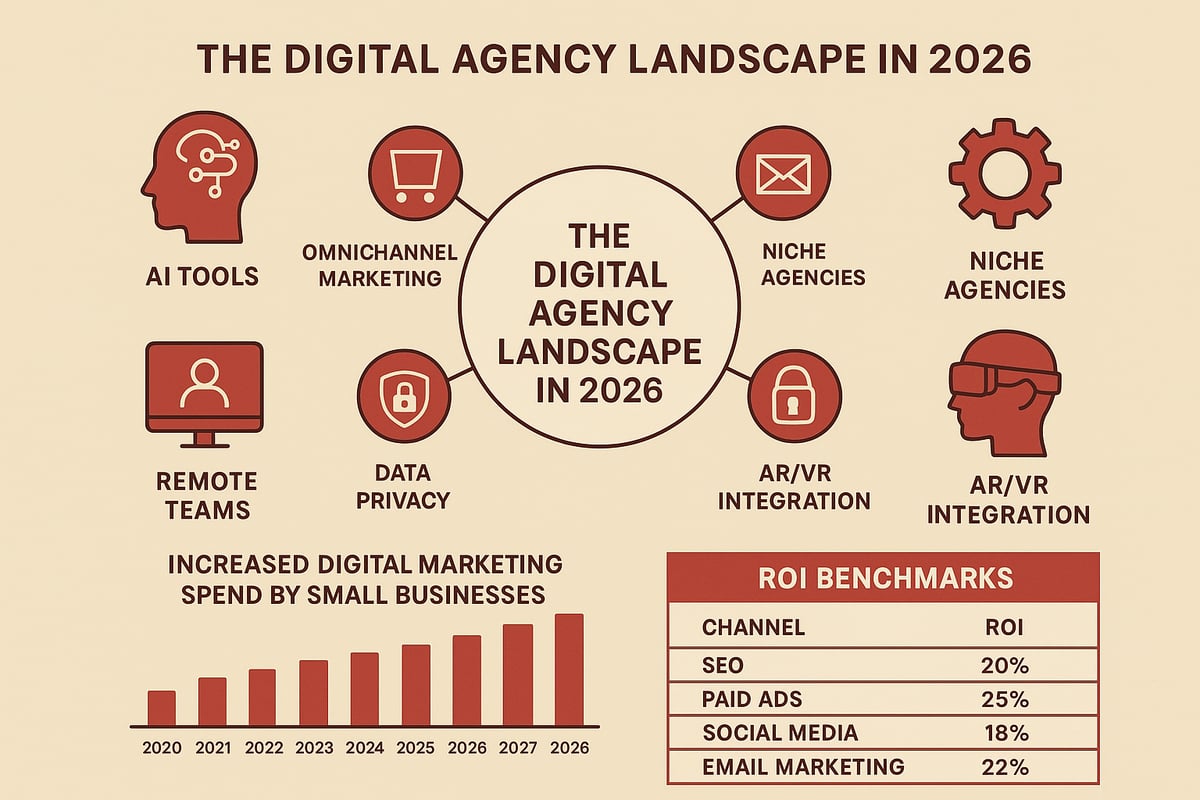
In 2026, the digital agency for small businesses is influenced by several defining trends. AI-driven marketing and automation tools are now mainstream, enabling smarter targeting and campaign management. Omnichannel strategies ensure brand consistency across platforms, while niche agencies specialize in sectors like healthcare or retail.
Remote and hybrid models allow agencies to tap into global talent, increasing flexibility for clients. Data privacy and compliance are not just regulatory requirements, but differentiators for agencies. For a deeper dive into these trends, see Emerging digital agency trends 2026.
Types of Digital Agencies and Their Core Services
A digital agency for small businesses can be full-service or specialized. Full-service agencies offer everything from SEO, PPC, and social media to branding and analytics. Specialized agencies, on the other hand, focus on areas like content marketing, web development, or paid advertising.
Core services typically include:
- Website development and design
- Branding and visual identity
- Content creation and strategy
- Data analytics and reporting
- Targeted advertising campaigns
Agencies such as The Sasha Group are recognized for tailoring these services to the unique needs of small businesses, emphasizing flexibility and measurable outcomes.
The Impact of Emerging Technologies
Emerging technologies are transforming the digital agency for small businesses. AI is now widely used for content creation, campaign optimization, and customer segmentation. Advanced analytics and predictive modeling allow agencies to anticipate trends and make proactive recommendations.
Integration of voice search, AR/VR experiences, and chatbots enhances user engagement and conversion rates. These innovations help small businesses compete with larger brands by leveling the digital playing field and opening new channels for growth.
Statistics on Small Business Digital Marketing in 2026
The demand for a digital agency for small businesses is reflected in industry statistics. According to recent reports:
| Metric | 2026 Value |
|---|---|
| % of small businesses increasing spend | 67% |
| Average ROI on agency-led campaigns | 4.5x |
| Top pain points | Budget, expertise |
Many small businesses cite budget constraints and limited in-house expertise as key challenges. However, those investing in agency partnerships report higher ROI and stronger brand growth. These numbers underscore the value of choosing the right agency in a competitive digital landscape.
Step 1: Assessing Your Small Business Needs and Goals
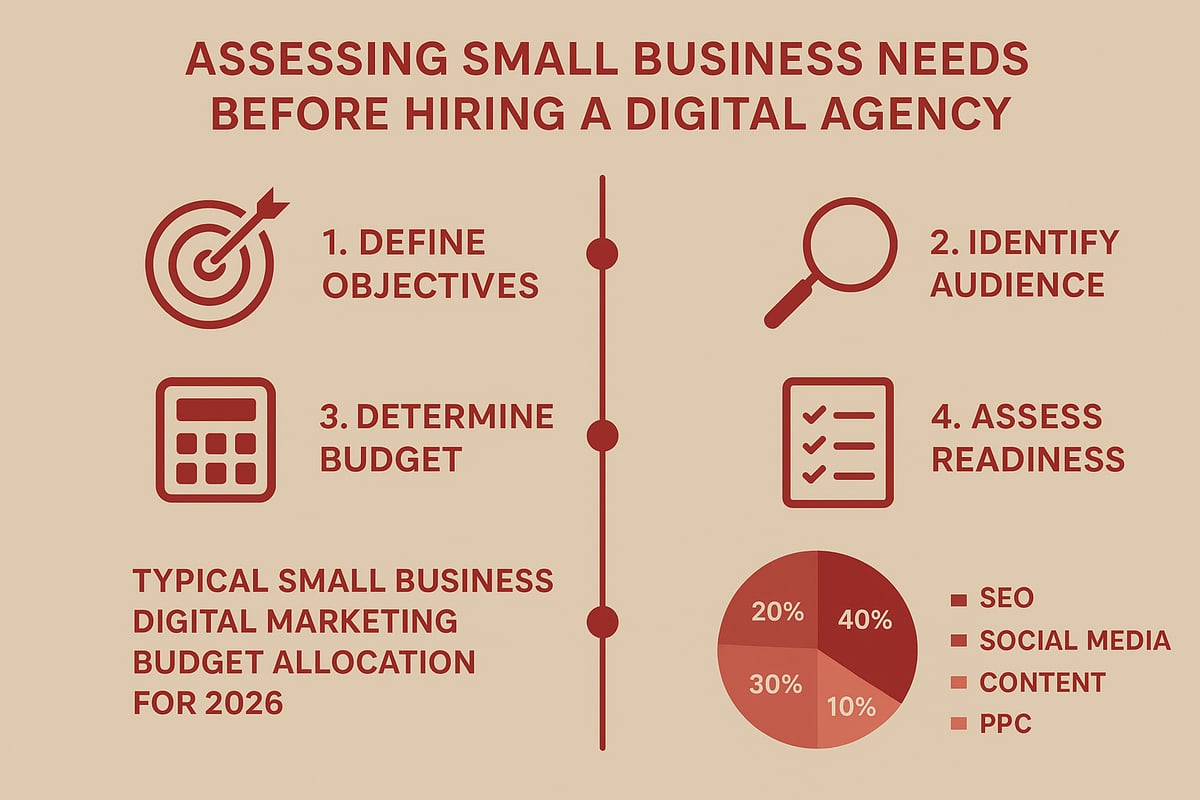
Understanding your unique needs is the first and most critical step in choosing a digital agency for small businesses. This stage lays the groundwork for a partnership that drives real results. By clarifying objectives, knowing your market, setting a realistic budget, and preparing your internal team, you set the stage for agency success.
Defining Clear Objectives for Agency Partnership
Start by defining what you want to achieve with a digital agency for small businesses. Are you aiming for more leads, increased sales, or greater brand awareness? Set SMART goals—Specific, Measurable, Achievable, Relevant, and Time-bound—to keep your agency partnership focused.
Short-term wins, like a spike in website traffic, should be balanced with long-term growth strategies that build brand equity. For example, a local retail shop might aim to double online sales within a year while also establishing a stronger digital presence in the community.
Identifying Your Target Audience and Market Position
Knowing your audience is essential before engaging a digital agency for small businesses. Develop customer personas to understand who your ideal clients are, what motivates them, and how they interact with your brand.
Create journey maps to visualize the steps customers take from discovery to purchase. Analyze your competitors to find gaps and opportunities, and clarify your unique value proposition. Utilize audience research tools and segmentation platforms to ensure your marketing efforts reach the right people at the right time.
Budgeting for Digital Agency Services
Budgeting is a critical part of selecting a digital agency for small businesses. Agencies may offer various pricing models, including retainers, project-based fees, or performance-based agreements. Allocate your budget strategically, dividing funds between agency fees and ad spend.
Industry benchmarks suggest small businesses are increasing digital marketing investments each year. For up-to-date figures on budgets, ROI, and trends, review small business digital marketing statistics for 2026. This data can help set realistic expectations and guide your financial planning.
Internal Readiness and Resource Assessment
Evaluate your internal resources before partnering with a digital agency for small businesses. Assess your team’s skills and capacity. Assign a dedicated point of contact to streamline communication with the agency.
Prepare essential assets, such as brand guidelines and creative materials, to accelerate onboarding. A well-organized internal team can collaborate more smoothly and make the most of your agency relationship.
Step 2: Researching and Shortlisting Digital Agencies
Selecting the right digital agency for small businesses is a pivotal step in building a successful digital marketing strategy. With countless agencies vying for your attention, a structured approach to research and shortlisting can help you focus on those best suited to your unique needs.
Where to Find Reputable Digital Agencies
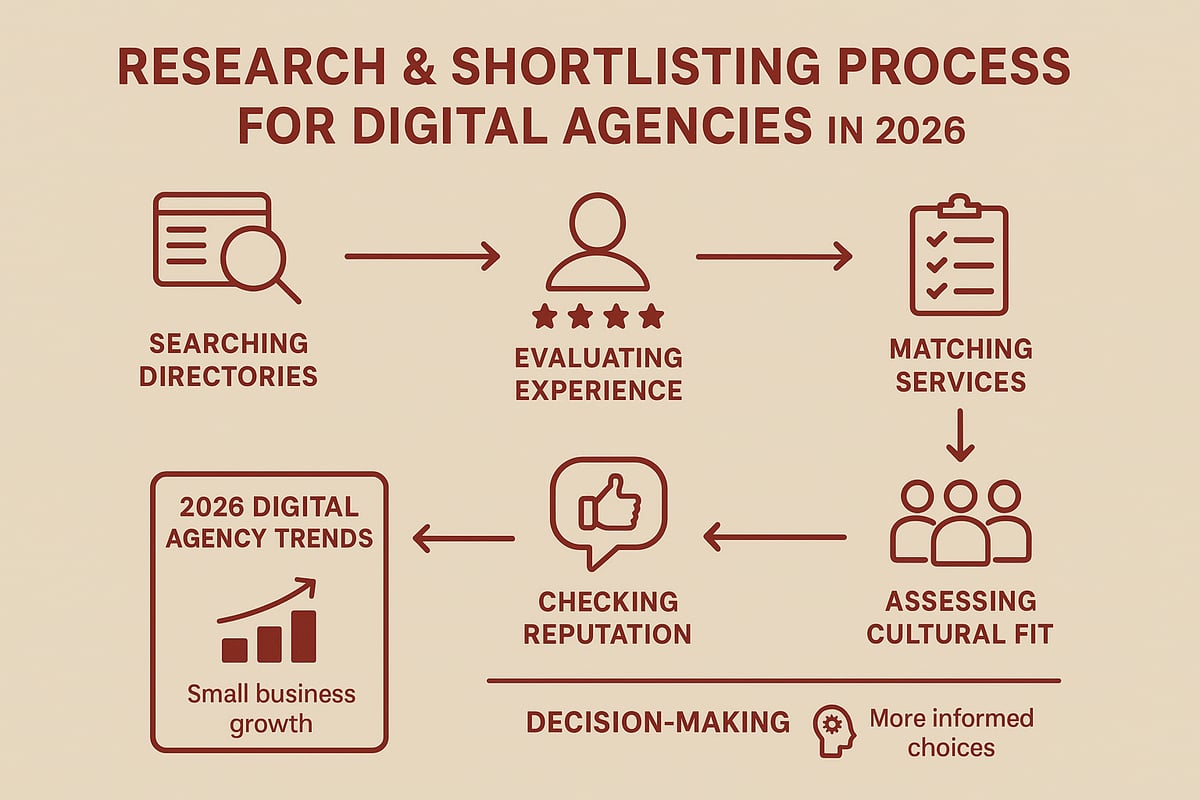
Begin your search for a digital agency for small businesses by exploring well-established directories and professional networks. Platforms like Clutch and UpCity list verified agencies, complete with reviews and case studies. Local business organizations and chambers of commerce often maintain trusted partner lists, which can be especially valuable for region-specific needs.
Attend digital marketing events and webinars to connect with agency representatives directly. Industry referrals from peers who have worked with a digital agency for small businesses can provide authentic insights that go beyond online reviews. For those in Texas, exploring specialized solutions like small business marketing in The Woodlands can uncover agencies with local expertise and proven results.
Evaluating Agency Experience with Small Businesses
Experience matters when choosing a digital agency for small businesses. Look for agencies that have a strong portfolio of work with businesses similar in size and scope to yours. Case studies and testimonials can reveal how an agency has helped companies overcome common challenges and achieve measurable growth.
Request references from clients in your industry to understand the agency’s approach and reliability. Agencies with a track record of supporting small businesses are more likely to anticipate your needs and tailor their strategies effectively. Pay attention to examples where the digital agency for small businesses has demonstrated flexibility and creative problem-solving.
Assessing Core Competencies and Service Fit
Matching your business goals with the right digital agency for small businesses is essential. Assess each agency’s key competencies, such as SEO, PPC, website design, branding, and content creation. Verify their certifications, technical expertise, and knowledge of industry-specific tools.
Ask for sample work or a portfolio review to gauge the quality and relevance of their services. A digital agency for small businesses should be able to articulate how their offerings align with your objectives, whether you need a comprehensive strategy or specialized support in a particular area.
Reviewing Agency Reputation and Transparency
A reputable digital agency for small businesses will have a history of transparent communication and ethical business practices. Check third-party review sites for feedback on reporting accuracy, billing clarity, and overall client satisfaction. Agencies that are open about their processes and provide clear, regular updates are more likely to build lasting partnerships.
Watch out for red flags such as overpromising results or vague pricing structures. Transparency should extend to all aspects of the relationship, ensuring you understand what to expect from your digital agency for small businesses at every stage.
Comparing Agency Approaches and Culture
The best digital agency for small businesses is not just a vendor, but a strategic partner. Consider the agency’s values, communication style, and willingness to immerse themselves in your business’s vision. Schedule introductory calls to assess their responsiveness and cultural fit.
A good match goes beyond technical skill—it involves shared goals and a commitment to collaboration. Prioritize agencies that demonstrate a genuine interest in your success and offer flexibility to adapt as your business evolves.
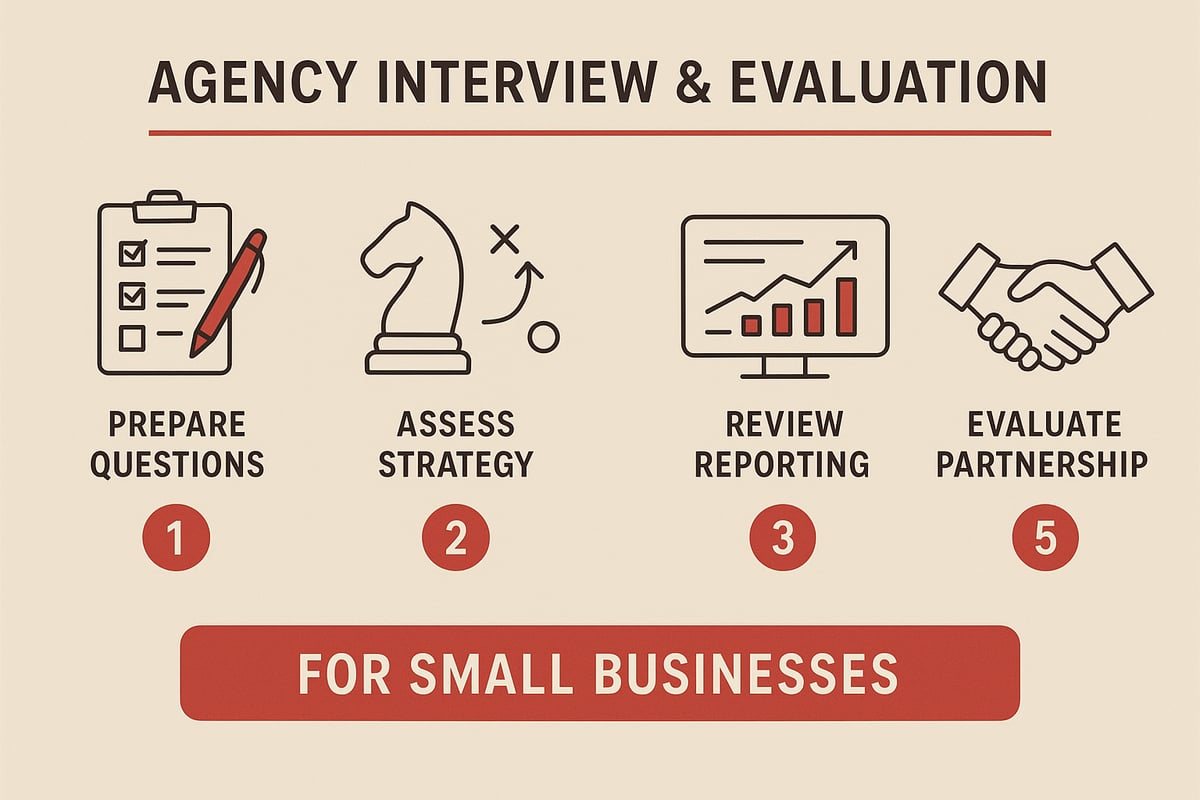
Step 3: Conducting Effective Agency Interviews and Evaluations
Selecting the right digital agency for small businesses hinges on a structured interview and evaluation process. This step ensures you make data-driven decisions and set the stage for a successful partnership. Let’s explore how to approach each aspect of the interview process with confidence.
Preparing for Productive Agency Meetings
Preparation is crucial when interviewing a digital agency for small businesses. Start by creating an interview checklist that outlines your objectives, must-have services, and preferred outcomes.
Share your business brief, including goals, target audience, and challenges, in advance. This helps agencies tailor their responses and demonstrate relevant expertise.
Ask focused questions such as, “How do you measure ROI?” or “What does your onboarding process look like?” By clarifying expectations early, you lay a strong foundation for a transparent relationship with your chosen digital agency for small businesses.
Evaluating Strategic Thinking and Customization
A top digital agency for small businesses should offer more than off-the-shelf solutions. Assess their ability to customize strategies based on your business goals, market, and budget.
Look for evidence of data-driven decision-making and creative problem-solving. Agencies that propose unique approaches, rather than generic packages, signal a higher level of commitment.
To dive deeper into what effective agency strategies look like, review Digital marketing agency content strategies for actionable examples and evaluation tips. This ensures your partnership is built on innovation and measurable impact.
Understanding Reporting, Analytics, and KPIs
Transparency in reporting is non-negotiable for any digital agency for small businesses. Clarify which key performance indicators (KPIs) will be tracked and how frequently you’ll receive updates.
Discuss the analytics tools and dashboards the agency uses, such as Google Analytics or custom reporting platforms. Request sample reports to ensure you understand the format and depth of insights provided.
Regular, actionable performance updates help you evaluate campaign progress and hold your digital agency for small businesses accountable for results.
Discussing Contracts, Pricing, and Deliverables
Reviewing contract terms and pricing models is essential when finalizing your choice of digital agency for small businesses. Examine the scope of work, service level agreements (SLAs), and exit clauses to avoid surprises.
Understand the timeline for deliverables and how revisions are handled. Negotiate payment schedules that align with your cash flow and project milestones.
Establishing clear expectations at this stage helps prevent misunderstandings and fosters a collaborative partnership with your digital agency for small businesses.
Checking for Long-Term Partnership Potential
A successful relationship with a digital agency for small businesses is built on ongoing support and mutual growth. Ask about the agency’s approach to continuous optimization, scalability, and proactive communication.
Look for dedicated account managers or teams who will champion your brand and adapt strategies as your business evolves. Agencies that prioritize long-term value over short-term wins demonstrate a true partnership mindset.
By selecting a digital agency for small businesses that aligns with your vision, you set your company up for sustained success.
Step 4: Avoiding Common Mistakes When Choosing a Digital Agency
Selecting the right digital agency for small businesses is a pivotal decision that can shape the future of your company. Many owners fall into avoidable traps during the selection process. By understanding these common mistakes, you can steer clear of costly missteps and ensure your investment delivers sustainable results.
Mistake 1: Prioritizing Quantity Over Quality
A frequent error is choosing a digital agency for small businesses based solely on the number of deliverables or the lowest price. High content volume or bargain rates may seem attractive, but quality and strategic impact matter far more. An effective campaign often hinges on a single, well-executed idea rather than endless generic posts. For instance, Dollar Shave Club’s success came from one iconic video, not sheer output. Before committing, assess the agency’s track record for creating meaningful, results-driven campaigns, not just content volume.
If you want to dig deeper into the pitfalls of this approach, explore these marketing mistakes to avoid when expanding.
Mistake 2: Overlooking Industry Experience
Not all agencies are equipped to serve every sector. When evaluating a digital agency for small businesses, ensure they have direct experience in your industry. Agencies familiar with your market can anticipate challenges, regulatory requirements, and audience preferences. Review their client portfolios and seek case studies relevant to your field. Avoid agencies whose expertise lies primarily with large enterprises or unrelated industries, as their strategies may not translate to your needs. Sector knowledge translates to quicker wins and fewer costly missteps.
Mistake 3: Ignoring Long-Term Value and Fit
Short-term gains are tempting, but longevity matters. Some agencies focus on quick wins rather than nurturing long-term growth. When considering a digital agency for small businesses, prioritize those that demonstrate a partnership mindset. Look for agencies that invest time in understanding your goals and are committed to ongoing optimization. Evaluate their approach to communication, collaboration, and shared vision. Agencies like The Sasha Group are known for fostering enduring relationships, which often leads to better outcomes and sustained success.
Mistake 4: Failing to Set Clear Expectations and KPIs
Vague objectives and poor communication can derail even the most promising partnerships. When partnering with a digital agency for small businesses, set explicit goals, timelines, and performance indicators from the outset. Establish a schedule for regular check-ins and transparent reporting. Clearly define what success looks like for your campaigns, and make sure both parties agree on the metrics tracked. This alignment helps prevent misunderstandings and ensures the agency is accountable for delivering measurable results.
Step 5: Setting the Stage for a Successful Agency Partnership
Building a lasting partnership with a digital agency for small businesses requires a proactive, organized approach from day one. The right foundation ensures your collaboration delivers measurable growth and adapts as your business evolves.
Onboarding and Knowledge Transfer
Effective onboarding is the first step toward a productive relationship with a digital agency for small businesses. Begin by sharing your brand guidelines, target audience data, and overarching business goals. This transparency helps the agency understand your vision and align strategies accordingly.
Assign a dedicated point of contact on your team to streamline communication. Set up clear channels such as email, project management tools, or scheduled video calls. Organize a kickoff meeting to introduce teams, clarify objectives, and outline initial deliverables.
Key onboarding steps:
- Share digital assets and documentation early.
- Discuss preferred workflows and approval processes.
- Establish timelines for initial campaigns and reviews.
A well-structured onboarding process ensures your digital agency for small businesses can hit the ground running with clarity and purpose.
Collaborating for Continuous Improvement
Sustained growth depends on ongoing collaboration between your team and the digital agency for small businesses. Encourage open feedback and regular exchanges of ideas to keep campaigns fresh and effective.
Schedule periodic performance reviews where both sides can discuss results, challenges, and next steps. Use collaborative project management tools to track progress and share updates in real time.
For actionable inspiration, explore creative marketing strategies for local business that foster visibility and engagement. Applying these strategies can empower your partnership to adapt quickly to market changes.
Effective collaboration keeps your digital agency for small businesses aligned with your evolving goals and maximizes long-term impact.
Measuring and Optimizing ROI
To ensure your digital agency for small businesses delivers value, establish clear metrics for success early in the partnership. Define key performance indicators that align with your business objectives, such as lead generation, website traffic, or sales growth.
Request regular, transparent reporting cycles. Review outcomes together and use data-driven insights to adjust strategies as needed. Modern analytics platforms and dashboards make it easy to visualize progress and pinpoint areas for optimization.
Iterative improvements, based on real results, will help your digital agency for small businesses continually enhance campaign performance and drive measurable returns.
Planning for Growth and Scalability
A forward-thinking digital agency for small businesses should be able to scale its services as your business grows. Discuss future plans, such as expanding into new markets or adopting advanced tactics like AI and automation.
Set up quarterly strategy sessions to revisit goals, explore new opportunities, and ensure your partnership remains aligned. Confirm that your agency can support increased demands, whether through new channels, expanded ad budgets, or added technical support.
Proactive scalability planning enables your digital agency for small businesses to remain a valuable partner as your needs evolve, ensuring consistent and sustainable growth.
Finding the right digital agency is about more than just ticking boxes; it’s about seeing real results and building trust over time. As you weigh your options and consider what makes an agency a true partner for your business, it helps to see the proof for yourself. We invite you to explore the projects and success stories that show how a thoughtful, relationship-driven approach delivers measurable growth for small businesses like yours. Take a closer look at our past work and imagine what’s possible for your brand—See Our Work / View Our Portfolio