
In 2026, design in marketing is more than just a visual element. It has become the driving force behind how brands are recognized, engaged with, and ultimately chosen by consumers.
This essential guide reveals how design in marketing is transforming the way businesses compete in the digital world. We will give marketers, business owners, and designers practical strategies and insights to help them leverage design in marketing campaigns for real impact.
You will discover the evolving role of design, key principles, emerging trends, and the latest technologies shaping the future. We will share proven strategies, critical design types, and real examples to help you stand out.
Design in marketing now captures attention, fuels interest, and drives loyalty. Ready to take action? Explore next-generation tactics and make your brand unforgettable in 2026.
The Evolving Role of Design in Marketing
Design in marketing has shifted from decoration to driving real business results. In today’s landscape, design is no longer an afterthought but a foundational pillar that shapes how brands engage, persuade, and retain their audiences. Let’s explore how this transformation is fueling new levels of growth and differentiation for leading brands.
The Shift from Aesthetic to Strategic Asset
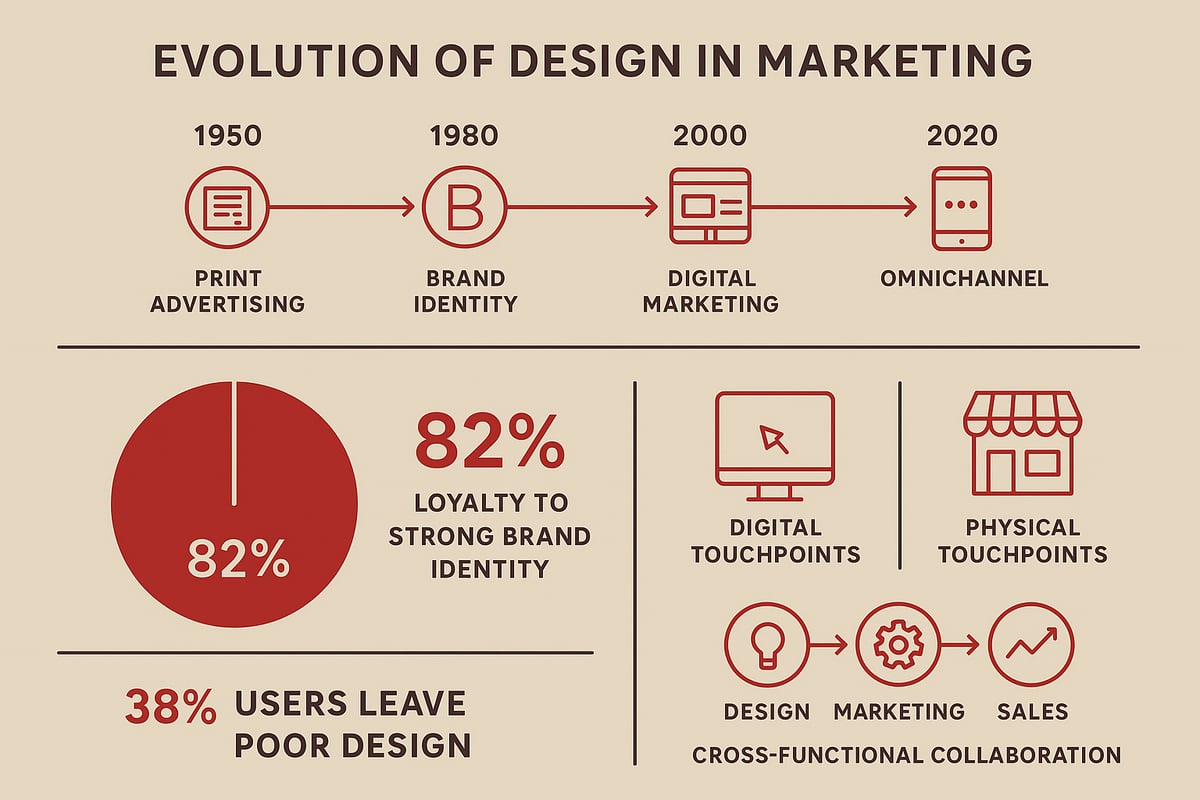
Over the past decade, design in marketing has evolved from a focus on pleasing visuals to a core strategic differentiator. Today, brands weave design thinking into every stage of the marketing process, using it to solve complex problems and spark innovation. This approach moves beyond surface-level appeal, driving deeper connections with customers.
Companies like Apple show how intuitive design in marketing can communicate value and foster loyalty. Their persistent focus on user-friendly interfaces triggers emotional responses, making each product launch memorable. Data supports this shift: 82% of U.S. consumers report loyalty to brands with strong identities, underscoring the tangible impact of design on business outcomes.
Consistency is now non-negotiable. Brands that maintain a unified look and feel across all channels strengthen recognition and credibility. According to The power of brand consistency, a cohesive design in marketing builds lasting trust and amplifies results. Cross-functional teams—spanning designers, marketers, and product leads—are critical for delivering these seamless experiences. As a result, design in marketing has become a C-level concern, directly influencing ROI and long-term success.
Impact on User Perception and Behavior
Compelling design in marketing is a powerful force for capturing attention and driving engagement. The right combination of color, typography, and imagery can instantly shape how a brand is perceived and remembered. When users encounter thoughtful design in marketing, they are more likely to associate positive emotions with the brand.
Consider J.Crew’s visually driven email campaigns. By prioritizing vibrant visuals over lengthy copy, they boost engagement and encourage action. The data is clear: 38% of users will leave a website if design in marketing feels unattractive or difficult to use. This highlights the importance of not just looking good, but creating intuitive, emotionally resonant experiences.
Design in marketing goes beyond aesthetics, influencing how customers feel and behave. Brands that lead with design outperform competitors in engagement and retention. The emotional impact of visual storytelling, paired with consistent design in marketing, reinforces loyalty and keeps audiences invested across every touchpoint.
The Rise of Multichannel and Omnichannel Design
Modern consumers interact with brands across a vast array of digital and physical touchpoints. Maintaining a consistent design in marketing is essential for ensuring every interaction feels authentic and connected. As marketing channels multiply, so do the challenges of upholding a unified brand presence.
To address these challenges, brands are adopting robust design systems and clear guidelines. These tools help teams apply consistent design in marketing across web, mobile, social media, packaging, and more. Visual storytelling and interactive elements are now central to cross-channel campaigns, making experiences memorable regardless of where they occur.
The future of design in marketing is omnichannel. Brands that master consistency, adapt to evolving platforms, and create engaging, seamless journeys will continue to stand out and drive measurable results.
Foundational Principles of Effective Marketing Design
A strong foundation is essential for successful design in marketing. In 2026, brands that master core principles can cut through digital noise, attract the right audience, and maximize impact. Let’s explore the pillars that shape effective marketing visuals and experiences.
Core Design Principles for Marketing Success
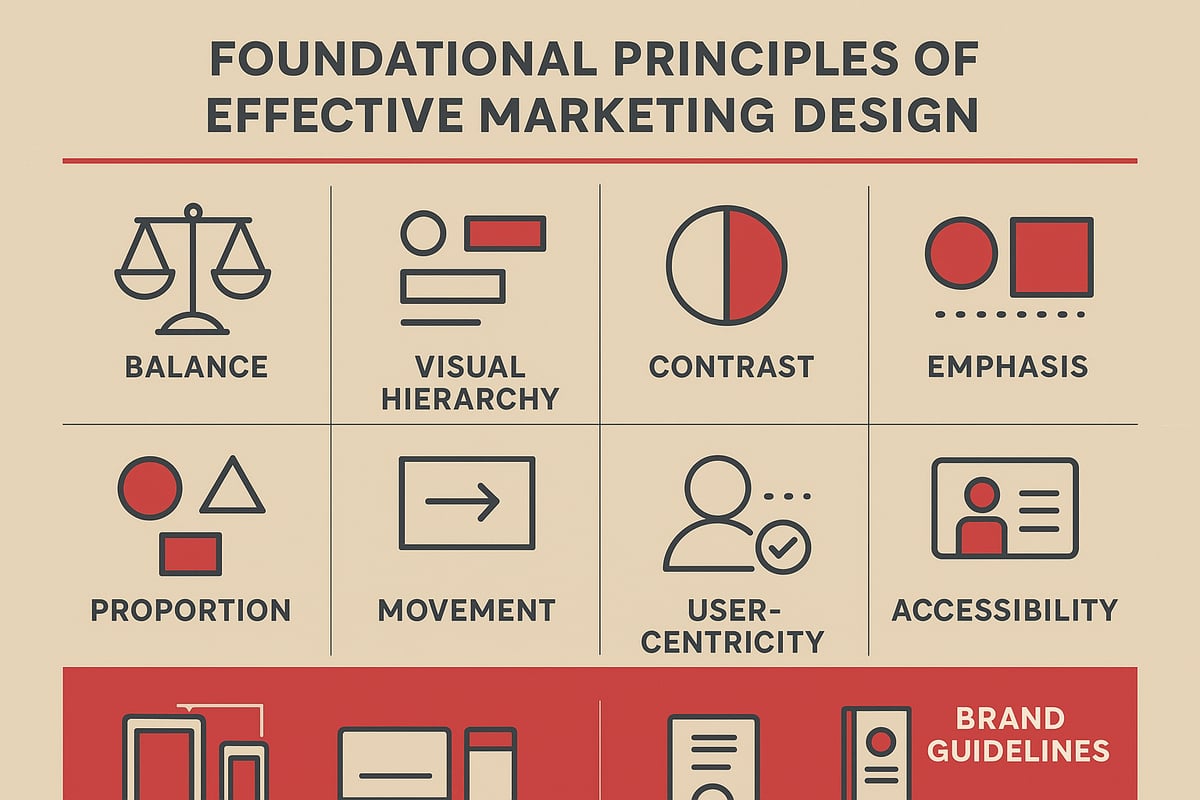
At the heart of design in marketing are time-tested principles that guide every visual decision. Balance ensures that each element has appropriate visual weight, resulting in harmonious layouts that appeal to the eye. Visual hierarchy is critical—it directs attention strategically, ensuring calls to action and messages are seen first.
Contrast, achieved through color, size, or shape, highlights what matters most. Proportion maintains a sense of order, making sure elements relate logically for clarity. Movement guides viewers’ eyes through intentional flow, while emphasis spotlights the main message without overwhelming the audience.
Consider this table summarizing these principles:
| Principle | Purpose | Example |
|---|---|---|
| Balance | Harmony and stability | Symmetrical web layouts |
| Visual Hierarchy | Focus on key messages | Bold CTA buttons |
| Contrast | Highlight important elements | Bright colors for offers |
| Proportion | Logical relationships | Scaled icons vs. headlines |
| Movement | Guide eye flow | Arrow graphics, lines |
| Emphasis | Make messages stand out | Contrasting CTA backgrounds |
Effective design in marketing often uses contrasting CTAs to boost conversions. These principles ensure that every campaign asset, from landing pages to ads, feels intentional and persuasive.
User-Centric and Inclusive Design
Modern design in marketing revolves around the user. Brands must understand audience behaviors, preferences, and values to create meaningful experiences. Personalization is key—tailoring visuals and messaging for segmented groups increases relevance and engagement.
Accessibility is equally important. Inclusive design means considering color contrast, readable fonts, and responsive layouts for all users, including those with disabilities. For example, mobile-first responsive designs ensure emails and websites look great on any device.
The shift toward authentic and user-centric design is shaping the industry. Brands are embracing Inclusive and Imperfect Visuals to reflect real people and diverse experiences, rather than relying on outdated stereotypes or polished stock imagery. This approach fosters deeper emotional connections and trust.
User-centric design in marketing leads to higher engagement and conversion rates. When audiences feel seen and valued, they are more likely to interact with and support a brand.
Consistency, Authenticity, and Brand Guidelines
Consistency is the backbone of effective design in marketing. Codified style guides ensure visual harmony across all channels, from social media to print. These guides define essential elements like logos, color palettes, fonts, and iconography, making it easy for teams to maintain a unified look.
Authenticity matters more than ever. Brands should adapt visuals to evolving trends without losing their core identity. Regularly reevaluating and refreshing brand assets helps maintain relevance while staying true to foundational values.
Successful rebranding examples show that aligning visuals with audience expectations can revitalize perception. By sticking to clear guidelines and prioritizing authenticity, brands build recognition and trust—two pillars that sustain long-term growth in design in marketing.
Key Types of Marketing Design in 2026
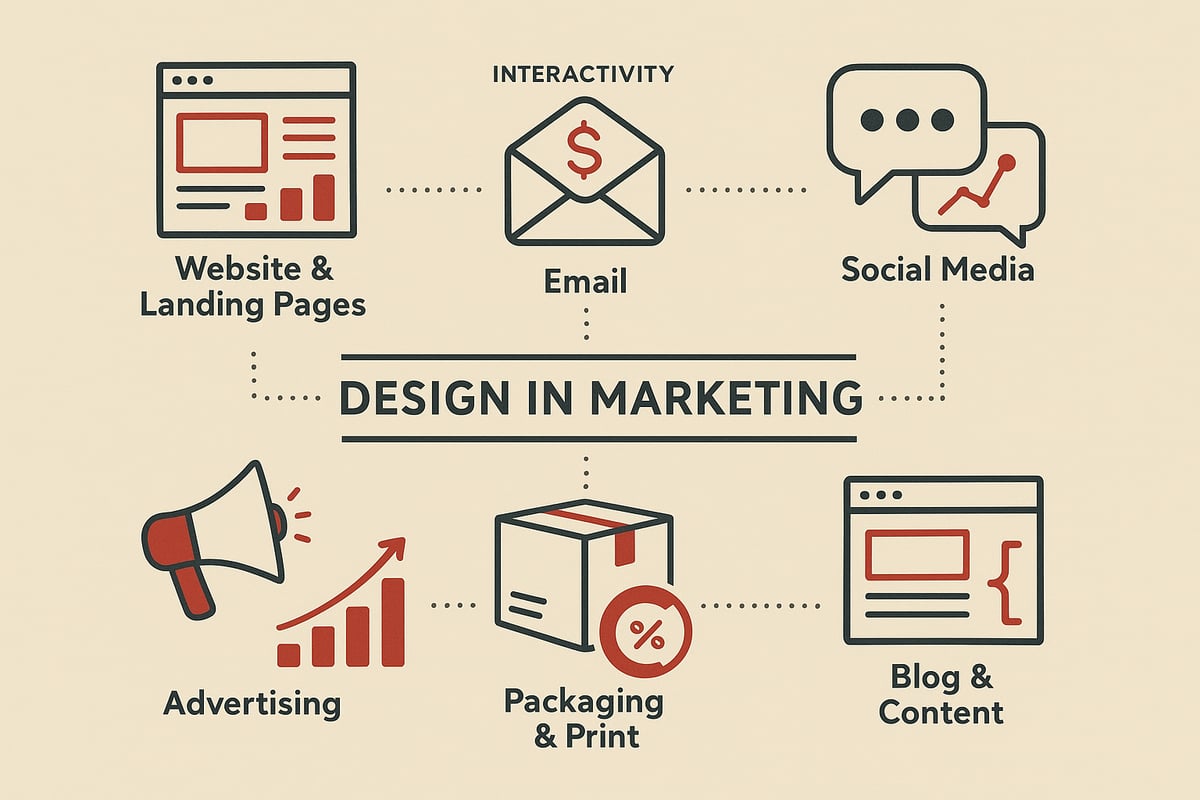
In 2026, design in marketing is more multifaceted and strategic than ever. Each channel, from digital to physical, demands a tailored approach to engage audiences and reinforce brand identity. Let’s explore the essential types of marketing design that shape successful campaigns in today’s evolving landscape.
Website and Landing Page Design
Websites and landing pages remain the primary digital touchpoints for brands. In 2026, design in marketing for web assets focuses on intuitive navigation, fast load times, and conversion-driven layouts. A seamless user journey is crucial, as research shows most users will not return after a poor experience.
Modern web design integrates responsive frameworks and dynamic elements that adapt to user behavior. Personalization, clear calls to action, and accessibility are now baseline expectations. Brands often rely on specialized agencies to ensure their website design stands out and delivers results. For actionable strategies, explore these creative website design tips to elevate your brand presence online.
Consistency in design in marketing across all digital platforms ensures that users recognize and trust your brand, whether on desktop or mobile.
Email Design
Despite new channels emerging, email remains a powerhouse in design in marketing, projected to generate $9.5 billion in global revenue. Success in 2026 hinges on responsive layouts, mobile-first design, and visually engaging storytelling.
Dynamic content, such as GIFs and interactive modules, keeps recipients engaged. Segmentation and personalization drive higher open and click rates, while clear visual hierarchy guides readers to the primary call to action. Brands like J Crew leverage bold imagery and minimal copy to boost engagement.
Design in marketing for email demands that every element, from typography to imagery, aligns with broader brand guidelines for maximum impact.
Social Media and Content Design
Social media platforms are fast-paced and visually demanding, making design in marketing on these channels both challenging and rewarding. Branded templates, short-form videos, and motion graphics dominate feeds, capturing attention in seconds.
Infographics and micro-content are highly shareable, driving organic reach and engagement. Effective brands maintain a consistent visual identity, blending creativity with strategy to stand out. Visual storytelling is essential, as it fosters emotional connections and encourages audience participation.
A strong design in marketing approach on social platforms increases brand recall and supports overall campaign objectives.
Advertising and Promotional Design
Advertising and promotional materials are evolving rapidly in the realm of design in marketing. Digital ads now feature motion, interactivity, and hyper-personalization, responding to user data in real time. Consistency across campaign visuals, whether for display, social, or print, is vital for brand recognition.
Data-driven insights allow marketers to iterate and optimize creative assets efficiently. Visual elements are tested and refined to maximize engagement, ensuring every design in marketing asset contributes to conversion goals.
Strategic use of color, contrast, and whitespace draws attention to the most critical information in every ad.
Packaging and Print Design
Even in a digital-first world, physical touchpoints like packaging and print materials remain powerful tools in design in marketing. Brands use packaging to tell their story, create memorable experiences, and build loyalty among customers.
Trends in 2026 include sustainable materials and experiential packaging that invites interaction. Well-designed print collateral—brochures, business cards, merchandise—serves as a tangible extension of digital campaigns. Consistency in design in marketing ensures a unified brand message across every medium.
Successful brands adapt print design to evolving consumer expectations while staying true to their core identity.
Blog and Long-Form Content Design
Content marketing thrives on thoughtful design in marketing, especially for blogs and long-form assets. Visual hierarchy, clear typography, and strategic use of color guide readers through complex information.
Interactive elements, such as quizzes or polls, keep audiences engaged and increase time on page. Consistency in branding, from headers to imagery, reinforces trust and authority. A well-executed design in marketing for content assets transforms passive readers into active brand advocates.
Ultimately, the right design choices ensure your message is both accessible and memorable.
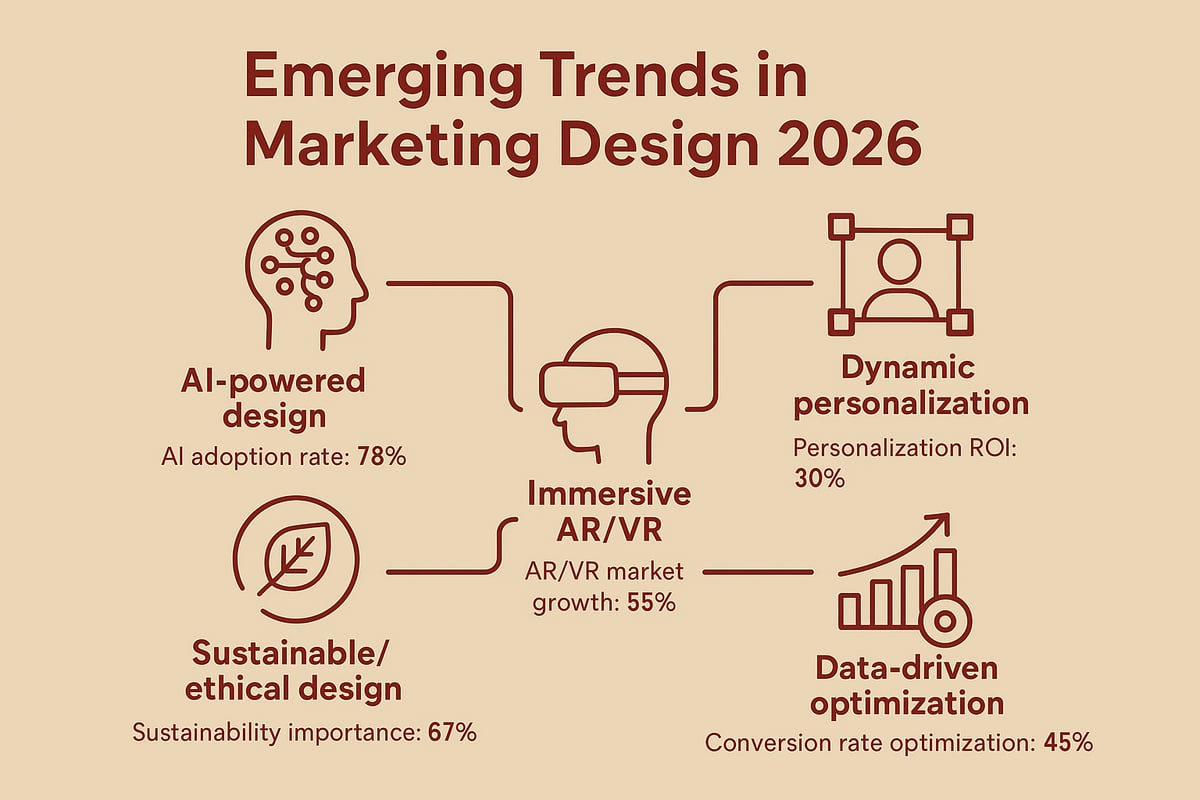
Emerging Trends and Technologies Shaping Marketing Design
The landscape of design in marketing is transforming rapidly, driven by new technologies and shifting consumer expectations. In 2026, brands must stay ahead by embracing innovation that not only streamlines creative workflows but also delivers impactful, personalized experiences. Let’s explore the trends and technologies shaping the future of design in marketing.
AI and Automation in Design
AI is set to revolutionize design in marketing by making asset creation faster, smarter, and more scalable. Advanced AI tools can now generate layouts, automate repetitive tasks, and even suggest creative improvements based on performance data. For example, automated A/B testing can instantly evaluate multiple design variants, helping marketers optimize campaigns in real time.
AI-driven platforms also empower teams to personalize visuals and messaging for different audience segments without sacrificing brand consistency. This level of automation means design in marketing can be both efficient and highly targeted, saving time and resources.
According to insights from AI Revolutionizes Built Environment, the integration of AI is not just a trend, but a fundamental shift in how brands approach creative problem-solving. As a result, companies leveraging AI are seeing measurable gains in engagement, cost efficiency, and campaign performance.
Personalization and Dynamic Content
Personalization is a cornerstone of design in marketing for 2026. Brands are harnessing customer data to deliver hyper-relevant visuals, messages, and offers across all channels. Dynamic content adapts in real time, ensuring each user receives an experience tailored to their preferences and behaviors.
Personalized landing pages, individualized emails, and adaptive website interfaces are examples of how brands increase conversion rates through targeted design in marketing. This approach not only drives higher engagement but also builds deeper connections with audiences by making every interaction feel unique.
Interactive and Immersive Experiences
Interactivity and immersion are redefining design in marketing, allowing brands to move beyond static visuals. Augmented reality (AR) and virtual reality (VR) offer new ways for consumers to explore products, visualize options, and participate in branded experiences.
Interactive elements such as quizzes, polls, and clickable annotations keep users engaged and encourage active participation. For example, virtual try-ons and product demos powered by AR are helping brands create memorable, hands-on experiences that foster both trust and excitement.
Staying updated with Top Graphic Design Trends 2026 can help marketers identify the most effective interactive formats and technologies for their audiences.
Sustainability and Ethical Design
Sustainability is no longer optional in design in marketing. Consumers are increasingly demanding transparency, eco-friendly materials, and ethical business practices. Brands are responding by incorporating sustainability into every stage of the design process, from eco-conscious packaging to digital assets that reduce environmental impact.
Highlighting responsible sourcing, recyclable materials, and ethical storytelling helps brands build credibility and loyalty. Ethical design in marketing also means being mindful of accessibility and inclusivity, ensuring that campaigns resonate with diverse audiences while minimizing environmental footprint.
Data-Driven Creative Optimization
Data analytics now drives every aspect of design in marketing. Marketers use real-time performance data to inform creative decisions, refine visual assets, and optimize messaging for maximum impact. Tools that track engagement, conversion rates, and user behavior allow teams to iterate quickly and respond to what works.
Continuous measurement and agile optimization ensure that design in marketing remains effective, relevant, and aligned with business goals. By closing the loop between creativity and analytics, brands can achieve measurable improvements in both campaign performance and customer satisfaction.
Proven Strategies for High-Impact Marketing Design
In 2026, proven strategies are essential for brands aiming to maximize the impact of design in marketing. As competition intensifies, marketers must deploy intentional, data-driven tactics to create memorable customer experiences. This section explores the core approaches that drive emotional connection, loyalty, conversions, and continuous improvement through design in marketing.
Building Emotional Connections Through Visual Storytelling
One of the most powerful ways to leverage design in marketing is through visual storytelling. Brands that craft narratives with intention use imagery, color, and typography to evoke emotion and connect with their audiences on a deeper level. This strategy goes beyond simply showcasing products; it weaves brand values into every visual touchpoint.
Consider how Apple’s product launches consistently use minimalist visuals, bold color palettes, and clean typography to create a sense of anticipation and aspiration. These elements work together to reinforce the brand’s identity and foster emotional resonance.
Key tactics for effective visual storytelling include:
- Selecting a cohesive color palette that reflects your brand’s personality
- Using authentic imagery that mirrors your audience’s lifestyle and aspirations
- Incorporating consistent typography to strengthen recognition
By treating design in marketing as a narrative tool, brands can differentiate themselves, inspire loyalty, and drive engagement. Emotional storytelling is what transforms casual viewers into lifelong advocates.
Enhancing Brand Loyalty and Advocacy
Design in marketing is fundamental to building not just awareness, but lasting loyalty and advocacy. Consumers gravitate toward brands that project authenticity and reliability through every visual element. Consistency in design reassures customers, signaling a dependable experience across all channels.
Visual cues, such as logo placement, color consistency, and tone of imagery, all contribute to trust. According to industry data, 82% of U.S. consumers remain loyal to brands with strong, recognizable identities. This underscores the importance of codified brand guidelines and regular updates to visual assets.
Strategies for boosting loyalty:
- Maintain uniformity in design across web, social, and print
- Use design elements that reflect brand values
- Adapt visuals over time to stay relevant without losing core identity
Ultimately, design in marketing is the silent ambassador for your brand, shaping perceptions and deepening customer relationships.
Conversion-Driven Design Tactics
At the heart of every successful campaign is the ability of design in marketing to drive conversions. Strategic placement of calls to action, thoughtful use of contrast, and clear visual hierarchy direct users toward desired outcomes. Effective CTAs should stand out, using color and whitespace to draw attention without overwhelming the viewer.
Responsive design is critical, particularly as mobile traffic continues to surge. Every asset, from landing pages to emails, must be optimized for clarity and ease of interaction. Incorporating interactive elements, such as dynamic content and personalized visuals, further increases engagement and conversion rates.
For more insights on optimizing email assets, explore Email marketing design strategies and see how brands boost open and click rates with smart design choices.
By focusing on these tactics, marketers can ensure that design in marketing is not just visually appealing, but also a direct driver of measurable results.
Measurement and Iteration
Continuous improvement is the hallmark of high-impact design in marketing. Setting clear KPIs—such as engagement, conversion, and retention—allows teams to track design performance and make informed adjustments. A/B testing different layouts, colors, and CTAs provides actionable insights into what resonates with audiences.
Modern measurement goes hand-in-hand with technology. AI-driven analytics and real-time feedback loops empower marketers to refine creative assets quickly and at scale. For a deeper dive into how automation is transforming this process, refer to AI-Enhanced Design Workflows.
Ultimately, the most effective design in marketing is never static. Brands that embrace measurement and iteration stay ahead, delivering experiences that are both relevant and compelling.
As you explore how design will shape the future of marketing in 2026, it's clear that thoughtful, consistent visuals are more essential than ever for building trust and driving results. If you're looking for inspiration or want to see how these principles come to life across different industries, I encourage you to take a closer look at real-world examples from a team with over 25 years of experience. Discover how Red Van Creative elevates brands through authentic, strategic design—see how their holistic approach could work for you by visiting See Our Work / View Our Portfolio.