
In 2026, the digital era has fully transformed how brands compete and connect. The right business on social media can mean the difference between thriving and fading in a crowded market. Did you know 74% of consumers now share brand videos, and 57% reach out to businesses through social platforms?
This essential guide is designed to help you navigate the evolving world of business on social media, offering the latest trends, proven strategies, and actionable steps for measurable growth. Get ready to explore platform selection, content creation, engagement tactics, analytics, and future-proofing your social presence. Let’s dive in and take your business on social media to the next level.
The 2026 Social Media Landscape: Trends and Transformations
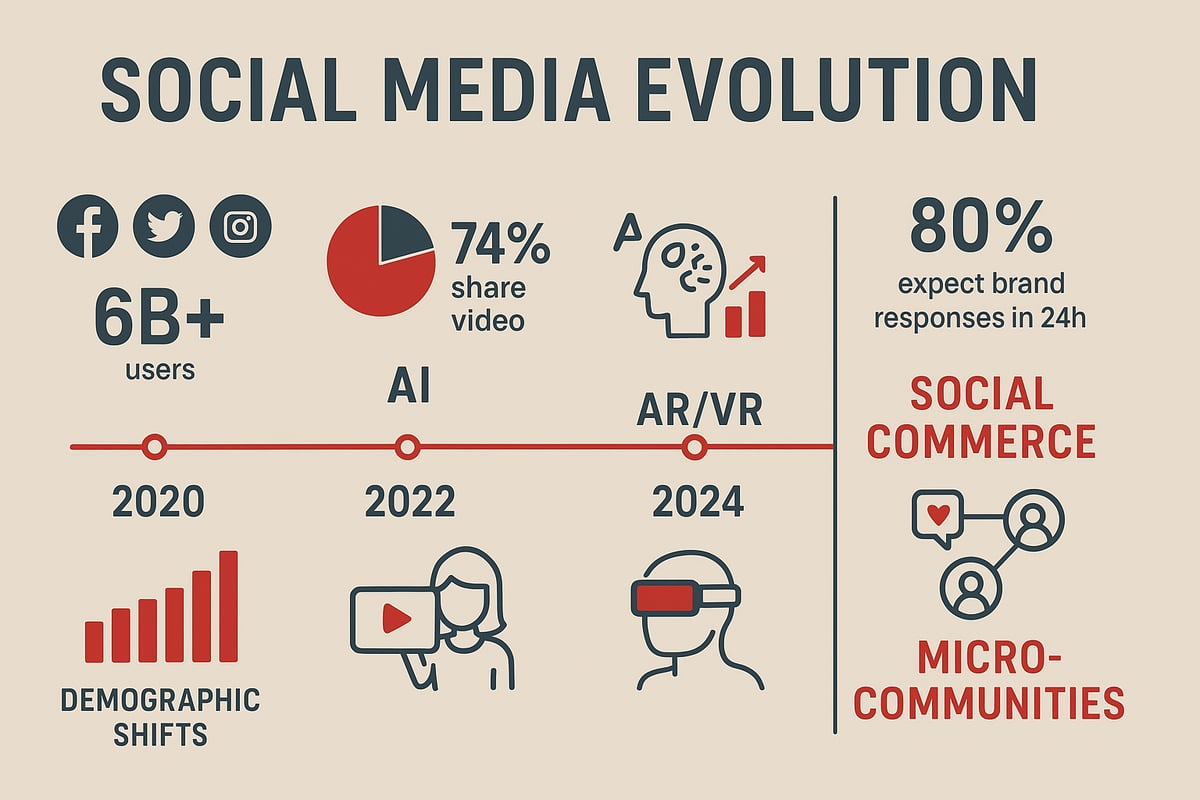
The business on social media landscape in 2026 is more dynamic than ever. Over 6 billion people are now active on social platforms, with digital engagement reaching new heights according to the Digital 2026 Report. For companies, adapting to this rapid evolution is crucial for success.
Evolution of Platforms and User Behaviors
Social platforms have rapidly diversified. New entrants compete with established giants, driving brands to rethink their business on social media approach. Platforms now prioritize personalized feeds, ephemeral content, and interactive experiences.
Gen Z and Alpha users gravitate toward authenticity, short-form video, and community-driven spaces. Brands must understand these shifts to stay relevant.
Video-First and Immersive Content
Short-form videos, live streams, and AR/VR experiences dominate feeds. Stories, interactive polls, and branded AR filters capture attention in seconds.
- 74% of consumers share video content from brands.
- Immersive AR product demos and virtual events are now mainstream.
- Live shopping events boost direct sales within apps.
To succeed, business on social media requires a strong visual and interactive strategy.
AI Integration in Social Media
Artificial intelligence is deeply embedded in content curation, chatbots, and predictive analytics. AI personalizes user experiences, automates customer support, and optimizes campaign targeting.
Brands leverage AI-powered tools to schedule posts, analyze sentiment, and forecast trends. This shift transforms how business on social media operates daily.
Privacy and Data Regulation Shifts
With stricter data privacy laws, businesses must adapt their data collection and targeting strategies. Consent-driven marketing, transparent data policies, and secure customer interactions are non-negotiable.
Failure to comply can risk reputation and limit reach. Business on social media must now balance personalization with user trust.
Social Commerce Expansion
Social commerce has matured. Users shop directly through posts, stories, and live streams without leaving the platform.
- In-app checkout options are standard.
- Influencer partnerships drive product recommendations.
- Seamless shopping journeys enhance conversion rates.
This new reality means business on social media is directly tied to revenue generation.
Micro-Communities and Niche Networks
Micro-communities thrive on platforms like Discord, Threads, and industry-specific networks. These spaces allow for targeted engagement and deeper relationships.
Brands use niche groups to foster loyalty, gather feedback, and deliver exclusive content. Business on social media is no longer about mass reach, but meaningful connections.
Demographic and Platform Popularity Shifts
Platform preferences continue to shift. Instagram and TikTok attract younger audiences, while LinkedIn remains vital for B2B engagement. AR/VR-specific platforms open new frontiers for brand storytelling.
A flexible business on social media strategy tailors content and presence to each demographic.
Key Statistics and Brand Examples
| Trend | Stat/Example |
|---|---|
| Video sharing | 74% share branded videos |
| Customer expectations | 80% expect replies in 24 hours |
| AI in campaigns | AI-driven AR filters boost engagement |
| Gen Z/Alpha preferences | Authentic, short-form, community-centric content |
Leading brands harness AI, immersive content, and social commerce to stay ahead. The next era of business on social media rewards those who innovate, listen, and adapt.
Choosing the Right Social Media Platforms for Your Business in 2026
Selecting the right platforms is critical for success with business on social media. In 2026, an abundance of networks, features, and audience shifts make this decision more strategic than ever. Brands must go beyond trends and choose platforms that align with their vision, audience, and measurable goals.
Understanding Your Audience and Goals
The foundation of any effective business on social media strategy is deep audience understanding. Start with thorough research: Who are your ideal customers? What are their pain points, habits, and preferred platforms? Developing detailed personas lets you tailor your approach and avoid wasting resources.
Align each platform with specific business objectives. For example, use LinkedIn for B2B networking, while Instagram and TikTok excel for retail brands aiming to reach younger demographics. Data-driven decisions are essential. Analytics reveal where your audience spends time, their engagement patterns, and which content formats resonate.
B2B and B2C businesses require different strategies. Retailers often thrive on Instagram, leveraging visual storytelling and shopping features, while SaaS companies may find more value in LinkedIn’s professional environment. Remember, not every business on social media needs to be everywhere. Focus on where your efforts will yield the greatest impact.
According to recent studies, 45% of consumers use social platforms for customer service and 34% to give positive feedback. This highlights the need for a platform strategy that supports both support and engagement. For a deeper dive into aligning platforms with your goals, explore proven social media marketing strategies that drive results.
Overview of Major and Emerging Platforms in 2026
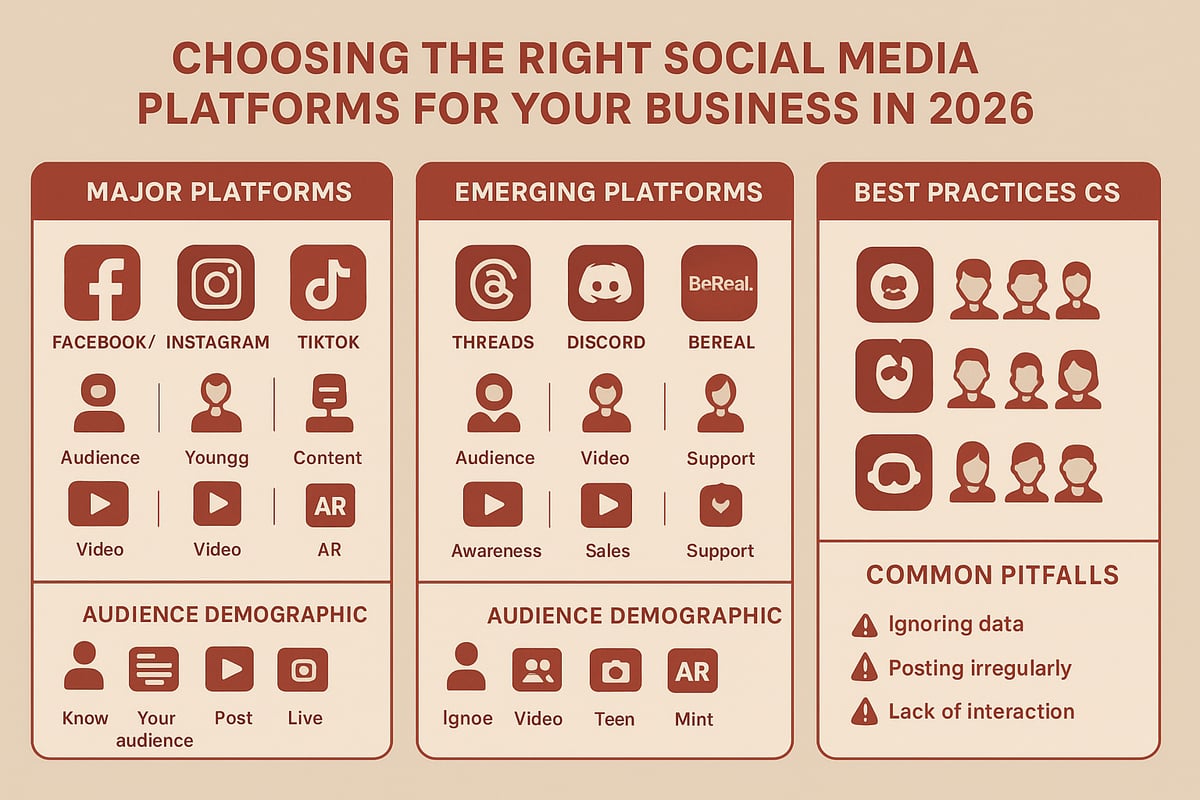
The business on social media landscape in 2026 features both legacy giants and innovative newcomers. Facebook/Meta remains relevant for its broad reach, robust groups, and marketplace functions, making it suitable for businesses aiming for community engagement. Instagram dominates visual storytelling, shopping, and influencer collaborations, especially among millennials and Gen Z.
TikTok leads with viral short-form video content, making it a powerhouse for brands targeting Gen Z and Alpha audiences. LinkedIn continues as the go-to for B2B networking, thought leadership, and recruitment.
Emerging platforms like Threads, Discord, and BeReal are gaining traction, particularly among niche audiences and micro-communities. Discord stands out for community building, while BeReal appeals to those seeking authenticity. Industry-specific networks are also providing targeted engagement opportunities.
AR/VR platforms are revolutionizing branded experiences, enabling immersive product demos and interactive storytelling. Brands are leveraging these tools to differentiate themselves and deepen customer relationships. For instance, companies use Discord to foster vibrant communities, while others turn to BeReal for raw, behind-the-scenes content.
The right mix of platforms is vital for maximizing business on social media effectiveness. Consider audience demographics, platform culture, and content format compatibility before committing resources.
Platform Comparison Table
| Platform | Audience | Top Content Formats | Best for |
|---|---|---|---|
| Facebook/Meta | Broad, 25-54 | Groups, video, marketplace | Community, support |
| Gen Z, Millennials | Stories, Reels, shopping | Visual branding | |
| TikTok | Gen Z/Alpha | Short-form video, trends | Virality, awareness |
| Professionals | Articles, video, posts | B2B, recruitment | |
| Discord | Niche, gaming | Voice, chat, events | Community building |
| BeReal | Gen Z | Authentic photos | Transparency |
| AR/VR | Early adopters | Immersive experiences | Innovation |
Platform Selection Checklist and Pitfalls to Avoid
A focused approach to business on social media ensures maximum ROI. Use this checklist to guide your platform selection:
- Identify where your audience is most active.
- Match platform content formats to your brand’s strengths.
- Evaluate advertising options and analytics capabilities.
- Understand platform culture and user expectations.
Common pitfalls include spreading your business on social media presence too thin, ignoring platform updates, and failing to respect the unique culture of each network. Avoid these mistakes by prioritizing mastery on a few platforms before expanding.
Consider the case of a small retailer who launched on every major platform at once, only to struggle with inconsistent content and low engagement. By refocusing on Instagram and TikTok, they rebuilt a loyal following and saw improved sales.
Quality always trumps quantity. Invest in platforms that align with your goals and audience. Monitor performance, stay adaptable, and refine your business on social media strategy as platforms and behaviors evolve.
Crafting a Winning Social Media Strategy for 2026
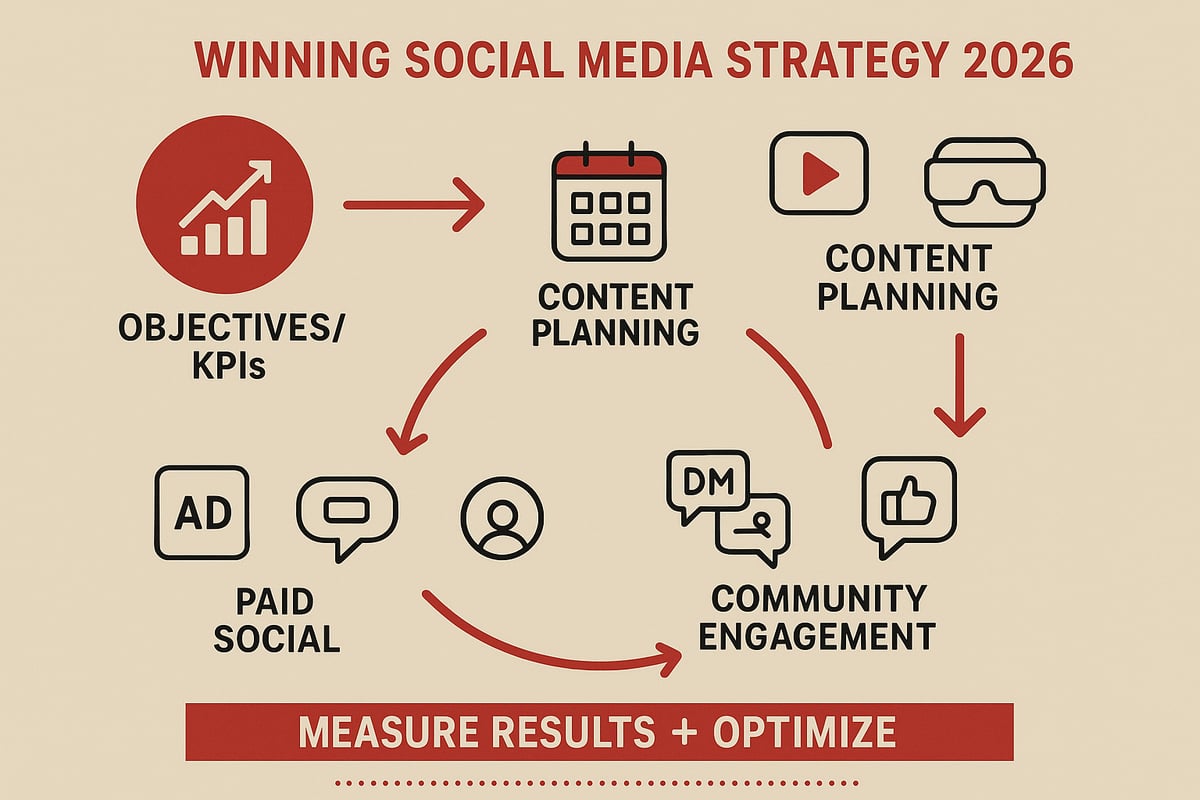
A strategic approach is vital for any business on social media in 2026. With evolving platforms, shifting user behaviors, and advanced technologies, success requires more than sporadic posting. The following framework will guide you in building a robust, adaptable strategy to drive measurable results.
Setting Clear Objectives and KPIs
Every successful business on social media starts with clear, measurable objectives. Define what you want to achieve, whether it is boosting engagement, increasing conversions, expanding reach, or improving sentiment. Align these goals with your overall business strategy to ensure consistency and focus.
Establishing KPIs is essential for accountability. For example, a business on social media can set a KPI to respond to customer inquiries within one hour. This not only enhances customer satisfaction but also reinforces brand reliability.
A practical approach is to use a table to clarify your objectives and KPIs:
| Objective | KPI Example | Measurement Tool |
|---|---|---|
| Increase Engagement | 10% growth in comments | Platform Analytics |
| Boost Conversions | 5% rise in sales via social | E-commerce Tracking |
| Improve Sentiment | Higher positive mentions | Social Listening |
When your business on social media tracks these KPIs regularly, you can quickly adapt and improve your tactics for maximum impact.
Content Planning: Formats, Frequency, and Trends
Content is at the heart of every business on social media. In 2026, audiences crave dynamic formats like short-form video, live streams, and immersive AR/VR experiences. To stay relevant, businesses must plan content that aligns with both audience preferences and platform algorithms.
A well-structured content calendar is crucial. AI-powered scheduling tools help automate posting and optimize timing for peak engagement. Balance evergreen topics with timely, real-time content to maintain a consistent presence while seizing trending opportunities.
Best practices for content planning include:
- Prioritize video and interactive formats, as 74% of consumers share branded videos.
- Incorporate AR filters and live streaming for launches and special events.
- Leverage user-generated content and influencer collaborations to expand reach.
- Use A/B testing to refine content types and posting schedules.
Optimization is ongoing. Businesses looking to elevate their presence can benefit from social media optimization techniques to maximize the effectiveness of each post.
By integrating these trends and tools, a business on social media can stand out in crowded feeds, foster loyalty, and drive measurable results.
Community Engagement and Customer Support
Building authentic relationships is a cornerstone of any business on social media. Timely responses are expected, with 80% of users anticipating replies within 24 hours. Prompt engagement transforms followers into advocates and helps manage reputation.
Key engagement tactics for business on social media include:
- Respond quickly to comments and direct messages.
- Address negative feedback constructively to showcase accountability.
- Use AI-driven chatbots to provide instant support and resolve common queries.
- Create interactive polls, Q&As, and challenges to boost participation.
Companies that resolve issues through private messages often see improved public perception. By prioritizing engagement, your business on social media not only retains customers but also attracts new ones through positive word-of-mouth.
Paid Social and Advertising Innovations
Paid strategies are evolving rapidly for business on social media. New ad formats like shoppable posts, dynamic video ads, and interactive polls are now standard options, enabling brands to engage audiences in more meaningful ways.
AI-driven targeting ensures ads reach the most relevant users, optimizing budget allocation for higher ROI. For example, e-commerce brands are increasing sales by integrating in-app checkout features, making the path from discovery to purchase seamless.
To maximize results, balance organic efforts with paid campaigns. Monitor performance closely and adjust budgets to invest in what works best for your business on social media.
Content Creation and Storytelling: Standing Out in a Crowded Feed
Content creation is the heartbeat of business on social media. In 2026, brands face more competition than ever to capture attention and build loyalty. With evolving audiences, new technologies, and higher expectations, mastering storytelling and content strategy is essential for any business on social media.
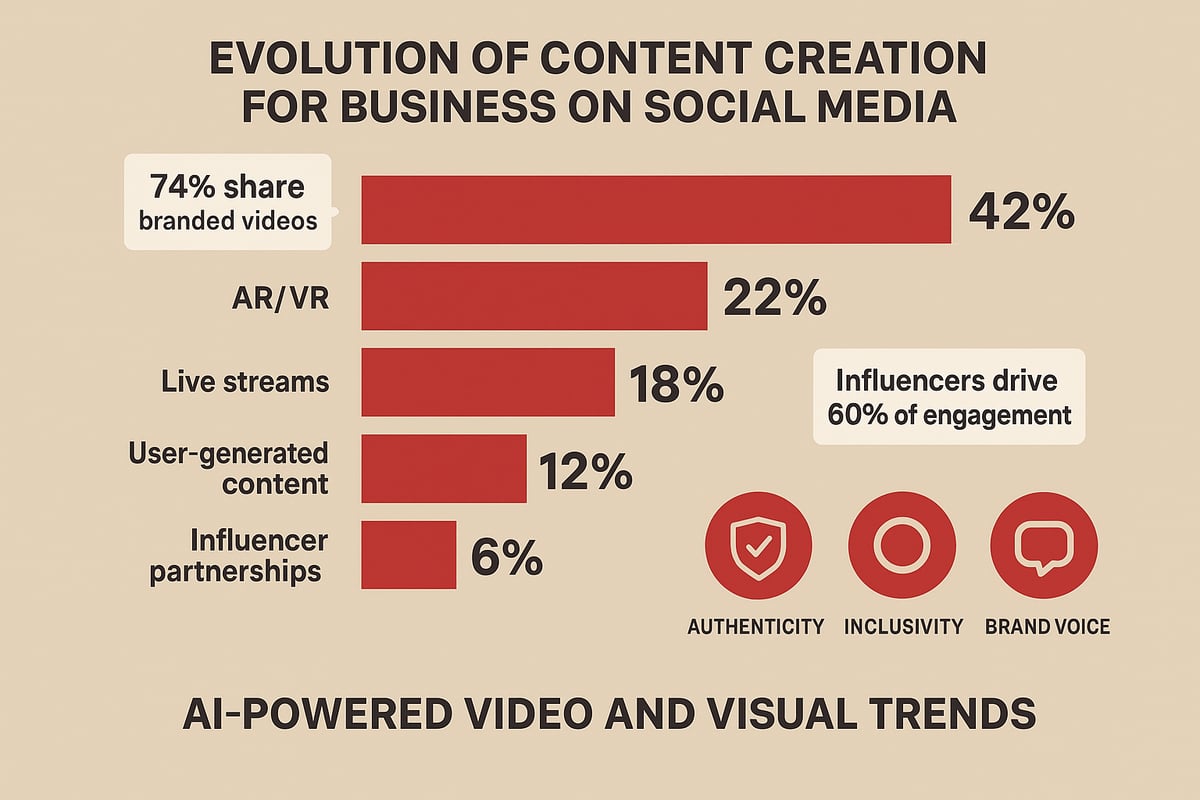
Visual and Video Content Mastery
High-impact visuals and video content have become non-negotiable for business on social media. In 2026, audiences gravitate toward short-form videos, interactive stories, and immersive AR/VR experiences. Brands that invest in high-quality visuals consistently outperform competitors.
Key best practices for visual and video content include:
- Keep videos concise and engaging, aiming for immediate impact in the first few seconds.
- Use AR filters for product launches or behind-the-scenes experiences.
- Combine captions and branded hashtags to boost discoverability and encourage sharing.
According to industry research, 74% of consumers share branded video content, making video a cornerstone of business on social media. Generative AI tools now empower marketers to create dynamic, personalized video ads at scale. In fact, nearly 90 percent of advertisers will use generative AI for video ads by 2026, as highlighted in the IAB’s 2025 Digital Video Ad Spend Report. Brands that leverage these innovations not only stand out but also drive higher engagement and conversions.
Short-form content, such as viral TikTok campaigns, has set new benchmarks for creativity and reach. Experiment with interactive polls, live streams, and AR storytelling to ensure your business on social media remains ahead of the curve.
Authenticity, Inclusivity, and Brand Voice
Audiences in 2026 demand authenticity and transparency from every business on social media. Consumers resonate with brands that are open about their values, show real people, and address social issues responsibly.
Inclusive content is also vital. Representing diverse voices and experiences helps your business on social media foster trust and reach wider audiences. Use language and visuals that reflect your community, and prioritize accessibility in every post.
Developing a consistent, relatable brand voice is the foundation of effective storytelling. Share behind-the-scenes content, team introductions, and honest responses to feedback. These approaches humanize your business on social media and create lasting relationships with followers.
Leveraging Influencers and User-Generated Content
Influencer partnerships and user-generated content (UGC) are powerful tools for amplifying business on social media. Identify influencers whose audiences align with your brand values and goals. Structure collaborations to prioritize authenticity and measurable results.
Encourage your customers to share their experiences, reviews, and creative takes on your products. Feature this UGC in your main feed or stories to build community and trust. Campaigns that turn customers into brand storytellers often see higher engagement and organic reach.
In summary, integrating influencer marketing and UGC into your business on social media strategy not only boosts credibility but also showcases real-world impact. The most successful brands in 2026 will be those that empower their communities to co-create and share their stories.
Measuring Success: Analytics, ROI, and Continuous Improvement
Understanding the true impact of your business on social media requires more than just counting likes or followers. Success in 2026 is defined by actionable insights, measurable outcomes, and a commitment to continuous improvement. Let us explore the key metrics, data-driven optimizations, and future-proofing strategies every brand needs to thrive.
Essential Metrics and Tools for 2026
To drive business on social media, you must track the right metrics. In 2026, brands focus on engagement rate, reach, conversions, sentiment, and response time. Each metric delivers unique insights into audience behavior and campaign effectiveness.
Here is a quick comparison of essential metrics:
| Metric | What It Measures | Why It Matters |
|---|---|---|
| Engagement Rate | Likes, comments, shares | Gauges audience interest |
| Reach | Unique viewers | Shows content exposure |
| Conversion | Actions taken (sales, signups) | Links social to business goals |
| Sentiment | Positive/negative mentions | Monitors brand reputation |
| Response Time | Reply speed | Impacts customer support |
Advanced platforms now leverage AI to provide predictive analytics and real-time insights. According to Emplifi’s 2026 Social Media Marketing Report, AI-powered tools allow marketers to forecast trends, automate reporting, and identify opportunities for ROI growth. By relying on these tools, brands can ensure their business on social media is both data-driven and future-ready.
Adapting Based on Data: Optimization and Experimentation
Continuous improvement is vital for any business on social media. Use data to drive every decision, from content timing to creative direction. A/B testing is essential—experiment with different headlines, visuals, and posting schedules to see what resonates.
Consider these steps for effective optimization:
- Analyze performance weekly using advanced analytics.
- Run A/B tests on ads, captions, and formats.
- Benchmark against industry leaders to spot trends.
- Adjust strategies in real time based on audience feedback.
Predictive analytics now help marketers anticipate shifts and modify campaigns before results decline. For example, if engagement drops after a content change, swift adjustments can recover momentum. By treating every campaign as a learning opportunity, you will foster a culture of experimentation. This approach ensures your business on social media adapts to changing user behaviors and platform algorithms.
Staying Ahead: Trends Monitoring and Future-Proofing
To keep your business on social media resilient, you must stay vigilant and proactive. Monitor platform updates, algorithm changes, and emerging features regularly. Invest in ongoing training for your team, and encourage them to explore new technologies and creative formats.
Key strategies for future-proofing:
- Stay informed about AI, AR, and new platform launches.
- Build agile workflows that enable rapid pivots.
- Prioritize privacy and ethical data use in all campaigns.
- Develop crisis response plans for social incidents.
- Be an early adopter to gain competitive advantage.
As new trends emerge, businesses that anticipate change will lead the market. By embedding adaptability and innovation into your business on social media, you can weather disruptions and seize new opportunities before competitors do.
Future-Proofing Your Business on Social Media
Staying ahead in business on social media requires more than just following trends. It demands a proactive, adaptable approach to new technology, shifting user expectations, and evolving regulations. In 2026, future-proofing is not optional—it is essential for long-term growth.
Embracing Emerging Technologies and Trends
To future-proof your business on social media, you must anticipate and embrace the next wave of technology. Artificial intelligence is transforming how brands personalize content, predict trends, and automate customer interactions. Augmented reality, virtual reality, and interactive content are redefining the user experience, allowing brands to create immersive campaigns.
A recent experimental study on AI’s impact on social media highlights how generative AI shapes user behavior and content perception. Businesses that leverage these technologies gain a competitive edge by delivering more relevant, engaging experiences.
Building Resilient Teams and Workflows
A resilient business on social media depends on teams who can adapt quickly to change. Invest in ongoing training to keep your staff up to date with platform updates, analytics tools, and content creation trends. Agile workflows enable rapid response to algorithm shifts or new features.
Consider these steps:
- Cross-train team members on multiple platforms
- Use cloud-based collaboration tools
- Set up regular reviews of workflow efficiency
Prioritizing Privacy, Security, and Ethics
With privacy regulations tightening, businesses must make data protection a priority. Transparent data practices and ethical content strategies build trust with audiences. Always review new platform policies and ensure compliance to avoid costly missteps.
Key practices include:
- Regular privacy audits
- Clear consent protocols for user data
- Ethical guidelines for AI and automation use
Fostering Innovation and Crisis Preparedness
Continuous experimentation is vital for thriving in business on social media. Test new formats, pilot emerging platforms, and encourage creative risk-taking. At the same time, develop robust crisis communication plans so your team can respond swiftly to incidents or policy changes.
Example: When a major platform updated its privacy policy with little notice, one retailer quickly pivoted its content strategy, communicated transparently with followers, and maintained customer trust.
Future-Proofing Strategies at a Glance
| Strategy | Action Item | Benefit |
|---|---|---|
| Embrace AI and AR/VR | Invest in new tech and training | Enhanced engagement |
| Build resilient teams | Foster adaptability | Faster response to change |
| Prioritize privacy and ethics | Regular audits, clear policies | Audience trust, compliance |
| Foster innovation | Experiment and iterate | Stay ahead of competitors |
| Crisis communication planning | Draft and practice response plans | Reputation protection |
As the landscape evolves, the businesses that succeed will be those who treat business on social media as a dynamic, ever-learning journey. By staying agile, prioritizing ethics, and embracing innovation, your brand will be ready for whatever the future holds.
As you look ahead to making your brand stand out on social media in 2026, it’s clear that success comes down to authentic connections, innovative content, and a strategy tailored for today’s platforms. At Red Van Creative, we know how crucial it is to blend creativity with measurable results, whether you’re engaging a new audience or reinforcing relationships with loyal customers. If you’re curious how these principles come to life in real campaigns, I invite you to explore real-world examples that showcase what’s possible. Take a moment to See Our Work / View Our Portfolio and get inspired for your next step.