
The advertising branding agency landscape is evolving at a breakneck pace as 2026 draws near. New technologies, shifting consumer expectations, and fierce competition are transforming how agencies operate and succeed.
To thrive, agencies must embrace innovation, adapt to rapid changes, and find creative ways to stand out. This article promises to uncover seven brilliant ideas poised to define the future of agency branding and advertising.
Get ready for practical insights and forward-thinking concepts that will empower your agency to lead in the years ahead.
The Future of Advertising Branding Agencies in 2026
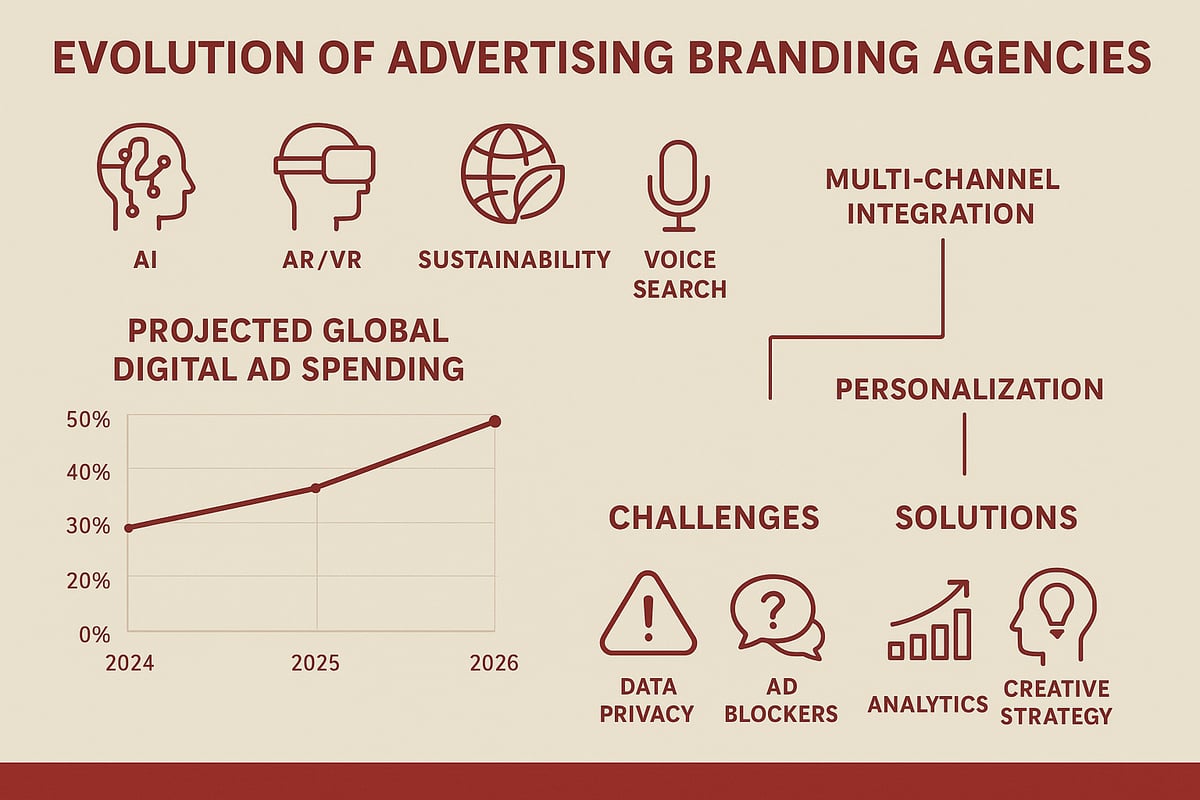
The landscape for every advertising branding agency is transforming at an unprecedented pace. As digital touchpoints multiply and consumer journeys become more fragmented, agencies must rethink how they connect brands with audiences. The pressure is on to be both innovative and adaptable.
Today’s consumers expect brands to be responsive, relevant, and authentic. They seek value-driven interactions and personalized experiences at every stage of the journey. For an advertising branding agency, understanding these evolving behaviors is critical for crafting campaigns that resonate and build loyalty.
AI, automation, and data-driven personalization are rapidly redefining agency operations. Agencies are leveraging machine learning to analyze consumer insights, deploy dynamic creative, and optimize campaigns in real time. This shift enables an advertising branding agency to deliver hyper-targeted messaging, driving higher engagement and conversion rates.
Sustainability and social responsibility are now central to branding. Consumers, especially Gen Z and Millennials, favor brands that prioritize ethical practices and transparency. Agencies are helping clients integrate purpose-driven messaging, measure impact, and communicate genuine commitments to societal and environmental causes.
Emerging technologies are opening new frontiers. Augmented reality, virtual reality, blockchain, and voice search are transforming how brands tell stories and interact with users. Agencies are experimenting with AR-powered shopping, immersive brand activations, and secure blockchain-based campaigns to foster trust and engagement.
Digital ad spending continues to surge, with global investments expected to top $700 billion by 2026. The table below highlights projected growth and key market trends:
| Year | Global Digital Ad Spend | Notable Trend |
|---|---|---|
| 2024 | $600B | AI-driven personalization |
| 2025 | $660B | AR/VR adoption accelerating |
| 2026 | $720B+ | Multi-channel integration |
To succeed, every advertising branding agency must offer holistic, multi-channel solutions. Integrating content, social, experiential, and digital touchpoints is no longer optional, but essential for impact. Agencies at the forefront are already adopting agile structures, expanding creative capabilities, and embracing innovation to stay ahead.
Leading agencies are pioneering future-ready strategies, such as AI-powered campaign optimization and immersive brand storytelling. For more on these evolving trends, see Creative Branding Trends for Agencies and Startups in 2026.
However, adapting to this rapid change is not without challenges. Agencies face hurdles like data privacy concerns, talent shortages, and keeping pace with technology. The key is to remain flexible, invest in upskilling, and prioritize transparent client relationships.
The future belongs to agencies that can anticipate shifts, embrace new tools, and build genuine connections between brands and consumers. Staying relevant in 2026 means being bold, data-driven, and purpose-focused in every campaign.
7 Brilliant Advertising Branding Agency Ideas for 2026
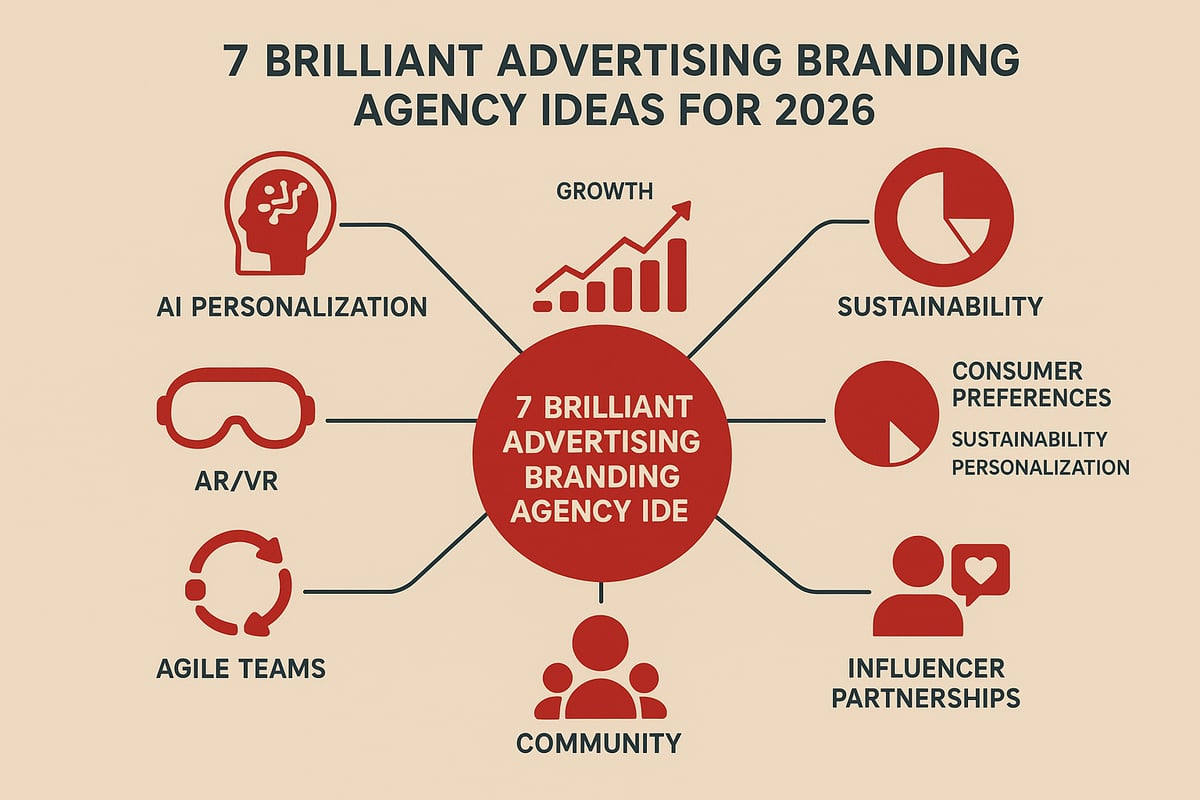
The future of the advertising branding agency landscape promises to be shaped by rapid technological advancements and evolving consumer expectations. Agencies that harness innovation and creativity will stand out in 2026. Below, discover seven transformative ideas that can help your advertising branding agency thrive in this dynamic environment.
1. [Hyper-Personalized Brand Experiences]
Hyper-personalization is revolutionizing how an advertising branding agency connects with audiences. By leveraging AI and big data, agencies can micro-target consumers and tailor messaging to individual preferences in real time. This approach uses dynamic creative optimization to adapt content instantly based on user behaviors, ensuring every touchpoint resonates.
Customer journey mapping is essential for delivering seamless omnichannel experiences. With AI analyzing vast data sets, agencies can anticipate needs and provide relevant interactions across platforms. Industry leaders like Coca-Cola have demonstrated the power of hyper-personalization with campaigns such as “Share a Coke,” which increased engagement by featuring individual names on bottles.
However, this strategy comes with challenges. Data privacy and ethical personalization are critical concerns. Agencies must balance personalization with transparency and comply with privacy regulations. Research shows that personalized campaigns typically achieve 20 percent higher conversion rates, highlighting the tangible benefits for advertising branding agency clients.
To implement hyper-personalized strategies, agencies should:
- Invest in advanced data analytics tools.
- Create detailed customer personas.
- Map out end-to-end customer journeys.
- Test and optimize creative assets in real time.
For more strategies on tailoring campaigns, see Why Personalized Marketing Matters.
2. [Sustainable & Purpose-Driven Branding]
In 2026, sustainability and purpose will be central to every successful advertising branding agency. Consumers, especially Gen Z and Millennials, expect brands to champion social and environmental causes. Agencies that help clients align their values with authentic action will earn trust and loyalty.
Purpose-driven branding means more than greenwashing. Transparency and accountability are essential. Patagonia’s activism, for example, showcases how consistent environmental efforts can drive brand advocacy. Agencies can guide clients in setting measurable goals and communicating progress honestly.
Data supports this movement. Over 70 percent of younger consumers prefer brands that demonstrate sustainability. An advertising branding agency must develop frameworks for tracking impact and reporting results to stakeholders.
Steps for agencies:
- Conduct sustainability audits for clients.
- Develop campaigns that highlight real impact stories.
- Use third-party certifications to validate claims.
- Create annual sustainability reports for brands.
Agencies that prioritize purpose-driven branding will not only attract conscious consumers but also future-proof their business against shifting market expectations.
3. [Immersive Storytelling with AR/VR]
The integration of AR and VR is unlocking new storytelling dimensions for the advertising branding agency sector. Immersive technology allows brands to create interactive experiences that foster deep emotional connections. For example, IKEA Place uses AR to let customers visualize furniture in their homes, while Nike’s AR try-ons enhance the shopping journey.
Benefits of immersive storytelling include higher brand recall and stronger engagement rates. However, barriers remain, such as upfront technology costs and limited consumer access. Agencies can overcome these by partnering with tech providers and designing scalable solutions.
Statistics show AR/VR adoption is rising, with projections indicating a 30 percent annual growth rate through 2026. To capitalize, an advertising branding agency should:
- Offer AR/VR creative services.
- Train teams in immersive content production.
- Integrate AR/VR into digital campaigns.
- Measure results through engagement analytics.
For deeper insights into creating impactful experiences, visit Experience Branding Insights.
By embracing AR and VR, agencies can differentiate their offerings and position themselves as pioneers in experiential branding.
4. [Agile, Data-Driven Creative Teams]
The agile methodology is transforming how an advertising branding agency operates. By adopting agile principles, agencies can accelerate campaign delivery and foster cross-functional collaboration. Agile teams work in sprints, allowing for rapid iteration and continuous feedback.
Data-driven decision-making enhances creativity and effectiveness. Creative teams that integrate analytics into their process can quickly identify what resonates with audiences and adjust campaigns accordingly. Agencies such as R/GA have restructured to embrace agile models, resulting in faster speed-to-market and improved ROI.
A recent survey found that agencies using agile methods saw a 25 percent increase in project efficiency. For an advertising branding agency, the benefits are clear:
- Greater flexibility and responsiveness.
- Enhanced collaboration between departments.
- Measurable improvements in campaign outcomes.
Best practices for building agile teams include:
- Regular stand-up meetings.
- Transparent progress tracking.
- Empowering team members to make data-informed decisions.
Agile, data-driven teams are essential for agencies looking to stay competitive and deliver exceptional results in 2026.
5. [Voice Search & Audio Branding]
Voice search and audio branding are rapidly reshaping the strategies of every advertising branding agency. With smart speakers and voice assistants becoming household staples, optimizing for voice is now a necessity. Brands must rethink how they communicate through sound, not just visuals.
Sonic branding, such as Mastercard’s iconic sonic logo, creates memorable audio identities that enhance brand recall. Agencies should guide clients in developing distinct audio cues and integrating them across touchpoints.
Voice search is also influencing content strategies. By 2026, it is expected that over half of all online searches will be voice-based. An advertising branding agency can help brands:
- Optimize website content for conversational queries.
- Create audio ads and branded podcasts.
- Analyze voice search data for consumer insights.
Tips for agencies:
- Focus on natural language and long-tail keywords.
- Ensure consistent audio branding across platforms.
- Monitor emerging trends in voice technology.
By mastering voice and audio, agencies can ensure their clients remain top-of-mind in an increasingly audio-first world.
6. [Community-Driven Brand Building]
Community-driven branding is redefining the engagement model for the advertising branding agency. Instead of treating audiences as passive recipients, brands now build active communities that foster loyalty and advocacy. Platforms like LEGO Ideas and Glossier’s customer groups are prime examples of this shift.
User-generated content and peer-to-peer interactions drive authentic engagement. Research indicates that brands with strong communities see up to 30 percent higher customer lifetime value. An advertising branding agency should help clients:
- Launch branded forums or social groups.
- Encourage and showcase user-generated content.
- Identify and support brand advocates.
Actionable steps for agencies:
- Facilitate regular community events or campaigns.
- Reward loyal customers with exclusive benefits.
- Monitor conversations to gather feedback and insights.
Community-building not only strengthens brand loyalty but also provides a valuable feedback loop for continuous improvement.
7. [Integrated Influencer Partnerships]
Influencer marketing is evolving, and the advertising branding agency of 2026 must focus on integrated, long-term partnerships rather than one-off collaborations. Authenticity is key. Consumers trust influencers who genuinely connect with a brand’s values and audience.
Micro-influencers and niche communities often deliver better engagement than celebrity endorsements. Brands like Gymshark have built ambassador programs that foster ongoing relationships, resulting in sustained visibility and trust.
Data shows that integrated influencer campaigns yield a 30 percent higher ROI compared to transactional deals. An advertising branding agency should:
- Vet influencers for brand alignment.
- Co-create content and campaigns.
- Track performance using advanced analytics.
Guidelines for agencies:
- Prioritize transparency and clear expectations.
- Build long-term contracts with performance incentives.
- Regularly review and refine partnership strategies.
By investing in meaningful influencer relationships, agencies can amplify brand reach and credibility well into the future.
Measuring Success: KPIs & Analytics for 2026 Agency Campaigns
In 2026, measuring the impact of every advertising branding agency campaign will be more critical than ever. With budgets under scrutiny and brands demanding proof of ROI, agencies must adopt a data-first mindset. Success is no longer defined by impressions alone. Instead, agencies need to track a wide spectrum of performance indicators tailored to each client’s objectives.
Key KPIs for Modern Campaigns
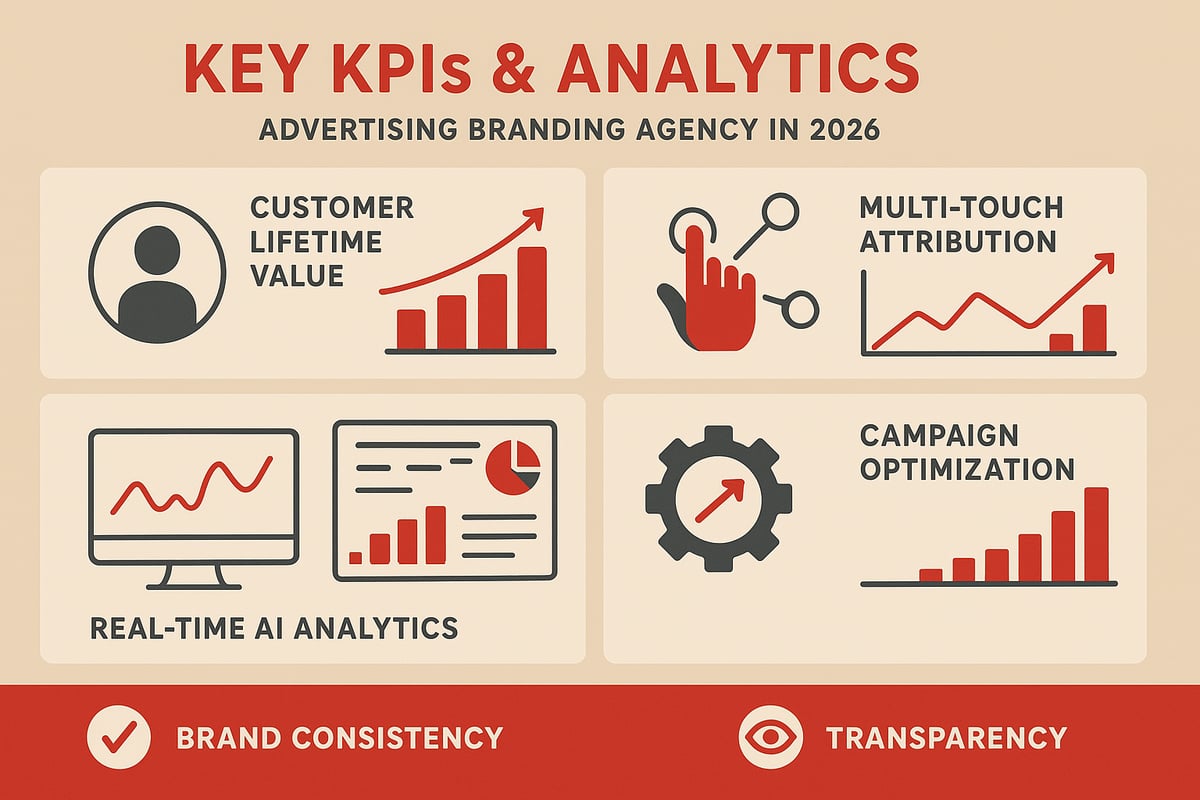
An advertising branding agency must define the right KPIs from the start. Core metrics now include customer lifetime value, multi-touch attribution, engagement rates, and brand sentiment. These metrics help agencies move beyond vanity numbers and focus on outcomes that matter most to clients.
| KPI | Description | Why It Matters |
|---|---|---|
| Customer Lifetime Value | Total revenue from a client | Measures long-term brand impact |
| Multi-Touch Attribution | Tracks all campaign touchpoints | Reveals true conversion drivers |
| Engagement Rate | Interaction per impression | Shows audience connection |
| Brand Sentiment | Positive/negative brand mentions | Gauges public perception |
The right KPIs allow an advertising branding agency to align reporting with client goals and demonstrate strategic value.
AI-Driven Analytics and Multi-Touch Attribution
AI-powered analytics are transforming how agencies track and optimize campaigns in real time. By leveraging machine learning, an advertising branding agency can identify patterns, predict outcomes, and adjust strategy on the fly. Multi-touch attribution models provide a holistic view of the customer journey, capturing every interaction that leads to conversion.
Agencies also benefit from integrating analytics with digital branding strategies. For a deeper dive into how branding and analytics intersect, see Branding in Digital Marketing. Using these insights, agencies can deliver campaigns that resonate and convert, not just reach.
Best Practices for Success Measurement
To ensure transparency and accountability, agencies should establish clear reporting frameworks from the outset. Regular dashboards, data visualization, and open communication keep clients informed and engaged. Agencies should also audit campaigns regularly, using data to refine creative and media choices continuously.
A modern advertising branding agency thrives by embracing innovation, leveraging advanced analytics, and prioritizing clear, measurable outcomes. By focusing on these best practices, agencies can build trust and deliver exceptional results in a rapidly evolving market.
As we look ahead to 2026, it’s clear that forward-thinking strategies—like hyper-personalization, immersive storytelling, and purpose-driven branding—will set exceptional agencies apart. At Red Van Creative, we’ve been helping brands build authentic connections and navigate industry shifts for over 25 years. If you’re curious how these innovative ideas translate into real-world impact, you don’t have to imagine it. Take a moment to see how we’ve brought fresh, holistic marketing solutions to life across industries—your next big idea could be inspired here.
See Our Work / View Our Portfolio